

 Pregledaj u realnoj veličini
 Pošalji
 Podijeli
 Detalji o umjetničkom djelu
 Vodič
Vodič

 Preuzmi umjetničko djelo
 Slični predmeti
 Rentgenska snimka
 Slide show
 Pitanja i odgovori
 Statistika
untitled (9426)

 Prikaži više
Djelo prikazano na ovoj stranici zaštićeno je autorskim pravima, što znači da zakonski ne možemo izraditi niti prodati identičnu reprodukciju. Ova se zaštita provodi u skladu s međunarodnim sporazumima kao što su Bernska konvencija i nacionalnim zakonima, uključujući i one koji su utvrđeni u Američki zakon o autorskom pravu – Title 17.
Ova metoda u potpunosti je usklađena s autorskim pravima jer ne uključuje kopiranje ili dupliciranje zaštićenih umjetničkih djela. Umjesto toga, riječ je o kreativnoj reinterpretaciji – novoj slici koja je dobila utjecaj na izvornik, ali nije identična njemu.
Giclée / Umjetnički otisak
Giclée tisak muzejske kvalitete ili otisak na platnu uz brzu izradu i raznolike opcije završne obrade. ( Kupi ručno oslikano djelo Prebacite na digitalnu sliku)




P118B €10

P118H €10

P118W €10

P438Z €10

P508JH €12

P508YH €12

P805H €10

P805Z €10

P919BZ €10

P919G €10

P919XJ €10

P959ZH €10

P968JZ €12

W106C €8

W218G €10

W218JH €8

W218Y €10

W307PJ €10

W316G €10

W316PJ €8

W316Y €10

W398PJ €8

W4111J €10

W500HY €15

W500JH €15

W692G €12

W849H €8

W940BG €15

W953PJ €8




Odaberite jednu od naših unaprijed definiranih veličina koje odgovaraju izvornim proporcijama umjetničkog djela.

Unesite potrebnu širinu i visinu kako bi odgovarali vašem okviru ili zidu. Print se može samo izrezati, nikada ne može biti veći od slike, stoga format s drugačijim omjerom stranica uzrokuje gubitak dijela slike. Prije bilo kakve štampe šaljemo vam digitalni prikaz (mockup) na odobrenje. Slika prikazana na ovoj stranici ne prikazuje stvarni rez — to prikazuje isključivo digitalni prikaz.
Dostava širom svijeta () u roku od 2 tjedna umjesto standardnih 4/5 tjedana. (8 Studeni)

Besplatna ekspresna dostava širom svijeta

Visokokvalitetno laneno platno

Potpuno osiguranje dostave

Jamstvo povrata carine i uvoznih poreza

Jamstvo vjernosti boja

Politika povrata u roku od 100 dana (samo u slučaju nedostataka)

Jamstvo povrata 100% novca

Popust na više proizvoda
 Opcija stakla dostupna je samo za dimenzije manje od 110 cm

untitled (9426)
Giclée / Umjetnički otisak
Veličina reprodukcije
-


Ukupna cijena
€ 56
The Silent Echo of the City: Unpacking Edward Hopper's "Untitled (9426)"
Edward Hopper’s “Untitled (9426),” a stark black and white depiction of a late-night train journey, isn’t merely a snapshot of a rural landscape; it’s a profound meditation on isolation, modernity, and the quiet anxieties simmering beneath the surface of American life. Painted in 1931, during a period of rapid industrialization and social change, this work encapsulates Hopper's signature style – a masterful blend of realism and psychological depth that continues to resonate with viewers today. The painting’s power lies not in dramatic action or vibrant color, but in its carefully constructed stillness, inviting the viewer to contemplate the solitary figures within and the vast, indifferent expanse surrounding them.
The scene is deceptively simple: a train, rendered in meticulous detail against a backdrop of rolling hills and a darkening sky, snakes its way along the tracks. Smoke billows from its engine, hinting at movement yet simultaneously reinforcing the sense of suspended time. A single passenger sits within one of the carriages, their face obscured, lost in thought – or perhaps simply observing. The composition is dominated by horizontal lines, mirroring the train’s trajectory and creating a feeling of relentless forward motion, while vertical elements—the tracks themselves—suggest an inescapable path. Hopper's use of light is particularly striking; it’s diffused and cool, casting long shadows that emphasize the emptiness of the landscape and the vulnerability of the figures within.
Hopper’s Poetics of Modern Loneliness
Edward Hopper was a chronicler of the American experience in the early 20th century, a period marked by both unprecedented prosperity and a growing sense of alienation. His art wasn't about grand narratives or heroic figures; instead, he focused on the small, everyday moments that revealed the complexities of human relationships and the often-unspoken emotions of his subjects. As Hopper himself famously stated, “Unconsciously, probably, I was painting the loneliness of a large city.” This sentiment is powerfully conveyed in "Untitled (9426)." The train, a symbol of travel and connection, ironically becomes a vehicle for isolation, transporting its passenger away from familiar surroundings and deeper into an unknown future. The lack of interaction between the figures—the solitary traveler and the unseen occupants of the other carriages—underscores this theme.
Hopper’s artistic lineage is complex, drawing inspiration from both realism and a subtle influence from the Ashcan School painters who documented the gritty realities of urban life. However, Hopper transcends mere imitation; he imbues his scenes with a distinctly psychological dimension. His meticulous attention to detail—the texture of the train's upholstery, the sheen on the tracks, the subtle nuances of light and shadow—creates an immersive experience for the viewer, drawing them into the painting’s quiet drama. The deliberate ambiguity of the scene – who is this passenger? Where are they going? What thoughts occupy their mind? – invites endless interpretation and ensures that the work remains perpetually relevant.
Technique and Historical Context
“Untitled (9426)” was executed in oil on canvas, a medium Hopper favored for its ability to capture subtle tonal variations and create a sense of depth. The painting’s monochrome palette—primarily shades of gray and black—further enhances the mood of melancholy and isolation. Hopper's technique is characterized by precise brushwork and a careful layering of colors, creating a surface that appears both smooth and textured. He employed a limited range of values to create strong contrasts between light and shadow, emphasizing form and volume. The painting’s composition—a carefully balanced arrangement of elements—contributes to its overall sense of stability and quiet contemplation.
Painted in 1931, “Untitled (9426)” reflects the anxieties and uncertainties of the interwar period. The Great Depression had profoundly impacted American society, leading to widespread unemployment and economic hardship. Hopper’s art captured this sense of unease, reflecting a growing awareness of social fragmentation and the psychological toll of modern life. The painting's enduring appeal lies in its ability to tap into universal themes—loneliness, isolation, and the search for meaning—that continue to resonate with audiences today. Reproductions of this iconic work offer a powerful window into Hopper’s artistic vision and a poignant reflection on the human condition.
Pitanja i odgovori
Mogu li vidjeti rentgenski prikaz djela "untitled (9426)" autora Edward Hopper?
X-ray prikaz djela "untitled (9426)" autora Edward Hopper možete pronaći na stranici Rentgenska snimka: to je interaktivno istraživanje slike kroz jedanaest optičkih slojeva.
Postoji li vodič za "untitled (9426)" autora Edward Hopper?
Za djelo "untitled (9426)" autora Edward Hopper dostupna je stranica Vodič za učenike: isprintana informativnica o umjetničkom djelu, dizajnirana za učenike i upotrebu u učionici.
Kako se kontrast i harmonija prepliću u djelu "untitled (9426)"?
Koloristička kompozicija djela "untitled (9426)" autora Edward Hopper spaja Statement kontrast s Strong Color Unity harmonijom.
Srodna umjetnička djela


Biografija umjetnika
Edward Hopper: A Master of American Realism
Edward Hopper, a name inextricably linked to the quietude and subtle melancholy that permeated 20th-century American life, wasn’t simply a painter of scenes; he was a poet of light and shadow, a chronicler of modern isolation. Born in Nyack, New York, in 1882, to middle-class parents of Dutch ancestry, Hopper's early years provided a stable upbringing that nurtured his artistic inclinations. From childhood sketches meticulously dated and signed, it became evident that keen observation and an innate talent for drawing were central to his being. Though initially encouraged towards commercial illustration – a pragmatic suggestion from his parents – Hopper’s ambitions leaned toward fine art, leading him to the New York School of Art where he studied under William Merritt Chase and Robert Henri. These formative years instilled not only technical skill but also an appreciation for realism and a commitment to depicting the world as he saw it—unvarnished and honest. The writings of Ralph Waldo Emerson resonated deeply with Hopper, reinforcing his sense of individualism and acute observation – qualities that would become hallmarks of his artistic vision. Early travels to Paris exposed him to Impressionism, yet Hopper quickly diverged from its fleeting brushstrokes, forging a path uniquely his own.Early Life and Artistic Beginnings
Hopper’s fascination with art began in childhood, fueled by a family tradition of sketching and drawing. He displayed remarkable talent from an early age, diligently documenting the world around him with meticulous detail—a habit that would continue throughout his life. Despite initial reservations about pursuing artistic endeavors due to familial pressure for a more conventional career path, Hopper remained steadfast in his desire to express himself creatively. His formal training at the New York School of Art solidified his foundational skills and exposed him to influential teachers who championed realism as an artistic ideal. William Merritt Chase instilled in him a disciplined approach to technique, emphasizing anatomical accuracy and tonal gradation—skills that would prove invaluable in his subsequent work. Robert Henri encouraged Hopper’s experimentation with expressive brushwork while simultaneously upholding the importance of capturing psychological truthfulness. These formative influences shaped Hopper's artistic sensibilities and established him on a trajectory toward producing art that transcended mere visual representation.Realism as Artistic Expression
Hopper distinguished himself from many of his contemporaries by rejecting Impressionistic techniques in favor of a rigorously realistic style—a stylistic choice driven by a profound conviction that art should faithfully reflect the world as it is perceived. He eschewed idealized forms and decorative embellishments, prioritizing clarity and precision to convey emotional resonance. Hopper’s canvases often depict solitary figures inhabiting unremarkable spaces—houses, diners, offices—yet these scenes radiate an atmosphere of palpable tension and unspoken longing. His masterful manipulation of light and shadow became a defining characteristic of his oeuvre, transforming ordinary environments into evocative landscapes imbued with psychological depth. He achieved this effect through careful tonal planning and meticulous blending techniques—skills honed during his years studying under Chase and Henri—resulting in paintings that captivate viewers not only aesthetically but also emotionally.Iconic Visions: Nighthawks and Beyond
While Hopper’s career unfolded gradually, certain works catapulted him to widespread recognition. Nighthawks (1942), arguably his most famous painting, became an instant icon of American culture. The late-night diner scene, bathed in stark fluorescent light, perfectly encapsulates the alienation and anonymity of modern urban life. The figures within are lost in their own thoughts, disconnected from one another despite their proximity—a poignant commentary on the human condition. Hopper’s printmaking, often overlooked, ran parallel to his painting, sharing similar themes and stylistic qualities, demonstrating his mastery across mediums. He wasn't interested in grand historical narratives or allegorical symbolism; he focused on the mundane, elevating it through careful observation and emotional resonance. House by the Railroad (1925), an early masterpiece, exemplifies this approach—a seemingly simple composition radiating a profound sense of isolation and mystery. Hopper’s printmaking, often overlooked, ran parallel to his painting, sharing similar themes and stylistic qualities, demonstrating his mastery across mediums. He wasn't interested in grand historical narratives or allegorical symbolism; he focused on the mundane, elevating it through careful observation and emotional resonance. Other notable works like *Gas*, *Automat*, and *Office in a Small City* each offer unique insights into the complexities of 20th-century American society. These paintings weren't merely depictions of places; they were explorations of mood, psychology, and the subtle dramas unfolding within ordinary settings.Legacy and Influence
Edward Hopper’s enduring legacy rests on his profound contribution to American art history—his unwavering commitment to realism as an artistic ideal and his ability to capture the psychological nuances of everyday life with unparalleled sensitivity. His paintings continue to resonate with audiences today because they speak to universal themes of loneliness, isolation, and the search for meaning in a rapidly changing world. Hopper’s influence extends far beyond the realm of painting, inspiring filmmakers (like Alfred Hitchcock) and writers who explore similar themes of alienation and psychological tension. He established himself as one of the most important artists of the 20th century—a visual poet whose work transcends time and continues to captivate viewers with its haunting beauty and intellectual depth. Hopper’s distinctive style has influenced countless painters, cementing his place as a pivotal figure in American art history. His ability to capture the essence of modern American life with honesty, sensitivity, and a stylistic vision that distinguishes him from many of his contemporaries ensures his enduring relevance—a testament to the power of art to illuminate the human condition.
Edward Hopper
1931 - 1967 , Sjedinjene Američke Države
Osnovne informacije
- Artistic Movement Or Style: Realizam
- Artists Who Influenced This Artist:
- William Merritt Chase
- Robert Henri
- Date Of Birth: 22. srpnja 1882.
- Date Of Death: 15. svibnja 1967.
- Full Name: Edward Hopper
- Nationality: Američan
- Notable Artworks:
- Nighthawks
- Kuća pored pruga
- Benzinska stanica
- Place Of Birth: Nyack, SAD
Srodni članci

American Realism: Social Commentary & Artistic Representation in Early 20th-Century Painting
Explore the powerful social commentary & artistic representation of American Realism. Discover key artists like Bellows & Sloan, and understand the movement's lasting impact on 20th-century art history.

American Realism's Defining Works: 10 Masterpieces for Your Home
Explore 10 defining American Realism masterpieces – Hopper, Homer & more. Discover the stories behind these iconic paintings and bring timeless art to your home with ArtsDot's museum-quality reproductions. Explore the full collection online.

Robert Henri & the Spirit of American Realism: A Legacy of Urban Life and Artistic Independence
Explore the life & legacy of Robert Henri, a pivotal figure in American Realism. Discover his captivating portraits, influence on the Ashcan School, and enduring impact on art history. Learn more at ArtsDot.
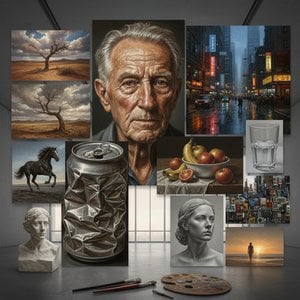
10 Remek-djela koja su definirala suvremeni realizam: Uronite u umjetnost i dekor!
Otkrijte 10 remek-djela suvremenog realizma! Uronite u svijet umjetnosti, od poznatih slikara do uljnih slika i akrilnih djela. Inspirirajte se za dekoraciju doma s ArtsDot.com – vrhunskim reprodukcijama i kuriranih ideja! Explore the full collection online.

Edward Hopper: 25 Remek-djela Usamljenosti i Američkog Realizma | ArtsDot.com
Uronite u svijet Edwarda Hoppera! Otkrijte 25 remek-djela američkog realizma, priče iza ikoničnih slika i tajne svjetla i sjene. Reprodukcije vrhunske kvalitete za vaš dom na ArtsDot.com


