

 Pregledaj u realnoj veličini

 Pošalji
 Podijeli
 Detalji o umjetničkom djelu
 Vodič


 Preuzmi umjetničko djelo
 Slični predmeti
 Rentgenska snimka
 Slide show
 Pitanja i odgovori
 Statistika
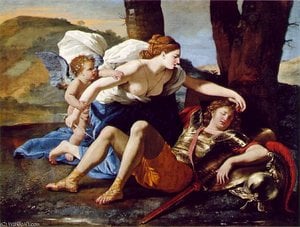
Rinaldo in Armida


 Prikaži više
Preuzmite datoteku spremnu za tisak koja kvalitom daleko nadilazi web prikaz. Svaka digitalna slika koju prodajemo prosljeđuje se iz visokorezolucijske master datoteke iz naše baze — obično širine od 5.000 do 15.000 piksela — što vam omogućuje tisak velikih dimenzija, precizno izrezivanje ili sigurnu reprodukciju najfinijih detalja.
Nijedna datoteka ne napušta naš studio netaknuta. Digitalni stručnjak uspoređuje boje s izvornim slikama i po potrebi ih ispravlja, a zatim poboljšava jasnoću i detalje pomoću profesionalnih alata za retuširanje — uvijek ostajući vjerni umjetnikovim potezima četkice i stilu. Rezultat je prikaz koji izgleda kao prava slika, a ne kao sken s filtrima.
Odobravanje prije završetka: naš stručnjak šalje sliku e-poštom u roku od 72 sata na vaš pregled. Niste zadovoljni? Zatražite poboljšanja ili ispravke, ili tražite povrat novca ako kvaliteta ne ispunjava vaša očekivanja.
To je kvaliteta na koju se oslanjaju izdavači, dizajn studiji, galerije i tiskare.
Digitalna slika
Preuzmite datoteku visoke rezolucije za osobnu izložbu, tisak i kreativne projekte. ( Prebacite na printove Kupi ručno oslikano djelo)
Uključeno uz svaku narudžbu digitalne slike
Profesionalna digitalna dostava, zajamčena
Odabirom ArtsDot.com ne dobivate samo sliku – dobivate profesionalno unapređeno digitalno umjetničko djelo, izrađeno s najvećom preciznošću uz jamstvo zadovoljstva. Evo svega što automatski dolazi uz vašu narudžbu:

Brza dostava e-poštom
Vaša digitalna slika visoke rezolucije bit će vam poslana e-mailom u roku od 72 sata od trenutka narudžbe – spremna za neposrednu upotrebu.

Digitalna datoteka poboljšana umjetnom inteligencijom
Vaše umjetničko djelo profesionalno je optimizirano pomoću naprednih AI alata i ručnog uređivanja, čime se osigurava maksimalna razina detalja, oštrine i točnosti boja.

Besplatna doživotna ponovna dostava
Slučajno ste obrisali ili izgubili svoju datoteku? Ne brinite – ponovno ćemo vam je poslati u bilo kojem trenutku, potpuno besplatno.

Bez uvoznih pristojnika – ikada
Uživajte u svojim umjetničkim djelima trenutno, bez carina, pristojbi ili troškova dostave – digitalni downloadi uvijek su oslobođeni poreza.

Jamstvo točnosti boja
Uz pomoć profesionalnih alata i upravljanja bojama, osiguravamo da vaša digitalna slika što vjernije odražava izvorne boje.

Jamstvo zadovoljstva u trajanju od 100 dana
Ako niste zadovoljni svojom digitalnom slikom, revidirat ćemo je ili vratiti 100% iznosa u roku od 100 dana – bez suvišnih pitanja.

100% Jamstvo povrata novca
Niste zadovoljni? Osigurajte puni povrat novca u roku od 100 dana od primitka digitalne datoteke – bez suvišnih pitanja.

Popusti na velike narudžbe
Kupite 3 slike, uštedite 10% - Kupite 5 slika, uštedite 15% - Kupite 10+ slika, uštedite 20%. Odlično za kreativne projekte, galerije i agencije.
A Garden of Seduction and Shadow
The scene unfolds within a lush, outdoor sanctuary where the air feels heavy with the scent of damp earth and blooming flora. At the heart of this verdant enclosure, a man and a woman lie in a moment of quiet intimacy. He rests upon the ground, his body surrendered to the stillness, while she sits beside him, her presence a soft weight against his side. Their hands are joined, fingers interlaced in a silent pact of connection. They do not look at one another; instead, their gazes are pulled toward something unseen at the periphery of the frame. Around them, the garden is populated by several figures, some standing in the distance and others gathered near the center, their forms partially obscured by the dense foliage and the play of light.
The composition is anchored by a tension between the living and the skeletal. Amidst the soft textures of the garden, the hard, pale shapes of skulls are scattered, resting near the figures like forgotten mementos of mortality. This juxtaposition creates a quiet friction between the warmth of the lovers and the cold reality of the earth.
The Language of Venetian Light
Domenico Tintoretto works with a precision that favors the psychological over the theatrical. His brush captures the subtle shifts in skin tone and the heavy drape of fabric with a meticulous hand. The light does not merely illuminate; it pierces through the shadows to define the contours of the human form, a technique learned from the dramatic traditions of Venice. The oil on canvas reveals a sophisticated handling of texture, from the smoothness of a cheek to the rough bark of the background trees.
- The use of chiaroscuro to define the depth of the garden.
- A focus on anatomical precision in the intertwined hands.
- The integration of symbolic objects within a naturalistic landscape.
- A palette that balances the greens of the garden with the pale tones of the skulls.
A Study in Poised Elegance
This work belongs to the second half of the 16th century, a period where the grand energy of the Venetian school began to settle into a more refined, observant grace. The painting draws its narrative from the epic themes of the era, specifically the story of Rinaldo and Armida. Here, the focus is not on the heat of battle, but on the stillness of the enchanted garden. The artist moves away from overwhelming scale to find meaning in the small, the intimate, and the quiet. It is a study of a moment caught between the pulse of life and the silence of the grave.
The shadows hold the secrets of the garden.
Pitanja i odgovori
Postoji li vodič za "Rinaldo in Armida" autora Domenico Tintoretto?
Vodič za "Rinaldo in Armida" je stranica Vodič za učenike umjetničkog djela – isprintani informativni list koji prikazuje umjetničko djelo uz pripadajući opis, izvor i tablicu podataka (umjetnik, datumi, tehnika, izvorni dimenzije, kolekcija).
Kako se tema djela "Rinaldo in Armida" povezuje s uobičajenim temama umjetnika Domenico Tintoretto?
Među zabilježenim temama umjetnika Domenico Tintoretto – jacopo tintoretto's influence, mannerist tradition, gerusalemme liberata by tasso, venetian renaissance style, secular and religious themes – djelo "Rinaldo in Armida" donosi vlastiti fokus na man, woman, trees, garden, skulls, people, outdoor setting.
U koji je umjetnički pokret i u koje razdoblje uvršteno djelo "Rinaldo in Armida" autora Domenico Tintoretto?
U djelu "Rinaldo in Armida" autora Domenico Tintoretto, pokret Mannerism susreće eru Renaissance.
Srodna umjetnička djela




Biografija umjetnika
The Shadow of a Master: The Life and Legacy of Domenico Robusti
In the golden, sun-drenched era of the Venetian Renaissance, names often echoed through the marble halls of history with a thunderous intensity. Yet, within the orbit of the legendary Jacopo Tintoretto, there existed a more subtle, quiet brilliance. Domenico Robusti, often whispered about in the annals of art history as a figure existing in the soft glow of his father’s monumental shadow, carved out a space for himself that was uniquely his own. Born in Venice around 1560, Domenico grew up amidst the scent of oil paints and the dramatic tension of his father's workshop. While he is frequently linked to the grand, theatrical compositions of the Tintoretto lineage, his true artistry lay in a more intimate, refined approach to the canvas—a departure from the flamboyant energy of his predecessor toward something far more poised and psychologically observant.
The formative years of Domenico Robústi were undoubtedly shaped by the revolutionary techniques flowing through his family home. To study under Tintoretto was to learn the language of chiaroscuro, to understand how light could pierce through darkness to reveal the soul of a subject, and to master the complex geometry of perspective. However, where the elder Robusti sought to overwhelm the viewer with movement and scale, Domenico found beauty in the stillness. His development as an artist was marked by a transition from mere stylistic imitation to a sophisticated mastery of portraiture and decorative elegance. He possessed a rare ability to capture the dignity of the Venetian nobility, translating their social stature into subtle facial expressions and meticulous anatomical precision.
A Mastery of Portraiture and Devotional Grace
Domenico’s body of work serves as a window into the social fabric of 16th-century Venice. His portraits were not merely records of likeness but were profound studies in character. Through his brush, figures such as Mario Barbarigo and Francesco Maria Veneto were rendered with a grace that balanced the weight of their titles with a palpable human vulnerability. This period of his career highlights a significant achievement: the ability to marry the grand Mannerist tradition with an understated elegance that would become his hallmark. His compositions often utilized rich, textured backgrounds—a skill likely honed through collaborative efforts within the family workshop—to frame his subjects in a way that felt both timeless and deeply rooted in the Venetian landscape.
Beyond the secular realm of portraiture, Domenico’s talent extended into the deeply spiritual. His religious works, such as the poignant Tancred Baptizing Clorinda, demonstrate a profound capacity for conveying solemn piety and emotional depth. In these pieces, one can observe the lingering influence of his father's dramatic lighting, yet it is tempered by a gentler, more contemplative touch. Similarly, in works like Annunciation and Three Avogadri, he navigated the complexities of religious symbolism and intricate composition, proving that he could handle the heavy theological themes of the era with a sophisticated, Mannerist flair. His ability to weave together the sacred and the human allowed him to contribute significantly to the devotional art that defined the Venetian spirit.
Historical Significance and Artistic Resonance
The historical significance of Domenico Robusti lies in his role as a bridge between the high drama of the late Renaissance and the more refined, poised sensibilities of the following era. While he may not have sought the same level of fame as the giants of his age, his contributions to the Venetian school are undeniable. He provided a necessary counterpoint to the overwhelming theatricality of the period, offering instead a vision of beauty found in detail, texture, and psychological nuance. His work remains a vital testament to the enduring legacy of the Robusti name and the intricate layers of influence that shaped the artistic identity of Venice.
To study Domenico is to appreciate the quiet strength of an artist who found his voice not by shouting over the masters, but by speaking with a clarity and elegance that demanded its own kind of reverence. His life and art remind us that even in the presence of legends, there is profound beauty to be found in the subtle strokes of a master's hand.

Domenico Tintoretto
1560 - 1635 , Italy
Kratki pregled
- Full Name: Domenico Robusti
- Nationality: Italian
- Date Of Birth: 1560
- Date Of Death: 1635
- Place Of Birth: Venice, Italy
- Notable Artworks:
- Annunciation and Three Avogadri
- Portrait of Mario Barbarigo
- Portrait of a Man
- Artistic Movement Or Style: Mannerism
- Artists Who Influenced This Artist: ['Tintoretto']
- Artists Or Movements Influenced By This Artist: ['Jacopo Robusti']