

 Pregledaj u stvarnoj veličini
 Podijeli
 Podijeli
 Detalji
 Vodič
Vodič

 Preuzmi datoteku
 Slični predmeti
 Rentgenska snimka
 Slide show
 Statistika
Proserpina
 Ulje na platnu
- Zidna umjetnost
- Romantizam
 1874
1874- 19. stoljeće
 61.0 x 125.0 cm
 Tate Gallery
 Pročitajte više
Ručno rađena uljana reprodukcija
Ručno oslikano uljanim bojama na platnu u dimenzijama i okviru po vašem izboru, izrađeno po narudžbi od strane naših umjetnika. ( Prebacite na prodaju printova Prebacite na digitalnu prodaju slika)




P118B €10

P118H €10

P118W €10

P438Z €10

P508JH €12

P508YH €12

P805H €10

P805Z €10

P919BZ €10

P919G €10

P919XJ €10

P959ZH €10

P968JZ €12

W106C €8

W218G €10

W218JH €8

W218Y €10

W307PJ €10

W316G €10

W316PJ €8

W316Y €10

W398PJ €8

W4111J €10

W500HY €15

W500JH €15

W692G €12

W849H €8

W940BG €15

W953PJ €8




Odaberite jednu od naših unaprijed definiranih veličina koje odgovaraju izvornim proporcijama umjetničkog djela.

Unesite širinu i visinu koja vam je potrebna, kako bi odgovarali vašem okviru ili zidu. Budući da je ovo ručno oslikano djelo, umjetnik može malo proširiti rubove slike ili ih skratiti kako bi postigao željeni oblik — izbor je vaš. Prije početka slikanja poslat ćemo vam digitalni prikaz (mockup) radi potvrde. Slika prikazana na ovoj stranici ne predstavlja stvarni rezultat — samo digitalni prikaz to čini.
Nakon narudžbe, tim ArtsDot.com kontaktirat će klijenta putem e-pošte radi dobivanja uputa te dostaviti probni prikaz (mockup)
Isporuka širom svijeta () u roku od 3-4 tjedna umjesto standardnih 5 tjedana. (26 Listopad). Bez kompromisa u kvaliteti.

Besplatna ekspresna dostava širom svijeta

Visokokvalitetno laneno platno

Potpuno osiguranje transporta

Jamstvo povrata carine i uvoznih poreza

Jamstvo vjernosti boja

Politika povrata u roku od 100 dana (samo u slučaju nedostataka)

Jamstvo povrata 100% novca

Popust na više proizvoda
 Opcija stakla dostupna je samo za dimenzije manje od 110 cm

Proserpina
Tehnika izrade
Veličina reprodukcije
-


Ukupna cijena
€ 231
Enigma kraljice podzemlja
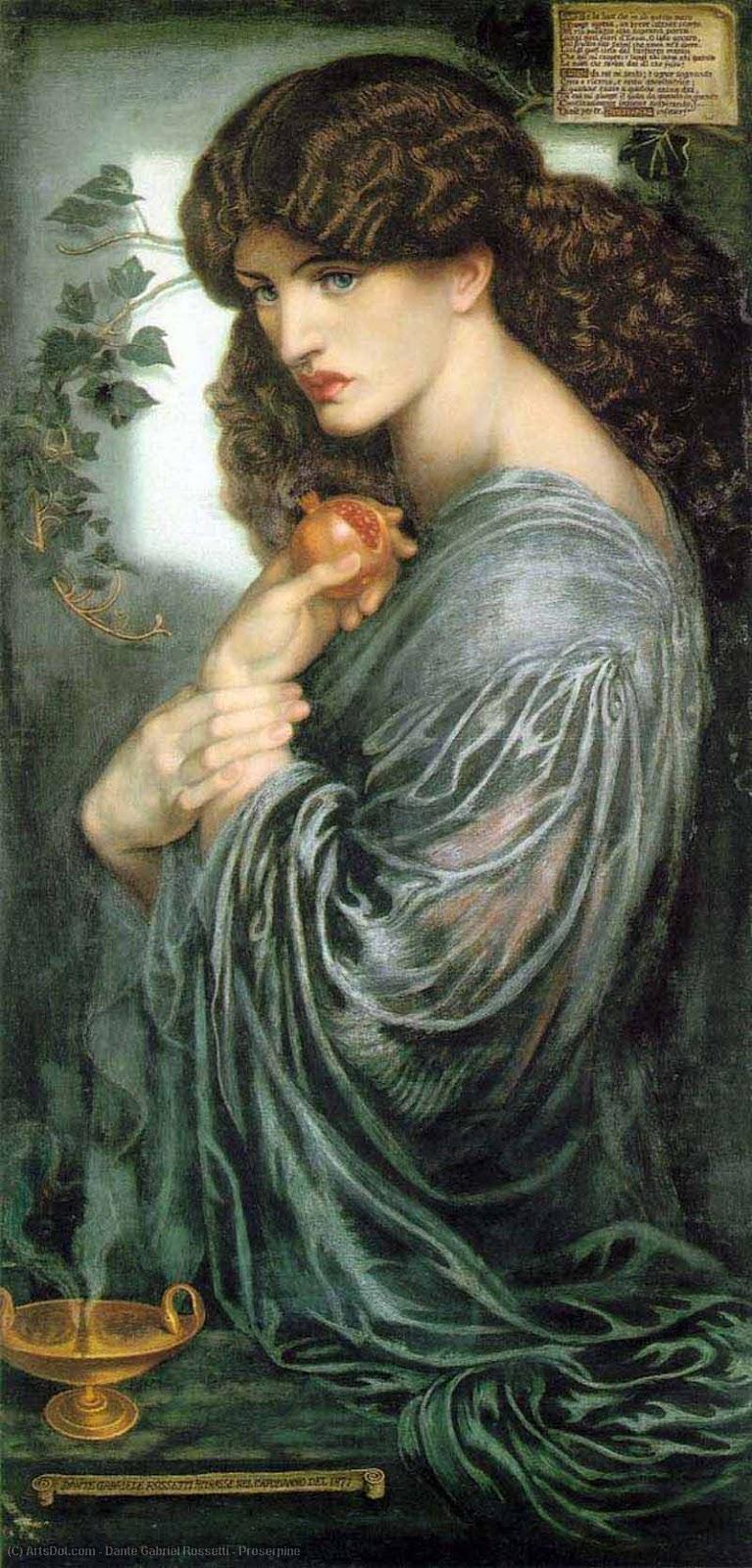
U uzvišenim prostorima Tate Britanije postoji prozor u carstvo u kojem se mit i emocija sudaraju: Proserpina Dantea Gabriela Rossettija. Njezino remek-djelo, naslikano 1874. godine, daleko je više od puke mitološke pripovijesti; to je duboka meditacija o dualnosti postojanja. Središnja figura, obuta elegantnim, fluidnim plavim ogrtačem, gleda rašireno pogledom koji bilježi samu bit čežnje i tihe predanosti. Kao boginja proljeća zarobljena u sjenama podzemnog svijeta, Proserpina utjelovljuje dušu suspendiranu između dva svijeta—sunčane vitalnosti Zemlje i sumorne tišine Hadovog carstva. Kroz lice Rossettijeve voljene muze, Jane Morris, umjetnik u božansko unosi dirljivu, ljudsku ranjivost, stvarajući portret koji odjekuje u svakome tko je ikada osjetio težinu prekrasnog zatočeništva.Majstorstvo prerafaelitske simbolike
Rossettijina tehnika u djelu Proprimina služi kao temelj prerafaelitske i romantičarske tradicije, gdje je svaki potez četkice prožet simboličkom namjerom. Bujno, zeleno okruženje, prikazano u dubokim zelenim i zemljanim tonovima, stvara atmosferu teške, atmosferske tišine koja okružuje subjekat. U svojoj ruci ona drži jabuku—snažan amblem iskušenja, znanja i nepovratnog trenutka transformacije. Ovaj mali, taktilni detalj usidruje eteričnu scenu u opipljivu stvarnost. Interakcija svjetla i sjene preko njezine svijetle kože i bogate teksture plave odjeće prikazuje Rossettijevu vještinu u obradi boje i forme. Čak i suptilno prisustvo zlatne zdjelice koja počiva na kamenu dodaje element misterija, pozivajući promatrača da meditira o božanskoj milosti skrivenoj unutar sjena podzemlja.Trajno naslijeđe za moderne interijere
Za kolekcionare umjetnina ili interijer dizajnere, reprodukcija Proserpine nudi mnogo više od vizualne dekoracije; ona pruža središnju točku duboke narativne težine. Bogata paleta slike i dramatična kompozicija čine je izvrsnim doprinosom prostorima koji cijene estetizam i romantizam. Bilo da je smještena u suvremenu prostoriju u stilu galerije ili u klasičnu, bogato teksturiranu studijsku sobu, ova umjetnina privlači pažnju svojom sposobnošću da potakne introspekciju. To je djelo koje poziva na razgovor, pokrećući dijaloge o povijesti, mitu i trajnoj moći ljepote. Posjedovati takvo djelo znači unijeti fragment viktorijanske duše u moderni dom, osiguravajući da gorak-slatki čar Rossettijeve vizije nastavi inspirirati generacije koje dolaze.Pitanja i odgovori
Kolika je razina kontrasta u djelu "Proserpina" autora Dante Gabriel Rossetti?
Razina kontrasta djela "Proserpina" autora Dante Gabriel Rossetti je Jaki kontrast.
Kakvu atmosferu odiše "Proserpina"?
"Proserpina" ima Romantičan atmosferu.
Može li se djelo "Proserpina" autora Dante Gabriel Rossetti, koje se nalazi u muzeju Tate Gallery, pravno reproducirati?
Status autorskih prava za djelo "Proserpina" autora Dante Gabriel Rossetti je jasan: rad pripada u javnom vlasništvu – autorska prava su istekla. Njegovo prisustvo u muzeju Tate Gallery ne mijenja taj status.
Srodna umjetnička djela


Biografija umjetnika
Dante Gabriel Rossetti (1828 – 1882) Poet, illustrator, painter
Dante Gabriel Rossetti was born in London on May 12, 1828, the second child and eldest son of Italian expatriates Gabriele Rossetti, a Dante scholar who had been exiled from Naples for writing poetry in support of the Neapolitan Constitution of 1819, and Frances Polidori Rossetti, a governess whose father Gaetano Polidori, from Tuscany, had married an English woman. His family’s intellectual heritage profoundly shaped his artistic sensibilities—a legacy that extended beyond mere biographical details to encompass a deep appreciation for literature and the arts. From a young age, he demonstrated exceptional talent in drawing and writing, foreshadowing the multifaceted career that would define his life.Early Life and Artistic Influences
Gabriel’s education was overseen by his mother, who instilled in him a love of learning and encouraged his intellectual curiosity. He devoured the works of Shakespeare, Dickens, Scott, Byron, and Wordsworth—literary giants whose influence permeated his imaginative landscape. Notably, he found inspiration in the poetry of John Keats and William Blake, artists who championed emotional intensity and visionary imagination as alternatives to academic conventions. The discovery of Blake’s writings in 1847 proved particularly transformative, sparking Rossetti's fascination with mythology and symbolism—themes that would become central to his artistic vision. He meticulously studied the techniques employed by Rembrandt and Rubens, absorbing their mastery of chiaroscuro (the dramatic interplay of light and shadow) and anatomical precision. These formative influences instilled in him a commitment to truthful representation combined with expressive artistry.The Pre-Raphaelite Brotherhood: A Revolt Against Convention
Rossetti’s artistic trajectory took an irreversible turn in 1848 when he co-founded the Pre-Raphaelite Brotherhood alongside William Holman Hunt and John Everett Millais—a movement that represented a radical challenge to the prevailing aesthetic standards of Victorian England. Dissatisfied with the idealized forms and decorative conventions favored by the Royal Academy, the Brotherhood sought to revive the artistic spirit of Italy *before* the High Renaissance—hence “Pre-Raphaelite.” This meant rejecting academic art’s preoccupation with classical mythology and embracing instead a meticulous observation of nature and a fervent devotion to moral seriousness. Rossetti's early paintings, such as *The Girlhood of Mary Virgin*, exemplify this ethos, showcasing an astonishing level of detail alongside symbolic imagery drawn from biblical texts and medieval romances. The Brotherhood’s manifesto articulated its conviction that art should serve as a conduit for spiritual contemplation—a stance that distinguished it from the commercialized culture of London society.Developing Style: Symbolism and Sensuality
Throughout his artistic career, Rossetti experimented with diverse stylistic approaches—moving gradually away from strict Pre-Raphaelite realism toward more evocative symbolism and dreamlike imagery. His paintings became increasingly infused with sensual desire—exploring themes of love, loss, and spiritual longing with profound emotional depth. This stylistic evolution was partly driven by his personal life, particularly his intimate relationship with Elizabeth Siddal—whom he married in 1860—and his enduring fascination with Jane Morris. Siddal served as Rossetti’s muse for many years, embodying an idealized feminine beauty that captivated him and inspired countless artworks. His paintings often depicted women bathed in ethereal light, adorned with flowing crimson hair—a visual motif that reflected his preoccupation with medieval symbolism and spiritual aspiration. Works like *Proserpine* exemplify this later style, demonstrating Rossetti’s mastery of color and composition—elements designed to evoke a sense of otherworldly enchantment.Legacy and Influence: Shaping Aesthetic Vision
Dante Gabriel Rossetti's artistic legacy extends far beyond his own lifetime—leaving an indelible mark on the course of Victorian art and profoundly influencing subsequent generations of artists and writers. He championed emotional intensity and subjective experience as paramount values—a stance that resonated with a cultural milieu yearning for alternatives to academic formalism. His work served as a catalyst for the emergence of Symbolism—a movement characterized by its exploration of psychological states and its embrace of mystical imagery—and contributed significantly to the development of Aestheticism—which prioritized beauty above all else. Artists like William Morris and Edward Burne-Jones were deeply inspired by Rossetti’s aesthetic principles, incorporating them into their distinctive artistic styles. Dante Gabriel Rossetti remains an important figure in understanding not only the history of art but also the broader cultural context in which it was created—a testament to his enduring contribution to Western artistic heritage.
Dante Gabriel Rossetti
1828 - 1882 , Velika Britanija
Brzi pregled
- Artistic Movement Or Style: Pre-Raphaelite
- Artists Who Influenced This Artist:
- John Keats
- William Blake
- Date Of Birth: 12. svibnja 1828.
- Date Of Death: 9. travnja 1882.
- Full Name: Dante Gabriel Rossetti
- Nationality: Engleski
- Notable Artworks:
- Proserpine
- Joan of Arc
- King Rene's Honeymoon
- Place Of Birth: London, UK
Povezani članci

Dante Gabriel Rossetti: 25 Remek-djela Pre-Raphaelita i Inspiracija za Vaš Dom
Uronite u svijet Dantea Gabriela Rossettija! Otkrijte 25 remek-djela Pre-Raphaelita, njihove priče i inspiraciju. Reprodukcije slika vrhunske kvalitete za vaš dom dostupne na ArtsDot.com. Ekskluzivna kolekcija online!

Escape into Beauty: A Curated Guide to the Dreamy World of Pre-Raphaelite Romanticism
Embark on a visual journey through Pre-Raphaelite Romanticism. Discover the vivid details, mythic narratives, and luminous colors of this iconic era, and learn how to bring this timeless, dreamy beauty into your home with museum-quality art reproductions.
The Pre-Raphaelite Brotherhood: Rebellion, Romance & Medieval Revival
Explore the captivating world of the Pre-Raphaelite Brotherhood! Discover their rebellious spirit, iconic masterpieces & lasting influence on art history. Learn about Rossetti, Millais & more.
The Pre-Raphaelite Brotherhood: A Rebellion of Beauty & Medieval Revival
Explore the captivating world of the Pre-Raphaelite Brotherhood! Discover their rebellion against academic art, iconic masterpieces, and lasting influence on Victorian aesthetics. Learn about Rossetti, Burne-Jones & more.

Sir John Everett Millais: Pre-Raphaelite Rebellion & Victorian Narrative Detail
Explore the revolutionary art of Sir John Everett Millais & the Pre-Raphaelite Brotherhood. Discover their radical realism, symbolic narratives, and lasting impact on Victorian aesthetics. A deep dive into 19th-century masterpieces.


