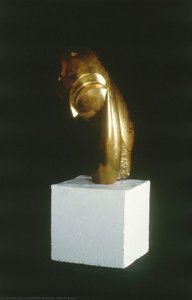
If you remember one Abstract Art कलाकार, make it हिल्मा अफ़ क्लिंट (1862–1944), the name behind De Tio Största, n°10 Alderdomen और De tio största, n° 2 Barnaaldern. After that come जोहान्स इटेन, कॉन्स्टेंटिन ब्रैंकुसी, यू यंगकुक और Douglas Abdell. Our 17 picks go from हिल्मा अफ़ क्लिंट (born 1862) to चार्ल्स गिबॉन्स (born 1957), from 14 countries.
APicked by the ArtsDot.com team
How we picked them. We list the artists our catalogue links to Abstract Art, from the most famous down. Artists born after 1955 that we cannot yet check on Wikidata are left out. The Wikipedia number shows in how many of our 32 languages Wikipedia writes about them.
स्वीडिशFrom सोलनाअमूर्त कला, आध्यात्मिकताOn Wikipedia in 24 of 32 languages
Hilma af Klint, a Swedish artist born in Solna in 1862, remains one of the most compelling and historically significant figures to emerge from the dawn of abstract art.
स्विसFrom वाचसेलडोर्नअभिव्यक्तिवाद, बाउहौसOn Wikipedia in 21 of 32 languages
Though briefly attempting formal training at Geneva’s École des Beaux-Arts, he found its methods stifling, returning to Bern where studies with Ernst Schneider proved pivotal. Itten's arrival at Walter Gropius’ newly founded Bauhaus in Weimar in 1919 marked a turning point not only in his career but also in the history of art education.
Douglas Abdell, born in Boston in 1947, is a sculptor whose work resonates with the weight of history, the echoes of ancient languages, and the complex political currents of the Mediterranean world. His journey as an artist began with formal training at Syracuse University, where he earned a Bachelor of Fine Arts degree in sculpture in 1970.
Birth and Background: Luke was born on May 14, 1901, in Montreal. Influences: Early influences included local artists Dorothy Van Luven and Dorothy Henderson, who encouraged her exploration of different styles and techniques.
Gheorghe Șaru, known to many as George Saru, was a painter whose life and work served as a bridge between the rich traditions of Romanian folk art and the experimental frontiers of European modernism. Born on February 29, 1920, in Checea, Romania, his journey began in a landscape shaped by post-war austerity, yet his artistic vision remained remarkably expansive.
Born in 1936 in Hastings, East Sussex, his early life was rooted in the practicalities of carpentry – a trade he learned from his father, a skilled craftsman. The reductive aesthetic of Piet Mondrian, with its emphasis on primary colors and orthogonal lines, undoubtedly played a significant role in shaping his approach to composition.
While initially uninterested in painting, he enrolled in the German art and industrial school in Lviv during World War II, a period of upheaval and uncertainty.
Thiago Morales Boemeke, known as Thiago Boecan, is a rising figure in the Brazilian contemporary art scene, captivating audiences with his exploration of emptiness and the human form. Born in São Paulo, Brazil, in 1995, Boecan’s artistic journey began with a formal education at Fundação Armando Álvares Penteado, followed by a degree in Graphic Design from Centro Universitário Belas Artes de São Paulo.
PolishFrom Rabka-ZdrójOp Art, Concrete ArtOn Wikipedia in 5 of 32 languages
A restless spirit led him to pursue higher education abroad, initially studying Scandinavian languages at the University of Gothenburg before shifting his focus to Art History at the University of Innsbruck, Austria. He was awarded a private scholarship in West Orange, New Jersey, in 1994, providing him with the opportunity to further develop his artistic practice.
BelgianFrom DiegemAbstract, Cubism, Constructivism, SurrealismOn Wikipedia in 3 of 32 languages
Servranckx’s formal artistic education began at the Brussels Royal Academy of Fine Arts from 1913 to 1917. It was during this period that he encountered René Magritte, a relationship that proved profoundly influential.
कनाडाईFrom ज़िम्बाब्वेअमूर्त अभिव्यंजनावाद (Abstract Expressionism)On Wikipedia in 2 of 32 languages
charles gibbons, a canadian artist born in 1957, has been making waves in the art world with his captivating abstract expressionist pieces. while there is a scarcity of information on his early life, it is evident that his artistic journey began with an innate passion for the visual arts.
Most कलाकार in this list were born in the 1880s (2 of 17), between 1862 and 1957 overall.
What techniques did Abstract Art कलाकार use?
“He theorized seven distinct types of color contrast – hue, value, temperature, complements (neutralization), simultaneous contrast, saturation, and extension—and devised a series of exercises designed to unlock an intuitive understanding of these principles.” — from our biography of जोहान्स इटेन (#2).
Which country produced the most Abstract Art कलाकार?
स्विट्जरलैंड: 2 of the 17 कलाकार in this list were born there, then स्वीडन (1) और रोमानिया (1).
Who was the first Abstract Art कलाकार?
The earliest-born कलाकार in this list is हिल्मा अफ़ क्लिंट (#1), born in 1862.
Which women Abstract Art कलाकार are the most famous?