
- मुख्य पृष्ठ

- लेखों
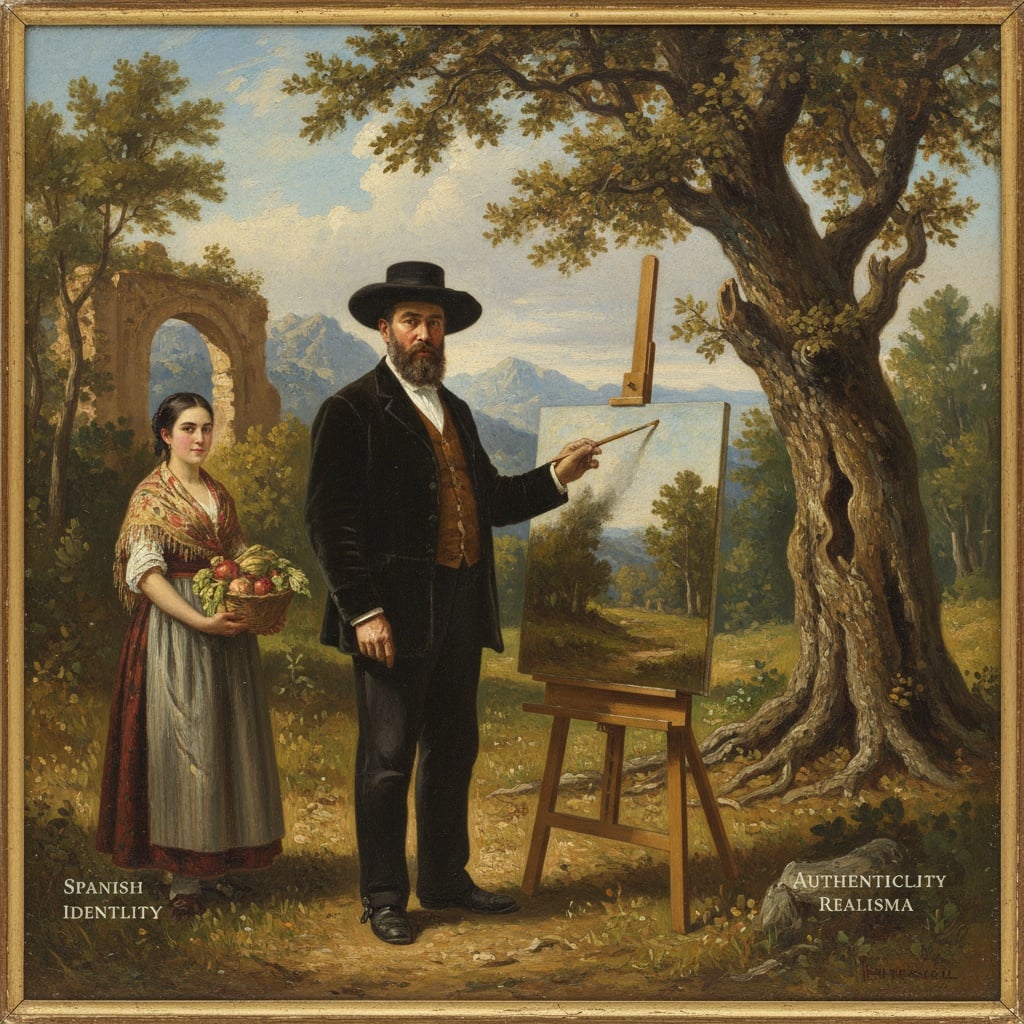
- Narcisso Díaz de la Peña: Realism, Spanish Identity & Artistic Authenticity
Narcisso Díaz de la Peña: Realism, Spanish Identity & Artistic Authenticity
विषय सूची
Early Life & Influences: Forging a Path Amidst Adversity
 Wikipedia: Narcisse Virgilio Díaz
Narcisse Virgilio Díaz de la Peña (20 August 1807 – 18 November 1876) was a French painter of the Barbizon school. == Early life == Diaz was born in Bordeaux to Spanish parents. At the age of ten, Diaz became an orphan, and misfortune dogged his ea...
Narcisse Virgilio Díaz de la Peña’s story is one woven with threads of both profound hardship and remarkable resilience, a narrative that profoundly shaped the evocative power of his art. Born in Bordeaux in 1807 to Spanish parents, his early years were marked by loss; orphaned at the tender age of ten, he faced a future clouded by uncertainty. A childhood accident – a reptile bite resulting in the amputation of his leg – might have defined him by limitation, yet it became, paradoxically, a symbol of his unwavering spirit and a peculiar source of recognition. The wooden stump that replaced his limb wasn’t merely a prosthetic; it was an emblem of his tenacity, a constant reminder of battles overcome. This early exposure to fragility and the unpredictable nature of life instilled in Díaz a deep sensitivity, one that would later permeate his canvases with a haunting beauty.
Initially apprenticed to porcelain decoration studios in Sèvres, he honed a meticulous attention to detail, a skill that would serve him well throughout his career. However, it was his fascination with the exotic – particularly scenes of Turkey and the Orient – that first ignited his artistic passion. These early works, though perhaps less celebrated than his later landscapes, reveal a burgeoning talent for capturing vibrant color and atmospheric effects. But it wasn’t until he encountered the camaraderie and philosophical undercurrents of the Barbizon school that Díaz truly found his artistic voice.
The Barbizon School & Díaz’s Embrace of Naturalism
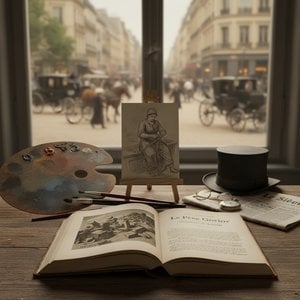 The Enduring Legacy of 19th-Century Realism: A Reflection of Society & Artistic Innovation
Explore the captivating world of 19th-century Realism! Discover key artists, masterpieces & the social commentary behind this influential art movement. Expert insights at .
The Barbizon school, a collective of French landscape painters who rejected the polished academic style in favor of direct observation from nature, proved to be a pivotal influence on Díaz. He gravitated towards Fontainebleau Forest, a haven for artists seeking authenticity and a rejection of idealized representations. Figures like Théodore Rousseau became mentors, though their relationship was initially marked by Rousseau’s own struggles with bitterness and isolation. Díaz's persistence – famously shadowing Rousseau through the woods despite his physical limitations – speaks volumes about his dedication to learning from those he admired.
The Barbizon painters weren’t simply depicting landscapes; they were striving for a truthful representation of nature, imbued with emotion and a sense of poetic realism. Díaz wholeheartedly embraced this philosophy, moving away from the theatricality of his earlier Orientalist scenes towards a more intimate and nuanced portrayal of the French countryside. He wasn't interested in grand vistas or dramatic compositions but rather in capturing the subtle shifts of light, the textures of bark and foliage, and the overall atmosphere of the forest. This commitment to naturalism would become a defining characteristic of his style.
Spanish Identity in Díaz's Oeuvre: Beyond Orientalist Tropes
 Spanish Lady, (painting)
Admire Emanuel Leutze’s ‘Spanish Lady,’ a captivating 19th-century portrait showcasing classical elegance & romanticism. Oil on canvas, intricate details, & symbolic motifs – a timeless masterpiece.
While often categorized within the French Realist movement, it’s crucial to acknowledge the enduring influence of Díaz’s Spanish heritage on his artistic vision. His early fascination with the Orient, though initially a stylistic exploration, can be seen as a reflection of Spain's complex historical and cultural ties to North Africa and the Middle East. However, Díaz moved beyond simplistic Orientalist tropes, infusing his depictions with a sense of dignity and humanity often absent in contemporary representations.
More subtly, a certain *duende* – a Spanish concept encompassing passion, inspiration, and an almost mystical connection to one’s roots – permeates his landscapes. There's a melancholic intensity, a raw emotionality that distinguishes his work from the more placid scenes of some of his Barbizon contemporaries. Consider paintings like ‘The Pearl Fairy,’ where richly colored figures evoke a sense of mystery and longing, hinting at a deeper cultural connection. While not explicitly Spanish in subject matter, these works reveal an underlying sensibility shaped by his upbringing and familial ties.
Technique and Style: A Master of Atmosphere and Light
Díaz’s technical prowess lay in his ability to create atmosphere – to evoke the feeling of a place rather than simply depict it. He employed a distinctive layering technique, building up textures with thick impasto and utilizing a rich palette of earth tones punctuated by vibrant highlights. His brushwork is often loose and expressive, conveying a sense of immediacy and spontaneity. He wasn’t concerned with photographic realism; instead, he sought to capture the *essence* of the landscape.
His mastery of light is particularly noteworthy. He understood how light could transform a scene, imbuing it with drama, mystery, or tranquility. Whether depicting a sun-drenched forest clearing or a stormy twilight, Díaz’s paintings are characterized by a luminous quality that draws the viewer into the heart of the landscape. He often used glazes to create depth and luminosity, allowing light to penetrate multiple layers of paint, resulting in a captivating sense of atmosphere.
Díaz’s Later Years & the Pursuit of Artistic Recognition
Despite his dedication and talent, Díaz faced periods of hardship throughout his career. The Franco-German War forced him into exile in Brussels, disrupting his artistic momentum. However, the years following the war saw a resurgence in his popularity. His works began to attract the attention of collectors, and he was finally recognized with the Chevalier (Knight) of the Légion d’honneur in 1851.
His later paintings are characterized by an even greater sense of emotional intensity and technical refinement. He continued to explore themes of nature and spirituality, creating evocative landscapes that resonated with a growing audience. While he never explicitly sought fame or fortune, his unwavering commitment to his artistic vision ultimately led to widespread acclaim.
The Enduring Legacy: Díaz and the Evolution of 19th-Century Painting
Narcisse Virgilio Díaz de la Peña’s contribution to 19th-century painting extends beyond his captivating landscapes. He bridged the gap between Romanticism and Realism, infusing the direct observation of nature with a profound sense of emotion and spirituality. His influence can be seen in the work of subsequent generations of artists who sought to capture the beauty and power of the natural world.
Díaz’s story serves as a powerful reminder that artistic greatness often emerges from adversity. His unwavering dedication, his commitment to authenticity, and his unique sensibility continue to inspire art lovers today. His paintings are not merely representations of landscapes; they are windows into the soul – evocative expressions of human emotion and our enduring connection to nature. Explore the captivating world of Díaz’s work at ArtsDot, where museum-quality reproductions bring these masterpieces to life, allowing you to experience the beauty and power of his art firsthand.
संबंधित लेख

Alberto Pasini: Evoking Venetian Atmosphere & Orientalist Visions
Explore the captivating world of Alberto Pasini (1826-1899), a master of Orientalist scenes and Venetian landscapes. Discover his stunning paintings & learn about his legacy at ArtsDot.


Émile Jean Horace Vernet: Romantic Realism & Depicting 19th-Century Life
Explore the life & art of Émile Jean Horace Vernet, a master of Romantic Realism. Discover his captivating battle scenes, portraits, and Orientalist works – a window into 19th-century France. Learn about his techniques & enduring legacy.

The Allure of the Exotic: Orientalism in 19th-Century Art
Explore the captivating world of 19th-century Orientalist art! Discover iconic painters like Gérôme & Benjamin-Constant, key themes, and collecting insights. Expert analysis at ArtsDot.

William James Müller: Navigating Victorian Sentiment & Realism in British Landscape Painting
Explore the captivating landscapes of William James Müller, the leading artist of the Bristol School. Discover his Victorian masterpieces, Egyptian travels & Lycian sketches – a journey through 19th-century art and technique.

