

 पूर्वावलोकन देखें
 साझा करें
 साझा करें
 विस्तृत विवरण
 मार्गदर्शिका

 डाउनलोड करें
 समान वस्तुएं
 एक्स-रे
 स्लाइड शो देखें
 Q&A
Q&A आंकड़े
Koska-Mc

 पूरा देखें
इस पृष्ठ पर प्रदर्शित कलाकृति कॉपीराइट कानून द्वारा संरक्षित है, जिसका अर्थ है कि हम कानूनी रूप से इसकी हूबहू प्रतिलिपि बनाने या बेचने का अधिकार नहीं रखते हैं। यह संरक्षण अंतर्राष्ट्रीय समझौतों के तहत लागू किया जाता है, जैसे कि बर्न कन्वेंशन और राष्ट्रीय कानूनों द्वारा, जिनमें % द्वारा निर्धारित कानून भी शामिल हैं। अमेरिकी कॉपीराइट कानून - शीर्षक 17।
यह विधि कॉपीराइट नियमों का पूरी तरह से पालन करती है क्योंकि इसमें संरक्षित कलाकृति की नकल या प्रतिलिपि बनाना शामिल नहीं है। इसके बजाय, यह एक रचनात्मक पुनर्व्याख्या है - एक ऐसी नई पेंटिंग जो मूल कृति से प्रेरित तो है, लेकिन उसके समान नहीं है।
गिक्ली / आर्ट प्रिंट
तेज़ उत्पादन और विभिन्न फिनिश विकल्पों के साथ म्यूजियम-क्वालिटी गिकली (giclée) या कैनवस प्रिंट। ( इस संग्रहणीय वस्तु की हाथ से बनी प्रतिकृति मंगवाएं डिजिटल इमेज पर स्विच करें)




P118B ₹10

P118H ₹10

P118W ₹10

P438Z ₹10

P508JH ₹12

P508YH ₹12

P805H ₹10

P805Z ₹10

P919BZ ₹10

P919G ₹10

P919XJ ₹10

P959ZH ₹10

P968JZ ₹12

W106C ₹8

W218G ₹10

W218JH ₹8

W218Y ₹10

W307PJ ₹10

W316G ₹10

W316PJ ₹8

W316Y ₹10

W398PJ ₹8

W4111J ₹10

W500HY ₹15

W500JH ₹15

W692G ₹12

W849H ₹8

W940BG ₹15

W953PJ ₹8




कलाकृति के मूल अनुपात से मेल खाने वाले हमारे पूर्व निर्धारित आकारों में से चुनें।

अपने फ्रेम या अपनी दीवार के अनुसार आवश्यक चौड़ाई और ऊंचाई दर्ज करें। प्रिंट को केवल काटा जा सकता है, चित्र से बड़ा कभी नहीं बनाया जा सकता, इसलिए अलग आकार का साइज चित्र का एक हिस्सा खो देता है। किसी भी चीज़ को प्रिंट करने से पहले हम आपकी स्वीकृति के लिए आपको एक डिजिटल मॉकअप भेजते हैं। इस पृष्ठ पर दिखाया गया चित्र वास्तविक कटिंग नहीं दिखाता है — केवल मॉकअप ही इसे दर्शाता है।
विश्वव्यापी डिलीवरी (), मानक 4/5 सप्ताह के बजाय मात्र 2 सप्ताह में। (3 नवमबर)

दुनिया भर में मुफ़्त एक्सप्रेस शिपिंग

उच्च गुणवत्ता वाला लिनेन कैनवास

पूर्ण शिपिंग बीमा

सीमा शुल्क और आयात कर वापसी की गारंटी

सटीक रंग मिलान की गारंटी

100 दिनों की वापसी नीति (केवल दोष होने पर)

100% पैसे वापसी की गारंटी

थोक छूट का अवसर
 ग्लास का विकल्प केवल 110 सेमी से कम आकार में ही उपलब्ध है।

Koska-Mc
गिक्ली / आर्ट प्रिंट
प्रतिकृति का आकार
-


कुल देय राशि
₹ 5979
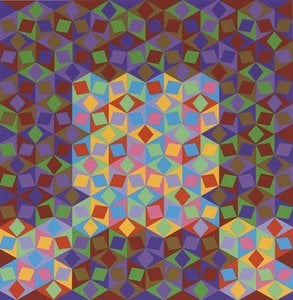
Koska-Mc: A Geometric Symphony of Perception
Victor Vasarely’s "Koska-Mc," painted in 1970, isn't merely an artwork; it is an experience—a carefully orchestrated visual illusion designed to challenge and delight the eye. This piece exemplifies Vasarely’s pioneering role within the Op Art movement, a style that emerged in the 1960s as artists sought to explore the dynamics of perception through geometric abstraction. Rather than depicting recognizable objects or scenes, "Koska-Mc" presents a vibrant, pulsating cube constructed from interlocking squares and rectangles, each rendered in a dazzling array of colors—yellows, greens, blues, oranges, reds, and pinks against a backdrop of deep purple. The effect is mesmerizing; the viewer’s gaze dances across the surface, perceiving movement and depth where none physically exist. It's an invitation to question the very nature of sight and how our brains interpret visual information.The Architect of Illusion: Vasarely's Technique
Vasarely wasn't a painter in the traditional sense; he was more akin to an architect of illusion. His approach was deeply rooted in mathematical principles and systematic design, a departure from the spontaneous gestures often associated with abstract expressionism. He meticulously planned each composition using grids and geometric forms, carefully calibrating color relationships to create optical vibrations and spatial distortions. The creation of "Koska-Mc" likely involved a process of precise calculation and layering, ensuring that the colors interacted in a way that maximized their visual impact. While the original was created with oil on canvas, reproductions capture this essence through careful printing techniques that mimic the vibrancy and luminosity of the original pigments. This dedication to precision is what sets Vasarely apart—he wasn't simply creating an image; he was engineering a perceptual experience. The seemingly random arrangement of colors isn’t arbitrary but rather follows a carefully considered logic, designed to stimulate the viewer's visual cortex in specific ways.A Legacy Rooted in Bauhaus and Beyond
To understand "Koska-Mc," one must appreciate Vasarely’s artistic journey. Born Győző Vásárhelyi in Hungary, he initially studied medicine before embracing art, eventually enrolling at Sándor Bortnyik's private school—a hub for Bauhaus ideals in Budapest. This early exposure to functional design and geometric abstraction profoundly shaped his aesthetic sensibilities. Later, while living in Paris, Vasarely absorbed influences from artists like Piet Mondrian and Kazimir Malevich, but he quickly transcended mere imitation, forging his own unique path. The 1960s saw him rise as a leading figure of Op Art, challenging the conventions of traditional painting and pushing the boundaries of visual perception. "Koska-Mc" stands as a testament to this evolution—a culmination of years of experimentation and a bold statement about the power of geometric abstraction.Symbolism in Structure: Order from Chaos
While seemingly abstract, “Koska-Mc” carries symbolic weight. The cube itself represents stability and structure – a fundamental building block in geometry and architecture. However, this solidity is undermined by the dynamic interplay of colors and shapes, creating a sense of visual tension. This juxtaposition—order versus chaos, stability versus movement—reflects broader themes of modernity and technological advancement. As society rapidly changed in the 1960s and 70s, Vasarely’s art mirrored this shift, embracing new forms of expression while simultaneously exploring the underlying principles that govern our perception of reality. The vibrant colors evoke a sense of energy and optimism, suggesting a future filled with possibilities—a world shaped by innovation and technological progress.An Emotional Resonance: Beyond the Visual
Beyond its intellectual appeal, "Koska-Mc" evokes a powerful emotional response. The pulsating patterns create a feeling of dynamism and excitement, drawing the viewer into a captivating visual dance. It’s an artwork that stimulates not just the intellect but also the senses—a vibrant tapestry of color and form that resonates with our innate fascination for optical illusions. Whether displayed in a modern living room or a corporate office space, "Koska-Mc" injects a dose of energy and sophistication, transforming any environment into a dynamic visual experience. It’s more than just decoration; it's an invitation to engage with art on a deeper level—to question our perceptions and appreciate the beauty of geometric abstraction.प्रश्न और उत्तर
कुल मिलाकर "Koska-Mc" कितना उज्ज्वल है?
कुल मिलाकर, "Koska-Mc" की चमक balanced दर्ज की गई है। परोक्ष चमक (Perceived brightness) यह बताती है कि कलाकृति कितनी उज्ज्वल या गहरी दिखाई देती है।
"Koska-Mc" का विषय विक्टर वासरेली के सामान्य विषयों से किस प्रकार संबंधित है?
"Koska-Mc" में abstract, geometric, optical, color, cube, pattern, illusion का चित्रण है, जबकि विक्टर वासरेली के मुख्य विषय bauhaus, mondrian, malevich, geometric abstraction, signature op art style, optical illusion, visual perception रहे हैं। इन दोनों की तुलना करने से यह स्पष्ट होता है कि यह कृति कलाकार के चिरपरिचित विषयों से किस प्रकार जुड़ी हुई है।
इसके रंगों को देखते हुए, विक्टर वासरेली द्वारा "Koska-Mc" के लिए किस कमरे की सलाह दी जाती है?
विक्टर वासरेली द्वारा "Koska-Mc" के Dark रंग इसके अनुशंसित स्थान: एक Living Room के साथ पूरी तरह मेल खाते हैं।




कलाकार की जीवनी
विक्टर वासरेली: भ्रम और ज्यामिति का जादूगर
१९०६ में पेच, क्रोएशिया (जो उस समय ऑस्ट्रिया-हंगरी का हिस्सा था) में जन्मे विक्टर वासरेली, जिन्हें मूल रूप से ग्योज़ो वासार्हेली के नाम से जाना जाता था, आधुनिक कला के इतिहास में एक अद्वितीय स्थान रखते हैं। वे ऑप्टिकल आर्ट (Op Art) और गतिज कला (Kinetic Art) के अग्रणी थे, जिन्होंने अपनी रचनाओं के माध्यम से हमारी देखने की क्षमता को चुनौती दी। वासरेली का जीवन चिकित्सा के अध्ययन से कलात्मक खोज तक एक असाधारण यात्रा थी, जो ज्यामितीय अमूर्तता और दृश्य भ्रमों के प्रति उनके अटूट समर्पण को दर्शाता है। उन्होंने न केवल कलात्मक सीमाओं को तोड़ा, बल्कि यह भी दिखाया कि कैसे गणितीय सिद्धांतों और वैज्ञानिक समझ का उपयोग करके सौंदर्यपूर्ण रूप से मनमोहक रचनाएँ बनाई जा सकती हैं। उनका काम आज भी दुनिया भर में प्रेरणा का स्रोत बना हुआ है, जो हमें दृश्य अनुभव की जटिलताओं पर विचार करने के लिए प्रेरित करता है।
प्रारंभिक जीवन और प्रभाव: Bauhaus का साया
वासरेली ने शुरूआती शिक्षा चिकित्सा के क्षेत्र में ली थी, लेकिन कला के प्रति उनके जुनून ने उन्हें बुडापेस्ट के पोडोलिनी-वोल्कमैन अकादमी में चित्रकला का अध्ययन करने के लिए प्रेरित किया। उनका सबसे महत्वपूर्ण अनुभव सैंडोर बोर्टनिक के कार्यशाला – मुहेले (Műhely) में आया, जो Bauhaus आंदोलन से गहराई से प्रभावित था। इस कार्यशाला ने उन्हें कार्यात्मक डिजाइन और ज्यामितीय अमूर्तता के सिद्धांतों को समझने में मदद की, जिसने उनके बाद के काम को आकार दिया। उन्होंने पियट मोंड्रियन और काज़िमिर मालेविच जैसे कलाकारों से प्रेरणा ली, लेकिन केवल उनकी शैली की नकल करने के बजाय, वासरेली ने एक ऐसी गतिशील कला बनाने का प्रयास किया जो दर्शक की धारणा को सक्रिय रूप से संलग्न करे। १९३० में पेरिस जाने के बाद, उन्होंने ग्राफिक डिजाइन और विज्ञापन में काम करते हुए अपनी कलात्मक कौशल को निखाराया, और धीरे-धीरे अपने विशिष्ट शैली का विकास किया।
ऑप्टिकल आर्ट का जन्म: भ्रम का विज्ञान
१९६० के दशक तक, विक्टर वासरेली ऑप्टिकल आर्ट आंदोलन के प्रमुख व्यक्ति बन गए। उन्होंने अपनी रचनाओं में एक व्यवस्थित पद्धति का उपयोग किया, ज्यामितीय आकृतियों और रंगों को इस तरह से व्यवस्थित किया कि वे दृश्य भ्रम पैदा करते थे - जैसे गति का आभास, गहराई या कंपन। यह कोई धोखा नहीं था; बल्कि, यह धारणा की अंतर्निहित गतिशीलता को उजागर करने का प्रयास था। वासरेली ने कला को लोकतांत्रिक बनाने के लिए पुनरुत्पादन और वाणिज्यिक अनुप्रयोगों को अपनाया, जिससे यह संग्रहालयों और दीर्घाओं से परे भी पहुंच योग्य हो गई। उन्होंने दर्शकों को अपनी दृश्य अनुभव पर सवाल उठाने और अर्थ के निर्माण में सक्रिय रूप से भाग लेने के लिए प्रेरित किया। उनकी रचनाएँ न केवल सौंदर्यपूर्ण रूप से मनमोहक थीं, बल्कि वे वैज्ञानिक सिद्धांतों पर आधारित थीं, जो उन्हें कलात्मक अभिव्यक्ति का एक अनूठा उदाहरण बनाती हैं।
गतिज कला और विरासत: कला का विस्तार
वासरेली की कलात्मक खोज स्थिर भ्रमों तक ही सीमित नहीं थी। उन्होंने गतिज कला के क्षेत्र में भी प्रवेश किया, ऐसी रचनाएँ बनाईं जो वास्तविक गति को शामिल करती थीं या दृश्य प्रभावों के माध्यम से गति का आभास देती थीं। “जॉर्जेस पोम्पिडो” (१९७६), जो पेरिस के सेंटर पोम्पिडो पर स्थापित एक बड़ी गतिमान वस्तु है, इस महत्वाकांक्षा का प्रमाण है - कला और वास्तुकला का एकीकरण जो शहरी डिजाइन के पैमाने पर होता है। उन्होंने रोसेन्थल चीनी मिट्टी के बरतन के साथ अपने सहयोग के माध्यम से वाणिज्यिक उत्पादों में भी अपनी डिजाइनों को लागू किया, जिसके परिणामस्वरूप प्रतिष्ठित “सुओमी” टेबलवेयर श्रृंखला सामने आई। यह सीमाओं को धुंधला करने की उनकी इच्छा ने कला और लोकप्रिय संस्कृति के बीच एक स्थायी छाप छोड़ी है। उन्होंने फाउंडेशन वासरेली की स्थापना करके अपने कार्यों के संरक्षण और प्रचार को सुनिश्चित किया, और १९८२ में फ्रेंच-सोवियत अंतरिक्ष यान सल्यूट ७ पर उनके सीरोग्राफ्स को शामिल करना उनकी कला की वैश्विक मान्यता का प्रतीक था।
ऐतिहासिक महत्व: आधुनिकतावादी दृष्टि
वासरेली का कला इतिहास में योगदान बहुआयामी है। उन्होंने पारंपरिक चित्रकला तकनीकों से परे जाकर ऐसी रचनाएँ बनाईं जो दर्शक की धारणा को सक्रिय रूप से संलग्न करती हैं। उनकी व्यवस्थित दृष्टिकोण ने कलात्मक रचनात्मकता के पारंपरिक विचारों को चुनौती दी और कंप्यूटर-जनित कला और डिजिटल डिजाइन का मार्ग प्रशस्त किया। पुनरुत्पादन और वाणिज्यिक अनुप्रयोगों को अपनाकर, वासरेली ने ललित कला और लोकप्रिय संस्कृति के बीच की सीमाओं को धुंधला कर दिया, जिससे दोनों पर एक स्थायी प्रभाव पड़ा। उन्होंने न केवल सौंदर्यपूर्ण रूप से मनभावन वस्तुएँ बनाईं, बल्कि दृश्य अनुभव के बारे में मौलिक सत्य प्रकट करने वाले दृश्य प्रयोग भी किए। उनकी रचनाएँ आज भी हमें ज्यामिति की सुंदरता, अमूर्तता की शक्ति और मानव रचनात्मकता की अनंत संभावनाओं की याद दिलाती हैं। वासरेली वास्तव में एक दूरदर्शी थे जिन्होंने हमारी कला को देखने के तरीके को हमेशा के लिए बदल दिया.

विक्टर वासरेली
1906 - 1997 , क्रोएशिया
प्रमुख तथ्य
- कलात्मक शैली: ऑप आर्ट, गतिज कला
- जन्म तिथि: 9 अप्रैल 1906
- जन्म स्थान: पेक्स, क्रोएशिया
- पूरा नाम: विक्टर वासरेली
- प्रभावित आंदोलन:
- ग्राफिक डिजाइन
- आंतरिक डिजाइन
- प्रभावित कलाकार:
- पीट मोंड्रियान
- काजिमीर मालेविच
- प्रमुख कलाकृतियाँ:
- ब्लू स्टडी
- ग्रीन स्टडी
- ज़ेबरा
- मृत्यु तिथि: 15 मार्च 1997
- राष्ट्रीयता: हंगेरियन-फ्रांसीसी
संबंधित लेख

Beyond Form & Color: Geometric Abstraction's Enduring Legacy in Art History
Explore the captivating world of geometric abstraction! Discover its origins, key artists like Malevich & Mondrian, and why this movement remains highly valued by art collectors today. Expert insights at ArtsDot.

Victor Vasarely: Pioneering Op Art & Democratizing Visual Experience
Explore the revolutionary world of Victor Vasarely, father of Op Art. Discover his geometric masterpieces, artistic system, & lasting impact on modern design. A guide for discerning art collectors.

ज्यामितीय अमूर्तता: शीर्ष 10 उत्कृष्ट कृतियाँ जो कला को नया आकार देती हैं | ArtsDot.com
ज्यामितीय अमूर्तता की शीर्ष 10 उत्कृष्ट कृतियों का अन्वेषण करें! पिकासो, मोंड्रियन और अन्य कलाकारों के प्रेरणादायक कार्यों से कला इतिहास जानें। ArtsDot.com पर उच्च गुणवत्ता वाली कला प्रिंट और कैनवास खरीदें।

Mastering Abstraction: The 25 Most Iconic Works by Wassily Kandinsky
Explore 25 iconic Kandinsky masterpieces and the birth of abstraction. Discover the full collection online at ArtsDot.com.

Beyond Form & Color: Geometric Abstraction's Evolution in 20th/21st Century Art
Explore the evolution of geometric abstraction from Cubism to contemporary art. Discover key artists like Malevich & Mondrian, investment insights, and expert collecting advice at ArtsDot.


