

 पूर्वावलोकन देखें
 साझा करें
 साझा करें
 विस्तृत विवरण
 मार्गदर्शिका

 डाउनलोड करें
 समान वस्तुएं
 एक्स-रे
 स्लाइड शो देखें
 प्रश्न और उत्तर
 आंकड़े
Study

- 410.0 x 570.0 cm


 पूरा देखें
गिक्ली / आर्ट प्रिंट
तेज़ उत्पादन और विभिन्न फिनिश विकल्पों के साथ म्यूजियम-क्वालिटी गिकली (giclée) या कैनवस प्रिंट। ( इस संग्रहणीय वस्तु की हाथ से बनी प्रतिकृति मंगवाएं डिजिटल इमेज पर स्विच करें)




P118B ₹10

P118H ₹10

P118W ₹10

P438Z ₹10

P508JH ₹12

P508YH ₹12

P805H ₹10

P805Z ₹10

P919BZ ₹10

P919G ₹10

P919XJ ₹10

P959ZH ₹10

P968JZ ₹12

W106C ₹8

W218G ₹10

W218JH ₹8

W218Y ₹10

W307PJ ₹10

W316G ₹10

W316PJ ₹8

W316Y ₹10

W398PJ ₹8

W4111J ₹10

W500HY ₹15

W500JH ₹15

W692G ₹12

W849H ₹8

W940BG ₹15

W953PJ ₹8




कलाकृति के मूल अनुपात से मेल खाने वाले हमारे पूर्व निर्धारित आकारों में से चुनें।

अपने फ्रेम या अपनी दीवार के अनुसार आवश्यक चौड़ाई और ऊंचाई दर्ज करें। प्रिंट को केवल काटा जा सकता है, चित्र से बड़ा कभी नहीं बनाया जा सकता, इसलिए अलग आकार का साइज चित्र का एक हिस्सा खो देता है। किसी भी चीज़ को प्रिंट करने से पहले हम आपकी स्वीकृति के लिए आपको एक डिजिटल मॉकअप भेजते हैं। इस पृष्ठ पर दिखाया गया चित्र वास्तविक कटिंग नहीं दिखाता है — केवल मॉकअप ही इसे दर्शाता है।
विश्वव्यापी डिलीवरी (), मानक 4/5 सप्ताह के बजाय मात्र 2 सप्ताह में। (11 नवमबर)

दुनिया भर में मुफ़्त एक्सप्रेस शिपिंग

उच्च गुणवत्ता वाला लिनेन कैनवास

पूर्ण शिपिंग बीमा

सीमा शुल्क और आयात कर वापसी की गारंटी

सटीक रंग मिलान की गारंटी

100 दिनों की वापसी नीति (केवल दोष होने पर)

100% पैसे वापसी की गारंटी

थोक छूट का अवसर
 ग्लास का विकल्प केवल 110 सेमी से कम आकार में ही उपलब्ध है।

Study
गिक्ली / आर्ट प्रिंट
प्रतिकृति का आकार
-


कुल देय राशि
₹ 6005
A Glimpse into Genius: Exploring Michelangelo's "Study"
Michelangelo Buonarroti, arguably the titan of the High Renaissance, bequeathed to posterity an unparalleled legacy—a body of work that continues to inspire awe and admiration. Among his monumental achievements, “Study,” executed in 1525, stands as a singular specimen of artistic contemplation and technical prowess. More than just a drawing, it’s a microcosm of Michelangelo's intellectual fervor and his unwavering dedication to capturing the essence of form and composition.
- Subject Matter: The artwork depicts an intricate celestial arrangement—a sprawling starfield dominated by a large central star encircled by numerous smaller constellations. This motif transcends mere visual representation; it speaks to themes of divine order, cosmic harmony, and the pursuit of transcendent beauty – concepts deeply ingrained in Renaissance thought.
- Style & Technique: Crafted with meticulous precision using pen and ink on paper, “Study” exemplifies Michelangelo’s mastery over draughtsmanship. The stark monochrome palette underscores the artist's focus on anatomical accuracy and geometric proportions—elements characteristic of his sculptural endeavors and informing his broader artistic vision.
Context Within Michelangelo’s Artistic Universe
“Study” resides within a larger collection of early sketches housed in the Casa Buonarroti Museum, Florence – a repository established by Michelangelo's nephew to honor his enduring influence. These drawings represent formative explorations into sculptural concepts and compositional strategies, foreshadowing the grandeur of masterpieces like David and the Sistine Chapel ceiling.
- Symbolism: The star imagery resonates with biblical references to divine providence and illumination—a cornerstone of Renaissance spirituality. Michelangelo’s preoccupation with representing idealized human form reflects the humanist ideals prevalent during his time, prioritizing reason and observation alongside faith.
- Historical Significance: Produced during a period marked by political upheaval and artistic innovation in Florence, “Study” embodies the Republic's commitment to liberty and intellectual freedom—values championed by Michelangelo himself. It serves as a tangible reminder of the Renaissance’s ambition to elevate human experience through art.
Renaissance Architecture: Echoes of Celestial Order
The geometric rigor evident in “Study” mirrors the principles underpinning Renaissance architecture—a movement obsessed with symmetry, proportion, and mathematical harmony. Architects like Brunelleschi sought to emulate the grandeur of classical temples by employing techniques akin to Michelangelo’s artistic explorations, creating spaces that conveyed both beauty and intellectual conviction.
- Influence: Consider how Michelangelo's understanding of spatial relationships—captured in this preparatory drawing—influenced monumental structures like St. Peter’s Basilica, cementing the Renaissance’s legacy as an era defined by artistic excellence and humanist ideals.
Emotional Resonance & Artistic Legacy
"Study" transcends mere technical accomplishment; it embodies Michelangelo's profound engagement with fundamental questions about human existence and divine creation. Its quiet contemplation invites viewers to contemplate the sublime—a concept central to Renaissance aesthetics—and to appreciate the enduring power of art to inspire wonder and elevate the spirit. This drawing remains a testament to Michelangelo’s genius, securing his place as one of history's most transformative artists.
प्रश्न और उत्तर
माइकल एंजेलो द्वारा "Study" की माध्यम (medium) और आयाम (dimensions) क्या हैं?
मूल माइकल एंजेलो द्वारा "Study" एक कैनवस पर एक्रिलिक पेंट कृति है जिसका माप 410 x 570 cm है। तकनीक और आकार मूल कलाकृति का वर्णन करते हैं।
क्या माइकल एंजेलो द्वारा "Study" एक पेंटिंग है, ड्राइंग है या प्रिंट?
माइकल एंजेलो द्वारा "Study" को वॉल आर्ट के रूप में वर्गीकृत किया गया है। यह श्रेणी मूल कलाकृति के प्रकार का वर्णन करती है।
मूल माइकल एंजेलो द्वारा "Study" के आयाम क्या हैं?
"Study" अपने मूल रूप में 410 x 570 cm का है। पुनरुत्पादन (reproduction) के आकार का चयन करते समय मूल आयाम एक उपयोगी संदर्भ होते हैं।
समान कलाकृतियाँ


कलाकार की जीवनी
पत्थर और धूल का भार
कैप्रेसे की पहाड़ियों में, एक बालक ने पत्थर के भार और संगमरमर की धूल की रगड़ को महसूस करना सीखा। 1475 में जन्मे, माइकल एंजेलो ने अपने शुरुआती वर्ष सेटियानो के पास बिताए, जहाँ उनके पिता की एक खदान थी। नम मिट्टी की गंध और चट्टानों पर चलते हथौड़ों की आवाज़ उनके बचपन का हिस्सा थी। उन्होंने अपनी कला की शुरुआत ब्रश से नहीं, बल्कि छेनी से की थी। फ्लोरेंस में डोमेनिको घिरलैंडियो के अधीन उनके प्रशिक्षण ने उन्हें मानव रूप के प्रति शहर के बढ़ते आकर्षण से परिचित कराया, फिर भी मेडिसी उद्यानों ने वास्तव में उनकी दृष्टि को आकार दिया। वहाँ, प्राचीन ग्रीक और रोमन अवशेषों के बीच, उन्होंने अध्ययन किया कि कैसे प्रकाश मांसपेशियों और हड्डियों पर पड़ता है।
शरीर रचना विज्ञान के गहन अध्ययन के माध्यम से उनके काम ने आकार लेना शुरू किया। उन्होंने देखा कि कैसे एक अंग भार वहन करता है और कैसे त्वचा एक जोड़ के ऊपर खिंचती है। शरीर की इस भौतिक वास्तविकता पर उनके ध्यान ने उनकी प्राथमिक भाषा का रूप ले लिया। जब तक वह 1496 में रोम पहुँचे, वह पहले से ही ऐसी आकृतियाँ तराश रहे थे जिनमें एक भारी और प्रत्यक्ष उपस्थिति थी। 1499 में पूरी हुई पिएता, संगमरमर को मांस की तरह कोमल दिखाने की उनकी इस प्रारंभिक क्षमता को प्रदर्शित करती है, भले ही वह एक मृत व्यक्ति का भार वहन कर रहा हो।
छत का तनाव
सिसटिन चैपल की छत का कार्य ऐसा नहीं था जिसे उन्होंने स्वयं चुना हो। वह खुद को एक मूर्तिकार के रूप में देखते थे, कोई ऐसा जो प्लास्टर पर रंग फैलाने के बजाय पत्थर से जीवन को बाहर निकालता है। फिर भी, चार वर्षों तक, उन्होंने चैपल की ऊंचाइयों में काम किया, उत्पत्ति की पुस्तक से 300 से अधिक आकृतियों को चित्रित किया। उनके दैनिक जीवन में शारीरिक थकान स्पष्ट रूप से दिखाई देती थी। उन्होंने कठिन स्थितियों में घंटों बिताए, जहाँ शरीर की मुद्रा और फ्रेस्को तकनीक के भारी अनुप्रयोग ने उन्हें थका दिया था। द क्रिएशन ऑफ एडम जैसे पैनलों में, तनाव दो उंगलियों के बीच के छोटे से अंतराल में पाया जाता है, जो लगभग संपर्क का एक ऐसा क्षण है जो शुद्ध संरचना के माध्यम से दर्शक का ध्यान खींच लेता है।
जैसे-जैसे समय बीता, उनकी शैली उच्च पुनर्जागरण के संतुलित आदर्शों से हटकर कुछ अधिक बेचैन और गतिशील होती गई। उनके बाद के कार्य, जैसे वेदी की दीवार पर द लास्ट जजमेंट, मैनरिज्म की ओर बदलाव को दर्शाते हैं। आकृतियाँ अधिक लंबी होती गईं और रचनाएँ अधिक भीड़भाड़ वाली और नाटकीय हो गईं। यह परिवर्तन रोम के बदलते आध्यात्मिक वातावरण को दर्शाता था। उन्होंने इतनी तीव्रता के साथ काम करना जारी रखा कि कई लोगों को यह अत्यधिक लगा, और अक्सर उनके विचार नई वास्तुकला या मूर्तिकला संबंधी समस्याओं की ओर मुड़ते ही परियोजनाएं अधूरी रह जाती थीं।
वास्तुकला और अंतिम वर्ष
अपने बाद के दशकों में, माइकल एंजेलो ने अपना अधिकांश ध्यान इमारतों की संरचना की ओर लगाया। 71 वर्ष की आयु में, उन्होंने सेंट पीटर्स बेसिलिका के कार्य का जिम्मा संभाला, और एक अधिक विशाल एवं प्रभावशाली डिजाइन बनाने के लिए योजनाओं को बदल दिया। उन्होंने लॉरेंटियन लाइब्रेरी भी डिजाइन की, जहाँ वास्तुशिल्प तत्वों के उनके उपयोग ने परंपरा को तोड़ते हुए पत्थर के भीतर ही गति का अहसास कराया। रोम में पियाज़ा डेल कैंपिडोग्लियो में उनके काम ने दिखाया कि कैसे वह समरूपता और शास्त्रीय रूपांकनों का उपयोग करके एक सार्वजनिक स्थान को व्यवस्थित कर सकते थे ताकि दृष्टि पूरे चौक में घूम सके।
1564 में रोम में उनका निधन हो गया, जो अपने पीछे संगमरमर, फ्रेस्को और पत्थर में लिखी एक विरासत छोड़ गए। उनका जीवन कई प्रमुख भूमिकाओं से परिभाषित था:
- मूर्तिकार: कैरारा संगमरमर के एकल ब्लॉकों से डेविड जैसी कृतियों को तराशना।
- चित्रकार: सिसटिन चैपल के विशाल कथा चक्रों का निष्पादन करना।
- वास्तुकार: सेंट पीटर्स बेसिलिका और लॉरेंटियन लाइब्रेरी की नींव का पुन: डिजाइन करना।
- कवि: छंदों के माध्यम से अपने आंतरिक विचारों को व्यक्त करना।

माइकल एंजेलो
1475 - 1564 , इटली
प्रमुख तथ्य
- Artistic Movement Or Style: उच्च पुनर्जागरण, मैनरिज्म
- Artists Or Movements Influenced By This Artist: ['मैनरिज्म']
- Artists Who Influenced This Artist: ['डोमेनिको घिरलैंडियो']
- Date Of Birth: 1475
- Date Of Death: 1564
- Full Name: माइकल एंजेलो डी लोडोविको बुओनारोटी सिमोनी
- Nationality: इतालवी
- Notable Artworks:
- पिएता
- डेविड
- सिसटिन चैपल की छत
- द लास्ट जजमेंट
- Place Of Birth: कैप्रेसे मिचेलांजेलो, इटली
संबंधित लेख

माइकल एंजेलो की शीर्ष 25 कलाकृतियाँ: सुंदरता और शक्ति का पुनर्जागरण संग्रह | ArtsDot
माइकल एंजेलो की शीर्ष 25 कलाकृतियों का अन्वेषण करें! पुनर्जागरण मूर्तिकला से लेकर सिसटीन चैपल के भित्तिचित्रों तक, उनकी प्रेरणादायक कहानियाँ जानें। ArtsDot.com पर उच्च गुणवत्ता वाले कला प्रिंट और घर की सजावट के विचार खोजें।
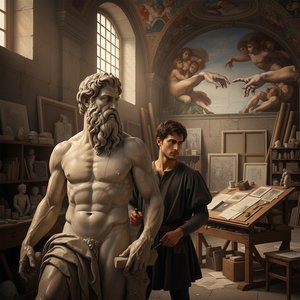
Michelangelo Buonarroti: A Renaissance Titan – Life, Works & Enduring Legacy
Explore the life, works & enduring legacy of Michelangelo Buonarroti, a Renaissance titan. Discover his iconic sculptures, frescoes, and architectural achievements. Expert art consultation & high-quality reproductions at ArtsDot.


