


 पूर्वावलोकन देखें
 साझा करें
 साझा करें
 विस्तृत विवरण
 मार्गदर्शिका

 डाउनलोड करें
 समान कलाकृतियाँ
 एक्स-रे
 स्लाइड शो देखें
 आंकड़े
Manuel B. Cossio
 Oil On Canvas
- WallArt
- Impressionism
 1908
1908- Early Modern
 120.0 x 75.0 cm
 पूरा देखें
गिक्ली / आर्ट प्रिंट
तेज़ उत्पादन और विभिन्न फिनिश विकल्पों के साथ म्यूजियम-क्वालिटी गिकली (giclée) या कैनवस प्रिंट। ( हाथ से बनी पेंटिंग खरीदें डिजिटल इमेज पर स्विच करें)




P118B $10

P118H $10

P118W $10

P438Z $10

P508JH $12

P508YH $12

P805H $10

P805Z $10

P919BZ $10

P919G $10

P919XJ $10

P959ZH $10

P968JZ $12

W106C $8

W218G $10

W218JH $8

W218Y $10

W307PJ $10

W316G $10

W316PJ $8

W316Y $10

W398PJ $8

W4111J $10

W500HY $15

W500JH $15

W692G $12

W849H $8

W940BG $15

W953PJ $8




कलाकृति के मूल अनुपात से मेल खाने वाले हमारे पूर्व निर्धारित आकारों में से चुनें।

आप किसी विशिष्ट फ्रेम या स्थान के अनुसार अपने स्वयं के आयाम (dimensions) दर्ज कर सकते हैं। यदि आपके द्वारा चुना गया आकार मूल छवि के अनुपात से मेल नहीं खाता है, तो हम कलाकृति को क्रॉप कर देंगे या मिरर किए गए या सॉलिड-फिल किनारे के साथ छवि का विस्तार करेंगे। उत्पादन शुरू होने से पहले आपकी स्वीकृति के लिए एक डिजिटल मॉकअप भेजा जाएगा।
कृपया ध्यान दें कि स्क्रीन पर दिखने वाला प्रीव्यू वास्तविक क्रॉपिंग या विस्तार को नहीं दर्शाता है। केवल मॉकअप ही अंतिम संरचना को सटीक रूप से दिखाएगा।
हालाँकि कस्टम आकार उपलब्ध हैं, फिर भी हम मूल अनुपात बनाए रखने के लिए पूर्व-निर्धारित सूची में से एक आयाम चुनने की सलाह देते हैं।
विश्वव्यापी डिलीवरी (), मानक 4/5 सप्ताह के बजाय मात्र 2 सप्ताह में। (24 सितमबर)

दुनिया भर में मुफ़्त एक्सप्रेस शिपिंग

उच्च गुणवत्ता वाला लिनेन कैनवास

पूर्ण शिपिंग बीमा

सीमा शुल्क और आयात कर वापसी की गारंटी

सटीक रंग मिलान की गारंटी

100-दिन की वापसी नीति (केवल दोषपूर्ण होने पर)

100% पैसे वापसी की गारंटी

थोक छूट का लाभ
 ग्लास का विकल्प केवल 110 सेमी से कम आकार में ही उपलब्ध है।

Manuel B. Cossio
गिक्ली / आर्ट प्रिंट
प्रतिकृति का आकार
-


कुल देय राशि
$ 62
Subject and Composition
The canvas presents a dignified figure, Manuel B. Cossio, rendered in a crisp suit and tie that speaks of early twentieth‑century Spanish professionalism. His stern gaze anchors the composition, while the book he holds hints at intellectual gravitas. Behind him, two smaller figures—perhaps confidants or family members—add depth without detracting from the central portrait. The wall backdrop provides texture and a subtle sense of space, allowing the viewer to feel as though they are standing in the same room, witnessing an intimate moment of contemplation.Technique and Style
Joaquín Sorolla, celebrated for his luminous landscapes, applies a similarly vibrant hand here, yet with a more restrained palette suited to portraiture. His brushwork remains loose enough to capture the play of light across fabric and skin, while precise strokes define the book’s edges and the subtle folds in the suit. The artist balances realism with an almost impressionistic touch, creating a scene that feels both authentic and alive. Sorolla’s mastery of color ensures that even within the muted tones of a formal setting, warmth radiates from the sitter’s presence.Historical Context
Painted in 1908, this work emerges during a period when Spain was negotiating its identity between tradition and modernity. The country was on the cusp of political upheaval, yet artists like Sorolla sought to preserve national dignity through their canvases. By portraying Manuel B. Cossio—a figure likely involved in public service—Sorolla captures a snapshot of Spanish civic pride at a time when the nation’s future hung in delicate balance.Symbolism and Emotional Resonance
The book, held firmly yet casually, symbolizes knowledge and authority, suggesting that Cossio’s power is rooted not only in position but also in intellect. The stern expression conveys responsibility, perhaps hinting at the weight of decisions carried by those who shape a nation’s destiny. The two background figures, though less prominent, imply support or legacy, reminding viewers that leadership rarely stands alone. Emotionally, the painting invites reverence and introspection; it is a quiet homage to steadfastness amid an era of change, resonating with collectors who value depth, history, and the enduring human spirit.संबद्ध कलाकृतियाँ


कलाकार का जीवन परिचय
Joaquín Sorolla y Bastida: A Life Bathed in Light
Joaquín Sorolla y Bastida, एक नाम जो स्पेन के प्रकाश और रंग की जीवंत ऊर्जा से समकालीन है, केवल एक चित्रकार नहीं था; वह अपने राष्ट्र की आत्मा का दस्तावेज़ था। 1863 में वालेंसिया में पैदा हुआ, सोरोला का प्रारंभिक जीवन त्रासदी से चिह्नित था। केवल दो साल की उम्र में अपनी दोनों माता-पिता को खसरा महामारी ने ले लिया था, युवा सोरोला और उसके बहन को उनकी मां के भाई और बहन द्वारा पालन किया गया था। इस शुरुआती अनुभव के परिणामस्वरूप हानि शायद उसे जीवन की क्षणभंगुर सुंदरता की गहरी सराहना पैदा कर दी - एक भावना जो कला में प्रतिध्वनित होती रही। कठिनाई अपने शुरुआती दिनों में मंद थी लेकिन कलात्मक प्रतिभा का स्पार्क तुरंत दिखाई दिया। वह वालेंसिया में प्रारंभिक शिक्षा प्राप्त करते थे, प्रदर्शन करते थे कि वे स्थापित कलाकारों जैसे कैयेटानो कैपुज़ और जोसे बेनलीउर के तहत अध्ययन कर सकते थे, अंततः रोम में चार साल के लिए अध्ययन करने के लिए एक अनुदान प्राप्त किया गया था। इटली के शास्त्रीय भव्यता के बीच वह अपने अद्वितीय कलात्मक मार्ग को आकार दे रहा था, जबकि समान रूप से अपनी शैली विकसित कर रहा था।Early Hardship and Artistic Beginnings
Joaquín Sorolla’s early life was marked by profound sorrow. Orphaned at just two years old following a devastating cholera epidemic that claimed the lives of his parents, young Joaquín and his sister were raised by their maternal aunt and uncle. This formative experience instilled within him an enduring appreciation for the fleeting beauty of existence – a sentiment that would profoundly influence his artistic vision. Despite facing considerable hardship, Sorolla’s innate talent shone through from a young age. He received initial instruction in Valencia, demonstrating aptitude that led to studies under established artists like Cayetano Capuz and José Benlliure, culminating in a four-year grant to study in Rome. This pivotal period shaped his artistic sensibilities and instilled a lifelong fascination with capturing the essence of light and color.Rome and Influences: Embracing Classical Tradition
Sorolla’s journey to Rome proved transformative. He enrolled at the Academy of Fine Arts, immersing himself in the artistic heritage of Italy and absorbing influences from masters like Francesco Hayez and Anton Raphael Mengelsdorf. The Roman landscape—characterized by its rolling hills and azure skies—became a constant source of inspiration for his early works. Notably, he studied with José Benlliure, Emilio Sala, and José Villegas Cordero, honing his technique and developing a distinctive style rooted in Luminism – an artistic movement that sought to depict light as the dominant force shaping visual perception. This approach would foreshadow Sorolla’s later mastery of capturing atmospheric effects and conveying emotion through color.From Historical Narratives to Sun-Drenched Realism
Sorolla's initial artistic endeavors leaned towards historical painting, mirroring the prevailing academic trends of his time. However, a decisive shift occurred upon his return to Spain, where he began to observe the world around him with renewed intensity. He was captivated by the daily lives of ordinary Spaniards—particularly those inhabiting the Valencian coast—a region renowned for its radiant Mediterranean sunlight. This fascination fueled his artistic exploration and propelled him toward a style that would become synonymous with Spanish Impressionism. The shimmering sea, vibrant flora, and bustling marketplaces provided endless subjects for his canvases, reflecting Sorolla’s belief in art's ability to capture the immediacy of experience.The Valencian Coast: A Lifelong Obsession
Sorolla’s artistic focus solidified during his residency in Valencia—a city he would revisit repeatedly throughout his life. He established a studio overlooking the harbor and dedicated himself to painting scenes of coastal life, capturing the interplay between light and shadow on water and sand with unparalleled skill. His paintings depict fishermen hauling boats ashore, children playing on beaches, and families enjoying leisurely afternoons—moments rendered with breathtaking luminosity and expressive brushwork. These works exemplify Sorolla’s unwavering commitment to *plein air* painting—working outdoors directly confronted with the challenges of capturing fleeting atmospheric conditions—a technique that would become his hallmark. He sought not merely to represent what he saw but to convey its emotional impact, achieving a remarkable synthesis of observation and artistic interpretation.Notable Achievements & Recognition
- 1892: Gold medal at the National Exhibition in Madrid for Another Marguerite
- 1894: Acclaimed for The Return from Fishing: Hauling the Boat, acquired by the Musée du Luxembourg
- 1899: Grand Prix and medal of honor at the Universal Exhibition in Paris for Sad Inheritance
- 1900-1923: Extensive exhibitions throughout Europe and the United States, establishing international recognition
- 1912-1928: Commissioned to create Vision of Spain for the Hispanic Society of America (completed posthumously)

जोAquin सोरोला य बास्टिडा
1863 - 1923 , स्पेन
मुख्य तथ्य
- Artistic Movement Or Style: लुमिनिज्म और प्रभाववाद
- Artists Or Movements Influenced By This Artist: ['प्रभाववाद']
- Artists Who Influenced This Artist:
- फ्रांसिसको प्रadilla
- जूलस बास्टियन-लेपेज
- Date Of Birth: 27 फरवरी 1863
- Date Of Death: 10 अगस्त 1923
- Full Name: Joaquín Sorolla y Bastida
- Nationality: स्पेनिश
- Notable Artworks:
- इतालवी लड़की के फूल
- समुद्र तट पर बच्चे
- सिलाई जहाज
- Place Of Birth: वैलेंसिया, स्पेन
संबंधित लेख
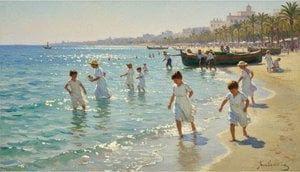
Joaquín Sorolla: Capturing Spanish Light & Life – A Legacy of Impressionism
Explore the luminous world of Joaquín Sorolla, Spanish master of Impressionism. Discover his life, techniques & legacy – a guide for art collectors and enthusiasts. Invest in timeless beauty.

The Enduring Power of Painting: A Historical & Contemporary Exploration of Form and Emotion
Explore the rich history & enduring techniques of oil painting with ArtsDot. Discover masterpieces, learn about art collecting, and find authentic handmade reproductions crafted by skilled artists.

Oil on Canvas: A Historical & Technical Exploration of a Timeless Artistic Medium
Explore the rich history & enduring techniques of oil painting on canvas. Discover the science behind its longevity, conservation practices, and contemporary relevance. Expert insights for art enthusiasts.

The Enduring Legacy of Oil on Canvas: Technique, History & Aesthetic Impact
Explore the rich history & techniques of oil painting – from Renaissance masters to Impressionism. Discover pigments, layering methods, and why this timeless medium endures. Expert insights for artists & art enthusiasts.

कैनवस पर चित्रित विरासत: तकनीक, इतिहास और समकालीन अभ्यास
कैनवस पर चित्रित विरासत की गहराई में उतरें। तकनीक, इतिहास और समकालीन कला अभ्यास जानें। ArtsDot के साथ उच्च गुणवत्ता वाली पेंटिंग खरीदें और अपनी दीवारों को जीवंत करें।


