


Un manifeste d'or : l'esprit de la Sécession viennoise
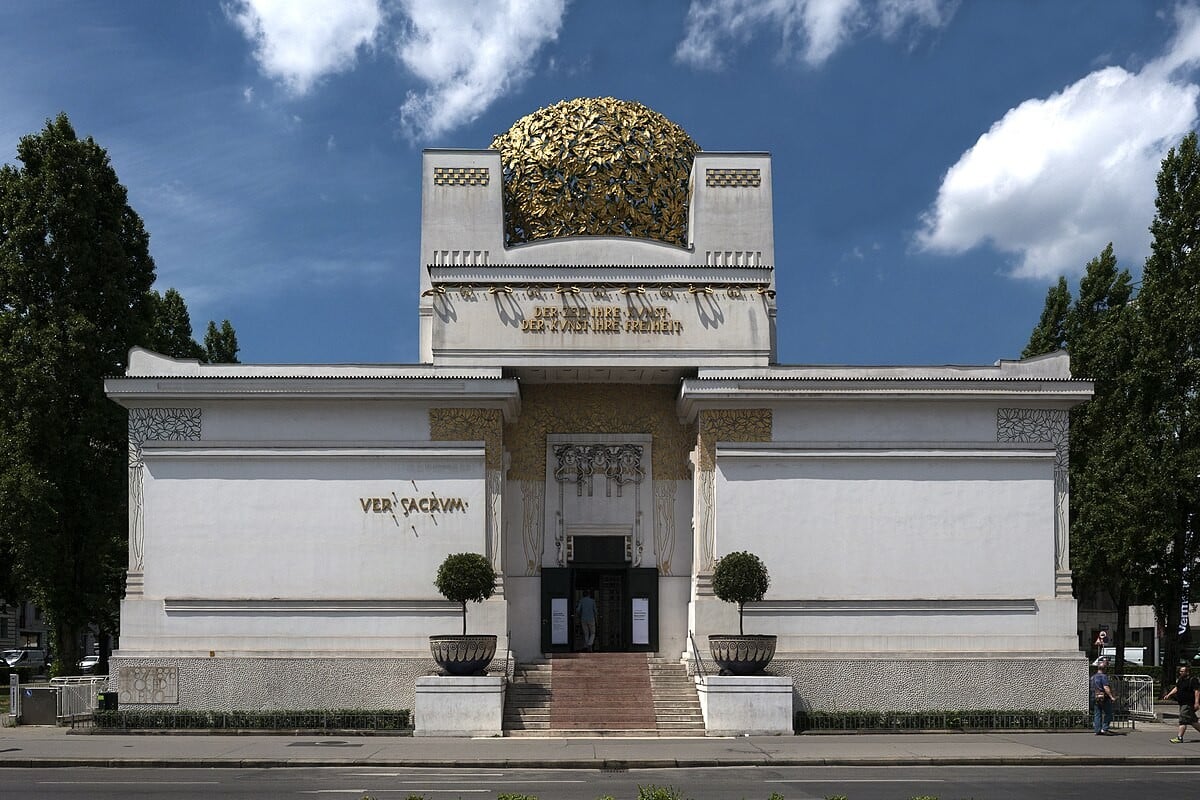
Se tenir devant la Sécession viennoise, c'est être le témoin d'un instant de profonde rébellion artistique figé dans le temps. Fondée en 1897, il ne s'agissait pas seulement de la naissance d'une nouvelle galerie, mais de l'émergence d'un mouvement de défi mené par des visionnaires tels que Gustav Klimt, Koloman Moser et Josef Hoffmann. Ils chercha de toutes leurs forces à s'affranchir de l'emprise étouffante de l'académisme historique, portés par une devise radicale : « À chaque époque son art. À chaque art sa liberté. » Cette institution s'érige comme le cœur battant du modernisme viennois, un lieu où les frontières entre les beaux-arts, l'architecture et le design se sont dissoutes pour créer une expérience esthétique unifiée et immersive.
L'architecture même du bâtiment de la Sécession sert de manifeste visuel au mouvement. Conçue par Joseph Maria Olbrich, la structure est un chef-d'œuvre des principes de l'Art nouveau, célèbre pour être couronnée d'un dôme colossal de feuilles de laurier en fer forgé complexe, richement dorées à la feuille d'or. Cette canopée scintillante agit comme un phare de lumière et d'innovation, signalant une rupture avec les traditions lourdes et de pierre du passé au profit de quelque chose de plus organique, géométrique et éthéré. Le bâtiment lui-même est une œuvre d'art, conçu pour inspirer la créativité par ses formes audacieuses et ses motifs floraux stylisés, en faisant un lieu de pèlerinage essentiel pour ceux qui apprécient comment le design structurel peut activement propulsé le progrès artistique.
L'éclat doré de Klimt et la vision symboliste
Entre ces murs sacrés, la collection atteint son zénith émotionnel et technique à travers les œuvres de Gustav Klimt. Le musée abrite le monumental Frise du Beethoven , un chef-d'œuvre allégorique et foisonnant créé pour la 14ème exposition de la Sécession viennoise en 1902. Cette œuvre est bien plus qu'une simple illustration ; c'est une méditation profonde sur le pouvoir transformateur de la musique et la lutte humaine pour la joie. Rendue dans le style opulent caractéristique de Klimt — caractérisé par des ors riches, des pigments vibrants et des motifs hypnotiques — la frise capture l'essence même de l'âme sécessionniste : une synthèse de grandeur classique et d'énergie moderne bourgeonnante.
L'attrait de la collection s'étend à l'intime et au symbolique, offrant aux collectionneurs et aux amoureux de l'art un aperçu des textures luxueuses de l'époque. Des surfaces scintillantes, semblables à des mosaïques, des portraits de Klimt jusqu'à l'intrigante Frise de Stoclet , le musée expose une maîtrise de la technique de la feuille d'or qui continue de captiver l'œil moderne. Ces œuvres ne se contentent pas de décorer un espace ; elles s'en emparent, offrant un sentiment de beauté intemporelle et de profondeur psychologique. Pour le designer d'intérieur ou le connaisseur des beaux-arts, la Sécession offre une étude inégalée sur la manière dont le motif, la lumière et le symbolisme peuvent être tissés ensemble pour créer une atmosphère d'une sophistication et d'une intrigue intellectuelle sans pareilles.
Un héritage vivant de l'innovation
L'importance de la Sécession transcende la brillance singulière de Klimt, englobant une riche tapisserie de talents qui ont façonné le langage visuel de l'Europe. L'influence d'artistes comme Alfred Roller, dont les conceptions révolutionnaires pour les peintures murales et les décors de scène ont redéfini l'expression graphique, démontre la portée expansive du mouvement à travers de multiples disciplines. Cet héritage de l'expérimentation — un engagement à rejeter le dogme au profit de la découverte — est ce qui fait de la Sécession un monument vivant plutôt qu'un simple dépôt statique du passé.
Aujourd'hui, le musée demeure une intersection vitale entre l'histoire et l'inspiration contemporaine. Il sert de rappel que le véritable progrès exige le courage de défier les conventions. Que l'on soit attiré par l'audace architecturale d'Olbrich, la complexité symbolique des maîtres symbolistes ou la splendeur décorative pure de l'avant-garde viennoise, la Sécession offre un voyage éternel au cœur de la libération artistique. Elle demeure une pierre angulaire du patrimoine culturel, invitant chaque visiteur à trouver son propre chemin vers l'innovation et la beauté.


