


Une chronique vivante de la Royal Collection
La Royal Collection représente la plus vaste collection d'art privée au monde. Appartenant au Roi Charles III et placée sous l'égide du Royal Collection Trust, ces collections sont réparties à travers treize résidences royales, entre lieux de vie et sites historiques, à travers tout le Royaume-Uni. Cet ensemble prodigieux comprend des peintures, des sculptures, du mobilier, des textiles et diverses arts décoratifs, formant un témoignage matériel de l'influence royale et de l'évolution des goûts artistiques au fil des siècles.
La présence de ces œuvres au cœur même des espaces habités par la monarchie instaure une atmosphère unique. Des salles majestueuses du palais de Hampton Court aux appartements du château de Windsor, les œuvres coexistent dans leur contexte architectural originel. Cette continuité permet d'établir un lien direct avec le mécénat historique de la monarchie britannique. Loin d'être une entité statique, la collection est une chronique vivante, reflétant les vies et les ambitions de ceux qui ont habité ces demeures prestigieuses.
L'ampleur de ce patrimoine est immense, englobant plus d'un million d'objets. Si une grande partie est conservée dans des cadres privés ou royaux, d'autres sont accessibles au public via la King's Gallery au palais de Buckingham. La diversité des pièces témoigne d'une longue histoire d'acquisition et de préservation :
- Peintures
- Sculptures
- Mobilier
- Textiles
- Joaillerie
- Céramiques
L'Architecture des Résidences Royales
La collection se déploie à travers treize résidences royales, entre lieux de vie et monuments historiques, parsemées à travers le Royaume-Uni. Chaque site offre un écrin architectural unique aux trésors qu'il abrite. Au palais de Hampton Court, l'architecture Tudor demeure palpable, particulièrement au sein de la vaste Grande Salle où résonnent encore les échos de la vie de cour. Cet espace majestueux offre un cadre d'une solennité rare, en parfaite adéquation avec la grandeur de cette époque.
Le château de Windsor, plus grand château habité au monde, témoigne de l'évolution des goûts royaux à travers ses divers appartements d'apparat et ses chambres privées. À l'opposé, le palais de Kensington abrite un ensemble remarquable de portraits et d'arts décoratifs qui éclairent l'intimité des monarques ayant autrefois habité ses salons. Ces espaces ne sont pas de simples contenants, ils font partie intégrante du récit vivant des œuvres qu'ils protègent.
Le palais de Buckingham, résidence officielle du Roi à Londres, demeure un palais royal en activité. Entre ses murs, la King's Gallery offre un espace dédié à l'exposition de pièces sélectionnées selon un programme rotatif. L'architecture de ces différents sites, de la formalité de Kensington à l'immensité de Windsor, crée un environnement immersif, idéal pour la préservation et la mise en lumière de la collection.
Les chefs-d'œuvre de la Royal Collection
La présence de l'œuvre de Leonardo da Vinci, Study for an Equestrian Monument, offre un aperçu rare de l'esprit de l'un des plus grands innovateurs de l'histoire. Ce croquis préparatoire révèle une approche méticuleuse du détail anatomique. À proximité, The Risen Christ de Michel-Ange porte une profonde signification spirituelle grâce à sa maîtrise de la forme humaine. Les sculptures en bronze de Donatello illustrent davantage l'artisanat impérissable de la Renaissance italienne, invitant à une contemplation silencieuse sur les thèmes de l'humanité et de la foi.
La collection abrite également des œuvres qui capturent l'essence d'époques spécifiques. Les portraits de Rembrandt offrent des aperçus intimes de la vie de figures éminentes, utilisant le clair-obscur pour révéler la psychologie humaine. En contraste, les toiles de Van Dyck incarnent l'élégance et la sophistication baroque, capturant un sens raffiné de la prestance royale. Ces œuvres subsistent comme les témoignages physiques des goûts et des ambitions de ceux qui les ont rassemblées.
- Charles I in Three Positions, vers 1636
- Portrait of Sir Henry Guildford, 1527
- Self-portrait as the Allegory of Painting, 1641
- The Triumphs of Caesar: Trumpeters and Standard-Bearer
Expositions et recherche au sein de la Collection
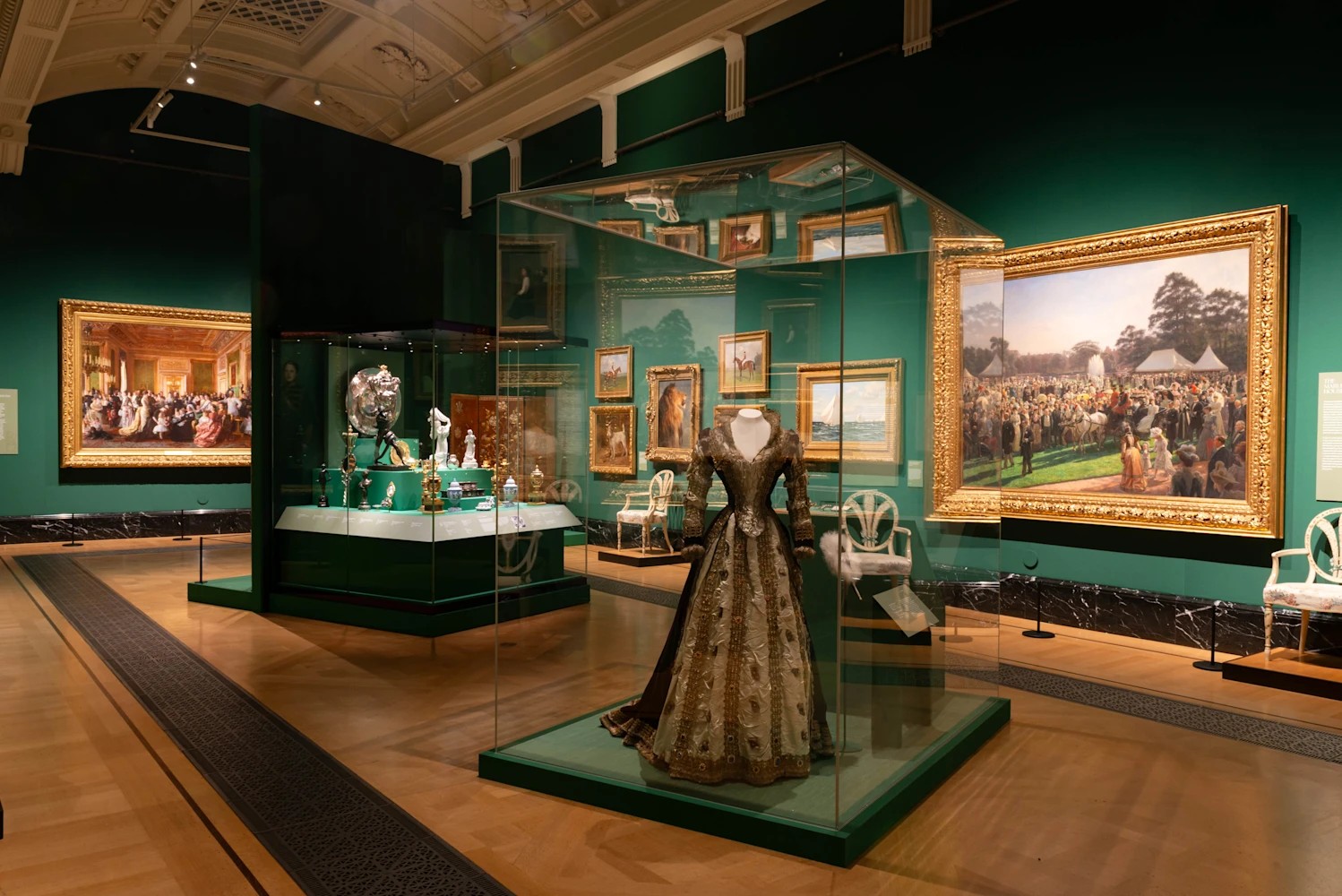
Le Royal Collection Trust orchestre des expositions qui explorent des moments charnières de l'histoire à travers les trésors placés sous sa garde. Une telle quête, illustrée par l'exposition « Les Édouardiens : l'âge de l'élégance », a permis de sonder le style et la sensibilité du début du XXe siècle. D'autres études plus ciblées, à l'instar de « Dessiner la Renaissance italienne », ont réuni des œuvres sur papier de maîtres tels que Leonardo da Vinci et Michelangelo. Ces expositions offrent une opportunité unique d'observer de près l'évolution de la pratique artistique au fil des différentes époques.
Au-delà des galeries physiques, un effort soutenu est déployé pour la numérisation des collections. Cette initiative ambitieuse vise à rendre la collection accessible à un public mondial grâce à des ressources en ligne et des visites virtuelles. Une telle présence numérique garantit que ces œuvres demeurent disponibles pour l'étude et l'observation, quelle que soit la distance géographique. La préservation de ces pièces est assurée par le Royal Collection Trust, qui assure la gestion de la collection par le biais de diverses activités publiques et commerciales.


