Explorez Edvard Munch (1863-1944), pionnier de l'Expressionnisme ! Découvrez 'Le Cri' et son art explorant l'anxiété, la mort, l'amour & les thèmes psychologiques. Reproductions disponibles sur ArtsDot.
A Sanctuary of Soul: Delving into the World of Edvard Munch
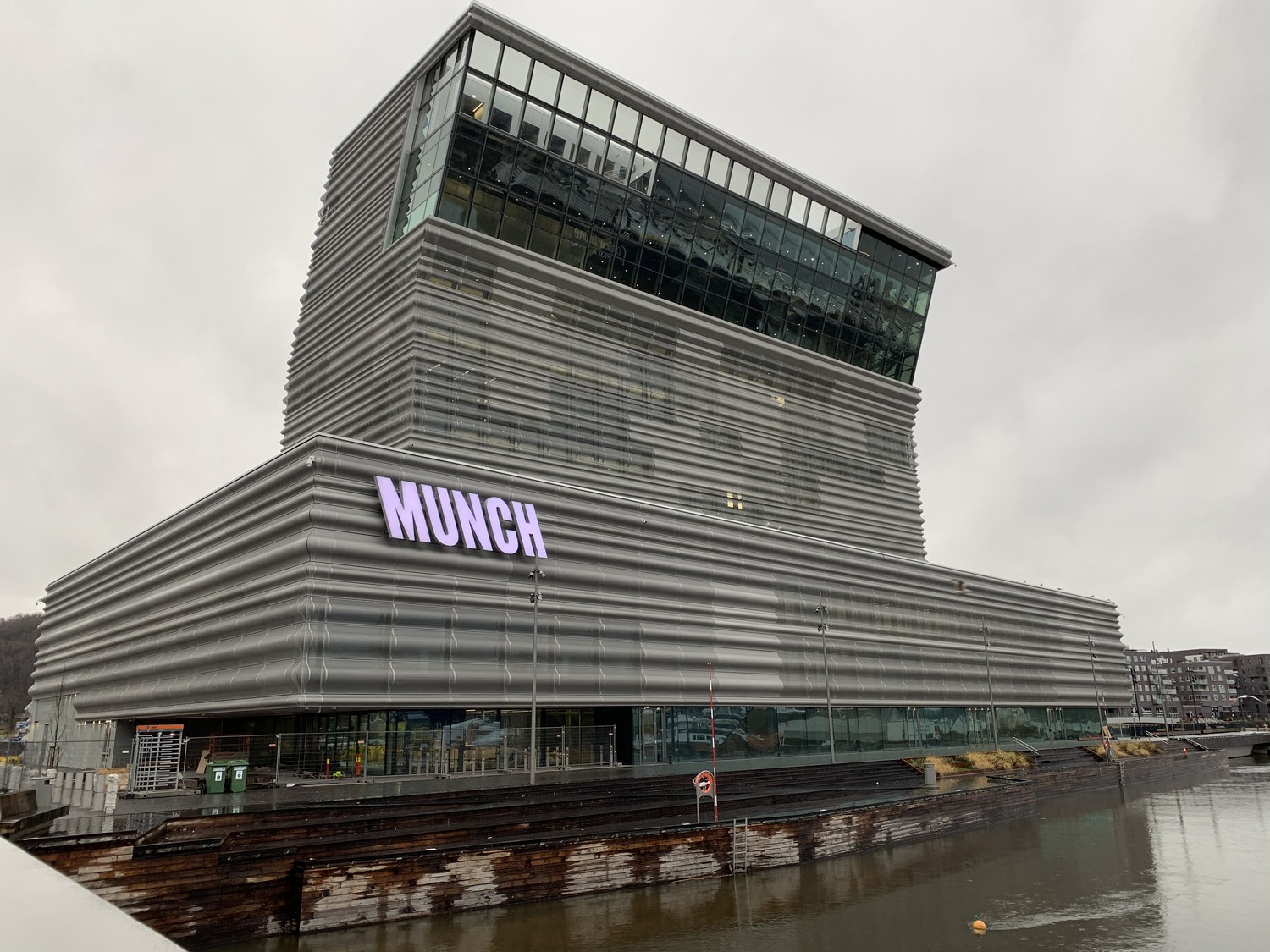
The MUNCH Museum stands as a testament to Norway’s artistic heritage and a profound exploration of human emotion—a space where the legacy of Edvard Munch continues to inspire awe and contemplation. Established in 1963, initially housed in Tøyen, Oslo, it relocated to Bjørvika in 2021, marking a pivotal moment for Norwegian culture and cementing its position as one of Europe’s foremost institutions dedicated to Expressionism. This architectural marvel, conceived by Spanish architect Juan Herreros, embodies innovation while honoring the spirit of Munch's vision—a building that invites visitors on an immersive journey into the artist’s world.
The Building: Bjørvika’s Bold Statement
A Treasure Trove of Munch’s Oeuvre
Exploring Expressionism: Beyond Iconic Images
History and Evolution: From Humble Beginnings to Global Recognition
Visiting MUNCH: An Experience for All Ages
The Building: Bjørvika’s Bold Statement
The relocation to Bjørvika, Oslo’s waterfront district, represents more than just a change of address; it signifies an ambitious reimagining of the museum experience. Designed by Juan Herreros, MUNCH’s new building is a striking contrast to its predecessor—a soaring structure reaching 60 meters into the air and spanning 26300 square meters. Its expansive glass facades bathe the interior in natural light, creating a dynamic interplay between architecture and landscape—specifically, breathtaking views of Oslofjord. The building incorporates sustainable materials and energy-efficient systems, reflecting Norway’s commitment to environmental responsibility and aligning with MUNCH's ethos of artistic exploration and intellectual curiosity. Notably, it was voted “Worst Building of the Year” by Norwegian voters in 2021, a playful acknowledgement of its daring design—a symbol of Oslo’s embrace of innovation and cultural dynamism.
A Treasure Trove of Munch’s Oeuvre
At its core lies an unparalleled collection of over 18,000 prints and drawings by Edvard Munch—nearly half of the artist's entire output. This extraordinary assemblage encompasses masterpieces like *The Scream*, arguably Munch’s most recognizable image and a visceral depiction of existential anguish; *Madonna*, which delves into complex themes of love, sexuality, and motherhood with Munch’s distinctive style; and *Man and Woman I*, capturing a moment of intimacy fraught with unspoken emotion. Beyond these iconic works, visitors discover lesser-known pieces—such as *Vågen* (The View), showcasing Munch's masterful rendering of the Oslofjord landscape—each offering unique insights into his artistic development and psychological landscape. The museum’s curators meticulously organize exhibitions to illuminate connections between Munch’s oeuvre and broader cultural contexts, fostering a deeper understanding of Expressionism’s influence on art history.
Exploring Expressionism: Beyond Iconic Images
MUNCH transcends the allure of its most famous paintings—a journey into Expressionism requires delving beyond surface appearances to grasp the artist's profound engagement with psychological themes and emotional intensity. Exhibitions explore Munch’s preoccupation with anxiety, mortality, and the human condition—subjects tackled with unflinching honesty and stylistic innovation. Visitors gain access to archival materials—letters, sketches, and preparatory studies—providing invaluable context for interpreting Munch’s artistic process and revealing his personal struggles. Furthermore, MUNCH actively engages younger audiences through educational programs and interactive installations, fostering a dialogue between past and present and ensuring that Munch's legacy continues to resonate with future generations.
History and Evolution: From Humble Beginnings to Global Recognition
The museum’s story began in 1963 at Tøyen, Oslo—a deliberate tribute to Munch’s centenary. Funded by profits from municipal cinemas and enriched by donations from Munch himself and his sister Inger Munch, the initial building served as a beacon of artistic ambition—a space dedicated to preserving and disseminating Munch's work. The relocation to Bjørvika in 2021 marked a significant milestone—solidifying MUNCH’s position as a world-class institution and attracting visitors from across the globe. The daring decision to move into a new building, designed by Gunnar Fougner and Einar Myklebust, underscored Oslo's commitment to architectural innovation and cultural vibrancy. The museum’s history is punctuated by dramatic events—most notably the audacious 2004 theft of *The Scream* and *Madonna*, which captivated international media attention and reaffirmed the immense cultural value placed upon Munch’s masterpieces. Their triumphant recovery in 2006 fueled optimism for MUNCH's future and cemented its reputation as a symbol of artistic resilience.
Visiting MUNCH: An Experience for All Ages
A visit to MUNCH is an invitation to immerse oneself in the emotional core of Expressionism—a journey that caters to visitors of all ages and interests. The museum’s interactive exhibits engage children with Munch's art through playful activities and storytelling, fostering artistic curiosity from a young age. Guided tours illuminate the artist’s life and work, providing insights into his psychological landscape and stylistic innovations. Furthermore, MUNCH hosts concerts, performances, film screenings, and lectures—enriching visitors’ understanding of Munch’s cultural context and expanding their appreciation for art beyond the confines of the museum walls. And don't miss the opportunity to savor Norwegian gastronomy at MUNCH Restaurant—a culinary experience inspired by Munch’s artistic vision.
Par la rédaction de ArtsDot.com
Quiz d'art
Chaque question ne comporte qu'une seule réponse correcte.
Question 1:
Dans quelle ville se trouve le Musée Munch ?
Question 2:
Combien de peintures le Musée Munch possède-t-il environ, représentant plus de la moitié de la production artistique d'Edvard Munch ?
Question 3:
Quel est l'un des chefs-d'œuvre les plus emblématiques conservés au Musée Munch ?
Question 4:
Quand le Musée Munch a-t-il déménagé dans son nouveau bâtiment à Bjørvika ?
Question 5:
Qui a conçu l'actuel bâtiment du Musée Munch ?
Question 6:
En 2004, que s'est-il passé au Musée Munch, mettant en évidence la valeur culturelle de sa collection ?
Question 7:
Outre les peintures, quels autres types d'art la collection du Musée Munch comprend-elle ?
Question 8:
Quel est le nombre total approximatif d'objets dans la collection du Musée Munch (peintures, estampes, livres, etc.) ?
Question 9:
Quel est le nom de l'une des œuvres moins connues de Munch mentionnées dans le texte ?
Question 10:
Quel surnom enjoué a été donné au nouveau bâtiment du Musée Munch en raison de ses dispositifs de sécurité ?
Explorez l'univers poignant d'Edvard Munch : biographie, analyse du célèbre 'Le Cri', et découverte de ses œuvres méconnues. Plongez au cœur de l'expressionnisme norvégien avec ArtsDot.
Plongez au cœur de l'Expressionnisme avec les 10 œuvres majeures qui ont marqué ce mouvement puissant. Découvrez Munch, Kirchner, Kandinsky et plus encore. Reproductions d'art de qualité muséale sur – Explorez la collection !
Plongez au cœur de l'univers d'Edvard Munch avec 25 chefs-d’œuvre emblématiques. Explorez les émotions intenses, les couleurs sombres et le symbolisme unique de cet artiste visionnaire. Découvrez des reproductions de qualité musée sur ArtsDot.com.
AAssistant de studioEn ligne · répond en une minute
Bonjour ! Je peux vous aider à choisir une œuvre d'art, à suivre une commande ou à répondre à vos questions sur la garantie. Que puis-je faire pour vous ?