


L'Histoire du Musée Munch
L'aventure du Musée Munch débute en 1963 à Tøyen, à Oslo. L'institution fut fondée pour commémorer ce qui aurait dû être le centième anniversaire de Edvard Munch. Ce projet est né de la volonté profonde de préserver l'héritage de l'artiste, un élan soutenu par les dons de l'artiste lui-même et de sa sœur, Inger. Pendant des décennies, le musée a fait office de sanctuaire central pour son œuvre foisonnante, abritant une collection immense de peintures et d'estampes.
L'histoire du musée a connu un chapitre dramatique en 2004, marqué par une période de tension extrême. Le vol de deux de ses pièces les plus précieuses fut un événement qui a mis en lumière le poids culturel immense de ses collections. Ce climat d'incertitude ne prit fin qu'en 2006, lorsque les œuvres furent enfin retrouvées. Cette période de perte et de renaissance a, par la suite, nourri l'ambition de créer un espace plus vaste et plus sûr pour protéger ce trésor artistique.
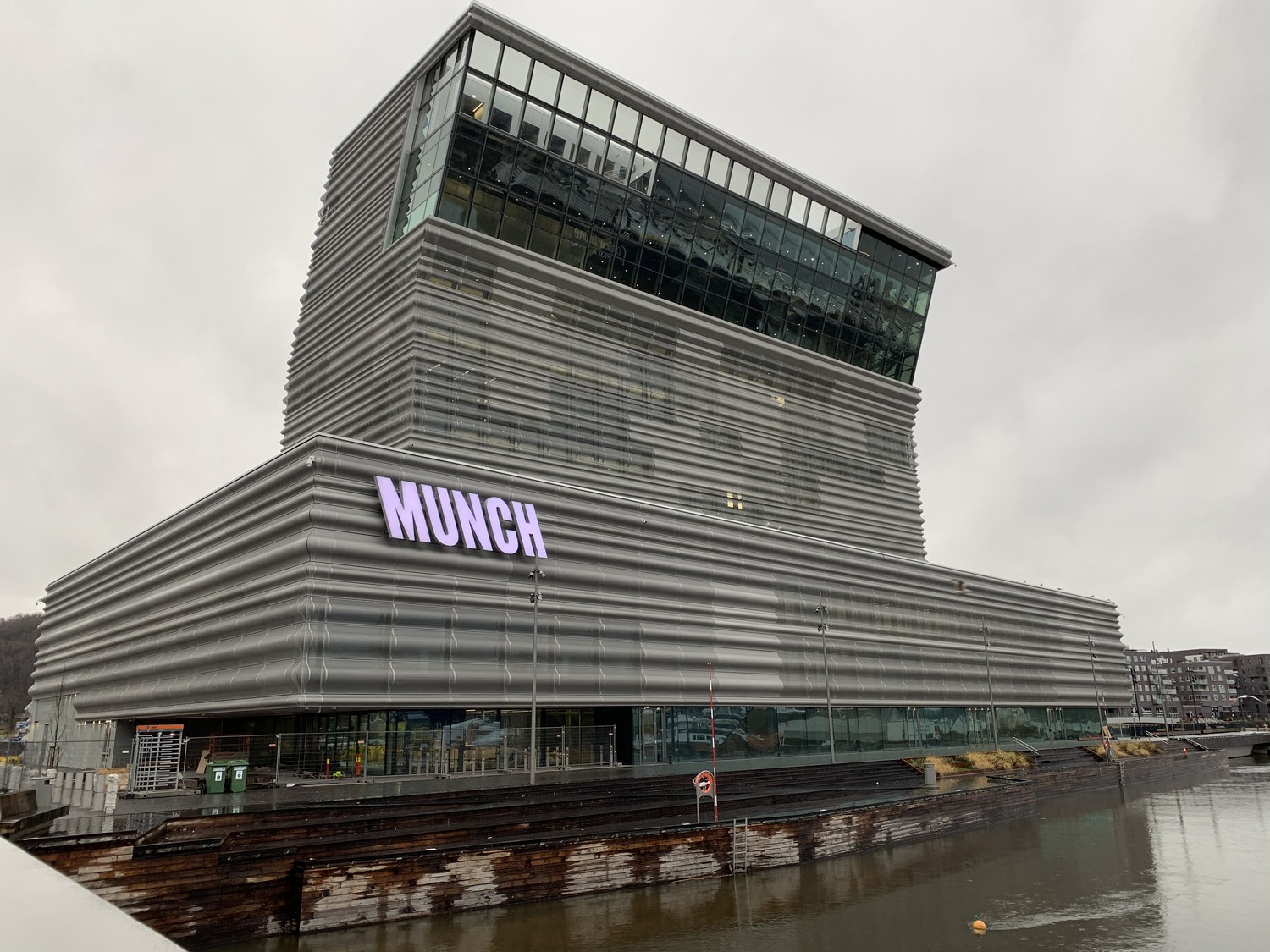
En octobre 2021, le Musée Munch a quitté son emplacement d'origine pour s'installer sur un nouveau site à Bjørvika. Ce déménagement a marqué une transition majeure, passant des salles historiques de Tøyen à une présence résolument moderne sur le front de mer d'Oslo. Aujourd'hui, le musée occupe une structure verticale qui fusionne l'histoire de l'artiste avec le paysage urbain en constante évolution de la ville.
L'Architecture du Nouveau Bâtiment
La structure actuelle qui borde le front de mer d'Oslo s'affirme comme une déclaration architecturale contemporaine, conçue par l'architecte espagnol Juan Herreros. S'élançant sur une hauteur de 60 mètres, l'édifice se déploie sur treize étages, organisant ses fonctions selon une dynamique verticale. Une section supérieure, distinctement inclinée, dessine sa silhouette contre la ligne d'horizon de la ville. Cette verticalité permet une expérience spatiale fluide et immersive au fil de la progression à travers les différents niveaux.
La façade est composée de panneaux d'aluminium recyclés, perforés et partiellement translucides. Ces matériaux réagissent aux variations de la lumière sur l'Oslofjord, créant une présence énigmatique qui se métamorphose au fil des saisons. La conception intègre un vaste hall de verre ainsi que diverses terrasses qui offrent des panoramas sur le paysage urbain environnant. La matérialité et la forme du bâtiment témoignent d'un engagement profond envers la durabilité et l'ingénierie moderne.
Les chefs-d'œuvre de la collection
La collection abrite plus de 1 200 peintures et 18 000 estampes qui tracent avec une précision troublante la profondeur psychologique de l'artiste. Au cœur de ces salles, Le Cri et Madone s'imposent comme des présences centrales et magnétiques. Ces œuvres sont accompagnées par Homme et Femme I, une exploration poignante des complexités du lien humain. L'ampleur même de ces collections permet une étude contemplative de la manière dont la forme et la couleur évoluent au fil de décennies de création.
D'autres œuvres majeures, telles que La Danse de la vie, occupent une place prépondérante dans ce récit visuel. Le musée préserve également Vågen et Mördaren i gränden, des pièces qui offrent un regard singulier sur l'évolution stylistique de l'artiste. Se tenir face à ces originaux, c'est se confronter à l'intensité brute du mouvement expressionniste dans sa forme la plus directe et la plus viscérale.
- Madone, 1894
- Noël au bordel, 1905
- Près du lit de mort (fièvre), 1915
- Autoportrait, 1882
- Jeune femme sur le rivage, 1896
- Autoportrait sous le masque de la femme, 1892
Un héritage vivant de l'expressionnisme
L'institution s'affirme comme un carrefour culturel dynamique, dont la portée dépasse largement la simple préservation de l'œuvre d'un artiste unique. En tant que l'un des plus grands musées dédiés à un seul artiste au monde, le Musée Munch demeure entièrement consacré à la vie et à l'œuvre d'Edvard Munch. Cet espace favorise un dialogue incessant entre le passé et le présent, grâce à des expositions temporaires qui mettent en lumière des artistes tant établis qu'émergents. Une telle approche garantit que les fondements de l'expressionnisme demeurent en conversation constante avec les tendances artistiques contemporaines.
L'immersion dans l'art est encouragée par une programmation variée, conçue pour approfondir la compréhension de ce mouvement majeur. Le musée propose des conférences, des ateliers, des projections de films et des performances qui invitent à une participation active. Ces activités transforment l'édifice, passant d'un simple lieu de conservation silencieux à un espace d'échange culturel vibrant. La présence de ces événements diversifiés permet à l'héritage de la collection de rester une partie vivante et pulsante du tissu social de la ville.


