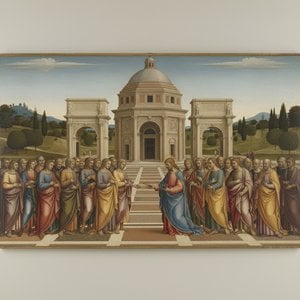
Fiorenzo di Lorenzo: A Quiet Genius of Umbrian Renaissance
Fiorenzo di Lorenzo (c. 1445 – 1522) remains a somewhat enigmatic figure in the annals of Umbrian Renaissance art, overshadowed by his more celebrated contemporaries like Pinturicchio and Perugino. Despite lacking extensive biographical details—Giorgio Vasari’s account offers scant information—scholarly research has unearthed evidence suggesting he was a pivotal artist shaping the aesthetic sensibilities of his time. His legacy resides primarily in his surviving paintings, particularly those housed within the Galleria Nazionale dell'Umbria, where they continue to inspire admiration for their masterful use of space and expressive depth.Early Life and Artistic Training
Precise details concerning Fiorenzo’s birth place and formative years are elusive. However, he was born in Perugia, a city steeped in artistic tradition—a fact that undoubtedly influenced his artistic development. Vasari mentions Cristofano Pinturicchio's son receiving instruction from a painter in Perugia who held the art in high esteem, hinting at Fiorenzo’s exposure to influential mentors early on. While definitive attribution remains challenging, speculation suggests connections with artists like Pietro Perugino and Benedetto Bonfigli—figures whose distinctive style undoubtedly permeated Fiorenzo’s artistic vocabulary. The influence of Pinturicchio is particularly notable, as evidenced by stylistic similarities in their respective works; the delicate color palettes and subtle gradations of light found in Pinturicchio's frescoes clearly resonated within Fiorenzo’s artistic vision.Notable Works and Artistic Style
Fiorenzo's oeuvre comprises approximately fifty paintings, showcasing a remarkable range of subjects – primarily religious depictions—that reflect the prevailing artistic currents of the Renaissance. His distinctive approach distinguishes him from Perugino’s somewhat affected grace; instead, Fiorenzo possessed an intensity of feeling and a capacity for conveying character that resonated with greater emotional power. The Madonna of the Recommended (1476), a luminous depiction of Mary holding the infant Jesus, exemplifies his masterful manipulation of light and color—a technique honed under Perugino and Pinturicchio—resulting in canvases imbued with an ethereal atmosphere. Similarly, the niche with lunette, two wings and predella commissioned for Santa Maria Nuova in Perugia demonstrates Fiorenzo’s meticulous attention to detail and compositional balance; he skillfully employed perspective and shading to create a convincing illusion of depth, mirroring the innovations championed by artists like Piero della Francesca. Critics have identified influences from masters such as Andrea Mantegna, Francesco Squarcione, Filippo Lippi and Domenico Ghirlandaio, suggesting Fiorenzo navigated a complex artistic landscape.Influence and Legacy
Fiorenzo di Lorenzo's contribution to Umbrian art is significant: he helped solidify the region’s reputation for producing exceptional religious paintings during the Renaissance period. Although Vasari neglected to mention his name, Fiorenzo di Lorenzo's enduring works continue to captivate viewers and scholars alike—a testament to his quiet genius and lasting impact on the artistic heritage of Italy. His paintings stand as a poignant reminder of Umbria’s flourishing cultural landscape during this transformative era, securing his place among the foremost artists of his time. The Galleria Nazionale dell'Umbria houses an impressive collection of Fiorenzo di Lorenzo’s masterpieces—a treasure trove for art historians and admirers alike—guaranteeing that his artistic legacy will endure for generations to come.Questions et réponses
Comment puis-je voir toutes les œuvres de Fiorenzo di Lorenzo ?
Retrouvez toutes les œuvres de Fiorenzo di Lorenzo sur ce site en consultant sa page Toutes les œuvres d'art.
Puis-je parcourir les œuvres de Fiorenzo di Lorenzo par ambiance ?
Les œuvres de Fiorenzo di Lorenzo peuvent être explorées par émotion sur la page L'espace des émotions de l'artiste, qui organise les créations selon l'ambiance qu'elles dégagent.
Quelles œuvres de Fiorenzo di Lorenzo sont les plus consultées ?
Une page Statistiques est disponible pour Fiorenzo di Lorenzo, présentant des statistiques sur les œuvres de l'artiste sur ce site.