L'Ombre et la Lumière : La Vie de Dirck van Baburen
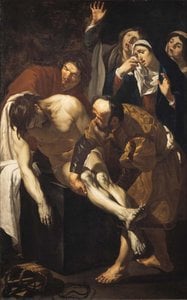
Dans les annales de l'Âge d'or néerlandais, peu de noms évoquent le drame viscéral de l'ombre et de l'illumination soudaine comme Dirck van Baburet. Né vers 1595 à Wijk bij Duurstede, sa vie fut une étoile filante, brève mais éclatante, traversant la toile de l'histoire de l'art. Bien que ses années furent tragiquement courtes, s'achevant en 1624, il réussit à déclencher une révolution stylistique qui allait redéfinir l'esthétique de l'Europe du Nord. En tant que pilier central de l'École caravagiste d'Utrecht, van Baburen ne se contentait pas de peindre des scènes ; il orchestrait des moments d'une tension profonde, utilisant le langage dépouillé du ténébrisme pour plonger les spectateurs dans la réalité intime et souvent brute de ses sujets.
Les fondements de sa maîtrise furent posés dans les ateliers d'Utrecht, sous la tutelle du respecté Paulus Moreelse. Cependant, la véritable métamorphose de son âme et de son pinceau survint lors de son pèlerinage transformateur à Rome entre 1612 et 1615. C'est dans les rues baignées de soleil mais parsemées d'ombres de la Ville Éternelle que van Baburen rencontra l'esprit révolutionnaire du Caravage. Grâce à sa relation étroite avec Bartolomeo Manfredi, un fervent disciple des méthodes caravagesques, le jeune Néerlandais absorba les secrets du clair-obscur—l'art d'utiliser des contrastes extrêmes entre la lumière et l'obscurité pour créer du volume et de la profondeur psychologique. Cette immersion romaine ne fut pas seulement académique ; ce fut une ascension sociale et professionnelle, puisqu'il obtint des commandes de commanditaires prestigieux tels que le cardinal Scipione Borghese, le plaçant au cœur même du mouvement baroque.
La Genèse des Caravagistes d'Utrecht
À son retour aux Pays-Bas, van Baburen ne revint pas comme un simple étudiant, mais comme un avant-garde. Aux côtés de contemporains tels qu'Hendrick ter Brugghen et Gerard van Honthorst, il mena un mouvement qui allait altérer à jamais la trajectoire de la peinture néerlandaise. Ce collectif, connu sous le nom de Caravagistes d'Utrecht, cherchait à transplanter l'intensité dramatique du baroque italien dans le langage local. Leur travail se caractérisait par une rupture avec les paysages sereins et polis de leurs prédécesseurs, privilégiant plutôt :
- Les scènes de genre : Des représentations vives et souvent tumultueuses de la vie quotidienne, incluant musiciens, buveurs et paysans, rendues avec un sentiment de présence saisissant.
- L'immédiateté émotionnelle : Une focalisation sur la condition humaine, capturant les expressions fugaces de joie, de tristesse ou de calme contemplatif.
Sa prouesse technique lui permettait de manipuler la lumière comme s'il s'agissait d'une substance physique, sculptant les personnages hors des ténèbres avec une précision presque tactile. Qu'il dépeigne la ferveur religieuse ou les activités humbles d'une taverne, son coup de pinceau possédait une énergie qui comblait le fossé entre l'échelle monumentale de l'art italien et l'approche intime et domestique de la tradition néerlandaise.
Héritage et Importance Historique
L'impact de Dirck van Baburen s'étend bien au-delà des frontières d'Utrecht. Bien que sa carrière ait été interrompue au début de la trentaine, les ondes de choc de son innovation ont traversé les décennies, influençant le développement du baroque néerlandais et constituant même un précurseur stylistique aux œuvres de Rembrandt van Rijn. La manière dont Rembrandt allait plus tard manipuler la lumière pour évoquer de profondes vérités psychologiques doit une dette significative au travail préparatoire posé par les maîtres d'Utrecht.
Aujourd'hui, van Baburen est commémoré non pas seulement comme un disciple d'un maître italien, mais comme l'architecte d'un nouveau langage visuel. Il a transformé la toile en une scène où la lumière et l'ombre exécutent un drame perpétuel, garantissant que son nom reste gravé dans l'histoire de l'art en tant que maître du profond, du dramatique et de l'humain. Sa capacité à trouver l'extraordinaire au sein de l'ordinaire continue de captiver les érudits comme les amateurs d'art, témoignant de la puissance durable de l'esprit caravagesque.
Questions et réponses
Quelles œuvres de Dirck Van Baburen sont les plus consultées ?
La page Statistiques de Dirck Van Baburen présente des statistiques calculées à partir des œuvres de l'artiste répertoriées sur ce site.
À quelle époque historique Dirck Van Baburen a-t-il vécu ?
Dirck Van Baburen a œuvré durant la période L'époque moderne. Cette époque permet de situer l'activité de l'artiste dans l'histoire.
Où trouver les œuvres de Dirck Van Baburen regroupées par mots-clés ?
La page Par mots-clés de Dirck Van Baburen regroupe les œuvres de l'artiste par mots-clés.