early life and artistic beginnings
Charles Ernest Cundall, a british artist, was born in 1890. Although there is limited information on his early life, it is known that he developed an interest in art from a young age. This innate passion would later guide him through various artistic endeavors. He pursued formal training at the Royal Academy of Arts (RA) and subsequently earned the Royal Watercolour Society (RWS) designation, marking him as a respected figure within the British artistic community. His formative years instilled a lifelong dedication to visual expression and shaped his distinctive approach to painting.artistic style and notable works
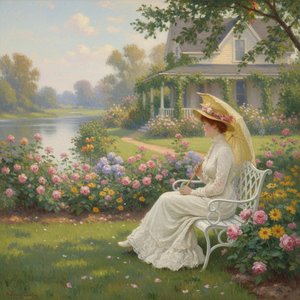
Cundall’s artwork is characterized by panoramic townscapes and landscapes, reflecting the grandeur of the british countryside and urban vistas. He skillfully employed Impressionist techniques—particularly capturing fleeting moments of light and color—to convey atmosphere and emotion. Among his most celebrated pieces are “Gravesend,” a meticulously rendered depiction of the coastal town, showcasing Cundall’s meticulous attention to detail and compositional balance; "The Arena, Assisi," an evocative portrayal of the basilica's interior bathed in sunlight, demonstrating his ability to translate spiritual contemplation into visual form; and “Segovia, Spain,” where he captured the architectural majesty of Segovia Cathedral against a dramatic sky. These works exemplify Cundall’s commitment to portraying subjects with sensitivity and artistic integrity.influences and comparisons
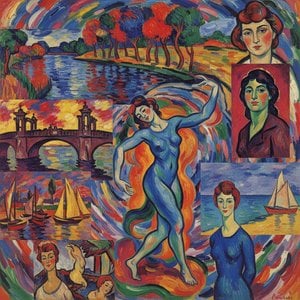
Cundall's style resonates with the broader artistic currents of his time, notably influenced by Henri Matisse’s Fauvism—specifically “Antibes” (73 x 92 cm), fauvism—which championed bold color palettes and expressive brushstrokes as a reaction against academic conventions. Similarly, Vincent van Gogh’s “Blossoming Branches” exemplifies the emotional depth and textural richness that defined Post-Impressionism. These comparisons underscore Cundall's position within a dynamic artistic landscape where experimentation and subjective interpretation were paramount.museum and gallery presence
Although there isn't a dedicated section for Cundall on ArtsDot or an extensive collection in prominent museums, his work is part of the broader british art landscape. For instance, The Munnings Art Museum (Dedham, United States) and The Herbarium (Richmond, United States), featured on ArtsDot, showcase diverse artistic collections. His paintings contribute to a rich tapestry of british art history, mirroring the stylistic explorations undertaken by artists like Marianne North and Eric Ravilious.legacy and influence
Charles Ernest Cundall’s contribution to british landscape painting is recognized as an important facet of early 20th-century artistic heritage. He skillfully blended observation with imagination, producing images that capture both the beauty of nature and the complexities of human experience—a legacy that continues to inspire artists today. Explore more artists like Cundall on ArtsDot's artist directory. Discover the medieval art to abstract art at ArtsDot.Questions et réponses
Où puis-je voir les œuvres de Charles Cundall classées par atmosphère ?
La L'espace des émotions de Charles Cundall vous permet de découvrir les œuvres de l'artiste classées par ambiance.
Où puis-je voir la palette de couleurs des œuvres de Charles Cundall ?
L'usage de la couleur par Charles Cundall à travers les œuvres répertoriées sur ce site peut être étudié sur la page ADN de la palette de l'artiste.
Existe-t-il une visite virtuelle en 3D des œuvres de Charles Cundall ?
Une visite virtuelle est possible : la page Musée en 3D de Charles Cundall présente les œuvres de l'artiste dans une galerie en trois dimensions.