

Antonio Zucchi: A Venetian Master of Rococo & Neoclassical Charm
Sommaire
Early Life & Venetian Roots: The Foundations of Zucchi’s Style
Antonio Pietro Francesco Zucchi, born in Venice on May 1st, 1726, emerged from a family deeply entrenched in the artistic traditions of the Serenissima. His initial training wasn't within the grand academies, but rather a nurturing environment shaped by his father, Francesco—an accomplished engraver—and his uncle Carlo, a skilled scene painter. This familial foundation instilled not only technical proficiency but also a keen understanding of perspective and composition, qualities that would become hallmarks of Zucchi’s distinctive style. Venice itself was a crucial influence; the city's shimmering light, ornate architecture, and vibrant artistic community fostered an appreciation for detail and a predilection for decorative elegance. Early works reveal this Venetian sensibility—historical paintings imbued with a delicate haziness reminiscent of Jacopo Amigoni, one of his later instructors. However, even in these nascent pieces, hints of the clarity and refined form that would define his mature work begin to surface.
The Allure of Rococo: Decorative Frescoes and Mythological Scenes
 Putti Making Music
Admire 'Putti Making Music' by Antonio Zucchi (1770). A stunning Rococo painting of cherubs playing music, oil on canvas. Discover its neoclassical style & historical charm.
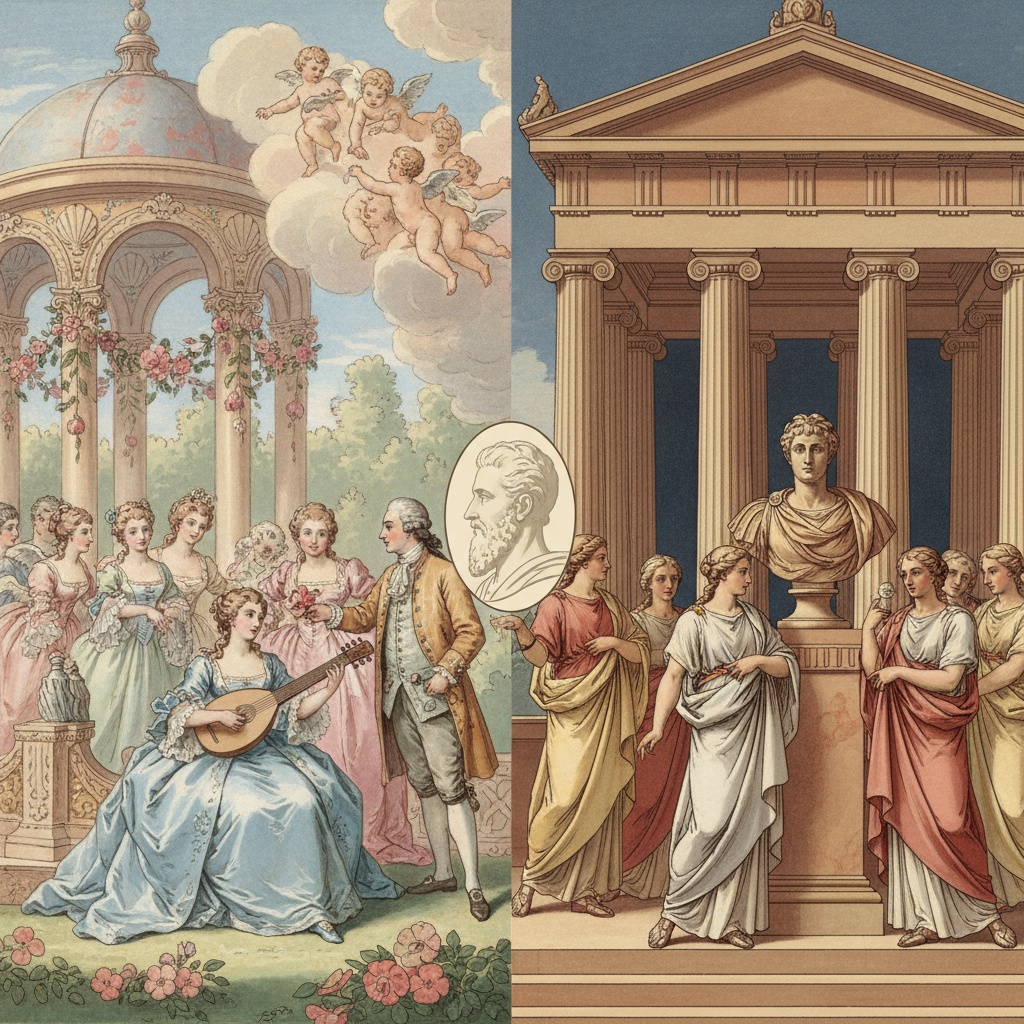
As Zucchi’s career blossomed, he became increasingly drawn to the prevailing aesthetic of the Rococo period. This wasn't merely a stylistic adoption; it was an embrace of a philosophy—a celebration of lightness, grace, and playful ornamentation. His frescoes, particularly those commissioned for Venetian churches and palazzi, exemplify this sensibility. They are not simply depictions of religious or mythological narratives but immersive experiences, filled with swirling figures, pastel hues, and intricate details that invite the viewer into a world of ethereal beauty. Paintings like ‘Sappho Giving Anacreon a Feather from Cupid's Wing’ (1770) beautifully illustrate this—a dynamic composition brimming with classical allusion, rendered with a delicate touch and an exquisite attention to color. The subject matter itself, steeped in the mythology of love and poetry, reflects the Rococo fascination with amorous intrigue and idealized beauty. Alongside these grand-scale works, Zucchi produced smaller canvases populated by cherubic figures – ‘Putti Making Music’ (1770) being a prime example – showcasing his mastery of capturing movement and emotion in miniature.
Collaboration with Robert Adam: English Estates and Architectural Harmony
The turning point in Zucchi's career arrived with his association with the Scottish architect Robert Adam. In 1754, he accompanied Adam on a tour of Italy, meticulously sketching ancient ruins and architectural marvels. This journey proved transformative, exposing Zucchi to the principles of Neoclassicism and igniting a passion for classical forms. The collaboration that followed was remarkably fruitful. Adam recognized Zucchi’s talent for decorative painting and commissioned him to adorn numerous English estates with frescoes and elaborate schemes. Kenwood House, Newby Hall, Osterley Park, and Nostell Priory all bear testament to this partnership—interiors where architecture and art seamlessly converge. Zucchi wasn't merely executing Adam’s designs; he was an integral part of the creative process, translating architectural concepts into vibrant visual narratives. His work in these spaces often involved integrating classical motifs with contemporary portraiture, creating a unique blend of historical reverence and personalized elegance.
Angelica Kauffmann: A Marriage of Artistic Minds
Zucchi’s personal life took an equally fascinating turn in 1781 with his marriage to Angelica Kauffmann, one of the most celebrated female painters of her time. Their union was more than a romantic alliance; it was a meeting of two formidable artistic talents. Kauffmann, already established as a prominent figure in London’s art scene, brought with her a network of patrons and a reputation for historical and portrait painting. The couple's move to Rome marked a new chapter in both their careers. While Zucchi continued to produce etchings of classical landscapes – *veduta* capturing the grandeur of Roman ruins – he also dedicated himself to managing Kauffmann’s career, meticulously documenting her commissions and ensuring her artistic legacy. Their relationship, though unconventional by contemporary standards, was built on mutual respect and a shared passion for art. It is said that Zucchi often assisted Kauffmann with her paintings, demonstrating the depth of their collaborative spirit.
Zucchi's Later Years & Enduring Legacy in Printmaking
The final decades of Zucchi’s life were spent primarily in Rome, where he focused increasingly on printmaking. His etchings, often depicting classical buildings and ruins, reveal a refined sensibility and an exceptional attention to detail. These works weren't simply reproductions of existing structures; they were interpretations—informed by his travels with Adam and imbued with a sense of romantic nostalgia. While less celebrated than his frescoes, these prints played a crucial role in disseminating his artistic vision and influencing the Neoclassical style across Europe. Zucchi’s dedication to documenting classical architecture also reflects a broader intellectual trend—a growing fascination with antiquity that fueled the Enlightenment and shaped the aesthetic sensibilities of the era. He passed away on December 25th, 1795, leaving behind a rich artistic legacy.
Collecting Zucchi Today: Rediscovering a Neoclassical Gem
Today, Antonio Zucchi’s works are increasingly sought after by collectors and art enthusiasts alike. While his large-scale frescoes remain largely confined to the stately homes of England, his paintings and etchings offer accessible entry points into his captivating world. Pieces like ‘An English Family Group’, a delicate pen and brown ink sketch, showcase his mastery of line and composition. His works represent a fascinating intersection of Rococo elegance and Neoclassical restraint—a unique blend that sets him apart from his contemporaries. Rediscovering Zucchi is not merely about acquiring beautiful artworks; it’s about connecting with a pivotal moment in art history and appreciating the enduring power of artistic collaboration. ArtsDot.com offers a curated selection of high-quality reproductions of Zucchi's masterpieces, allowing you to bring the beauty and sophistication of his art into your own home. Explore our collection today and experience the timeless allure of this Venetian master.
Articles connexes

Francesco Guardi: Venetian Light, Atmospheric Perspective & the Rococo to Neoclassical Transition
Explore the captivating world of Francesco Guardi, master of Venetian light and atmosphere. Discover his transition from Rococo to Neoclassicism, influence on Impressionism & investment potential with ArtsDot.


