


 Aperçu en situation
 Envoyer
 Partager
 Détails de l'œuvre

 Télécharger
 Articles similaires
 Radiographie
 Diaporama
Northern Lights
 Acrylic On Canvas
- WallArt
- Northern Lights
 1917
1917 21.0 x 26.0 cm
 Galerie Nationale du Canada
 Lire la suite
Giclées et impressions d'art
Impressions giclées ou sur toile de qualité musée, avec une production rapide et des finitions au choix. ( Commander la reproduction peinte à la main Télécharger l'image haute résolution)




P118B $10

P118H $10

P118W $10

P438Z $10

P508JH $12

P508YH $12

P805H $10

P805Z $10

P919BZ $10

P919G $10

P919XJ $10

P959ZH $10

P968JZ $12

W106C $8

W218G $10

W218JH $8

W218Y $10

W307PJ $10

W316G $10

W316PJ $8

W316Y $10

W398PJ $8

W4111J $10

W500HY $15

W500JH $15

W692G $12

W849H $8

W940BG $15

W953PJ $8




Choisissez parmi nos formats prédéfinis qui respectent les proportions originales de l’œuvre.

Vous pouvez saisir vos propres dimensions pour vous adapter à un cadre ou à un espace spécifique. Si la taille sélectionnée ne correspond pas aux proportions de l'image originale, nous recadrerons l'œuvre ou étendrons l'image avec une bordure en miroir ou une couleur unie. Une maquette numérique vous sera envoyée pour approbation avant le début de la production.
Veuillez noter que l'aperçu à l'écran ne reflète pas le recadrage ou l'extension réelle. Seule la maquette montrera avec précision la composition finale.
Bien que des tailles personnalisées soient disponibles, nous vous recommandons de choisir une dimension dans la liste prédéfinie afin de préserver les proportions originales.
Livraison dans le monde entier () en 2 semaines au lieu des 4/5 semaines habituelles. (17 août)

Livraison express gratuite dans le monde entier

Toile de lin de qualité supérieure

Assurance transport complète

Garantie de remboursement des droits de douane

Garantie de fidélité des couleurs

Politique de retour de 60 jours (uniquement en cas de défaut)

Garantie de remboursement à 100%

Offre de tarifs dégressifs
 L'option verre n'est disponible que pour les dimensions inférieures à 110 cm.

Northern Lights
Giclées et impressions d'art
Format de la reproduction
-


Prix total
$ 62
Description de la pièce
The Dance of the Aurora: William John Thomson’s ‘Northern Lights’
William John Thomson's “Northern Lights,” painted in 1917, isn’t merely a depiction of a natural phenomenon; it’s an immersive experience. The canvas vibrates with the ethereal glow of the aurora borealis, capturing not just its visual spectacle but also the profound sense of wonder and mystery associated with this celestial display. Thomson, a master of silhouette painting who later transitioned to portraiture and landscapes, here demonstrates a remarkable shift in his artistic focus – moving from precise outlines to a richer, more atmospheric rendering of light and color. The piece immediately draws the viewer into its heart, inviting contemplation on the sublime beauty of the natural world and humanity’s place within it.
- Subject Matter: The painting centers around the Northern Lights themselves – ribbons of emerald, violet, and gold swirling across a dramatic mountainous landscape. The inclusion of a solitary figure on the left side of the composition adds an element of scale and human perspective, suggesting our smallness in the face of such immense natural power.
- Style: While rooted in late 19th-century British painting traditions, “Northern Lights” transcends simple representation. It leans towards a romanticized view of nature, imbued with a sense of awe and spiritual resonance. The brushwork is loose and expressive, prioritizing the conveyance of light and atmosphere over meticulous detail.
A Window into the Early 20th Century: Context and Technique
Painted in 1917, during a period of significant social and artistic change – the dawn of the 20th century – “Northern Lights” reflects both the prevailing fascination with the natural world and the growing interest in capturing fleeting moments of beauty. Thomson’s technique is particularly noteworthy. He employed a layering approach, building up color gradually through multiple thin washes of paint, creating a luminous effect that mimics the shimmering quality of the aurora itself. The use of subtle gradations of tone – from deep blues and purples to vibrant greens and yellows – adds depth and dynamism to the scene. The artist’s choice of palette is crucial; it's not a literal representation but an interpretation, prioritizing emotional impact over photographic accuracy.
Historical Note:** Thomson’s career spanned several decades, and his style evolved considerably. This piece represents a pivotal moment in his artistic journey, showcasing his growing confidence and willingness to experiment with color and atmosphere.Symbolism and the Myth of the Northern Lights
The Northern Lights have long held a powerful place in human imagination, steeped in myth and legend across various cultures. Often associated with spirits, gods, and portals to other realms, they represent both beauty and danger – a reminder of the forces beyond our control. In “Northern Lights,” Thomson subtly incorporates these symbolic associations. The solitary figure gazing upwards can be interpreted as an individual seeking connection with something larger than themselves, a yearning for transcendence. The vastness of the landscape reinforces this sense of scale and humility. The painting evokes the ancient belief that the aurora borealis was a sign from the gods or a pathway to the afterlife – a potent reminder of humanity’s enduring fascination with the unknown.
A Timeless Masterpiece: Reproduction and Legacy
“Northern Lights” remains a captivating work of art, offering viewers a glimpse into both the beauty of nature and the artistic vision of William John Thomson. Reproductions, meticulously crafted by ArtsDot.com, allow us to appreciate this masterpiece in our own homes, bringing its ethereal glow and evocative atmosphere into our spaces. The painting’s enduring appeal lies not only in its technical skill but also in its ability to transport us to a realm of wonder and inspire a sense of connection with the natural world. It's a testament to Thomson's talent and a beautiful reminder that some sights are best experienced through the lens of art.
Œuvres similaires


Biographie de l'artiste
William John Thomson RSA (1771-1845)
Jeunesse et Éducation
William John Thomson est né le 3 octobre 1771 à Savannah, comté de Chatham, en Géorgie, aux parents écossais Alexander Thomson et Mary Elizabeth Spencer. Sa famille a émigré en Angleterre pendant la Guerre d'Indépendance américaine. Il a reçu sa formation artistique à Londres, bien que des détails spécifiques concernant sa formation formelle restent rares. Cette période a jeté les bases de sa future carrière d’artiste polyvalent.
Développement Artistique et Style
Thomson a initialement été reconnu pour son talent dans la création de silhouettes, une forme d'art populaire à la fin du XVIIIe et au début du XIXe siècle. Il a rapidement élargi son répertoire pour inclure les miniatures de portrait et les portraits à grande échelle. Son style a évolué avec le temps, démontrant une capacité à s’adapter aux goûts artistiques changeants. Bien ancré dans les techniques traditionnelles, il a incorporé des éléments de la peinture britannique contemporaine.
Expositions et Reconnaissance
Thomson a exposé pour la première fois à l'Académie Royale des Arts en 1795, marquant une étape significative dans sa carrière. Il a continué à y exposer régulièrement ainsi qu’à l’Institution britannique entre 1809 et 1829 tout en résidant à Londres aux adresses suivantes : Charles Street, Craven St, et The Strand. En 1808, il a été considéré pour son élection à l'Académie Royale. Son travail lui a valu une réputation de portraitiste et miniaturiste habile.
Déménagement en Écosse et Vie Tardive
En 1812, Thomson s’est relocalisé dans sa patrie d'origine, l'Écosse, s'installant à Édimbourg. Il a épousé Helen J Colhoun en 1797 et plus tard Anne McCulloch (décédée en 1855) vers 1817 ; ces mariages ont engendré sept enfants. À Édimbourg, il est devenu une figure de proue de la communauté artistique, résidant aux adresses suivantes : York Place et Northumberland Avenue. Il a occupé divers postes officiels au sein des cercles artistiques écossais.
Œuvres Majeures et Thèmes
L’œuvre de Thomson englobe les portraits, les miniatures, les paysages et les peintures de genre. Certaines de ses œuvres notables comprennent Northern Lights et Presentation teapot. Ses portraits ont souvent capturé la ressemblance des figures écossaises importantes, reflétant le paysage social de l'époque. Il a également exploré les vues pittoresques et la vie quotidienne dans ses paysages et scènes de genre.
Influences et Héritage
Bien que des influences artistiques spécifiques ne soient pas largement documentées, son travail témoigne d'une conscience des styles de portraiture britanniques dominants de la période. Sa sœur, Catherine Thomson, est par la suite la belle-mère de l’écrivaine Elizabeth Gaskell, suggérant un lien avec les cercles littéraires. Il est devenu une figure clé de l'art britannique du XIXe siècle et en particulier dans le paysage artistique écossais.
Signification Historique
William John Thomson RSA a joué un rôle important dans la documentation des vies de ses contemporains à travers les portraits. Son travail fournit des informations précieuses sur l’histoire sociale et culturelle de l'Écosse au début du XIXe siècle. Bien qu'il ne soit pas aussi largement célébré que certains de ses pairs, il reste une figure significative pour les chercheurs étudiant l'art britannique et le patrimoine artistique écossais.

William John Thomson RSA
1771 - 1845 , États-Unis d'Amérique
L'essentiel de l'artiste
- Artistic Movement Or Style: Portraiture et Miniatures
- Date Of Birth: 3 octobre 1771
- Date Of Death: 1845
- Full Name: William John Thomson RSA
- Nationality: Écossais
- Notable Artworks:
- Northern Lights
- Présentation teapot
- Place Of Birth: Savannah, États-Unis
Articles connexes

Top 10 Paysages Iconiques : Voyage Artistique & Décoration d'Intérieur
Découvrez les 10 plus beaux paysages de l'histoire de l'art : Monet, Van Gogh et bien d'autres. Explorez leur technique unique et trouvez l'inspiration pour votre décoration intérieure avec ArtsDot.com. Œuvres exceptionnelles à découvrir !

Les 10 Chefs-d'œuvre du Paysage Romantique : Artistes et Décor d'Intérieur
Plongez dans l'émotion du Romantisme avec les 10 plus beaux paysages de Friedrich, Turner & Delacroix. Découvrez leur histoire et trouvez l'inspiration déco idéale sur ArtsDot.com !

Constable : Les 25 Chefs-d'Œuvre du Maître Anglais | ArtsDot
Plongez dans l'univers de John Constable avec les 25 œuvres incontournables du maître anglais. Découvrez l'histoire, la technique et l'émotion derrière ses paysages romantiques. Reproductions de qualité muséale sur ArtsDot.com.

Évocations de lieux : Un voyage historique à travers l'art du paysage
Explorez l'histoire fascinante de la peinture de paysage à travers les chefs-d'œuvre du Romantisme. Découvrez Friedrich, Turner et Aivazovski et laissez-vous inspirer par la beauté sauvage et le sublime. Reproduction d'art de qualité chez ArtsDot.
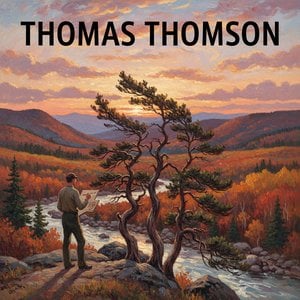
Thomas Thomson: Pioneering Canadian Landscape & the Pursuit of National Identity
Explore the evocative landscapes of Tom Thomson, a pivotal figure in Canadian art & precursor to the Group of Seven. Discover his bold style, lasting legacy, and profound impact on shaping a national artistic identity.

