


 Aperçu en situation
 Partager
 Partager
 Détails
 Guide imprimable

 Télécharger
 Articles similaires
 Radiographie
 Voir le diaporama
 Statistiques
Julia Reading


 Afficher la suite
Reproduction à l'huile faite à la main
Huile sur toile peinte à la main, avec cadre et dimensions personnalisés, réalisée sur commande par nos artistes. ( Passer au format impression Passer au format image numérique)




P118B €10

P118H €10

P118W €10

P438Z €10

P508JH €12

P508YH €12

P805H €10

P805Z €10

P919BZ €10

P919G €10

P919XJ €10

P959ZH €10

P968JZ €12

W106C €8

W218G €10

W218JH €8

W218Y €10

W307PJ €10

W316G €10

W316PJ €8

W316Y €10

W398PJ €8

W4111J €10

W500HY €15

W500JH €15

W692G €12

W849H €8

W940BG €15

W953PJ €8




Choisissez parmi nos formats prédéfinis qui respectent les proportions originales de l’œuvre.

Saisissez la largeur et la hauteur souhaitées, pour s'adapter à votre cadre ou à votre mur. Cette œuvre est peinte à la main ; ainsi, pour un format de forme différente, l'artiste peut peindre un peu plus autour du tableau ou réduire légèrement les bords — c'est vous qui choisissez. Nous vous envoyons une maquette numérique pour approbation avant que la peinture ne commence. L'image présentée sur cette page ne reflète pas le résultat réel — seule la maquette le fait.
Après la commande, l’équipe ArtsDot.com contactera le client par e-mail pour recueillir ses instructions et lui fournira une maquette d’aperçu
Livraison dans le monde entier () en 3 à 4 semaines au lieu des 5 semaines habituelles. (23 octobre). Aucun compromis sur la qualité.

Livraison express gratuite dans le monde entier

Toile de lin de haute qualité

Assurance transport complète

Garantie de remboursement des droits de douane

Garantie de fidélité des couleurs

Garantie de retour de 100 jours (uniquement en cas de défaut)

Garantie de remboursement à 100%

Tarifs dégressifs sur quantité
 L'option verre n'est disponible que pour les dimensions inférieures à 110 cm.

Julia Reading
Technique de reproduction
Format de la reproduction
-


Prix total final
€ 231
A Snapshot of Urban Life: Unveiling "Julia Reading"
William James Glackens’ “Julia Reading,” painted in 1916, isn't merely a portrait; it’s a meticulously crafted window into the burgeoning dynamism and subtle social currents of early 20th-century New York City. Born during the height of the Ashcan School movement, Glackens rejected the idealized depictions favored by the National Academy of Design, instead choosing to capture the gritty reality of everyday life – the bustling streets, the casual interactions, and the quiet moments within a rapidly changing metropolis. “Julia Reading” exemplifies this approach, offering a glimpse into a specific scene that simultaneously feels intimate and profoundly connected to the larger urban narrative.
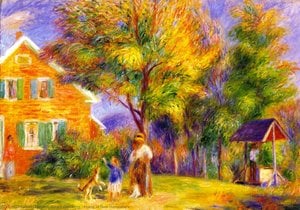
The painting immediately draws the eye to its central figure, a woman engrossed in a book. Her posture – slightly turned towards the viewer, her hand resting delicately on the page – conveys a sense of quiet contemplation amidst the implied activity around her. Glackens’ masterful use of light and shadow establishes a strong focal point, directing our gaze to Julia's face and highlighting the subtle details of her expression. The inclusion of two other individuals—a man standing behind her and another seated further back—adds layers of narrative complexity without disrupting the primary focus. These figures, though less defined, contribute to the sense of a shared space, a moment captured within the larger tapestry of urban life.
The Ashcan School: A Rejection of Tradition
Glackens was a key figure in the Ashcan School, a movement that challenged the established norms of American art. Rejecting the polished surfaces and grand narratives of academic painting, the Ashcan artists sought to depict the realities of urban life with honesty and immediacy. They favored working-class subjects, unvarnished scenes, and often employed a darker palette—a deliberate choice reflecting the sometimes bleak conditions of city living. “Julia Reading” embodies this spirit perfectly; it’s not a romanticized vision of New York, but rather a realistic portrayal of a woman finding solace in literature within its crowded streets.
The painting's style is characterized by loose brushstrokes and an emphasis on capturing the essence of the scene. Glackens employed a technique reminiscent of Impressionism, using broken color and subtle gradations to create a sense of movement and atmosphere. The composition itself—a slightly off-center arrangement with overlapping planes—adds to the painting’s dynamism and invites the viewer to become part of the scene.
Symbolism and Context: A Moment in Time
The book Julia is reading likely symbolizes escape, knowledge, or perhaps simply a moment of respite from the demands of city life. It's a small detail that speaks volumes about the human desire for intellectual stimulation amidst the chaos of urban existence. The setting itself—a public space filled with implied activity—suggests a sense of anonymity and connection within a large population. “Julia Reading” was painted during a period of rapid industrialization and urbanization in America, a time of significant social and economic change. The painting reflects this transformation, capturing the spirit of a city grappling with modernity while still retaining its inherent human qualities.
A Legacy of Realism: Glackens' Enduring Influence
William James Glackens’ work continues to resonate today because it offers a powerful and honest portrayal of American life. “Julia Reading” stands as a testament to his skill as an artist and his commitment to capturing the realities of the urban experience. His legacy extends beyond individual paintings; he helped pave the way for future generations of artists who sought to depict America with greater authenticity and social awareness. Reproductions of this evocative piece offer a valuable window into a bygone era, inviting viewers to contemplate the timeless themes of human connection, solitude, and the enduring power of art.
Questions et réponses
À quelle étape de la carrière de William James Glackens appartient « Julia Reading » (1916) ?
«Julia Reading», créé en 1916, appartient à la période Early Period de la carrière de William James Glackens.
Comment puis-je découvrir des œuvres d'art proches de «Julia Reading» de William James Glackens ?
Les œuvres similaires à «Julia Reading» de William James Glackens sont regroupées sur la page Œuvres similaires de l'œuvre.
Quelle technique a été utilisée pour «Julia Reading» de William James Glackens ?
William James Glackens a utilisé la technique du Acrylic On Canvas pour "Julia Reading". Cette technique définit la nature matérielle de l'œuvre originale.
Œuvres similaires


Biographie de l'artiste
Un Pionnier de l'École Ashcan
William James Glackens, une figure marquante de l’art américain, a laissé une empreinte indélébile sur la toile avec ses captivantes peintures réalistes. Né à Philadelphie, en Pennsylvanie, en 1870, le parcours artistique de Glackens témoigne de sa passion inébranlable pour saisir l'essence de la vie quotidienne.Jeunesse et Influences
Les premières années de Glackens furent marquées par une inclination innée vers l’art, ce qui le conduisit à s’inscrire à l’Académie des Beaux-Arts de Pennsylvanie. Sous la tutelle de Thomas Anshutz, un réaliste renommé, Glackens affina ses compétences et devint l’un des fondateurs de l'École Ashcan. Ce mouvement rejetait les frontières conventionnelles de la beauté artistique, se concentrant plutôt sur les réalités brutes de la vie métropolitaine.Carrière Artistique
Le travail de Glackens se caractérise par ses scènes de rue aux teintes sombres et vibrantes, ainsi que par des représentations de la vie quotidienne à New York et à Paris avant la Première Guerre mondiale. Ses œuvres ultérieures, influencées par Renoir, affichaient une tonalité plus lumineuse, reflétant sa croissance en tant qu'artiste. Notamment, Glackens a également travaillé comme illustrateur pour des journaux et des magazines à Philadelphie et New York.- Vue de Haarlem avec des terrains de blanchiment, une peinture de Jacob Isaakszoon van Ruisdael (Ruisdael), exemplifie le niveau de détail et de savoir-faire qui définit le travail de Glackens. Cette œuvre fait maintenant partie de la collection du Musée Chrysler.
- Le chef-d'œuvre de Glackens lui-même, Les Acheteurs, témoigne de sa capacité à saisir l’essence de la vie urbaine. Cette peinture se trouve dans la collection Nouveau Réalisme sur ArtsDot.com.
Héritage et Impact
Les contributions de Glackens à l’art américain sont multiples, allant au-delà de son propre travail. Il a joué un rôle essentiel en aidant Albert C. Barnes à acquérir des peintures européennes pour la Fondation Barnes à Philadelphie. Cette collection est devenue un pilier de l’histoire de l’art américain. Œuvres clés et collections : * Les Acheteurs (Nouveau Réalisme, huile sur toile, Musée Chrysler) * Vue de Haarlem avec des terrains de blanchiment (Ruisdael, Château Sforza, Milan, Italie) Lectures recommandées : * [https://ArtsDot.com/@/william-james-glackens](https://ArtsDot.com/@/william-james-glackens) - Explorez la collection étendue des œuvres de Glackens sur ArtsDot.com. * [https://en.wikipedia.org/wiki/william_glackens](https://en.wikipedia.org/wiki/william_glackens) - Plongez dans la biographie détaillée de William James Glackens sur Wikipédia.
William James Glackens
1870 - 1938 , États-Unis d'Amérique
En bref
- Artistic Movement Or Style: Réalisme, Ashcan School
- Artists Who Influenced This Artist:
- Thomas Anshutz
- Renoir
- Date Of Birth: 1870
- Date Of Death: 1938
- Full Name: William James Glackens
- Nationality: Américain
- Notable Artworks:
- The Shoppers
- View of Haarlem
- Place Of Birth (City And Country): Philadelphie, États-Unis
Articles connexes

L'École d'Ashcan : Réalisme urbain et démocratisation de l'art américain
Explorez l'École d'Ashcan : un mouvement artistique révolutionnaire capturant la vie urbaine américaine au début du XXe siècle. Découvrez ses figures clés, thèmes et son héritage durable avec ArtsDot.

Réalisme Américain : 10 Chefs-d'œuvre Incontournables pour une Déco Inspirée
Plongez au cœur du Réalisme Américain avec 10 chefs-d'œuvre d'Edward Hopper, Andrew Wyeth et plus. Découvrez l'histoire et les techniques de ces artistes emblématiques. Reproductions de tableaux de qualité musée sur ArtsDot.com !

Grant Wood & American Regionalism: Identity, Myth & the Rural Landscape
Explore the world of Grant Wood & American Regionalism with ArtsDot. Discover the symbolism behind 'American Gothic', recurring themes, and the movement's lasting impact on art history. High-quality reproductions available.

Le Réalisme Américain du XXe siècle : Un commentaire social et artistique poignant
Explorez le Réalisme Américain du XXe siècle : de l'Ashcan School à Hopper. Analyse approfondie des artistes, techniques et l'impact social de ce mouvement artistique puissant. Découvrez son héritage sur ArtsDot.
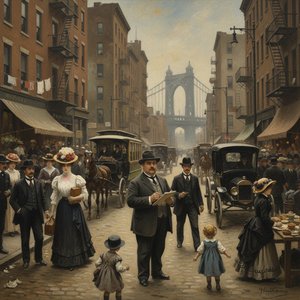
William Glackens: Capturing Modern American Life with Ashcan Realism
Explore the life & art of William Glackens, a pioneer of American Realism and founding member of the Ashcan School. Discover his vibrant depictions of early 20th-century New York & Paris. Learn about his influences & lasting legacy.


