
- Accueil

- Reproduction de peinture à l'huile
- William Hogarth
- Mary Edwards

 Aperçu en situation
 Envoyer
 Partager
 Détails de l'œuvre

 Télécharger l'image
 Articles similaires
 Radiographie
 Voir le diaporama
Mary Edwards

 Lire la suite
Reproduction à l'huile faite à la main
Huile sur toile peinte à la main, avec cadre et dimensions personnalisés, réalisée sur commande par nos artistes. ( Passer au tirage Passer à l'image)




P118B $10

P118H $10

P118W $10

P438Z $10

P508JH $12

P508YH $12

P805H $10

P805Z $10

P919BZ $10

P919G $10

P919XJ $10

P959ZH $10

P968JZ $12

W106C $8

W218G $10

W218JH $8

W218Y $10

W307PJ $10

W316G $10

W316PJ $8

W316Y $10

W398PJ $8

W4111J $10

W500HY $15

W500JH $15

W692G $12

W849H $8

W940BG $15

W953PJ $8




Choisissez parmi nos formats prédéfinis qui respectent les proportions originales de l’œuvre.

Vous pouvez saisir vos propres dimensions pour l'adapter à un cadre ou à un espace spécifique. Si la taille sélectionnée ne correspond pas aux proportions de l'image d'origine, nous recadrerons l'œuvre ou prolongerons la peinture avec des éléments peints à la main supplémentaires. Une maquette numérique vous sera envoyée pour approbation avant le début de la production.
Veuillez noter que l'aperçu à l'écran ne reflète pas le recadrage ou l'extension réels. Seule la maquette montrera fidèlement la composition finale.
Bien que des tailles personnalisées soient disponibles, nous vous recommandons de sélectionner une dimension dans la liste prédéfinie afin de préserver les proportions d'origine.
Après la commande, l’équipe ArtsDot.com contactera le client par e-mail pour obtenir ses instructions et lui fournira une maquette d’aperçu
Livraison dans le monde entier () en 3 à 4 semaines au lieu des 5 semaines habituelles. (31 juillet). Aucune concession sur la qualité.

Livraison express gratuite dans le monde entier

Toile de lin de qualité supérieure

Assurance transport complète

Garantie de remboursement des droits de douane

Garantie de fidélité des couleurs

Politique de retour de 60 jours (uniquement en cas de défaut)

Garantie de remboursement à 100%

Offre de réduction sur les achats groupés
 L'option verre n'est disponible que pour les dimensions inférieures à 110 cm.

Mary Edwards
Technique de reproduction
Dimensions de la reproduction
-


Prix total
$ 263
Description de l'œuvre
A Moment of Quiet Contemplation: William Hogarth’s “Mary Edwards”
William Hogarth's "Mary Edwards," a captivating portrait rendered with his signature meticulous detail and sharp social observation, offers more than just a likeness; it presents a carefully constructed tableau of domesticity and quiet introspection. Painted around the mid-18th century, this work exemplifies Hogarth’s unique approach to genre painting – moving beyond mere representation to deliver a subtle commentary on the roles and expectations placed upon women within the burgeoning urban landscape of London. The scene unfolds within a modestly furnished interior, likely a parlor or study, bathed in soft light that suggests an afternoon repose. At the heart of the composition sits Mary Edwards, a woman of evident grace and intelligence, absorbed in a book. Her posture is relaxed yet dignified, her gaze directed inward, hinting at a world of thought and imagination contained within those pages.
Beside her rests her loyal dog, a creature of gentle demeanor that mirrors the serenity of the scene. The inclusion of the animal isn’t merely decorative; it speaks to the close bonds between humans and animals in 18th-century life – a shared space of companionship and mutual affection. The dining table behind them, adorned with simple tableware and a clock, anchors the composition within the realities of daily existence. The clock, a recurring motif in Hogarth’s work, serves as a subtle reminder of time's relentless passage, adding a layer of temporal awareness to the scene.
Hogarth’s Technique: A Masterclass in Detail and Observation
Hogarth was renowned for his painstaking technique, honed during his early apprenticeship as an engraver. This training instilled within him an unparalleled ability to render texture, light, and shadow with astonishing accuracy. In “Mary Edwards,” this skill is immediately apparent. Notice the subtle variations in the fabric of Mary’s dress – the delicate folds, the sheen of the material, all meticulously captured. The dog's fur is rendered with a remarkable level of detail, conveying its softness and warmth. Hogarth’s use of chiaroscuro—the dramatic contrast between light and dark—further enhances the sense of depth and realism within the painting. He masterfully employs this technique to draw the viewer’s eye towards Mary’s face, emphasizing her expression of quiet contemplation.
Furthermore, Hogarth's approach extended beyond mere technical proficiency; he was a keen observer of human behavior. He didn’t simply paint what he saw but sought to capture the essence of his subjects – their personalities, their social standing, and their place within the broader context of society. This is particularly evident in Mary Edwards’ posture and expression, which suggest a woman of independent thought and quiet dignity.
Symbolism and Social Commentary
While seemingly a simple portrait, “Mary Edwards” carries subtle layers of symbolic meaning. The book she reads likely represents her intellectual pursuits – a rare privilege for women of the era. It speaks to a desire for knowledge and self-improvement, hinting at a woman who transcends the traditional roles assigned to her by society. The dog, as mentioned earlier, symbolizes companionship and loyalty, but also perhaps a connection to the natural world—a grounding force amidst the complexities of urban life.
Considering this painting within the context of Hogarth’s broader oeuvre reveals a consistent thread of social commentary. He frequently used his art to critique the moral failings and societal injustices of his time. While “Mary Edwards” lacks the overt satire of works like *A Rake's Progress*, it subtly challenges conventional notions of female roles, suggesting that women possessed intellectual capabilities beyond mere domesticity. It’s a quiet assertion of agency within a restrictive social framework.
A Legacy of Insight: Mary Stella Edwards and Beyond
Interestingly, the subject of this painting bears a striking resemblance to Mary Stella Edwards (1893-1989), an English painter herself. While separated by over two centuries, both women shared a passion for art and a desire to capture moments of quiet beauty. Edwards’ own work often featured domestic scenes and portraits, reflecting a similar interest in the lives of ordinary people. The connection between Hogarth's "Mary Edwards" and Edwards highlights the enduring appeal of portraying intimate human experiences.
Today, ArtsDot offers meticulously crafted hand-painted reproductions of “Mary Edwards,” allowing you to bring this remarkable work into your home or office. Each reproduction is created by skilled artisans who replicate Hogarth’s technique with exceptional precision, ensuring that the painting's beauty and detail are faithfully preserved. Whether you are an art enthusiast, a collector, or simply seeking a piece of timeless elegance, a ArtsDot reproduction of “Mary Edwards” offers a unique opportunity to connect with one of Britain’s most influential artists.
Œuvres similaires


Biographie de l'artiste
jeune vie et influences
William Hogarth, artiste anglais multifacette, est né le 10 novembre 1697 à Londres. Sa jeune vie a été marquée par son apprentissage chez l'engraver Ellis Gamble dans les champs de Leicester, où il a développé ses compétences en gravure de cartes commerciales. Cette expérience a considérablement influencé son ton artistique, souvent noté pour sa pointe acérée et critique.carrière artistique
La gamme créative d’Hogarth s’étendait de la peinture réaliste de portraits à des séries picturales de type comic-like, appelées "sujets moraux modernes". Il est célèbre pour ses œuvres A Harlot’s Progress, A Rake’s Progress et Marriage a-la-mode. Son style distinctif est devenu si influent que des illustrations satiriques politiques similaires sont souvent désignées comme "hogarthiennes".œuvres notables et leur signification
- Le contrat de mariage (classicisme, huile sur toile) : ce tableau illustre la maîtrise d’Hogarth de la satire, critiquant les récits sociaux de son temps. [https://ArtsDot.com/@@/8bwmb6-william-hogarth-the-marriage-contract](https://ArtsDot.com/@@/8bwmb6-william-hogarth-the-marriage-contract)
- A Harlot’s Progress (art satirique, gravure) : cette série de peintures témoigne de la capacité d’Hogarth à capturer la forme humaine avec grâce et puissance, souvent en incorporant du contenu sexuellement explicite. [https://ArtsDot.com/@/william-hogarth](https://ArtsDot.com/@/william-hogarth)
héritage et influence
L’art d’Hogarth a gagné une immense popularité et a été produit en masse par le biais d’estampes, faisant de lui l’artiste anglais le plus important de son temps. Charles Lamb, l'essayiste, a noté célèbrement que les images d’Hogarth étaient comme des livres à lire plutôt qu’à simplement regarder.musées et collections
Le British Museum, avec sa vaste collection d'objets artistiques et d'antiquités culturelles, est une institution importante au Royaume-Uni. [https://en.wikipedia.org/wiki/british_museum](https://en.wikipedia.org/wiki/british_museum) Bien qu’il ne soit pas spécifiquement axé sur le travail d’Hogarth, il représente le contexte plus large de l'art et de la culture britanniques.conclusion
L'héritage d'Hogarth en tant qu'artiste satirique continue d'influencer le monde de l'art. Ses œuvres, telles que Le contrat de mariage et A Harlot’s Progress, restent significatives non seulement pour leur valeur artistique mais aussi pour leur critique acerbe des récits sociaux. Explorez davantage l'œuvre d'Hogarth sur [https://ArtsDot.com/@/william-hogarth](https://ArtsDot.com/@/william-hogarth).
William Hogarth
1697 - 1764 , Royaume-Uni
L'essentiel de l'artiste
- Artistes Influencés:
- James Gillray
- George Cruikshank
- Date De Naissance: 10 novembre 1697
- Influenceurs Artistiques:
- Peinture de genre néerlandaise
- Caricatures françaises
- Lieu De Naissance: Londres, Royaume-Uni
- Mouvement Artistique: Art satirique, Réalisme
- Nationalité: Britannique
- Nom Complet: William Hogarth
- Oeuvres Notables:
- A Harlot’s Progress
- A Rake’s Progress
- Marriage A-la-Mode
Articles similaires
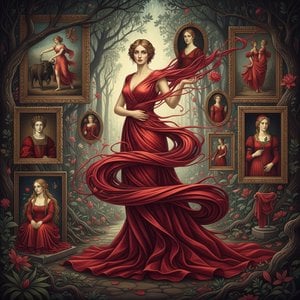
Crimson Threads of Narrative: Exploring Symbolism & Representation in Artworks Featuring the Red Dress
Explore the rich symbolism of the red dress in art history! From ancient power displays to iconic portraits like Cézanne’s 'Madame Cezanne', discover the cultural and artistic significance behind this captivating color. Expert analysis & insights.

Résonance Émotionnelle dans la Conception Intérieure : Sélectionner les Peintures pour des Espaces Harmonieux
Transformez votre intérieur avec des peintures qui évoquent vos émotions ! Conseils d'experts, reproductions de qualité et créations sur mesure pour une décoration unique & harmonieuse. Découvrez l'art qui vous ressemble.

The Enduring Gaze: A Historical & Artistic Exploration of Portrait Painting Across Cultures
Explore the rich history of portrait painting with expert insights into Renaissance masterpieces & modern innovations. Discover artists, movements & commission a custom oil painting at ArtsDot.
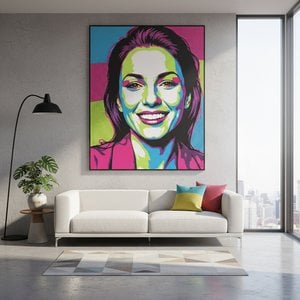
De l'Instantané à l'Œuvre Iconique : La Pop Art Personnalisée comme Affirmation Esthétique Contemporaine
Transformez vos photos en œuvres d'art Pop Art personnalisées avec ArtsDot ! Artisans experts, qualité supérieure & satisfaction garantie. Créez un héritage visuel unique et intemporel.

John Singer Sargent : Les 25 Œuvres Maîtresses d'un Portraitiste Éminent | ArtsDot
Plongez dans l'univers de John Singer Sargent : découvrez les 25 œuvres qui ont marqué l'histoire de l'art. Portraits impressionnants, réalisme exquis et couleurs vibrantes. Retrouvez ces chefs-d'œuvre en reproduction haute définition sur ArtsDot.com.



