 Aperçu en situation
 Envoyer
 Partager
 Détails de l'œuvre

 Télécharger
 Articles similaires
 Radiographie
 Diaporama
Untitled


 Lire la suite
Reproduction à l'huile faite à la main
Huile sur toile peinte à la main, avec cadre et dimensions personnalisés, réalisée sur commande par nos artistes. ( Commander l'impression Télécharger l'image haute résolution)




P118B $10

P118H $10

P118W $10

P438Z $10

P508JH $12

P508YH $12

P805H $10

P805Z $10

P919BZ $10

P919G $10

P919XJ $10

P959ZH $10

P968JZ $12

W106C $8

W218G $10

W218JH $8

W218Y $10

W307PJ $10

W316G $10

W316PJ $8

W316Y $10

W398PJ $8

W4111J $10

W500HY $15

W500JH $15

W692G $12

W849H $8

W940BG $15

W953PJ $8




Choisissez parmi nos formats prédéfinis qui respectent les proportions originales de l’œuvre.

Vous pouvez saisir vos propres dimensions pour l'adapter à un cadre ou à un espace spécifique. Si la taille sélectionnée ne correspond pas aux proportions de l'image d'origine, nous recadrerons l'œuvre ou prolongerons la peinture avec des éléments peints à la main supplémentaires. Une maquette numérique vous sera envoyée pour approbation avant le début de la production.
Veuillez noter que l'aperçu à l'écran ne reflète pas le recadrage ou l'extension réels. Seule la maquette montrera fidèlement la composition finale.
Bien que des tailles personnalisées soient disponibles, nous vous recommandons de sélectionner une dimension dans la liste prédéfinie afin de préserver les proportions d'origine.
Après la commande, l’équipe ArtsDot.com contactera le client par e-mail pour recueillir ses instructions et lui fournira une maquette d’aperçu
Livraison dans le monde entier () en 3 à 4 semaines au lieu des 5 semaines habituelles. (17 août). Aucun compromis sur la qualité.

Livraison express gratuite dans le monde entier

Toile de lin de qualité supérieure

Assurance transport complète

Garantie de remboursement des droits de douane

Garantie de fidélité des couleurs

Politique de retour de 60 jours (uniquement en cas de défaut)

Garantie de remboursement à 100%

Offre de tarifs dégressifs
 L'option verre n'est disponible que pour les dimensions inférieures à 110 cm.

Untitled
Technique de reproduction
Format de la reproduction
-


Prix total
$ 263
Description de l'œuvre
A Symphony of Chaos: Willem de Kooning’s “Interchange”
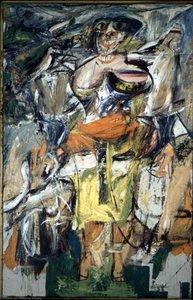
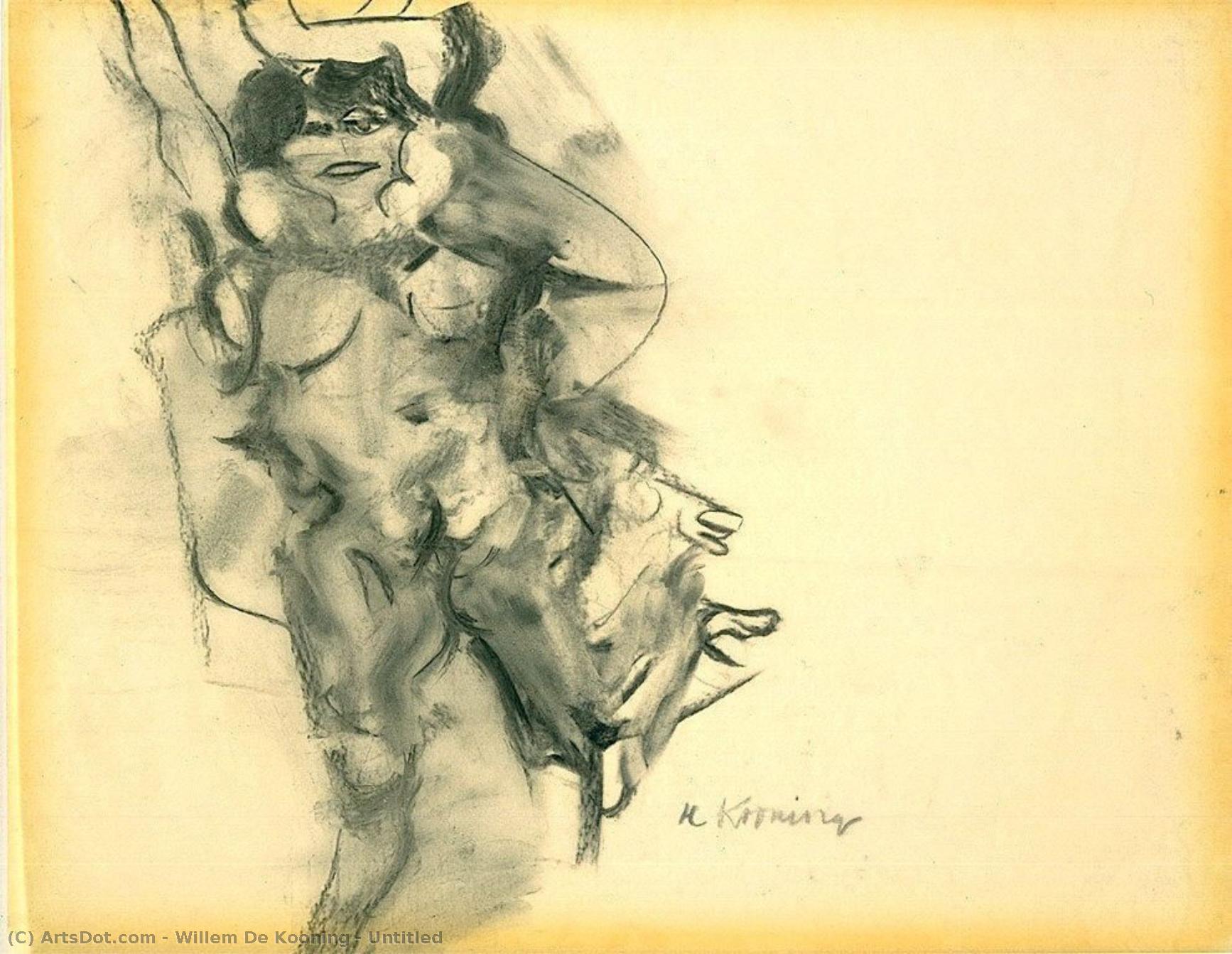
“Interchange,” painted in 1955 by Willem de Kooning, stands as a pivotal moment in the artist's oeuvre and embodies the core tenets of Abstract Expressionism. More than just a depiction of a woman’s body—a subject he had largely abandoned by this point—the canvas pulsates with an unsettling dynamism that captures the anxieties of postwar America and foreshadows the movement’s eventual embrace of urban landscapes as its primary focus. De Kooning himself described it as “a kind of…a sort of…a terrible thing,” reflecting the profound emotional investment he poured into its creation.The Style: Fragmented Gestures and Bold Texture
De Kooning's stylistic evolution is palpable in "Interchange." Departing from his earlier explorations of female figures—characterized by meticulous detail and psychological nuance—he adopted a radically different approach, prioritizing gesture and texture above all else. Inspired by the work of Franz Kline, whose stark black-and-white lines had captivated him, De Kooning employed thick impasto strokes of charcoal to build up layers of pigment onto the canvas. These marks aren’t merely decorative; they convey an urgent physicality—a sense of struggle and disruption—that dominates the composition. The fragmented forms emerge from this turbulent surface, mirroring the fractured realities experienced by individuals navigating a rapidly changing world.Historical Context: Anxiety and Transformation
Painted during the height of the Abstract Expressionist movement, “Interchange” reflects the pervasive atmosphere of uncertainty that gripped Europe and North America following World War II. Artists wrestled with existential questions about identity, morality, and purpose in the wake of unimaginable devastation. De Kooning’s decision to move away from traditional representations—specifically women—can be interpreted as a rejection of bourgeois ideals and an assertion of artistic freedom. Simultaneously, it signaled a crucial shift towards exploring themes of urban alienation and psychological complexity – trends that would become hallmarks of subsequent generations of artists.Symbolism: The Figure Dissolving into Landscape
The woman depicted in “Interchange” isn’t presented as a fully realized portrait; rather, she appears to be dissolving into the surrounding landscape—a deliberate tactic designed to convey a sense of vulnerability and impermanence. Her body is fractured into angular shards, mirroring the fragmented nature of experience itself. The dark charcoal tones contribute to this unsettling effect, creating an atmosphere of claustrophobia and hinting at hidden traumas. Some scholars suggest that De Kooning intended to represent not just physical disintegration but also the loss of spiritual certainty—a theme prevalent in existentialist philosophy during the period.Emotional Impact: Confrontation and Discomfort
“Interchange” is undeniably a challenging artwork, demanding sustained contemplation from the viewer. Its jarring juxtaposition of form and texture compels us to confront uncomfortable truths about human existence – fear, uncertainty, and the inevitability of change. Yet, within this apparent chaos lies an undeniable beauty—a testament to De Kooning’s mastery of technique and his ability to translate profound emotion onto canvas. Like many masterpieces of Abstract Expressionism, “Interchange” refuses easy interpretation, inviting viewers to engage in a dialogue with its unsettling imagery and prompting reflection on the complexities of the human condition. It remains a powerful reminder that art can serve as both a mirror reflecting our inner turmoil and a catalyst for transformative insight.Œuvres similaires


Biographie de l'artiste
jeunesse et carrière
Willem de Kooning, un artiste expressionniste abstrait néerlandais-américain renommé, est né le 24 avril 1904 à Rotterdam, aux Pays-Bas. Ses parents, Leendert de Kooning et Cornelia Nobel, ont divorcé en 1907, et de Kooning a vécu avec son père avant de passer sous la tutelle de sa mère. Il quitte l'école en 1916 et devient apprenti dans un cabinet d'arts commerciaux.développement artistique
De Kooning a suivi des cours du soir à l’Académie des Beaux-Arts et des Sciences Techniques à Rotterdam de 1916 à 1924. En 1927, il s'installe à New York City, où il travaille comme peintre décorateur et commence à développer son style artistique unique.expressionnisme abstrait
Le travail de De Kooning a évolué vers l’expressionnisme abstrait dans les années 1950, caractérisé par des coups de pinceau audacieux et des couleurs vibrantes. Sa peinture Woman I (1950-1952) est une œuvre fondamentale de ce mouvement, combinant la figuration à l'improvisation et à l'intensité émotionnelle.œuvres notables et collections
* The Glazier (137 x 112 cm, huile sur toile) : une peinture sombre aux tons terreux inspirée des fresques de Boscoreale. * Door to the River (expressionnisme abstrait) : une peinture à large coup de pinceau rappelant son passé de peintre décorateur. * Standing Man (expressionnisme abstrait) : un exemple caractéristique du style expressionniste abstrait de De Kooning.musées et collections
* Musée Boijmans Van Beuningen, Rotterdam, aux Pays-Bas : présente une impressionnante collection de plus de 151 000 œuvres d'art. * Bibliothèque universitaire de Leiden, aux Pays-Bas : abrite un centre culturel important avec plus de 5 200 000 volumes et 1 000 000 de livres électroniques. L'héritage de Willem de Kooning continue d'inspirer les artistes et les amateurs d'art, consolidant ainsi sa place en tant que pionnier de l'expressionnisme abstrait.
Willem de Kooning
1904 - 1997 , Pays-Bas
L'essentiel de l'artiste
- Artistes Influents: ['Arshile Gorky']
- Date De Décès: 19 mars 1997
- Date De Naissance: 24 avril 1904
- Lieu De Naissance: Rotterdam, Pays-Bas
- Mouvement Artistique: Expressionnisme abstrait
- Nationalité: Néerlandais-Américain
- Nom Complet: Willem de Kooning
- Oeuvres Notables:
- Woman I
- The Glazier
- Excavation
Articles connexes

Expressionnisme Abstrait : Les 10 Chefs-d'Œuvre Incontournables pour Décorer avec Art et Histoire
Plongez au cœur de l'Expressionnisme Abstrait avec ! Découvrez les 10 œuvres majeures de Pollock, Rothko et De Kooning. Histoire, techniques & inspiration déco. Explorez la collection complète en ligne.

Demandes professionnelles
APS ofrece reproducciones de bellas artes y encargos personalizados desde 2004. Confían en nosotros corporaciones, hoteles y coleccionistas selectos para obras de arte de calidad museística, servicio discreto y soluciones artísticas completas. ¡Póngase en contacto con nosotros para obtener un presupuesto personalizado!

Willem de Kooning : Abstraction, Geste et Évolution de la Peinture Américaine d'Après-Guerre
Explorez l'évolution artistique de Willem de Kooning et son rôle clé dans l'expressionnisme abstrait américain. Analyse approfondie, influences européennes et héritage durable pour les collectionneurs avertis.

Goya : 25 Chefs-d'Œuvre Inoubliables d'un Maître de l'Âme
Plongez au cœur de l'œuvre inégalable de Goya ! Découvrez 25 chefs-d’œuvre emblématiques, des portraits saisissants aux scènes dramatiques. Explorez la vie et l'art du maître espagnol avec ArtsDot.com – reproductions d'art de qualité musée et inspirations déco.

Au-Delà de la Représentation : Exploration du Paysage Émotionnel de l'Expressionnisme Abstrait
Explorez l'univers fascinant de l'Expressionnisme Abstrait avec ArtsDot. Analyse approfondie des maîtres (Pollock, Rothko, De Kooning) et conseils d'experts pour collectionner ces œuvres emblématiques. Découvrez une sélection unique.