Aperçu en situation
 Envoyer
 Partager
 Détails de l'œuvre
 Guide
Guide

 Télécharger l'image
 Articles similaires
 Radiographie
 Diaporama
 Questions et réponses
 Statistiques
Marilyn Monroe


 Lire la suite
L’œuvre d'art présentée sur cette page est protégée par le droit d'auteur, ce qui signifie que nous ne pouvons légalement créer ou vendre de reproduction identique. Cette protection est appliquée en vertu d'accords internationaux tels que la Convention de Berne et par les lois nationales, notamment celles énoncées par le Loi américaine sur le droit d'auteur - Titre 17.
Cette méthode est pleinement conforme aux réglementations sur le droit d'auteur car elle ne repose pas sur la copie ou la duplication de l'œuvre protégée. Il s'agit plutôt d'une réinterprétation créative — une nouvelle peinture qui s'inspire de l'original sans pour autant lui être identique.
Giclées et impressions d'art
Impressions giclées ou sur toile de qualité musée, avec une production rapide et des finitions au choix. ( Commander la reproduction peinte à la main Passer au format numérique)




P118B €10

P118H €10

P118W €10

P438Z €10

P508JH €12

P508YH €12

P805H €10

P805Z €10

P919BZ €10

P919G €10

P919XJ €10

P959ZH €10

P968JZ €12

W106C €8

W218G €10

W218JH €8

W218Y €10

W307PJ €10

W316G €10

W316PJ €8

W316Y €10

W398PJ €8

W4111J €10

W500HY €15

W500JH €15

W692G €12

W849H €8

W940BG €15

W953PJ €8




Choisissez parmi nos formats prédéfinis qui respectent les proportions originales de l’œuvre.

Saisissez la largeur et la hauteur souhaitées pour qu'elles s'adaptent à votre cadre ou à votre mur. Une impression peut être recadrée, mais jamais agrandie au-delà de l'image originale ; ainsi, un format de forme différente entraînera la perte d'une partie de l'image. Nous vous envoyons une maquette numérique pour approbation avant toute impression. L'image présentée sur cette page ne montre pas le recadrage réel — seule la maquette le permet.
Livraison dans le monde entier () en 2 semaines au lieu des 4/5 semaines habituelles. (3 novembre)

Livraison express gratuite dans le monde entier

Toile de lin de qualité supérieure

Assurance transport complète

Garantie de remboursement des droits de douane

Garantie de fidélité des couleurs

Politique de retour de 100 jours (uniquement en cas de défaut)

Garantie de remboursement à 100%

Offre de tarifs dégressifs
 L'option verre n'est disponible que pour les dimensions inférieures à 110 cm.

Marilyn Monroe
Giclées et impressions d'art
Format de la reproduction
-


Prix total
€ 56
A Tempestuous Portrait: De Kooning’s ‘Marilyn Monroe’
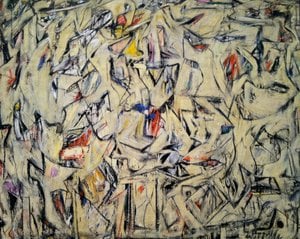
Created in 1954, Willem de Kooning's *Marilyn Monroe* is not merely a portrait of the iconic actress; it’s a visceral reaction to her image and a cornerstone of Abstract Expressionism. This painting transcends simple representation, capturing not just her likeness but the palpable tension between glamour and vulnerability—a dichotomy that defines De Kooning’s artistic vision.
Deconstructing an Icon: Subject & Style
- Subject Matter: While ostensibly depicting Marilyn Monroe, De Kooning deliberately avoids a conventional depiction. He doesn't strive for accuracy but rather seeks to convey her public persona—the carefully constructed façade concealing inner turmoil and anxieties.
- Stylistic Influences: *Marilyn Monroe* firmly establishes itself within the realm of Abstract Expressionism, mirroring the approaches of artists like Jackson Pollock and Franz Kline. However, De Kooning distinguishes himself by fusing abstraction with recognizable figuration, generating a dynamic interplay that characterizes his distinctive style.
- A Pivotal Moment: 1954 represents a crucial juncture for both De Kooning and American culture. The painting emerged during a period of fervent celebrity worship—a fascination fueled by postwar optimism yet shadowed by anxieties about societal change—and it embodies the artistic experimentation that characterized this era.
Technique &; Materials: A Gestural Force
- Oil on Canvas: De Kooning’s masterful manipulation of oil paint is central to the painting's impact. The thick, impasto application creates a tactile surface and emphasizes the physicality of artistic creation—a deliberate departure from smoother, more polished techniques prevalent at the time.
- Gestural Brushwork: Loose, energetic brushstrokes dominate the composition, conveying movement and instability. Drips and splatters contribute to the sense of spontaneity and raw emotion, mirroring De Kooning’s belief in capturing unfiltered feeling on canvas.
- Color Palette &; Composition: Dominated by reds, yellows, and whites—a palette simultaneously vibrant and unsettling—the painting reflects De Kooning's preoccupation with psychological depth. The vertical orientation focuses attention on the central figure while swirling patterns in the background generate a feeling of unease and contribute to the artwork’s dramatic atmosphere.
Symbolism &; Emotional Resonance
- Color Symbolism: The intense reds evoke passion, anger, or perhaps even violence—representing De Kooning's exploration of darker emotions alongside beauty and glamour. Yellows suggest hope mingled with anxiety—a subtle acknowledgment of the pressures inherent in fame and celebrity culture.
- Deconstructed Form: The fragmented and distorted depiction of Monroe’s face challenges conventional notions of beauty and celebrates imperfection. It underscores De Kooning's intention to portray not a polished ideal but rather a human figure grappling with internal complexities—a reflection of the anxieties prevalent in postwar America.
- Emotional Impact: *Marilyn Monroe* succeeds in eliciting feelings of vulnerability, apprehension, and contemplation—inviting viewers to confront questions about identity and the human condition. It stands as a testament to De Kooning’s ability to translate emotion into visual form.
Historical Context &; Legacy
- Pop Culture Intersection: De Kooning's engagement with Marilyn Monroe exemplifies a broader trend in postwar art—the incorporation of popular imagery and themes into high art—a bold move that signaled a shift away from purely intellectual pursuits toward embracing the cultural landscape.
- A Lasting Influence: *Marilyn Monroe* remains an enduring masterpiece within De Kooning’s oeuvre and serves as a compelling illustration of Abstract Expressionism's expressive power. It continues to inspire artists and captivate audiences with its visceral energy and innovative approach to portraiture—a painting that transcends time, prompting ongoing discussion about art, psychology, and the portrayal of femininity.
This artwork embodies De Kooning’s conviction that art should confront viewers with uncomfortable truths—challenging idealized representations and delving into the depths of human emotion. It is a poignant reminder that even figures celebrated for their glamour conceal profound vulnerabilities.
Questions et réponses
Quelle nuance dominante traverse «Marilyn Monroe» de Willem de Kooning ?
Une nuance De l'ocre au sépia traverse «Marilyn Monroe» de Willem de Kooning.
Puis-je examiner « Marilyn Monroe » plus en détail ?
« Marilyn Monroe » peut être examiné couche par couche sur la page Radiographie de l'œuvre, un visionneur inspiré d'un banc lumineux de restaurateur proposant onze lectures optiques de l'image.
Comment puis-je télécharger l'image de «Marilyn Monroe» de Willem de Kooning ?
«Marilyn Monroe» de Willem de Kooning peut être téléchargé depuis la page Téléchargement de l'œuvre, en tant que téléchargement d'une image numérique haute résolution.
Œuvres similaires


Biographie de l'artiste
jeunesse et carrière
Willem de Kooning, un artiste expressionniste abstrait néerlandais-américain renommé, est né le 24 avril 1904 à Rotterdam, aux Pays-Bas. Ses parents, Leendert de Kooning et Cornelia Nobel, ont divorcé en 1907, et de Kooning a vécu avec son père avant de passer sous la tutelle de sa mère. Il quitte l'école en 1916 et devient apprenti dans un cabinet d'arts commerciaux.développement artistique
De Kooning a suivi des cours du soir à l’Académie des Beaux-Arts et des Sciences Techniques à Rotterdam de 1916 à 1924. En 1927, il s'installe à New York City, où il travaille comme peintre décorateur et commence à développer son style artistique unique.expressionnisme abstrait
Le travail de De Kooning a évolué vers l’expressionnisme abstrait dans les années 1950, caractérisé par des coups de pinceau audacieux et des couleurs vibrantes. Sa peinture Woman I (1950-1952) est une œuvre fondamentale de ce mouvement, combinant la figuration à l'improvisation et à l'intensité émotionnelle.œuvres notables et collections
* The Glazier (137 x 112 cm, huile sur toile) : une peinture sombre aux tons terreux inspirée des fresques de Boscoreale. * Door to the River (expressionnisme abstrait) : une peinture à large coup de pinceau rappelant son passé de peintre décorateur. * Standing Man (expressionnisme abstrait) : un exemple caractéristique du style expressionniste abstrait de De Kooning.musées et collections
* Musée Boijmans Van Beuningen, Rotterdam, aux Pays-Bas : présente une impressionnante collection de plus de 151 000 œuvres d'art. * Bibliothèque universitaire de Leiden, aux Pays-Bas : abrite un centre culturel important avec plus de 5 200 000 volumes et 1 000 000 de livres électroniques. L'héritage de Willem de Kooning continue d'inspirer les artistes et les amateurs d'art, consolidant ainsi sa place en tant que pionnier de l'expressionnisme abstrait.
Willem de Kooning
1904 - 1997 , Pays-Bas
L'essentiel de l'artiste
- Artistes Influents: ['Arshile Gorky']
- Date De Décès: 19 mars 1997
- Date De Naissance: 24 avril 1904
- Lieu De Naissance: Rotterdam, Pays-Bas
- Mouvement Artistique: Expressionnisme abstrait
- Nationalité: Néerlandais-Américain
- Nom Complet: Willem de Kooning
- Oeuvres Notables:
- Woman I
- The Glazier
- Excavation
Articles connexes

Au-Delà de la Représentation : Exploration du Paysage Émotionnel de l'Expressionnisme Abstrait
Explorez l'univers fascinant de l'Expressionnisme Abstrait avec ArtsDot. Analyse approfondie des maîtres (Pollock, Rothko, De Kooning) et conseils d'experts pour collectionner ces œuvres emblématiques. Découvrez une sélection unique.

Expressionnisme Abstrait : Les 10 Chefs-d'Œuvre Incontournables pour Décorer avec Art et Histoire
Plongez au cœur de l'Expressionnisme Abstrait avec ! Découvrez les 10 œuvres majeures de Pollock, Rothko et De Kooning. Histoire, techniques & inspiration déco. Explorez la collection complète en ligne.

Willem de Kooning : Abstraction, Geste et Évolution de la Peinture Américaine d'Après-Guerre
Explorez l'évolution artistique de Willem de Kooning et son rôle clé dans l'expressionnisme abstrait américain. Analyse approfondie, influences européennes et héritage durable pour les collectionneurs avertis.

Maîtriser l'ombre : les 25 chefs-d'œuvre puissants de Francisco Goya
Explorez les 25 chefs-d'œuvre de Goya, entre ombre et lumière. Trouvez l'art ultime sur ArtsDot.com.

Les 25 chefs-d'œuvre de Kandinsky : l'éveil de l'art abstrait
Explorez les 25 chefs-d'œuvre de Kandinsky et l'éveil de l'abstraction. Découvrez toute la collection sur ArtsDot.com.