


 Aperçu en situation
 Partager
 Partager
 Détails
 Guide
Guide

 Télécharger
 Articles similaires
 Radiographie
 Voir le diaporama
 Statistiques
Rural View
 Impressionism
 34.0 x 51.0 cm
 Afficher la suite
Reproduction à l'huile faite à la main
Huile sur toile peinte à la main, avec cadre et dimensions personnalisés, réalisée sur commande par nos artistes. ( Passer au format impression Passer au format image numérique)




































Choisissez parmi nos formats prédéfinis qui respectent les proportions originales de l’œuvre.

Vous pouvez saisir vos propres dimensions pour l'adapter à un cadre ou à un espace spécifique. Si la taille sélectionnée ne correspond pas aux proportions de l'image d'origine, nous recadrerons l'œuvre ou prolongerons la peinture avec des éléments peints à la main supplémentaires. Une maquette numérique vous sera envoyée pour approbation avant le début de la production.
Veuillez noter que l'aperçu à l'écran ne reflète pas le recadrage ou l'extension réels. Seule la maquette montrera fidèlement la composition finale.
Bien que des tailles personnalisées soient disponibles, nous vous recommandons de sélectionner une dimension dans la liste prédéfinie afin de préserver les proportions d'origine.
Après la commande, l’équipe ArtsDot.com contactera le client par e-mail pour recueillir ses instructions et lui fournira une maquette d’aperçu
Livraison dans le monde entier () en 3 à 4 semaines au lieu des 5 semaines habituelles. (25 septembre). Aucun compromis sur la qualité.

Livraison express gratuite dans le monde entier

Toile de lin de haute qualité

Assurance transport complète

Garantie de remboursement des droits de douane

Garantie de fidélité des couleurs

Garantie de retour de 100 jours (uniquement en cas de défaut)

Garantie de remboursement à 100%

Tarifs dégressifs sur quantité
 L'option verre n'est disponible que pour les dimensions inférieures à 110 cm.

Rural View
Technique de reproduction
Format de la reproduction
-


Prix total final
$ 263
Œuvres similaires


Biographie de l'artiste
Walter J. Stamps: Capturing Manitoba's Soul Through Color Woodcuts
Walter J. Stamps (born 1930) stands as a pivotal figure in Canadian printmaking history, particularly renowned for his evocative depictions of Manitoba landscapes and prairies. His artistic journey began amidst the burgeoning postwar interest in European Expressionism, influencing his stylistic choices and fostering a deep connection to Japanese woodblock printing techniques—a fascination that would become central to his oeuvre. Stamps’s formative years were spent honing his skills in London, where he studied at Chelsea School of Art, absorbing the lessons of masters like Rembrandt and Cézanne before embarking on a solo artistic path.Early Influences: The Seeds of Impressionism
Stamps's initial explorations encompassed Surrealist aesthetics, mirroring the anxieties of the era but quickly gravitating toward Impressionistic sensibilities—a deliberate rejection of rigid formalism in favor of capturing fleeting moments of light and atmosphere. This pivotal shift away from Surrealism wasn’t merely stylistic; it represented a fundamental reconsideration of artistic purpose—a move towards conveying emotion and experience rather than intellectual abstraction. The influence of Impressionist painters like Claude Monet and Pierre-Auguste Renoir profoundly shaped Stamps's approach to composition and color palette, establishing a bedrock of aesthetic principles that would underpin his entire oeuvre.The Embrace of Japanese Printmaking: Hiroshige’s Legacy
Recognizing the profound impact of Hiroshige’s “Thirty-Six Views of Mount Fuji,” Stamps meticulously studied Ukiyo-e prints, mastering the meticulous carving process and experimenting with Prussian blue pigment—a bold innovation that revolutionized Canadian color woodcuts. Hiroshige's masterful use of perspective and tonal gradation served as a blueprint for Stamps’s own artistic endeavors—inspiring him to adopt similar techniques and prioritizing atmospheric depth in his compositions. The adoption of Prussian blue, imported from Germany, was particularly transformative, elevating the expressive potential of Canadian printmaking and establishing a new standard for color luminosity.Manitoba Landscapes: A Prairie Vision
Stamps's artistic focus solidified in Manitoba, where he established a studio amidst the vast prairies. His prints became synonymous with capturing the region’s rugged beauty—rolling hills bathed in golden sunlight, windswept wheat fields stretching to the horizon, and serene waterways reflecting the sky. Stamps’s meticulous observation of Manitoba’s natural environment—coupled with his stylistic mastery—produced images that transcend mere representation, conveying a palpable sense of place and embodying the spirit of prairie life. He sought to capture not just what he saw but also how it *felt*, imbuing his prints with an emotional resonance that continues to captivate viewers today.Technique and Style: Linocut’s Dialogue With Atmosphere
Stamps's artistic method involved a painstaking process of transferring designs onto wooden blocks—typically maple or birch—using meticulous linocut techniques. He prioritized tonal gradations achieved through multiple layers of Prussian blue pigment, meticulously blending colors to emulate the atmospheric perspective characteristic of Japanese prints. This deliberate stylistic choice wasn’t merely an homage to Ukiyo-e; it represented a conscious effort to distill the essence of Manitoba's visual language—a commitment to conveying mood and emotion rather than literal representation. The resulting textures captured the tactile qualities of prairie grasses and weathered wood surfaces, reflecting years of dedicated practice. Stamps’s linocut prints demonstrate exceptional precision, cementing his reputation as one of Canada’s foremost printmakers.Recognition and Legacy: An Enduring Influence
Stamps achieved considerable acclaim throughout his career, securing commissions from prominent Canadian institutions—including the Winnipeg Art Gallery and Alberta Arts Council—and exhibiting extensively across North America. His prints became integral to documenting Manitoba’s cultural heritage and celebrating its natural splendor. Stamps's enduring legacy resides in his contribution to establishing Manitoba as a center for color woodcut art—a distinction that continues to resonate within Canadian artistic discourse. He remains an exemplar of Canadian artistic excellence, ensuring that his distinctive prints endure as symbols of Manitoba’s beauty and enduring legacy.
Walter J. Stamps
Angleterre
En bref
- Artistic Movement Or Style: Japanese Inspired Art
- Artists Who Influenced This Artist:
- Hiroshi Yoshida
- Albert Bierstadt
- Date Of Birth: October 25, 1884
- Date Of Death: July 5, 1963
- Full Name: Walter Joseph Stamps
- Nationality: Canadian
- Notable Artworks:
- York Boat on Lake Winnipeg
- View of St Mary's Street Looking towards the Church
- Farmyard Scene
- Place Of Birth: Alberta, Canada
Articles similaires

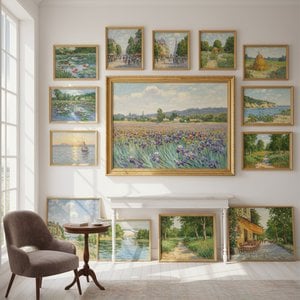
Beyond the Horizon: A Curated Guide to Integrating Post-Impressionist Landscapes into Modern Interiors
Transform your home with the emotive power of Post-Impressionist landscapes. Discover expert tips on selecting hand-painted oil reproductions to create a soulful, vibrant interior that reflects your unique style and connection to nature.

Les 10 Chefs-d'œuvre Impressionnistes qui ont Révolutionné le Paysage
Plongez dans l'univers vibrant de l'impressionnisme ! Découvrez les 10 chefs-d'œuvre de Monet, Renoir et autres maîtres qui ont révolutionné le paysage. Inspirez votre décoration intérieure avec ArtsDot.com : reproductions tableaux de qualité muséale.
Les 10 Chefs-d'œuvre Impressionnistes qui ont Révolutionné le Paysage
Plongez au cœur de l'Impressionnisme avec les 10 chefs-d'œuvre qui ont révolutionné le paysage. Découvrez Monet, Renoir et plus encore sur ArtsDot.com – reproductions d'art de qualité muséale pour sublimer votre intérieur.

Constable : Les 25 Chefs-d'Œuvre du Maître Anglais | ArtsDot
Plongez dans l'univers de John Constable avec les 25 œuvres incontournables du maître anglais. Découvrez l'histoire, la technique et l'émotion derrière ses paysages romantiques. Reproductions de qualité muséale sur ArtsDot.com.

George Agnew Reid: A Canadian Impressionist's Pursuit of Light, Colour, and National Identity
Explore the life & work of George Agnew Reid, a pivotal figure in Canadian Impressionism. Discover his genre paintings, mural commissions, and lasting influence on art education & national identity. A comprehensive guide for collectors & enthusiasts.