


 Aperçu en situation
 Partager
 Partager
 Détails
 Guide
Guide

 Télécharger
 Articles similaires
 Radiographie
 Voir le diaporama
 Statistiques
La Résurrection
 Acrylique sur toile
- Art mural
- Renaissance Revival
 1544
1544 163.0 x 104.0 cm
 Afficher la suite
Giclées et impressions d'art
Impressions giclées ou sur toile de qualité musée, avec une production rapide et des finitions au choix. ( Acheter la peinture faite à la main Passer au format image numérique)




P118B $10

P118H $10

P118W $10

P438Z $10

P508JH $12

P508YH $12

P805H $10

P805Z $10

P919BZ $10

P919G $10

P919XJ $10

P959ZH $10

P968JZ $12

W106C $8

W218G $10

W218JH $8

W218Y $10

W307PJ $10

W316G $10

W316PJ $8

W316Y $10

W398PJ $8

W4111J $10

W500HY $15

W500JH $15

W692G $12

W849H $8

W940BG $15

W953PJ $8




Choisissez parmi nos formats prédéfinis qui respectent les proportions originales de l’œuvre.

Vous pouvez saisir vos propres dimensions pour vous adapter à un cadre ou à un espace spécifique. Si la taille sélectionnée ne correspond pas aux proportions de l'image originale, nous recadrerons l'œuvre ou étendrons l'image avec une bordure en miroir ou une couleur unie. Une maquette numérique vous sera envoyée pour approbation avant le début de la production.
Veuillez noter que l'aperçu à l'écran ne reflète pas le recadrage ou l'extension réelle. Seule la maquette montrera avec précision la composition finale.
Bien que des tailles personnalisées soient disponibles, nous vous recommandons de choisir une dimension dans la liste prédéfinie afin de préserver les proportions originales.
Livraison dans le monde entier () en 2 semaines au lieu des 4/5 semaines habituelles. (25 septembre)

Livraison express gratuite dans le monde entier

Toile de lin de haute qualité

Assurance transport complète

Garantie de remboursement des droits de douane

Garantie de fidélité des couleurs

Garantie de retour de 100 jours (uniquement en cas de défaut)

Garantie de remboursement à 100%

Tarifs dégressifs sur quantité
 L'option verre n'est disponible que pour les dimensions inférieures à 110 cm.

La Résurrection
Giclées et impressions d'art
Format de la reproduction
-


Prix total final
$ 62
La Résurrection : Une Écho Renaissance dans le Nouveau Monde
Titian Ramsay Peale II, un artiste dont l'œuvre demeure souvent sous-estimée au sein de l’histoire américaine du XIXe siècle, incarne une véritable curiosité esthétique. Né à Philadelphie en 1799, il était imprégné d’une lignée artistique remarquable : fils cadet de Charles Willson Peale, fondateur du premier musée américain et figure emblématique du portrait romantique, il héritait d'un patrimoine artistique considérable. Bien que l’ombre de son père domine la mémoire collective, Titian Ramsay Peale II construisit une voie propre, guidée par les idéaux esthétiques de la Renaissance italienne, notamment ceux issus de Venise. Il ne se contentait pas de reproduire des styles ; il canalisait une sensibilité artistique profonde, insufflant à ses peintures une précision remarquable et une palette chromatique vibrante qui le distinguaient de nombreux contemporains. Sa vie fut marquée par l’essor d'une identité américaine nouvelle, mais son cœur artistique demeura fidèle aux maîtres classiques, créant ainsi une tension fascinante entre la vénération du passé et l’expression du présent. Cette œuvre particulière témoigne de cette richesse intellectuelle et esthétique.- Sujet : La scène représente un événement biblique majeur : la résurrection de Jésus Christ. Les anges sont chargés d'élever le corps ressuscité au ciel, capturant ainsi une scène chargée de signification religieuse et spirituelle.
- Style : L’œuvre est imprégnée du style classique italien de la Renaissance, notamment celui développé à Venise sous l’influence des grands maîtres tels que Titien lui-même. Cette esthétique privilégie la beauté idéale et une composition équilibrée pour exprimer les valeurs morales et spirituelles fondamentales.
- Technique : Peale II maîtrise parfaitement la peinture à huile sur toile, utilisant une méthode élaborée qui consiste en plusieurs couches de couleurs transparentes appliquées avec soin pour obtenir une luminosité exceptionnelle et une profondeur remarquable. Cette technique permet de restituer fidèlement les détails complexes et les nuances subtiles de la scène.
Œuvres similaires


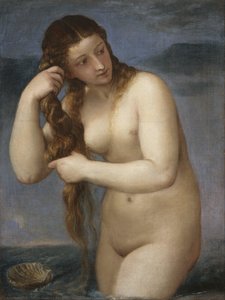

Biographie de l'artiste
**Jeunesse et débuts artistiques**
Titian Ramsey Peale II, un nom qui résonne dans les annales de l'histoire de l'art, mais enveloppé d'un mystère. Né en 1799, la jeunesse de Peale II est marquée par une passion inébranlable pour les arts, qui allait finalement le conduire à devenir un peintre habile.**Contributions artistiques et style**
L’œuvre de Peale II, caractérisée par son élégance de la Renaissance italienne, met en valeur sa maîtrise de la peinture à l'huile sur panneau et toile. Les œuvres notables comprennent :- Autel avec quatre saints (125 x 72 cm, peinture à l'huile sur panneau), un témoignage de sa dévotion à l’art sacré.
- Adoration des bergers (Palais Pitti, Florence, Italie, Renaissance italienne, peinture à l'huile sur toile), reflétant sa capacité à capturer des moments poignants.
- La beauté (89 x 76 cm, Palais Pitti, Florence, Italie, Renaissance italienne, peinture à l'huile sur toile), un portrait qui dégage élégance et raffinement.
**Influences et héritage**
Bien que sa vie ne soit pas aussi bien documentée que celle de certains de ses contemporains, l’œuvre de Peale II est indubitablement influencée par la Renaissance italienne, avec des touches de colorisme vénitien. Son héritage, bien qu'il n'ait pas été largement reconnu à son époque, a été redécouvert et réévalué à travers le prisme de la critique d’art moderne.**Où trouver l’œuvre de Peale II**
Pour ceux qui souhaitent approfondir leur connaissance de l’œuvre de Peale II, Titian Ramsey Peale II : Autel avec quatre saints peut être trouvé sur ArtsDot, ainsi que d’autres œuvres notables. La Galerie des Offices (Florence, Italie) et le Palais Pitti (Florence, Italie) présentent également ses œuvres, offrant un aperçu du monde de l’artiste.**Conclusion**
Titian Ramsey Peale II, figure énigmatique dans le monde de l'art, laisse derrière lui une série de chefs-d'œuvre qui continuent d'intriguer et d'inspirer. Grâce à ArtsDot et autres ressources, son œuvre est aujourd’hui plus accessible que jamais, invitant une nouvelle génération d'amateurs d'art à découvrir et apprécier ses contributions au mouvement de la Renaissance italienne.- Explorez davantage les œuvres de Peale II sur ArtsDot.
- Apprenez-en davantage sur d'autres artistes influents comme Giulio Clavio, connu pour ses manuscrits enluminés.
- Découvrez le Société des Beaux-Arts (Royaume-Uni, une institution de premier plan pour la promotion du patrimoine artistique, sur ArtsDot.

Titian Ramsay Peale II
1799 - 1885 , États-Unis
En bref
- Artistes Influents:
- Titian
- Maîtres vénitiens
- Date De Décès: 1885
- Date De Naissance: 1799
- Mouvement Artistique: Renaissance italienne
- Nationalité: Américain
- Nom Complet: Titian Ramsay Peale II
- Œuvres Notables:
- Autel avec quatre saints
- Adoration des bergers
- La Beauté
Articles similaires

Charles Willson Peale: Portraiture, Enlightenment Ideals & Shaping American Identity
Explore the life & art of Charles Willson Peale – Revolutionary portraitist, scientist, and founder of America’s first museum. Discover his iconic paintings of Washington & the Enlightenment ideals that shaped a nation.

Titian Ramsay Peale II: A Legacy of Botanical Precision & Artistic Innovation
Explore the life & art of Titian Ramsay Peale II, a master of botanical precision and wildlife painting. Discover his legacy bridging art & natural history at ArtsDot.

Allen Ramsay: Portraiture, Patronage & Shaping Georgian Identity
Explore the life & work of Allen Ramsay, pivotal portraitist to George III. Discover his Rococo style, influence on Georgian society, and lasting legacy in British art history. Learn about his key works & patronage.
Alte Pinakothek : 25 Chefs-d'œuvre pour Embellir Votre Intérieur
Plongez au cœur de l'Alte Pinakothek, Munich ! Découvrez 25 chefs-d'œuvre de Dürer à Rembrandt. Explorez l'art Renaissance et baroque, leurs couleurs & histoires fascinantes. Reproductions de qualité sur ArtsDot.com.

Titian : Innovation, Technique et la Tradition du Portrait Vénitien à la Renaissance
Explorez l'univers de Titien et la révolution du 'colorito' vénitien. Découvrez sa technique unique, son influence sur les maîtres européens et l'histoire fascinante du portrait à Venise. Expertise art & collectionneurs.


