

 Aperçu en situation
 Envoyer
 Partager
 Détails de l'œuvre
 Guide
Guide

 Télécharger l'image
 Articles similaires
 Radiographie
 Diaporama
 Questions et réponses
 Statistiques
Danae

 Lire la suite
Giclées et impressions d'art
Impressions giclées ou sur toile de qualité musée, avec une production rapide et des finitions au choix. ( Commander la reproduction peinte à la main Passer au format numérique)




































Choisissez parmi nos formats prédéfinis qui respectent les proportions originales de l’œuvre.

Saisissez la largeur et la hauteur souhaitées pour qu'elles s'adaptent à votre cadre ou à votre mur. Une impression peut être recadrée, mais jamais agrandie au-delà de l'image originale ; ainsi, un format de forme différente entraînera la perte d'une partie de l'image. Nous vous envoyons une maquette numérique pour approbation avant toute impression. L'image présentée sur cette page ne montre pas le recadrage réel — seule la maquette le permet.
Livraison dans le monde entier () en 2 semaines au lieu des 4/5 semaines habituelles. (13 novembre)

Livraison express gratuite dans le monde entier

Toile de lin de qualité supérieure

Assurance transport complète

Garantie de remboursement des droits de douane

Garantie de fidélité des couleurs

Politique de retour de 100 jours (uniquement en cas de défaut)

Garantie de remboursement à 100%

Offre de tarifs dégressifs
 L'option verre n'est disponible que pour les dimensions inférieures à 110 cm.

Danae
Giclées et impressions d'art
Format de la reproduction
-


Prix total
€ 56
The Mythological Figure of Danae
Titian's "Danae" is based on the mythological figure of Danae, as recounted by Roman poet Ovid and later expanded upon by Boccaccio. According to these accounts, Danae was isolated in a bronze tower following a prophecy that her firstborn would eventually kill her father. Despite being aware of the consequences, she was seduced and impregnated by Zeus (Jupiter in Roman mythology), who descended from Mount Olympus in the form of a shower of gold to consummate their union.Titian's Danae Series
Throughout his career, Titian created several versions of "Danae", with at least six known compositions painted between 1544 and the 1560s. Each version features a voluptuous figure of Danae reclining on a bed, her legs half-spread, while Zeus' golden rain showers down upon her. Although the main figure remains consistent across these paintings, other elements vary significantly.Influence and Legacy
Titian's "Danae" series had a profound impact on the art world, inspiring numerous artists such as Rembrandt, Anthony van Dyck, and Gustav Klimt to create their own interpretations of this mythological scene. The painting also showcases Titian's mastery of color and composition, which played an essential role in shaping the development of European art during the Renaissance period.Experience the Beauty of Titian's Danae at ArtsDot
At ArtsDot, we are proud to offer high-quality reproductions of this iconic masterpiece by Titian. Our handmade oil paintings capture the vibrant colors and intricate details that make "Danae" such a captivating work of art. By adding one of our stunning replicas to your collection, you can bring the beauty and elegance of Italian Renaissance art into your home or office space.Conclusion
Titian's "Danae" is a testament to the artist's skillful use of color, composition, and mythological themes that defined the High Italian Renaissance. As one of his most celebrated works, it continues to inspire artists and art enthusiasts alike with its timeless beauty and captivating storytelling.References
- View the original painting on ArtsDot - Danaë (Titian paintings) - Wikipedia - Danae - Titian — Google Arts & Culture - Danaé (Titien, Madrid) — WikipédiaQuestions et réponses
L'œuvre «Danae» de Titien est-elle dans le domaine public ?
Concernant les droits d'auteur, « Danae » est dans le dans le domaine public - ses droits d'auteur sont tombés dans le domaine public.
Combien de personnes consultent « Danae » ?
La page Statistiques de «Danae» de Titien présente les statistiques de visites publiques : le nombre de visites mensuelles de cette œuvre, une comparaison avec les œuvres les plus consultées de l'artiste, ainsi que la provenance des visiteurs.
Comment puis-je télécharger l'image de «Danae» de Titien ?
«Danae» de Titien peut être téléchargé depuis la page Téléchargement de l'œuvre, en tant que téléchargement d'une image numérique haute résolution.


Biographie de l'artiste
Le Peintre de l'Ombre et de la Lumière
Dans les étendues escarpées et montagneuses de Pieve di Cadore, un enfant nommé Titien commença une vie qui allait finir par remodeler le langage même de l'huile sur toile. Né vers 1490, il était le fils de Gregorio Vecellio, un homme de l'armée, et d'une femme nommée Lucia. La famille vivait dans une région où les sommets spectaculaires des Alpes vénitiennes projetaient de longues ombres mouvantes sur la terre, un paysage qui, peut-être, murmurait les secrets de la lumière à un jeune esprit. Reconnaissant l'étincelle du talent chez ses fils, la famille se tourna vers la grande cité de Venise, organisant l'entrée du jeune Tiziano et de son frère Francesco dans les ateliers des maîtres. Ce passage des montagnes paisibles aux canaux animés et imprégnés d'odeurs salines de Venise changea tout.
Ses premières années furent consacrées à l'absorption de l'atmosphère d'une ville qui pulsait de commerce et de couleurs. Il apprit d'abord son métier auprès de Sebastiano Zuccato, un mosaïste, avant d'intégrer les cercles de Gentile Bellini et de son propre frère, Giovanni. Pourtant, ce fut son temps passé aux côtés de Giorgione qui définit véritablement sa voie. Ensemble, ils travaillèrent sur les fresques extérieures du Fondaco dei Tedeschi, un comptoir commercial très fréquenté par les marchands allemands. En ces premiers jours, son pinceau recherchait un certain lyrisme, une manière de capturer l'air lui-même à travers des tons subtils et une touche douce et poétique.
L'Évolution d'un Style Vénitien
Au fil des années, les qualités douces et éthérées de sa jeunesse cédèrent la place à quelque chose de beaucoup plus musclé et dramatique. Il s'éloigna de la quiétude de sa formation initiale pour embrasser une approche plus audacieuse de la couleur. Sa touche devint un outil d'une puissance immense, passant de surfaces lisses et estompées à des traits lâches et expressifs qui semblaient palpiter de vie. Il apprit à superposer de fines couches de pigments sur les sous-couches, une technique qui lui permit d'atteindre une luminosité que peu pouvaient égaler. Il ne s'agissait pas seulement de représenter un sujet, mais de capturer le poids du velours, l'éclat de la peau et l'atmosphère même entourant une figure.
Ses sujets étaient aussi variés que les gens qui arpentaient les rues de Venise. Il devint un maître du portrait, capturant la profondeur psychologique de ses modèles, de la ressemblance physique d'un homme au caractère caché de son âme. Ses scènes mythologiques et ses compositions religieuses étaient imprégnées d'une sensualité et d'une tension qui attiraient les spectateurs. Dans des œuvres comme La Vénus d'Urbino, il redéfinit la présentation du corps humain, utilisant la couleur pour créer un sentiment de présence presque tactile. Il était un homme qui comprenait que la lumière ne se contente pas de tomber sur un objet ; elle interagit avec lui, créant un drame d'ombre et d'éclat.
Une Vie de Grandeur et d'Influence
La renommée de Titien finit par atteindre les plus hautes cours d'Europe. Il devint le favori de puissants souverains, servant comme peintre de l'Empereur Charles Quint, du roi Philippe II d'Espagne et du Pape Paul III. Ce mécénat de haut vol lui permit de travailler à une échelle monumentale, créant des toiles massives qui remplissaient les halls des palais et les autels des grandes églises. Il possédait une rare finesse diplomatique, adaptant son style aux goûts des différentes cours royales tout en ne perdant jamais la voix distinctive qui fit de lui un titan de son époque.
Lorsqu'il s'éteignit à Venise en 1576, il laissa derrière lui un héritage qui allait résonner à travers les siècles. Son influence fut ressentie par ceux qui lui succédèrent, de la touche épaisse de Rubens à la lumière dramatique de Rembrandt et aux coups de pinceau audacieux de Delacroix. Il agit comme un pont entre la Haute Renaissance et l'ère baroque à venir, prouvant que la couleur pouvait être tout aussi expressive que la ligne. Ses peintures demeurent dans les plus grandes collections du monde, du Prado à Madrid jusqu'à la National Gallery à Londres, témoignant de manière permanente de l'œuvre d'un homme qui a maîtrisé l'art de la vision.

Titien
1490 - 1576 , Italie
L'essentiel de l'artiste
- Artistic Movement Or Style: Renaissance vénitienne
- Artists Or Movements Influenced By This Artist:
- Peter Paul Rubens
- Rembrandt
- Eugène Delacroix
- Édouard Manet
- Artists Who Influenced This Artist:
- Sebastiano Zuccato
- Gentile Bellini
- Giovanni Bellini
- Giorgione
- Date Of Birth: 1490
- Date Of Death: 1576
- Full Name: Tiziano Vecellio
- Nationality: Italienne
- Notable Artworks:
- Un homme au manchon matelassé
- La Visitation de Marie et Élisabeth
- La Vénus d'Urbin
- Diane et Actéon
- Concert champêtre
- Place Of Birth: Pieve di Cadore, Italie
Articles connexes

From Ancient Pottery to Baroque Drama: The Evolution of Mythological Narratives in Western Art
Trace the epic evolution of Western myth from Greek pottery to Baroque drama with expert insight. Explore the history of art today.

Titian : Innovation, Technique et la Tradition du Portrait Vénitien à la Renaissance
Explorez l'univers de Titien et la révolution du 'colorito' vénitien. Découvrez sa technique unique, son influence sur les maîtres européens et l'histoire fascinante du portrait à Venise. Expertise art & collectionneurs.

Renaissance Visions: Exploring Themes & Techniques in 16th-Century Painting
Explore the captivating world of Renaissance painting! Discover key themes, masterful techniques & iconic artworks from Leonardo da Vinci to Raphael. Learn about Humanism's influence and the stylish departure of Mannerism.

Les 25 chefs-d'œuvre de Titien : Le maître absolu de la couleur
Explorez les 25 chefs-d'œuvre de Titien et la magie de la Renaissance. Découvrez ces trésors sur ArtsDot.com.
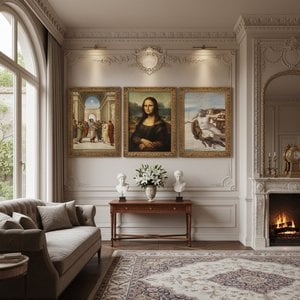
Les 10 Chefs-d'œuvre de la Haute Renaissance : Artistes et Décor d'Exception
Plongez au cœur de la Haute Renaissance avec les 10 chefs-d'œuvre incontournables de Léonard de Vinci, Michel-Ange et Raphaël. Découvrez l'histoire fascinante de ces tableaux emblématiques et trouvez l'inspiration pour une décoration intérieure d'exception sur .


