

 Aperçu en situation
 Envoyer
 Partager
 Détails de l'œuvre
 Guide
Guide

 Télécharger l'image
 Articles similaires
 Radiographie
 Diaporama
 Questions et réponses
 Statistiques
Cane

 Lire la suite
Obtenez un fichier prêt pour l'impression qui dépasse de loin la qualité de l'aperçu web. Chaque image numérique que nous proposons est issue d'un fichier maître haute résolution de notre base de données — mesurant généralement entre 5 000 et 15 000 pixels de large — vous permettant ainsi d'imprimer en grand format, de recadrer avec précision ou de reproduire les détails les plus fins en toute confiance.
Aucun fichier ne quitte notre studio sans être retouché. Un expert numérique vérifie la colorimétrie par rapport à l'œuvre originale et la corrige si nécessaire, puis améliore la clarté et les détails à l'aide d'outils de retouche professionnels — tout en restant toujours fidèle au coup de pinceau et au style de l'artiste. Le résultat est une image qui ressemble au tableau, et non à un simple scan filtré.
Validez avant de finaliser : notre expert vous envoie l'image par e-mail sous 72 heures pour examen. Non satisfait ? Demandez des améliorations ou des corrections, ou demandez un remboursement si la qualité ne répond pas à vos attentes.
C'est une qualité sur laquelle s'appuient éditeurs, studios de création, galeries et ateliers d'impression.
Image numérique
Téléchargez un fichier haute résolution pour votre usage personnel, l'impression et vos projets créatifs. ( Passer au format impression Commander la reproduction peinte à la main)
Inclus avec chaque commande d'image numérique
Livraison numérique experte, garantie.
En choisissant ArtsDot.com, vous n'obtenez pas seulement une simple image : vous recevez une œuvre numérique sublimée avec professionnalisme, conçue avec précision et accompagnée d'une garantie de satisfaction. Voici tout ce qui accompagne automatiquement votre commande :

Envoi rapide par e-mail
Votre fichier d'image numérique haute résolution vous sera envoyé par e-mail sous 72 heures après votre commande — prêt à un usage immédiat.

Fichier numérique optimisé par l'IA
Votre œuvre d'art bénéficie d'une optimisation professionnelle grâce à des outils d'IA avancés et une retouche manuelle, garantissant un niveau maximal de détail, de clarté et de fidélité chromatique.

Réexpédition gratuite à vie
Vous avez accidentellement supprimé ou perdu votre fichier ? Pas d'inquiétude — nous vous le renverrons gratuitement, quand vous le souhaitez.

Aucuns frais de douane — À jamais
Profitez de votre œuvre d'art instantanément sans frais de douane ni de livraison — les téléchargements numériques sont toujours exonérés de taxes.

Garantie de fidélité des couleurs
Nous garantissons que votre image numérique reproduit les couleurs de l'original aussi fidèlement que possible grâce à des outils professionnels et une gestion rigoureuse des couleurs.

Garantie de satisfaction 100 jours
Si vous n'êtes pas satisfait de votre image numérique, nous la retoucherons ou vous rembourserons 100% sous 100 jours — sans poser de questions.

Garantie de remboursement à 100%
Pas satisfait ? Obtenez un remboursement intégral dans les 100 jours suivant la réception de votre fichier numérique — sans aucune question posée.

Réductions sur les commandes groupées
Achetez 3 images, économisez 10% - Achetez 5, économisez 15% - Achetez 10+, économisez 20%. Idéal pour les projets créatifs, les galeries et les agences.
Œuvres similaires


Biographie de l'artiste
La Dynastie Tang : Un Creuset d'Innovation Artistique
La dynastie Tang (618–907) s'impose comme une époque inégalée de l'histoire chinoise et du génie artistique, une période caractérisée par la stabilité politique, la prospérité économique et une étreinte fervente de la culture cosmopolite. Émergeant des décombres fragmentés de l'effondrement de la dynastie Sui — témoignage d'une résilience face au chaos — les empereurs Tang ont instauré une ère qui a profondément façonné la trajectage de l'art, de la littérature et de la philosophie chinoises pour les siècles à venir. Cet âge d'or fut le témoin d'expérimentations artistiques sans précédent, nourries par le mécénat royal et facilitées par des routes commerciales florissantes reliant la Chine à la Perse, à l'Inde et à l'Asie centrale, aboutissant à une synthèse époustouflante de styles et de techniques.- Paysage politique : Le règne de l'empereur Taizong (626–649) marqua les années formatrices de la dynastie, consolidant le pouvoir par la conquête militaire et établissant des structures administratives centralisées qui privilégiaient la méritocratie — un concept révolutionnaire pour son temps — au détriment du privilège héréditaire. Cet engagement envers une gouvernance compétente a sous-tendu les politiques impériales ultérieures visant à favoriser la croissance économique et à promouvoir l'épanouissement culturel.
- Essor économique : La production de soie connut un essor fulgurant durant la période Tang, portée par l'expansion des réseaux commerciaux et stimulée par les innovations technologiques du tissage. La productivité agricole augmenta grâce aux progrès des méthodes d'irrigation et de fertilisation, renforçant l'approvisionnement alimentaire de la nation et soutenant une population urbaine en pleine croissance. La prospérité de cette ère dépassait la simple richesse matérielle ; elle a favorisé un environnement intellectuel vibrant où les érudits débattaient d'idées philosophiques et où les artistes exploraத்த de nouveaux horizons créatifs.
- Synthèse culturelle : Chang'an — la capitale des Tang — devint un pôle d'attraction pour les intellectuels, les artisans et les envoyés de toute l'Eurasie, se transformant en l'une des villes les plus cosmopolites au monde. Les monastères bouddhistes prospérèrent, commandant des sculptures et des peintures monumentales qui reflétaient l'iconographie orthodoxe orientale. Le christianisme nestorien gagna des adeptes, établissant des églises dans les grands centres urbains. Le zoroastrisme trouva également des convertis parmi les élites Tang, démontrant l'ouverture de la dynastie à diverses traditions religieuses.
L'Art de la Peinture de Paysage : Capturer la Beauté Sublime
La peinture de paysage atteignit son apogée durant la dynastie Tang, parvenant à un niveau de sophistication et une puissance expressive inégalés par les siècles précédents. Les artistes cherchaient à dépeindre non seulement des panoramas pittoresques, mais aussi de profondes vérités spirituelles — reflet des idéaux confucéens mettant l'accent sur l'harmonie avec la nature et la révérence envers le cosmos. Les innovations stylistiques portées par des maîtres tels que Wang Wei (699–759) révolutionnèrent la pratique artistique. Il fut le pionnier d'un style dit de « l'esprit de la montagne », caractérisé par de subtiles gradations tonales et une perspective atmosphérique qui transmettait une illusion de profondeur et de luminosité. Cette technique — influencée par la cosmologie bouddhiste — capturait la grandeur des paysages montagneux avec une précision saisissante tout en les imprégnant d'une résonance symbolique.- Technique : Les artistes employaient un travail de pinceau méticuleux pour rendre les textures et les contours, utilisant des pigments minéraux mélangés à de la colle de soie ou de papier pour obtenir une fidélité colorée remarquable. L'utilisation de la perspective aérienne — technique initiée par Wang Wei — créait une atmosphère brumeuse qui adoucissait les silhouettes et accentuait la sensation de distance.
- Symbolisme : Les peintures de paysage transmettaient des idées philosophiques complexes ancrées dans le confucianisme et le bouddhisme. Les montagnes représentaient la stabilité, la permanence et la vertu morale ; les pins symbolisaient la résilience et la longévité ; les rochers incarnaient la fermeté et l'endurance. Ces motifs résonnaient profondément auprès des spectateurs, véhiculant des messages sur l'éveil spirituel et la conduite éthique.
- Œuvres notables : L'œuvre de Wang Wei, Dwelling Among the Pines, illustre parfaitement le style de l'esprit de la montagne, capturant la beauté sereine d'une pinède baignée par la lumière lunaire — un chef-t'œuvre qui continue d'inspirer l'admiration par son exécution magistrale et sa profonde signification symbolique.
La Peinture sur Soie : Un Héritage d'Élégance et de Raffinement
La peinture sur soie émergea comme un autre genre artistique dominant durant la dynastie Tang, se distinguant par son exquisite délicatesse et ses couleurs lumineuses. Les artistes appliquaient avec art le pigment sur le tissu de soie — une matière importée d'Asie centrale — créant des images qui célébraient la grandeur impériale et une beauté idéalisée. La technique consistait à superposer des glacis translucides sur des pigments opaques pour obtenir un effet miroitant — une marque de fabrique de l'art Tang qui captivait les publics tant nationaux qu'étrangers.- Matériaux : Le tissu de soie servait de support aux peintures, offrant une surface idéale pour capturer de subtiles variations tonales et des couleurs éclatantes. Les pigments dérivés de minéraux et de plantes étaient méticuleusement mélangés à de la colle de soie pour produire des teintes vibrantes — intégrant souvent de la feuille d'or — qui renforçaient l'impact visuel de l'œuvre.
- Style : Les peintres sur soie de l'époque Tang privilégiaient une esthétique raffinée, caractérisée par des compositions gracieux et un détail minutieux. Ils employaient des techniques telles que la peinture « mouillé sur mouillé » — permettant aux pigments de se fondre harmonieusement — pour créer des effets doux et diffus qui conféraient une qualité éthérée à l'œuvre.
- Iconographie : Les peintures sur soie représentaient des figures mythologiques, des motifs floraux et des paysages — souvent imprégnés de significations symboliques — reflétant les valeurs culturelles prédominantes de la dynastie Tang. L'imagerie florale — particulièrement la pivoine — représentait la prospérité et la bonne fortune — un motif fréquemment utilisé dans les portraits impériaux et les décorations cérémonielles.
Influence et Héritage
Les accomplissements artistiques de la dynastie Tang ont exercé une influence profonde sur l'histoire ultérieure de l'art chinois, établissant des standards d'innovation stylistique et d'excellence esthétique qui ont perduré pendant des siècles. La peinture de paysage a continué d'inspirer les artistes tout au long de la dynastie Song (960–1279), tandis que la peinture sur soie a conservé son prestige en tant que médium privilégié pour les commandes impériales — témoignage de sa beauté durable et de sa sophistication artistique. De plus, les idéaux artistiques des Tang — tels que l'harmonie avec la nature et la révérence pour la tradition — ont façonné le paysage culturel plus large de la Chine, laissant une marque indélébile sur son héritage intellectuel et ses sensibilités artistiques. L'héritage de l'art Tang persiste aujourd'hui, servant de source d'inspiration aux artistes du monde entier et nous rappelant le pouvoir transformateur de la créativité et des échanges culturels.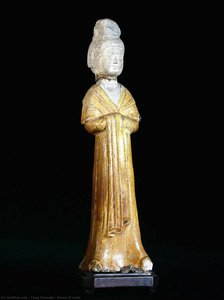
Dynastie Tang
Chine
En bref
- Artistic Movement Or Style: Peinture de paysage
- Full Name: Dynastie Tang
- Nationality: Chinoise
- Notable Artworks: ['Art de la grue, du pin et du rocher']
- Place Of Birth: Chine