
- Accueil

- Impression sur toile
- Sir John Everett Millais
- Untitled (AR27PC)

 Preview
 Commander la reproduction Acheter l'image haute résolution
 Partager
 Partager
 Détails de l'œuvre
 Ajouter aux favoris

 Télécharger
 Articles similaires
 Radiographie
 Diaporama
Untitled (AR27PC)
 Pre-Raphaelite
 1886
1886 125.0 x 84.0 cm
 Afficher la suite
Giclée / Impression d'art
Impression giclée ou sur toile de qualité musée, avec une production rapide et des finitions au choix.




P118B $10

P118H $10

P118W $10

P438Z $10

P508JH $12

P508YH $12

P805H $10

P805Z $10

P919BZ $10

P919G $10

P919XJ $10

P959ZH $10

P968JZ $12

W106C $8

W218G $10

W218JH $8

W218Y $10

W307PJ $10

W316G $10

W316PJ $8

W316Y $10

W398PJ $8

W4111J $10

W500HY $15

W500JH $15

W692G $12

W849H $8

W940BG $15

W953PJ $8




Choisissez parmi nos formats prédéfinis qui respectent les proportions originales de l’œuvre.

Vous pouvez saisir vos propres dimensions pour vous adapter à un cadre ou à un espace spécifique. Si la taille sélectionnée ne correspond pas aux proportions de l'image originale, nous recadrerons l'œuvre ou étendrons l'image avec une bordure en miroir ou une couleur unie. Une maquette numérique vous sera envoyée pour approbation avant le début de la production.
Veuillez noter que l'aperçu à l'écran ne reflète pas le recadrage ou l'extension réelle. Seule la maquette montrera avec précision la composition finale.
Bien que des tailles personnalisées soient disponibles, nous vous recommandons de choisir une dimension dans la liste prédéfinie afin de préserver les proportions originales.
Livraison dans le monde entier () en 2 semaines au lieu des 4/5 semaines habituelles. (27 juillet)

Livraison express gratuite dans le monde entier

Toile de lin de haute qualité

Assurance transport complète

Garantie de remboursement des frais de douane

Garantie de fidélité des couleurs

Politique de retour de 60 jours (uniquement en cas de défaut)

Garantie de remboursement à 100%

Réduction sur les achats groupés
 L'option verre n'est disponible que pour les dimensions inférieures à 110 cm.

Untitled (AR27PC)
Giclée / Impression d'art
Format de reproduction
-


Prix total final
-
Description de l'œuvre
A Vision in Crimson: Exploring Millais’s Portrait of a Lady
This captivating portrait, painted in 1886 by Sir John Everett Millais, embodies the enduring allure of Pre-Raphaelite artistry. Measuring 125 x 84 cm, *Untitled (AR27PC)* presents a woman enveloped in a rich red gown and cape – a striking image that immediately draws the viewer into her world. The work is demonstrably rooted in the aesthetic principles championed by the Pre-Raphaelite Brotherhood, which Millais co-founded. This movement rejected the academic conventions of the time, advocating for a return to the detailed observation of nature and a sincere, almost medieval, sense of beauty. Millais’s meticulous attention to detail is evident in the rendering of fabrics, hair, and facial features, creating a lifelike quality that was revolutionary for its era.Style & Technique: A Masterclass in Realism
The painting showcases Millais' mastery of oil on canvas. He employs layering techniques – building up form with successive glazes to achieve luminosity and depth. The brushwork, while appearing smooth overall, retains a visible texture that adds tactility and prevents the image from feeling overly polished. The composition is deliberately vertical, emphasizing the subject’s dignified stature and guiding the eye upwards. Notice how Millais utilizes diffused lighting – likely originating from an unseen source – to gently highlight her face and clothing, creating a soft, flattering effect. The background, rendered in muted browns and greens with loose brushstrokes, serves as a subtle atmospheric backdrop that doesn't distract from the central figure. This deliberate contrast between focused detail and atmospheric suggestion is characteristic of Millais’s mature style.Symbolism & Emotional Resonance
While ostensibly a portrait, *Untitled (AR27PC)* hints at deeper narratives. The woman's expression is contemplative, perhaps even melancholic, contributing to an overall somber emotional tone. The rolled-up document she holds adds a layer of intrigue – could it be correspondence, legal papers, or a secret missive? This subtle detail invites speculation about her story and social standing.- Red as a Symbol: The dominant use of red is significant. Historically, red has represented passion, power, and even sacrifice.
- The Unseen World: The indistinct background suggests an interior life or hidden circumstances surrounding the sitter.
- A Moment in Time: Millais captures a fleeting moment of introspection, inviting viewers to connect with the subject on an emotional level.
Historical Context & Legacy
Painted towards the end of his career, this portrait reflects Millais’s continued success as a leading portraitist. By 1886, he had already established himself as one of the most important artists of the Victorian era, having moved beyond the radicalism of his early Pre-Raphaelite works to embrace a more refined and commercially successful style. The painting offers a glimpse into the tastes and conventions of late 19th-century society – a world of elegant gowns, subtle symbolism, and carefully constructed appearances. For collectors and interior designers, this work provides a timeless aesthetic that blends seamlessly with both traditional and contemporary settings, adding a touch of Victorian grandeur and artistic sophistication to any space.Œuvres apparentées


Biographie de l'artiste
Premières années et éducation
Sir John Everett Millais, peintre et illustrateur anglais renommé, est né le 8 juin 1829 à Southampton, en Angleterre. Prodige dès son plus jeune âge, il devint l'élève le plus jeune à intégrer les écoles de la Royal Academy à l'âge de onze ans.Fondation de la Fraternité Prérraphaélite
En septembre 1848, Sir John Everett Millais, avec William Holman Hunt et Dante Gabriel Rossetti, fonda la Fraternité Prérraphaélite dans sa maison familiale de Gower Street, à Londres. Ce mouvement cherchait à raviver le style de la première Renaissance italienne.Œuvres Notables
Parmi les œuvres les plus notables de Sir John Everett Millais, on peut citer :- Christ in the House of His Parents (1849-1850), une œuvre hautement controversée qui mettait en valeur son portrait réaliste d'une famille ouvrière.
- A Huguenot (1851-1852), qui dépeignait un jeune couple sur le point d'être séparé en raison de conflits religieux.
- Ophelia (1851-1852), une peinture qui mettait en valeur ses surfaces picturales denses et élaborées, se concentrant souvent sur la beauté et la complexité du monde naturel.
- Mariana (1850-1851), basée sur la pièce « Measure for Measure » de William Shakespeare et le poème du même nom d'Alfred, Lord Tennyson.
Évolution Artistique et Influences
Les œuvres ultérieures de Sir John Everett Millais ont été influencées par sa femme, Effie, qui était autrefois mariée au critique John Ruskin. Son style a évolué vers une forme plus large de réalisme, initialement condamnée par Ruskin mais ultérieurement reconnue comme une contribution significative au monde de l'art. Il s’est également tourné vers le portrait, devenant un peintre très demandé et prospère.Héritage
L'héritage de Sir John Everett Millais s’étend au-delà de son art. Il a été un pionnier du mouvement prérraphaélite et une figure importante dans le développement de l'art britannique.- En savoir plus sur Sir John Everett Millais sur ArtsDot.com.
- Explorez la Fraternité Prérraphaélite et son influence sur l'art britannique sur Wikipédia.

Sir John Everett Millais
1829 - 1896 , Royaume-Uni
En bref
- Artistic Movement Or Style: Préraphaélisme
- Artists Or Movements Influenced By This Artist: ['Art britannique du XIXe siècle']
- Artists Who Influenced This Artist: ['Artistes de la Renaissance Italienne']
- Date Of Birth: 8 juin 1829
- Date Of Death: 13 août 1896
- Full Name: Sir John Everett Millais
- Nationality: Britannique
- Notable Artworks:
- Christ in the House of His Parents
- A Huguenot
- Ophelia
- Mariana
- Feuilles d'Automne
- Place Of Birth (City And Country): Southampton, Royaume-Uni
Articles connexes

Dante Gabriel Rossetti : Les 25 Œuvres Maîtresses du Préraphaélisme à Redécouvrir
Plongez dans l'univers fascinant de Dante Gabriel Rossetti ! Découvrez les 25 œuvres majeures du préraphaélisme : symbolisme, poésie et beauté victorienne. Reproductions d'art exceptionnelles sur ArtsDot.com.

James Abbott McNeill Whistler : Les 25 Œuvres Maîtresses d'un Précurseur de l'Art Moderne
Plongez dans l'univers de James Abbott McNeill Whistler : découvrez ses 25 œuvres les plus emblématiques, des nocturnes aux portraits saisissants. Explorez son esthétisme unique et trouvez l'inspiration déco avec ArtsDot.com.

Les 25 Chefs-d'œuvre du Metropolitan Museum of Art : Voyage Artistique et Décor d'Exception
Plongez au cœur du Metropolitan Museum of Art avec notre sélection des 25 œuvres les plus emblématiques. Découvrez l'histoire de Van Gogh, Monet et d'autres maîtres, et trouvez l'inspiration pour une décoration intérieure raffinée. Reproductions de qualité muséale sur ArtsDot.com.
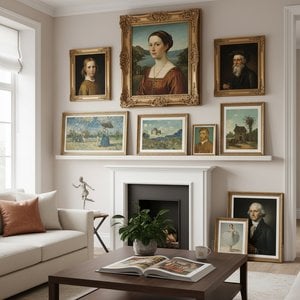
Les 25 Chefs-d'œuvre Incontournables de la National Gallery of Art : Peintures et Décor d'Exception
Plongez au cœur des 25 chefs-d'œuvre de la National Gallery of Art, Washington ! Découvrez l'histoire fascinante de Cézanne, Matisse, Picasso et bien d'autres. Trouvez l'inspiration déco et admirez les reproductions tableaux exceptionnelles sur ArtsDot.com.

Egon Schiele : Les 25 Œuvres Maîtresses d'un Artiste Expressionniste
Plongez dans l'univers poignant d'Egon Schiele avec les 25 œuvres incontournables de ce maître expressionniste. Découvrez son style unique, ses nus audacieux et la profondeur émotionnelle de ses portraits. Reproductions de qualité muséale sur ArtsDot.com



