


 Aperçu en situation
 Envoyer
 Partager
 Détails de l'œuvre

 Télécharger
 Articles similaires
 Radiographie
 Diaporama
La Vierge à l'Enfant avec Canon van der Paele
 Huile sur toile
- Art mural
- Peinture Flamande du Premier Ordre
 1436
1436- Renaissance
 122.0 x 157.0 cm
 Musée Groeninge
 Lire la suite
Reproduction à l'huile faite à la main
Huile sur toile peinte à la main, avec cadre et dimensions personnalisés, réalisée sur commande par nos artistes. ( Commander l'impression Télécharger l'image haute résolution)




P118B $10

P118H $10

P118W $10

P438Z $10

P508JH $12

P508YH $12

P805H $10

P805Z $10

P919BZ $10

P919G $10

P919XJ $10

P959ZH $10

P968JZ $12

W106C $8

W218G $10

W218JH $8

W218Y $10

W307PJ $10

W316G $10

W316PJ $8

W316Y $10

W398PJ $8

W4111J $10

W500HY $15

W500JH $15

W692G $12

W849H $8

W940BG $15

W953PJ $8




Choisissez parmi nos formats prédéfinis qui respectent les proportions originales de l’œuvre.

Vous pouvez saisir vos propres dimensions pour l'adapter à un cadre ou à un espace spécifique. Si la taille sélectionnée ne correspond pas aux proportions de l'image d'origine, nous recadrerons l'œuvre ou prolongerons la peinture avec des éléments peints à la main supplémentaires. Une maquette numérique vous sera envoyée pour approbation avant le début de la production.
Veuillez noter que l'aperçu à l'écran ne reflète pas le recadrage ou l'extension réels. Seule la maquette montrera fidèlement la composition finale.
Bien que des tailles personnalisées soient disponibles, nous vous recommandons de sélectionner une dimension dans la liste prédéfinie afin de préserver les proportions d'origine.
Après la commande, l’équipe ArtsDot.com contactera le client par e-mail pour recueillir ses instructions et lui fournira une maquette d’aperçu
Livraison dans le monde entier () en 3 à 4 semaines au lieu des 5 semaines habituelles. (19 août). Aucun compromis sur la qualité.

Livraison express gratuite dans le monde entier

Toile de lin de qualité supérieure

Assurance transport complète

Garantie de remboursement des droits de douane

Garantie de fidélité des couleurs

Politique de retour de 60 jours (uniquement en cas de défaut)

Garantie de remboursement à 100%

Offre de tarifs dégressifs
 L'option verre n'est disponible que pour les dimensions inférieures à 110 cm.

La Vierge à l'Enfant avec Canon van der Paele
Technique de reproduction
Format de la reproduction
-


Prix total
$ 338
Description de l'œuvre
A Vision of Faith and Status: Jan van Eyck’s *Madonna with Canon van der Paele*
Jan van Eyck's 1436 masterpiece, *The Madonna with Canon van der Paele*, housed in the Groeninge Museum in Bruges, Belgium, is far more than a devotional image; it’s a stunning display of Early Netherlandish artistry and a fascinating glimpse into the world of 15th-century religious patronage. This large-scale oil painting exemplifies Van Eyck's revolutionary techniques and his ability to imbue sacred scenes with remarkable realism and symbolic depth. It stands as a testament to the ambition of its commissioner, Joris van der Paele, and embodies the spiritual fervor of Bruges during its golden age.Composition and Setting
The painting presents the Virgin Mary, enthroned and holding the Christ Child, as the central focus of reverence. Flanking her are Saint Donatian, identified by his bishop’s mitre, and Canon Joris van der Paele himself, depicted kneeling in prayer. A further figure kneels on the right side, completing a carefully constructed hierarchical arrangement. The scene unfolds within an elaborate architectural setting – a richly decorated chamber resembling a palatial hall or church interior – creating a sense of solemn grandeur. The space is defined by pointed arches and detailed windows, suggesting both sacredness and worldly power. This deliberate design wasn’t merely aesthetic; it served to elevate the viewer's gaze upwards towards God, mirroring Van der Paele’s own aspiration for spiritual transcendence.Technical Brilliance: A Revolution in Oil Painting
Van Eyck was a pioneer in the use of oil paint, and *The Madonna with Canon van der Paele* showcases his mastery of the medium. He employed multiple layers of translucent glazes to achieve an unparalleled luminosity and depth of color—a technique unheard of at the time—creating an illusion of three-dimensionality that captivated viewers. Observe the meticulous detail – from the shimmering folds of Mary’s crimson dress to the intricate carvings on her throne and the realistic textures of skin and fabric. This painstaking technique allowed for a level of realism previously unseen in painting, establishing a new standard for artistic representation. The artist's dedication to capturing every nuance of light and shadow transformed the canvas into an immersive experience, mirroring the profound contemplation evoked by the scene itself.Symbolism Woven into Every Detail
The painting is replete with symbolic meaning. The book at Mary’s feet represents knowledge and scripture, while the cup on the right signifies purity and devotion. The throne itself is adorned with carvings depicting scenes from Genesis – Adam and Eve, Cain and Abel – foreshadowing Christ's sacrifice and redemption. Van der Paele’s presence isn’t merely that of a patron; it’s an act of pious submission and a visual testament to his faith and status. The inclusion of Saint Donatian connects the work directly to Bruges and its religious heritage—a city renowned for its devotion and artistic patronage during this period. Each element contributes to a complex tapestry of references, inviting viewers to engage in contemplation about God’s grace and humanity's role within divine providence.Historical Context: Burgundian Splendor
Created during a period of burgeoning wealth and artistic innovation in the Burgundian Netherlands, this artwork reflects the refined tastes and devout sensibilities of the era. Van Eyck served as court painter to Philip the Good, Duke of Burgundy, and his work embodies the elegance and sophistication associated with the Burgundian court. The commission by Canon van der Paele speaks to the growing importance of individual patronage in supporting artistic endeavors—a trend that propelled Bruges to become a center for artistic excellence. This painting captures not only the visual splendor of its time but also the spiritual convictions that underpinned it, cementing Van Eyck’s legacy as one of the most influential figures in art history.Exploring Further
- Related Works: Consider exploring Van Eyck’s *Portrait of Margareta van Eyck* for another example of his meticulous technique and intimate portraiture—a remarkable achievement considering the limitations of available pigments at the time.
- Interior Design Note: The rich colors and detailed composition make this painting a stunning focal point in any space, particularly those seeking a classic or historically inspired aesthetic. A high-quality reproduction can bring the beauty and symbolism of this masterpiece into your home.
- Artistic Legacy: Van Eyck’s innovations paved the way for future generations of Northern Renaissance artists, influencing masters like Hans Memling and Gerard David—artists who would carry forward his groundbreaking techniques and stylistic vision.
Œuvres similaires


Biographie de l'artiste
jeune vie et carrière
Jan van Eyck, figure prééminente du mouvement pictural néerlandais de début, est né vers 1390 à Maaseik, présent en Belgique. D’ici 1422, il s'était établi comme peintre maître avec un atelier et des assistants à La Haye. Notamment, il a servi Jean III le Cruel et plus tard Philippe le Beau, duc de Bourgogne, en tant que peintre de cour, jouissant d'une haute estime et s’engageant dans des activités diplomatiques.contributions artistiques
Les œuvres de Van Eyck, initialement ancrées dans le style gothique international, ont transcendé ses frontières grâce à son approche naturaliste améliorée et à l'utilisation innovante de la peinture à l'huile. Cela a établi une nouvelle norme en matière d’art, faisant de lui un pionnier du mouvement pictural néerlandais de début. Certaines de ses œuvres notables comprennent :- Le Dieu le Père (212 x 83 cm, renaissance du nord, huile sur panneau, voir sur ArtsDot.com)
- Portrait d'un jeune homme (33 x 19 cm, renaissance du nord, huile sur panneau, voir sur ArtsDot.com)
- Triptyque de Dresde (Vierge à l'enfant avec Saint Michel et Sainte Catherine et une donatrice) (28 x 38 cm, Gemäldegalerie alte meister, Dresde, Allemagne, renaissance du nord, bois, voir sur ArtsDot.com)
- Portrait de Giovanni Arnolfini et de sa femme (détail) (National Gallery, Londres, Royaume-Uni, huile, voir sur ArtsDot.com)
- Homme avec un turban bleu (17 x 23 cm, le musée national d'art de la Roumanie, Bucarest, Roumanie, renaissance du nord, bois, voir sur ArtsDot.com)
héritage et influence
L'influence de Van Eyck a été profonde, jetant les bases du développement de la tradition picturale néerlandaise de début. Son utilisation innovante de la peinture à l’huile a ajouté de la profondeur et du réalisme à ses œuvres, faisant de lui une figure renommée dans le monde de l'art. Pour explorer davantage les œuvres de Jan van Eyck et le mouvement pictural néerlandais de début, visitez la page de Jan van Eyck sur ArtsDot.com.relecture supplémentaire
* Wikipédia : [Jan van Eyck](https://en.wikipedia.org/wiki/jan_van_eyck) * ArtsDot.com : peintre néerlandais du nord * ArtsDot.com : le mouvement artistique néerlandais de début
Jan van Eyck
1390 - 1441 , Pays-Bas
L'essentiel de l'artiste
- Artistes Influents: ['Hubert van Eyck']
- Date De Décès: 1441
- Date De Naissance: c. 1390
- Influence Sur Les Artistes: ['École néerlandaise primitive']
- Lieu De Naissance: Maastricht, Pays-Bas
- Mouvement Artistique: École néerlandaise primitive
- Nationalité: Néerlandais
- Nom Complet: Jan van Eyck
- Oeuvres Notables:
- Retable de Gand
- Portrait d'Arnolfini
- Triptyque de Dresde
- Homme au turban bleu
Articles connexes

Les 10 Chefs-d'œuvre de la Peinture Primitif Néerlandaise : Art, Histoire & Décor
Plongez au cœur de la peinture flamande ! Découvrez les 10 chefs-d'œuvre de Jan van Eyck, Campin & Memling. Histoire, symbolisme et réalisme : trouvez l'inspiration déco et achetez des reproductions d'art exceptionnelles sur ArtsDot.com.
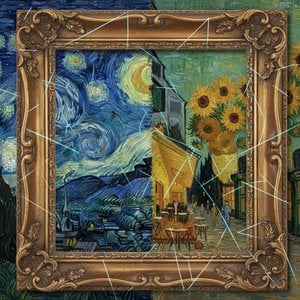
Van Gogh : 25 Chefs-d'Œuvres Iconiques - L'Âme et l'Émotion d'un Génie
Plongez au cœur de l'univers créatif de Van Gogh ! Découvrez 25 tableaux emblématiques, explorez ses couleurs vibrantes et son style unique. Reproductions d’art de qualité musée sur ArtsDot.com. Explorez la collection !

Jan van Eyck : Innovation technique, symbolisme subtil et aube de la peinture primitive flamande
Explorez le génie de Jan van Eyck et la révolution de la peinture flamande primitive. Découvrez ses techniques innovantes, son symbolisme subtil et l'impact durable de son œuvre sur l'histoire de l'art.

La Renaissance Septentrionale : Éclosion du Réalisme et de l'Innovation Artistique
Explorez la Renaissance septentrionale et l'éclosion du réalisme flamand avec ArtsDot. Découvrez Jan van Eyck, Robert Campin et les techniques révolutionnaires de cette période artistique majeure.

Renaissance Néerlandaise : 10 Chefs-d'œuvre Incontournables pour Décorer avec Art et Histoire
Plongez au cœur de la Renaissance néerlandaise avec 10 chefs-d'œuvre incontournables ! Découvrez Jan van Eyck, Robert Campin et les secrets de la peinture flamande. Trouvez l'inspiration déco et achetez des reproductions d'art de qualité muséale sur ArtsDot.com.



