


 Aperçu en situation
 Envoyer
 Partager
 Détails de l'œuvre

 Télécharger
 Articles similaires
 Radiographie
 Diaporama
Dante and Beatrice

 Lire la suite
Giclées et impressions d'art
Impressions giclées ou sur toile de qualité musée, avec une production rapide et des finitions au choix. ( Commander la reproduction peinte à la main Acheter l'image haute résolution)




P118B $10

P118H $10

P118W $10

P438Z $10

P508JH $12

P508YH $12

P805H $10

P805Z $10

P919BZ $10

P919G $10

P919XJ $10

P959ZH $10

P968JZ $12

W106C $8

W218G $10

W218JH $8

W218Y $10

W307PJ $10

W316G $10

W316PJ $8

W316Y $10

W398PJ $8

W4111J $10

W500HY $15

W500JH $15

W692G $12

W849H $8

W940BG $15

W953PJ $8




Choisissez parmi nos formats prédéfinis qui respectent les proportions originales de l’œuvre.

Vous pouvez saisir vos propres dimensions pour vous adapter à un cadre ou à un espace spécifique. Si la taille sélectionnée ne correspond pas aux proportions de l'image originale, nous recadrerons l'œuvre ou étendrons l'image avec une bordure en miroir ou une couleur unie. Une maquette numérique vous sera envoyée pour approbation avant le début de la production.
Veuillez noter que l'aperçu à l'écran ne reflète pas le recadrage ou l'extension réelle. Seule la maquette montrera avec précision la composition finale.
Bien que des tailles personnalisées soient disponibles, nous vous recommandons de choisir une dimension dans la liste prédéfinie afin de préserver les proportions originales.
Livraison dans le monde entier () en 2 semaines au lieu des 4/5 semaines habituelles. (29 août)

Livraison express gratuite dans le monde entier

Toile de lin de qualité supérieure

Assurance transport complète

Garantie de remboursement des droits de douane

Garantie de fidélité des couleurs

Politique de retour de 60 jours (uniquement en cas de défaut)

Garantie de remboursement à 100%

Offre de tarifs dégressifs
 L'option verre n'est disponible que pour les dimensions inférieures à 110 cm.

Dante and Beatrice
Giclées et impressions d'art
Format de la reproduction
-


Prix total
$ 62
Sandro Botticelli’s “Dante and Beatrice”: A Renaissance Vision of Divine Devotion
Sandro Botticelli's "Dante and Beatrice," painted around 1480, isn’t merely a depiction of two figures; it’s a vibrant portal into the heart of Florentine artistic and intellectual life during the Early Renaissance. This captivating drawing, now housed within the prestigious Kupferstichkabinett (Print Room) at the Staatliche Museen zu Berlin, offers a rare glimpse into Botticelli's masterful command of line and his profound engagement with Dante Alighieri’s “Divine Comedy.” More than just an illustration, it embodies a complex interplay of religious fervor, philosophical contemplation, and the burgeoning humanist spirit that defined the era. The work immediately draws the eye with its dynamic composition—a swirling mass of figures rendered in meticulously crafted black and white lines, creating a sense of both urgency and profound serenity.
Botticelli’s technique is instantly recognizable: a deliberate departure from the smooth, polished surfaces favored by many of his contemporaries. Here, he embraces a linear style reminiscent of late Gothic art, yet infused with a distinctly Renaissance sensibility. The artist employs intricate hatching and cross-hatching to build up tonal variations, suggesting depth and volume without relying on traditional shading. Notice how the varying line weights create texture—the dense layering of figures in the foreground contrasts sharply with the more fluid lines depicting the distant crowd, conveying a powerful sense of spatial recession. This masterful use of line isn’t simply decorative; it's integral to the work’s expressive power.
The Dantean Narrative and Symbolic Weight
At its core, “Dante and Beatrice” captures a pivotal moment from Dante’s “Paradiso,” the final canticle of his epic poem. The scene depicts Dante, guided by Virgil, ascending through the celestial spheres to encounter Beatrice, representing divine grace and ultimately, God himself. Botticelli doesn't offer a literal representation of this journey; instead, he translates the poem’s spiritual intensity into a visual drama. The sheer number of figures surrounding Dante—angels, saints, and other souls—underscores the overwhelming nature of divine presence and the magnitude of Dante’s ascent. Each figure is rendered with a distinct personality, contributing to the overall sense of bustling activity and profound reverence.
Symbolism permeates every aspect of the drawing. The central female figure, Beatrice, is depicted in a pose of serene beauty and ethereal grace—a testament to her role as an intercessor between humanity and the divine. The swirling crowd represents the collective yearning for salvation, while Virgil’s presence signifies human reason guiding Dante towards enlightenment. The composition itself echoes the structure of the “Divine Comedy” – a journey through different realms of existence, culminating in a transcendent experience. Botticelli's choice to depict this scene as a dynamic line drawing—rather than a more traditional fresco or panel painting—suggests a deliberate attempt to capture the *movement* and *energy* inherent in Dante’s vision.
Historical Context and Artistic Legacy
Botticelli’s “Dante and Beatrice” emerged during a period of intense intellectual ferment in Florence. The Renaissance was witnessing a renewed interest in classical antiquity, alongside a burgeoning humanist philosophy that emphasized human potential and earthly experience. This complex interplay of influences is reflected in Botticelli's work—his ability to seamlessly blend religious iconography with elegant, almost decorative forms. The drawing’s creation coincided with the rediscovery of Dante’s “Divine Comedy,” which quickly became a cultural phenomenon throughout Europe.
The acquisition of this drawing by Gustav von Waagen in 1854 from the Hamilton Collection is itself a fascinating story—a testament to the enduring appeal of Botticelli's work. The drawings were initially discovered in Scotland, and their subsequent journey to Berlin highlights the international significance of Renaissance art. “Dante and Beatrice” stands as a remarkable example of Botticelli’s artistic genius—a powerful synthesis of religious devotion, philosophical contemplation, and masterful technique that continues to captivate viewers centuries after its creation. It's a work that invites us to contemplate not only the beauty of the image itself but also the profound spiritual questions it raises.
A Timeless Masterpiece for Art Enthusiasts
Botticelli’s “Dante and Beatrice” is more than just an artwork; it’s a window into a pivotal moment in Western art history. Its intricate detail, dynamic composition, and rich symbolism make it a truly exceptional piece. Reproductions of this drawing offer a wonderful opportunity to bring this Renaissance masterpiece into your home or office, allowing you to appreciate its beauty and complexity on a daily basis. Whether you are an avid art collector, a design enthusiast seeking inspiration, or simply someone who appreciates the power of visual storytelling, “Dante and Beatrice” is sure to leave a lasting impression.
Œuvres similaires


Biographie de l'artiste
jeune vie et formation
Sandro Botticelli, né Alessandro di Mariano di Vanni Filipepi vers 1445, est une figure clé de la Renaissance italienne précoce. Initialement relégué à l'arrière-plan après sa mort, l'œuvre de Botticelli a été revitalisée au XIXe siècle par les préréfables, conduisant à une réévaluation de ses contributions artistiques. Botticelli est né à Florence, en Italie, et y a vécu toute sa vie dans le même quartier. Sa famille, dont son père Mariano di Vanni d'Amadeo Filipepi, était impliquée dans diverses professions, ce qui leur a permis de se rencontrer avec des artistes. Giorgio Vasari rapportait que Botticelli avait initialement été formé comme orfèvre.style artistique et œuvres notables
L'œuvre de Botticelli est caractérisée par une élégante linéarité, reliant le gothique italien tardif à la Renaissance précoce. Ses œuvres les plus célèbres, La Naissance de Vénus et *Primavera*, sont exposées à la Galerie des Offices à Florence, qui abrite une importante collection de ses œuvres. * La Naissance de Vénus (voir sur ArtsDot) * *Primavera* (explorer l'art de Sandro Botticelli sur ArtsDot) * Nativité mystique (National Gallery, Londres), datée 1501, est la seule œuvre de Botticelli avec une date claire.héritage et influence
Le style de Botticelli a évolué vers une approche plus personnelle dans les années 1490, s'écartant des contemporains comme Léonard de Vinci et du style de la Renaissance haute émergente. Son œuvre a été reconnue comme une contribution significative au mouvement artistique de la Renaissance italienne. * le mouvement artistique de la Renaissance italienne * Sandro Botticelli sur Wikipédia- Des artistes notables de la Renaissance italienne comprennent Sandro Botticelli, Léonard de Vinci, Michel-Ange et Titien.
- La Galerie des Offices à Florence abrite une importante collection d'œuvres de Botticelli.
- L'œuvre de Botticelli a été reconnue comme une figure clé de la Renaissance italienne précoce.

Sandro Botticelli
1445 - 1510 , Italie
L'essentiel de l'artiste
- Artistes Influents:
- Fra Angelico
- Paolo Uccello
- Date De Décès: 1510
- Date De Naissance: c. 1445
- Lieu De Naissance: Florence, Italie
- Mouvement Artistique: Renaissance italienne
- Nationalité: Italienne
- Nom Complet: Sandro Botticelli
- Oeuvres Notables:
- La Naissance de Vénus
- Primavera
- Nativité mystique
Articles connexes
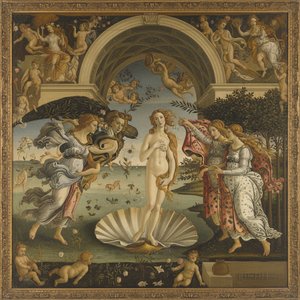
Botticelli : Les 25 Œuvres Maîtresses du Génie Florentin | ArtsDot
Plongez dans l'univers de Botticelli ! Découvrez les 25 œuvres majeures du maître florentin : La Naissance de Vénus, Primavera et bien plus. Histoire, technique & inspiration déco. Reproductions d'art haute qualité sur ArtsDot.com.

Dante Gabriel Rossetti : Les 25 Œuvres Maîtresses du Préraphaélisme à Redécouvrir
Plongez dans l'univers fascinant de Dante Gabriel Rossetti ! Découvrez les 25 œuvres majeures du préraphaélisme : symbolisme, poésie et beauté victorienne. Reproductions d'art exceptionnelles sur ArtsDot.com.

The Art of the Line: Discover Captivating Drawings to Transform Your Home with Sophisticated Minimalist Elegance
Elevate your home with the profound elegance of fine art drawings. From soulful charcoal sketches to minimalist line art, discover how captivating textures and masterful contours can transform your interior design. Explore expert curation for a sophisticated, meaningful living space.

The Nuances of Graphite: Exploring Emotional Depth & Technical Mastery in Pencil Drawing
Explore the captivating world of graphite drawing! Discover its rich history, master essential techniques like chiaroscuro, and learn how artists evoke emotion through this timeless medium. Expert insights for art enthusiasts.

Les 10 Chefs-d'œuvre de la Renaissance Précoce : Artistes et Décor Intemporels
Plongez au cœur de la Renaissance italienne ! Découvrez les 10 chefs-d'œuvre de Botticelli, Léonard de Vinci et Raphaël. Histoire, techniques & inspiration déco. Reproductions tableaux sur



