

 Aperçu en situation
 Envoyer
 Partager
 Détails de l'œuvre
 Guide
Guide

 Télécharger l'image
 Articles similaires
 Radiographie
 Diaporama
 Questions et réponses
 Statistiques
Self-Portrait

- 291.0 x 229.0 cm


 Lire la suite
Giclées et impressions d'art
Impressions giclées ou sur toile de qualité musée, avec une production rapide et des finitions au choix. ( Commander la reproduction peinte à la main Passer au format numérique)




P118B €10

P118H €10

P118W €10

P438Z €10

P508JH €12

P508YH €12

P805H €10

P805Z €10

P919BZ €10

P919G €10

P919XJ €10

P959ZH €10

P968JZ €12

W106C €8

W218G €10

W218JH €8

W218Y €10

W307PJ €10

W316G €10

W316PJ €8

W316Y €10

W398PJ €8

W4111J €10

W500HY €15

W500JH €15

W692G €12

W849H €8

W940BG €15

W953PJ €8




Choisissez parmi nos formats prédéfinis qui respectent les proportions originales de l’œuvre.

Saisissez la largeur et la hauteur souhaitées pour qu'elles s'adaptent à votre cadre ou à votre mur. Une impression peut être recadrée, mais jamais agrandie au-delà de l'image originale ; ainsi, un format de forme différente entraînera la perte d'une partie de l'image. Nous vous envoyons une maquette numérique pour approbation avant toute impression. L'image présentée sur cette page ne montre pas le recadrage réel — seule la maquette le permet.
Livraison dans le monde entier () en 2 semaines au lieu des 4/5 semaines habituelles. (5 novembre)

Livraison express gratuite dans le monde entier

Toile de lin de qualité supérieure

Assurance transport complète

Garantie de remboursement des droits de douane

Garantie de fidélité des couleurs

Politique de retour de 100 jours (uniquement en cas de défaut)

Garantie de remboursement à 100%

Offre de tarifs dégressifs
 L'option verre n'est disponible que pour les dimensions inférieures à 110 cm.

Self-Portrait
Giclées et impressions d'art
Format de la reproduction
-


Prix total
€ 56
A Window Into Romantic Mysticism
The Self-Portrait by Samuel Palmer, completed in 1825, transcends mere representation; it embodies the very essence of Romantic idealism and offers a profound glimpse into the artist's inner landscape. This work is not simply a depiction of Palmer himself but rather a carefully constructed symbol reflecting his artistic vision and spiritual convictions. It stands as a cornerstone of Palmer's oeuvre and exemplifies the burgeoning fascination with the sublime—that elusive, haunting blend of beauty and terror which characterized the era. In this intimate encounter with the artist's gaze, we find a soul navigating the delicate boundary between the physical world and a visionary realm.
The execution of this piece is defined by Palmer’s masterful use of chalk on buff paper, a technique that lends an ethereal, almost ghostly quality to the image. By eschewing vibrant hues in favor of a muted palette primarily composed of shades of grey and white, Palmer creates a striking contrast against the darker background. This deliberate choice emphasizes the contours of his face and torso with remarkable precision, allowing the light to emerge from the shadows as if from a dream. The subtle sheen of skin and the delicate folds of his shirt collar demonstrate an unwavering commitment to realism, yet this detail is always tempered by an expressive artistry that prioritizes mood and atmosphere over mere photographic accuracy.
The Soul Behind the Gaze
To look upon this portrait is to engage with a moment of intense introspection. The central figure, a young man with short hair, looks directly at the viewer with a neutral yet piercing expression. His eyes are particularly striking, possessing a lifelike gaze that suggests a profound presence, even as they seem to hold a sense of hollowed mystery. This tension between the tangible and the spiritual is where the true power of the work resides. The dark, indistinct background serves to isolate the subject, drawing all attention to the luminous features of his face and the textured ruffles of his collar, effectively stripping away the distractions of the external world to focus entirely on the internal state.
For collectors and lovers of fine art, this self-portrait offers more than just a historical artifact; it provides an emotional anchor for any space. The piece captures the dawn of symbolism and the transformative influence of visionary thinkers like William Blake, making it a significant piece of British Romantic history. Whether viewed as a study in light and shadow or as a psychological exploration of identity, the Self-Portrait remains a captivating masterpiece that invites continuous contemplation, making it an inspiring choice for those seeking to surround themselves with art that speaks to the depths of the human experience.
Questions et réponses
Quels sont les droits de reproduction pour « Self-Portrait » au Ashmolean Museum ?
L'original « Self-Portrait » se trouve au Ashmolean Museum, et l'œuvre est dans le domaine public - ses droits d'auteur sont tombés dans le domaine public.
Quel usage est suggéré pour «Self-Portrait» de Samuel Palmer ?
Une reproduction de «Self-Portrait» de Samuel Palmer est recommandée pour Reflective. Cette suggestion découle du sujet, de l'atmosphère et des couleurs de l'œuvre.
En quelle année "Self-Portrait" a-t-il été réalisé ?
L'œuvre «Self-Portrait» de Samuel Palmer date de 1825.
Œuvres similaires


Biographie de l'artiste
Première Vie et Influences
- Né: Londres, Royaume-Uni (1805)
- Décédé: 1881
- Samuel Palmer était le fils d'un libraire et ministre baptiste occasionnel. Il a reçu une éducation formelle limitée mais a démontré un talent artistique dès son plus jeune âge, peignant des églises vers l'âge de douze ans.
- Une exposition précoce à William Blake en 1824 s'est avérée profondément influente. Le style visionnaire de Blake a considérablement façonné le développement artistique de Palmer.
- Il a exposé des œuvres inspirées par Turner au Royal Academy dès l'âge de quatorze ans.
La Période de Shoreham et "Rat Abbey"
- De 1826 à 1835, Palmer résidait à Shoreham, dans le Kent, dans une chaumière surnommée « Rat Abbey ». Cette période est considérée comme cruciale pour sa production artistique.
- Pendant cette période, il a produit des peintures pastorales visionnaires représentant la région comme un paysage mystique, souvent en utilisant des tons sépia et des scènes de clair de lune évocatrices.
- Il s'est associé à un groupe d'artistes connus sous le nom de « The Ancients », qui partageaient l'influence de Blake et appréciaient le style unique de Palmer.
- Sa vie familiale pendant cette période était complexe, impliquant son père et sa nounou résidant à proximité, contribuant à l'atmosphère entourant son travail.
Œuvre Mature et Évolution des Styles
- Après 1835, Palmer est retourné à Londres et s'est orienté vers des paysages plus conventionnels et de la peinture à l'aquarelle.
- Il a travaillé comme maître de dessin privé pendant plus de deux décennies, ce qui a eu un impact sur sa capacité à consacrer du temps à son propre art.
- Sa palette est devenue plus lumineuse dans les années 1830 après un voyage en Italie, bien que parfois au détriment de la subtilité.
- Malgré des difficultés financières et des pertes personnelles (la mort de son fils Thomas), Palmer a continué à produire des œuvres importantes, notamment des illustrations pour les poèmes de Milton et des gravures inspirées par Virgile.
Style Artistique et Héritage
- Style: Le travail de Palmer se caractérise par un mélange d'éléments romantiques et visionnaires. Ses premières peintures de Shoreham sont connues pour leur atmosphère mystique, leurs tons sépia et leurs représentations de l'Angleterre rurale comme un paradis idéalisé. Les œuvres ultérieures ont incorporé des couleurs plus vives mais ont conservé un sentiment de tranquillité et d'observation.
- Influences: William Blake était l'influence la plus significative sur la vision artistique de Palmer. La peinture de paysage de Turner a également joué un rôle dans son développement précoce.
- Technique: Il travaillait principalement à l'aquarelle et à la gravure, démontrant des compétences dans les deux médiums. Son utilisation de la lumière et de l'ombre créaient des ambiances évocatrices dans ses peintures.
- Signification historique : Palmer est reconnu comme une figure clé du romantisme britannique, comblant le fossé entre l'art visionnaire de Blake et les peintres paysagistes ultérieurs. Son style unique et son accent sur les thèmes pastoraux lui ont assuré une place dans l'histoire de l'art.
Œuvres Principales
- Cornfield by Moonlight
- Harvesting
- The Timber Wain
- Pele Point, Land
- De nombreuses gravures illustrant des œuvres de Virgile et Milton.

Samuel Palmer
1805 - 1881 , Royaume-Uni
L'essentiel de l'artiste
- Artistes Influents:
- William Blake
- J.M.W. Turner
- Date De Décès: 1881
- Date De Naissance: 1805
- Full Name: Samuel Palmer
- Lieu De Naissance: Londres, Royaume-Uni
- Mouvement Artistique: Romantisme
- Nationalité: Britannique
- Oeuvres Notables:
- Cornfield by Moonlight
- Harvesting
- The Timber Wain
- Pele Point, Land
Articles connexes

L'Écho de Soi : La Réflexivité comme Thème Central dans l'Histoire de l'Art et la Pratique Contemporaine
Explorez l'évolution de la réflexivité dans l'art, des portraits romains à la performance contemporaine. Analyse approfondie pour collectionneurs avertis et passionnés d'histoire de l'art. Découvrez les chefs-d'œuvre et leur signification.

Les 10 Chefs-d'œuvre Noirs : Peintures Célèbres et Décoration d'Intérieur
Plongez dans l'univers fascinant des 10 plus beaux tableaux noirs de l'histoire de l'art. Découvrez les secrets de Goya, Manet, Rothko et autres maîtres. Inspirez votre décoration intérieure avec !

Les 10 Chefs-d'œuvre Noirs : Peintures Iconiques et Décoration d'Intérieur
Plongez dans l'univers fascinant des 10 plus beaux tableaux noirs de l'histoire de l'art. Découvrez les artistes célèbres, leurs techniques et le symbolisme puissant de ces chefs-d'œuvre intemporels. Inspirez votre décoration intérieure avec !

Reflecting the Self: A History of Portraiture & Psychological Insight
Explore the fascinating history of self-portraiture from Renaissance masters like Dürer & Rembrandt to modern interpretations. Discover the psychological insights and artistic techniques behind these iconic works. Expert analysis for art enthusiasts.
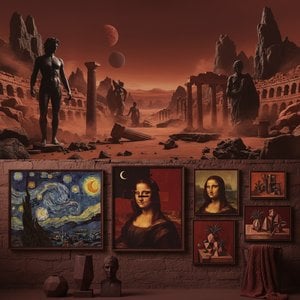
Les 10 Chefs-d'œuvre Dominés par le Noir : Art, Histoire & Décoration
Plongez dans l'univers fascinant des 10 plus beaux tableaux dominés par le noir. Découvrez les histoires, techniques et symbolisme de chefs-d'œuvre intemporels. Reproductions d'art de qualité musée sur !
