
- Accueil

- Impression sur toile
- Roy Lichtenstein
- Silver Frame
 Commander la reproduction Acheter l'image haute résolution
 Partager
 Partager
 Détails de l'œuvre
 Ajouter aux favoris

 Télécharger
 Articles similaires
 Radiographie
 Diaporama
Silver Frame


 Afficher la suite
Giclée / Impression d'art
Impression giclée ou sur toile de qualité musée, avec une production rapide et des finitions au choix.




P118B $10

P118H $10

P118W $10

P438Z $10

P508JH $12

P508YH $12

P805H $10

P805Z $10

P919BZ $10

P919G $10

P919XJ $10

P959ZH $10

P968JZ $12

W106C $8

W218G $10

W218JH $8

W218Y $10

W307PJ $10

W316G $10

W316PJ $8

W316Y $10

W398PJ $8

W4111J $10

W500HY $15

W500JH $15

W692G $12

W849H $8

W940BG $15

W953PJ $8




Choisissez parmi nos formats prédéfinis qui respectent les proportions originales de l’œuvre.

Vous pouvez saisir vos propres dimensions pour vous adapter à un cadre ou à un espace spécifique. Si la taille sélectionnée ne correspond pas aux proportions de l'image originale, nous recadrerons l'œuvre ou étendrons l'image avec une bordure en miroir ou une couleur unie. Une maquette numérique vous sera envoyée pour approbation avant le début de la production.
Veuillez noter que l'aperçu à l'écran ne reflète pas le recadrage ou l'extension réelle. Seule la maquette montrera avec précision la composition finale.
Bien que des tailles personnalisées soient disponibles, nous vous recommandons de choisir une dimension dans la liste prédéfinie afin de préserver les proportions originales.
Livraison dans le monde entier () en 2 semaines au lieu des 4/5 semaines habituelles. (19 juillet)

Livraison express gratuite dans le monde entier

Toile de lin de haute qualité

Assurance transport complète

Garantie de remboursement des frais de douane

Garantie de fidélité des couleurs

Politique de retour de 60 jours (uniquement en cas de défaut)

Garantie de remboursement à 100%

Réduction sur les achats groupés
 L'option verre n'est disponible que pour les dimensions inférieures à 110 cm.

Silver Frame
Giclée / Impression d'art
Format de reproduction
-


Prix total final
-
Description de l'œuvre
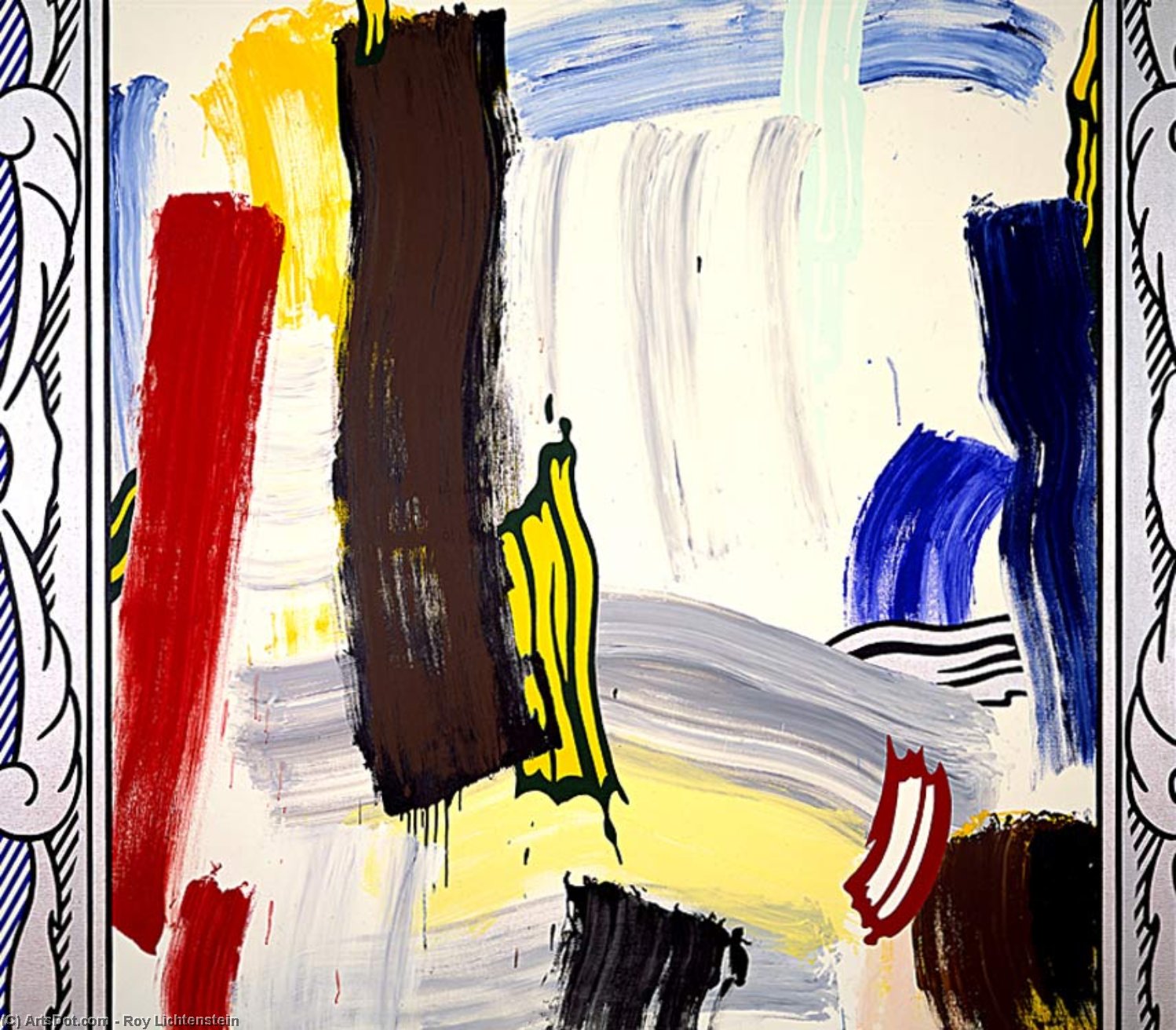
A Bold Exploration of Color and Collage: Roy Lichtenstein's "Silver Frame"
The year was 1984, and the art world was buzzing with excitement over the resurgence of Pop Art – specifically, the distinctive vision championed by Roy Lichtenstein. “Silver Frame,” a monumental canvas measuring approximately 60 x 72 inches, stands as a testament to Lichtenstein’s groundbreaking approach to painting and his masterful manipulation of collage techniques. It's not merely a depiction of an image; it’s an embodiment of the artist’s philosophy about how art can engage with popular culture and challenge traditional artistic conventions.The Style: Lichtensteinian Collage
At first glance, “Silver Frame” might appear to be a straightforward representation of a photograph – indeed, it is based on a print by Lichtenstein himself. However, this illusion quickly dissipates upon closer inspection. Lichtenstein’s signature technique involved meticulously layering printed images onto canvas, creating what he termed "collage." Unlike traditional painting where color and texture are blended seamlessly, collage embraces disparate elements—photographs, halftone patterns, and bold geometric shapes—resulting in a dynamic visual experience that pulsates with energy. The artist painstakingly positioned these components to achieve a harmonious balance between abstraction and recognizable imagery.Technique: Halftone Printing and Layered Composition
The core of Lichtenstein’s aesthetic lies in the halftone printing process – a technique borrowed from commercial illustration where dots of varying sizes are used to simulate shading and tonal variation. This method, perfected by Lichtenstein during his formative years as an illustrator, lends “Silver Frame” its characteristic mottled appearance. The artist meticulously applied halftone patterns over photographs, transforming them into stylized representations that retain their original visual information while simultaneously elevating them to the realm of art. Furthermore, Lichtenstein employed a layered compositional strategy—overlapping images and shapes—to create depth and complexity within the canvas. This layering technique contributes significantly to the artwork's overall impact, inviting viewers to explore multiple perspectives and engage in an active dialogue with the image.Historical Context: Challenging Artistic Boundaries
“Silver Frame” emerged during a period of significant artistic upheaval – the late 1980s saw artists increasingly questioning established hierarchies and embracing new forms of expression. Lichtenstein’s work directly confronted the elitism inherent in the art world, advocating for accessibility and engaging with themes prevalent in everyday life. He drew inspiration from comic strips and advertising campaigns—sources considered lowbrow by many critics at the time—demonstrating that artistic innovation could flourish outside of academic institutions. By appropriating imagery from popular culture, Lichtenstein asserted a powerful statement about the role of art in reflecting and shaping societal values.Symbolism: Bold Colors and Geometric Shapes
The artwork’s striking color palette – dominated by vibrant reds, yellows, blues, greens, and browns—serves as more than just aesthetic embellishment; it carries symbolic weight. Lichtenstein deliberately selected colors that evoke emotion and convey meaning beyond their literal appearance. The prominent red square, positioned centrally within the composition, represents passion, energy, and perhaps even aggression – mirroring themes explored in comic books and reflecting Lichtenstein’s own rebellious spirit. Similarly, the geometric shapes—squares and rectangles—symbolize order, stability, and rationality—contrasting with the chaotic layering of images that characterizes the collage technique. These deliberate choices underscore Lichtenstein's intention to provoke contemplation and stimulate intellectual engagement.Emotional Impact: A Celebration of Visual Stimulation
Ultimately, “Silver Frame” succeeds in captivating viewers through its sheer visual stimulation. The artwork’s bold colors, intricate patterns, and dynamic composition create an immersive experience that transcends mere representation—it invites the audience into Lichtenstein's artistic universe. It speaks to a desire for playful experimentation and challenges conventional notions of beauty. Viewing this piece evokes feelings of excitement, curiosity, and perhaps even amusement – mirroring the spirit of Pop Art itself. “Silver Frame” remains a powerful reminder that art can be both intellectually stimulating and emotionally resonant, cementing Lichtenstein’s legacy as one of the most influential artists of his generation.Œuvres apparentées


Biographie de l'artiste
jeune vie et éducation
roy fox lichtenstein, un artiste pop américain de premier plan, est né le 27 octobre 1923 à New York. Il a grandi dans une famille juive de milieu-classe supérieur, son père étant courtier en immobilier et sa mère femme au foyer. L'intérêt de Lichtenstein pour l'art et le design a commencé comme un passe-temps pendant ses années scolaires.carrière artistique
Après avoir terminé sa scolarité secondaire au Dwight School en 1940, Lichtenstein a étudié à l’Art Students League of New York sous la tutelle de Reginald Marsh. Il a ensuite obtenu une licence en arts plastiques de l'Ohio State University, interrompue par un service militaire de trois ans pendant la Seconde Guerre mondiale.- look mickey (1961, National Gallery of Art, Washington, D.C.), l'une des premières œuvres pop de Lichtenstein, a marqué le début de sa carrière influente.
- Son travail était fortement influencé par la publicité et les styles de bandes dessinées populaires, avec des œuvres notables telles que Wham!, drowning girl et oh, jeff...i love you, too...but...
- La pièce la plus chère de Lichtenstein, Masterpiece, a été vendue pour 165 millions de dollars en janvier 2017.
enseignement et influences
Lichtenstein a enseigné dans diverses institutions, notamment l'université d'État de New York à Oswego et l'université Rutgers. Son travail a été influencé par Allan Kaprow, un collègue professeur à Rutgers, ce qui a ravivé son intérêt pour les images proto-pop. Expositions notables :- the museum chambre de commerce (Toulouse, France), présentant diverses œuvres d'art, y compris celles du mouvement pop art.
- Le travail de Lichtenstein a été exposé à la Leo Castelli Gallery à New York, avec sa première exposition personnelle en 1962 ayant été entièrement achetée par des collectionneurs influents avant l'ouverture.
héritage et impact
Roy Lichtenstein est décédé le 29 septembre 1997, laissant derrière lui un héritage en tant que figure de proue du mouvement pop art. Son œuvre continue d’être célébrée pour son mélange innovant d’art haut et d’art populaire, ce qui la rend accessible à un public plus large.- Explorez davantage l'œuvre de Lichtenstein sur ArtsDot.com
- Découvrez le monde de l'art pop et de ses artistes influents sur pop art and beyond: navigating contemporary styles with ArtsDot.com

Roy Lichtenstein
1923 - 1997 , États-Unis d'Amérique
En bref
- Artistes Influents:
- Reginald Marsh
- Allan Kaprow
- Date De Décès: 29 septembre 1997
- Date De Naissance: 27 octobre 1923
- Lieu De Naissance: Manhattan, États-Unis
- Mouvement Artistique: Pop Art
- Nationalité: Américaine
- Nom Complet: Roy Lichtenstein
- Oeuvres Notables:
- Look Mickey
- Whaam!
- Drowning Girl
- Masterpiece
Articles connexes

L'Élégance du Fandom : Intégrer l'Art Pop Culture dans un Décor Sophistiqué
Transformez votre intérieur avec l'art pop culture ! Découvrez nos conseils d'experts pour intégrer subtilement vos passions dans un décor élégant et raffiné. Guide complet & inspiration déco.

Défis aux Conventions : Pop Art, Origines, Évolution et Héritage Durable
Explorez l'histoire fascinante du Pop Art : de ses origines à son influence durable. Découvrez les œuvres emblématiques d'Andy Warhol et des artistes clés. Guide expert pour collectionneurs.

Gene Davis: Chromatic Explorations of Color Field Painting & the Washington Color School
Explore the vibrant world of Gene Davis and the Washington Color School. Discover his iconic stripe paintings, innovative techniques, and lasting impact on American abstract art. A deep dive for collectors & enthusiasts.

Chromatic Abundance: Exploring the Psychological Impact of Rich Color Palettes in Painting
Explore the fascinating world of color theory in painting! Discover how Impressionist & Post-Impressionist masters used vibrant hues to evoke emotion and create lasting impact. Expert insights for collectors & art enthusiasts.

Chromatic Resonance: Exploring the Emotional Impact of Vibrant Color Palettes in Painting
Explore the fascinating relationship between color & emotion in art history. Discover how master artists like Matisse & Gauguin used vibrant hues to evoke feelings and cultural meanings. A deep dive for classic art enthusiasts.



