


 Aperçu en situation
 Envoyer
 Partager
 Détails de l'œuvre

 Télécharger
 Articles similaires
 Radiographie
 Diaporama
Bull (1973)

 Lire la suite
Reproduction à l'huile faite à la main
Huile sur toile peinte à la main, avec cadre et dimensions personnalisés, réalisée sur commande par nos artistes. ( Commander l'impression Acheter l'image haute résolution)




P118B $10

P118H $10

P118W $10

P438Z $10

P508JH $12

P508YH $12

P805H $10

P805Z $10

P919BZ $10

P919G $10

P919XJ $10

P959ZH $10

P968JZ $12

W106C $8

W218G $10

W218JH $8

W218Y $10

W307PJ $10

W316G $10

W316PJ $8

W316Y $10

W398PJ $8

W4111J $10

W500HY $15

W500JH $15

W692G $12

W849H $8

W940BG $15

W953PJ $8




Choisissez parmi nos formats prédéfinis qui respectent les proportions originales de l’œuvre.

Vous pouvez saisir vos propres dimensions pour l'adapter à un cadre ou à un espace spécifique. Si la taille sélectionnée ne correspond pas aux proportions de l'image d'origine, nous recadrerons l'œuvre ou prolongerons la peinture avec des éléments peints à la main supplémentaires. Une maquette numérique vous sera envoyée pour approbation avant le début de la production.
Veuillez noter que l'aperçu à l'écran ne reflète pas le recadrage ou l'extension réels. Seule la maquette montrera fidèlement la composition finale.
Bien que des tailles personnalisées soient disponibles, nous vous recommandons de sélectionner une dimension dans la liste prédéfinie afin de préserver les proportions d'origine.
Après la commande, l’équipe ArtsDot.com contactera le client par e-mail pour recueillir ses instructions et lui fournira une maquette d’aperçu
Livraison dans le monde entier () en 3 à 4 semaines au lieu des 5 semaines habituelles. (7 septembre). Aucun compromis sur la qualité.

Livraison express gratuite dans le monde entier

Toile de lin de qualité supérieure

Assurance transport complète

Garantie de remboursement des droits de douane

Garantie de fidélité des couleurs

Politique de retour de 100 jours (uniquement en cas de défaut)

Garantie de remboursement à 100%

Offre de tarifs dégressifs
 L'option verre n'est disponible que pour les dimensions inférieures à 110 cm.

Bull (1973)
Technique de reproduction
Format de la reproduction
-


Prix total
$ 263
A Bold Statement Against Tradition: Exploring Roy Lichtenstein’s “Bull”
- Subject Matter & Initial Impression:
- Pop Art's Disruptive Influence
- Technique and Style – The Ben-Day Dots
- Historical Context - Challenging Artistic Conventions
- Symbolism and Emotional Resonance
Subject Matter & Initial Impression:
Roy Lichtenstein’s “Bull,” painted in 1973, presents a deceptively simple image: a cow rendered against a stark yellow background. Yet, this seemingly banal depiction is anything but unremarkable when viewed through the lens of Pop Art's ambition – to elevate everyday subjects into realms of artistic contemplation. The composition itself—positioned squarely in the corner of what appears to be a domestic interior—immediately establishes a dialogue with the viewer, inviting us to reconsider our perceptions of commonplace objects and experiences. Lichtenstein deliberately eschewed grand narratives or complex emotional explorations, opting instead for directness and clarity that would resonate powerfully within its time.Pop Art's Disruptive Influence:
Born in Manhattan during a period marked by significant social and cultural shifts—the burgeoning optimism of the postwar era juxtaposed with anxieties surrounding Cold War tensions— Lichtenstein emerged as a key architect of Pop Art’s revolutionary aesthetic. Rejecting the formal concerns of Abstract Expressionism, which prioritized subjective emotion and gestural spontaneity, Lichtenstein championed an approach rooted in commercial illustration and comic strips. This stylistic rebellion wasn't merely about imitation; it was about actively dismantling hierarchies within the art world, asserting that beauty could be found not only in high culture but also in popular culture—a notion profoundly influential on subsequent generations of artists.Technique and Style – The Ben-Day Dots:
The distinctive visual language of “Bull” resides primarily in Lichtenstein’s masterful manipulation of technique, specifically the incorporation of Ben-Day dots. This printing process, popularized by commercial illustrators like George Herriman (creator of Krazy Kat), involved applying tiny colored dots onto a halftone pattern to simulate shading and texture. Rather than blending colors seamlessly—a hallmark of traditional painting— Lichtenstein meticulously recreated the illusion of depth and vibrancy using this method, mirroring the aesthetic conventions of advertising and comic books. The resulting surface is characterized by its grid-like structure and punctuated with vibrant hues, creating an effect that is simultaneously precise and visually arresting.Historical Context - Challenging Artistic Conventions:
“Bull”’s creation coincided with a broader cultural movement questioning established artistic traditions. Lichtenstein's work directly confronted the prevailing dominance of Abstract Expressionism, arguing for a new aesthetic vocabulary informed by visual culture. He deliberately distanced himself from the emotional intensity favored by artists like Jackson Pollock and Willem de Kooning, presenting instead a coolly analytical perspective on subject matter. This stance reflected a wider societal preoccupation with rationality and objectivity—themes that permeated intellectual discourse and artistic experimentation during the 1960s and 70s.Symbolism and Emotional Resonance:
Despite its apparent simplicity, “Bull” carries considerable symbolic weight. The cow itself has been interpreted as representing fertility, motherhood, and pastoral tranquility—themes that resonated deeply within American culture at the time. However, Lichtenstein’s deliberate avoidance of sentimental expression allows for a more nuanced reading. Rather than conveying explicit emotion, the artwork invites contemplation on the relationship between representation and perception. Ultimately, “Bull” serves as a testament to Lichtenstein's ability to transform familiar imagery into an enduring emblem of Pop Art’s transformative legacy—a bold declaration that beauty could reside in unexpected places and that artistic innovation demanded a rejection of convention.Œuvres similaires


Biographie de l'artiste
jeune vie et éducation
roy fox lichtenstein, un artiste pop américain de premier plan, est né le 27 octobre 1923 à New York. Il a grandi dans une famille juive de milieu-classe supérieur, son père étant courtier en immobilier et sa mère femme au foyer. L'intérêt de Lichtenstein pour l'art et le design a commencé comme un passe-temps pendant ses années scolaires.carrière artistique
Après avoir terminé sa scolarité secondaire au Dwight School en 1940, Lichtenstein a étudié à l’Art Students League of New York sous la tutelle de Reginald Marsh. Il a ensuite obtenu une licence en arts plastiques de l'Ohio State University, interrompue par un service militaire de trois ans pendant la Seconde Guerre mondiale.- look mickey (1961, National Gallery of Art, Washington, D.C.), l'une des premières œuvres pop de Lichtenstein, a marqué le début de sa carrière influente.
- Son travail était fortement influencé par la publicité et les styles de bandes dessinées populaires, avec des œuvres notables telles que Wham!, drowning girl et oh, jeff...i love you, too...but...
- La pièce la plus chère de Lichtenstein, Masterpiece, a été vendue pour 165 millions de dollars en janvier 2017.
enseignement et influences
Lichtenstein a enseigné dans diverses institutions, notamment l'université d'État de New York à Oswego et l'université Rutgers. Son travail a été influencé par Allan Kaprow, un collègue professeur à Rutgers, ce qui a ravivé son intérêt pour les images proto-pop. Expositions notables :- the museum chambre de commerce (Toulouse, France), présentant diverses œuvres d'art, y compris celles du mouvement pop art.
- Le travail de Lichtenstein a été exposé à la Leo Castelli Gallery à New York, avec sa première exposition personnelle en 1962 ayant été entièrement achetée par des collectionneurs influents avant l'ouverture.
héritage et impact
Roy Lichtenstein est décédé le 29 septembre 1997, laissant derrière lui un héritage en tant que figure de proue du mouvement pop art. Son œuvre continue d’être célébrée pour son mélange innovant d’art haut et d’art populaire, ce qui la rend accessible à un public plus large.- Explorez davantage l'œuvre de Lichtenstein sur ArtsDot.com
- Découvrez le monde de l'art pop et de ses artistes influents sur pop art and beyond: navigating contemporary styles with ArtsDot.com

Roy Lichtenstein
1923 - 1997 , États-Unis d'Amérique
L'essentiel de l'artiste
- Artistes Influents:
- Reginald Marsh
- Allan Kaprow
- Date De Décès: 29 septembre 1997
- Date De Naissance: 27 octobre 1923
- Lieu De Naissance: Manhattan, États-Unis
- Mouvement Artistique: Pop Art
- Nationalité: Américaine
- Nom Complet: Roy Lichtenstein
- Oeuvres Notables:
- Look Mickey
- Whaam!
- Drowning Girl
- Masterpiece
Articles connexes

Roy Lichtenstein : Les 25 Œuvres Maîtresses du Roi de la Pop Art | ArtsDot
Plongez dans l'univers vibrant de Roy Lichtenstein ! Découvrez les 25 œuvres emblématiques du Pop Art américain, de 'Look Mickey' à 'Whaam!'. Retrouvez l'histoire et la technique derrière chaque chef-d'œuvre. Reproductions d'art de qualité musée sur ArtsDot.com.

Pop Art : Les 10 Œuvres Maîtresses Qui Ont Révolutionné l'Art Moderne |
Plongez dans l'univers vibrant du Pop Art ! Découvrez les 10 œuvres maîtresses d'Andy Warhol, Roy Lichtenstein et autres artistes iconiques. Histoire, techniques & inspiration déco. Explorez la collection sur .
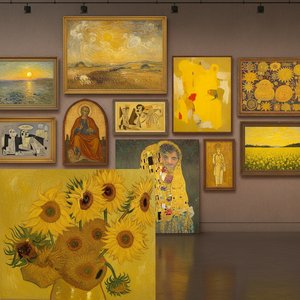
Top 10 des Tableaux Célèbres Dominés par le Jaune Chrome : Art & Décor
Plongez dans le monde vibrant du jaune chrome à travers 10 tableaux célèbres ! Découvrez l'histoire de Van Gogh, Monet et d'autres maîtres impressionnistes. Trouvez l'inspiration déco et achetez des reproductions d'art de qualité muséale sur ArtsDot.com.

Défis aux Conventions : Pop Art, Origines, Évolution et Héritage Durable
Explorez l'histoire fascinante du Pop Art : de ses origines à son influence durable. Découvrez les œuvres emblématiques d'Andy Warhol et des artistes clés. Guide expert pour collectionneurs.

Au-Delà des Points Ben-Day : La Révolution Pop Art de Roy Lichtenstein et son Héritage Durable
Explorez l'univers révolutionnaire de Roy Lichtenstein et le mouvement Pop Art. Découvrez les points Ben-Day, son héritage durable et des conseils avisés pour collectionner ses œuvres. Expertise ArtsDot.


