Aperçu en situation
 Envoyer
 Partager
 Détails de l'œuvre

 Télécharger
 Articles similaires
 Radiographie
 Diaporama
 Statistiques
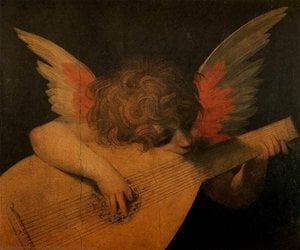
A Young Man
 Oil On Canvas
- WallArt
- Mannerist Portraiture
 1517
1517 82.0 x 60.0 cm
 Musées d'État de Berlin
 Lire la suite
Giclées et impressions d'art
Impressions giclées ou sur toile de qualité musée, avec une production rapide et des finitions au choix. ( Commander la reproduction peinte à la main Passer à l'image numérique)




P118B $10

P118H $10

P118W $10

P438Z $10

P508JH $12

P508YH $12

P805H $10

P805Z $10

P919BZ $10

P919G $10

P919XJ $10

P959ZH $10

P968JZ $12

W106C $8

W218G $10

W218JH $8

W218Y $10

W307PJ $10

W316G $10

W316PJ $8

W316Y $10

W398PJ $8

W4111J $10

W500HY $15

W500JH $15

W692G $12

W849H $8

W940BG $15

W953PJ $8




Choisissez parmi nos formats prédéfinis qui respectent les proportions originales de l’œuvre.

Vous pouvez saisir vos propres dimensions pour vous adapter à un cadre ou à un espace spécifique. Si la taille sélectionnée ne correspond pas aux proportions de l'image originale, nous recadrerons l'œuvre ou étendrons l'image avec une bordure en miroir ou une couleur unie. Une maquette numérique vous sera envoyée pour approbation avant le début de la production.
Veuillez noter que l'aperçu à l'écran ne reflète pas le recadrage ou l'extension réelle. Seule la maquette montrera avec précision la composition finale.
Bien que des tailles personnalisées soient disponibles, nous vous recommandons de choisir une dimension dans la liste prédéfinie afin de préserver les proportions originales.
Livraison dans le monde entier () en 2 semaines au lieu des 4/5 semaines habituelles. (10 septembre)

Livraison express gratuite dans le monde entier

Toile de lin de haute qualité

Assurance transport complète

Garantie de remboursement des droits de douane

Garantie de fidélité des couleurs

Garantie de retour de 100 jours (uniquement en cas de défaut)

Garantie de remboursement à 100%

Tarifs dégressifs sur quantité
 L'option verre n'est disponible que pour les dimensions inférieures à 110 cm.

A Young Man
Giclées et impressions d'art
Format de la reproduction
-


Prix total final
$ 62
A Portrait of Youthful Promise: Rosso Fiorentino’s ‘A Young Man’
Rosso Fiorentino's “A Young Man,” painted in 1518, isn’t merely a portrait; it’s a carefully constructed distillation of Renaissance ideals – a glimpse into the burgeoning complexities of Mannerism and a poignant meditation on youth, aspiration, and perhaps, a touch of melancholy. The painting, currently residing within the Gemäldegalerie in Berlin, immediately draws the eye with its subtly unsettling beauty, a hallmark of Rosso’s distinctive style. It's a work that whispers rather than shouts, inviting prolonged contemplation and rewarding repeated viewing.
At first glance, the subject appears remarkably relaxed, almost languidly posed against a hazy landscape backdrop – a detail that immediately sets it apart from the more rigidly formal portraits of the High Renaissance. He’s not presented as an idealized hero or a symbol of civic virtue; instead, he possesses a quiet intensity, his gaze directed slightly off-center, suggesting introspection and perhaps even a hint of guardedness. The youthful features – the delicate curve of his lips, the slight furrow in his brow – are rendered with remarkable sensitivity, capturing not just physical likeness but also an underlying sense of vulnerability. The red hair, a nod to Rosso’s own nickname, adds a touch of vibrant color against the muted palette, further emphasizing the subject's youthful vitality.
Mannerist Nuances and Artistic Innovation
Rosso Fiorentino was a pivotal figure in the transition from the High Renaissance to Mannerism. He wasn’t content with simply replicating classical ideals; he actively sought to push boundaries, experimenting with perspective, composition, and emotional expression. “A Young Man” exemplifies this innovative spirit. The landscape behind him isn't a realistic representation of nature but rather an atmospheric device – a deliberately ambiguous space that contributes to the painting’s overall sense of unease and psychological depth. Notice how the trees seem to lean inward, creating a claustrophobic effect, subtly mirroring the subject’s internal state.
The brushwork itself is crucial to understanding Rosso's approach. It’s not smooth or polished; instead, it’s characterized by visible strokes and a deliberate lack of finish. This technique – often referred to as “impasto” – adds texture and dynamism to the painting, creating a sense of movement and immediacy. The way he manipulates light and shadow is particularly noteworthy, casting dramatic highlights on the subject's face and clothing while leaving other areas shrouded in darkness. This masterful use of chiaroscuro not only enhances the portrait’s visual impact but also contributes to its emotional resonance.
Symbolism and a Hint of Disquiet
While seemingly straightforward, “A Young Man” is laden with subtle symbolism. The letter clutched in his hand – a detail often overlooked – suggests communication, perhaps even longing or unrequited affection. The slightly downturned mouth hints at suppressed emotions, while the direct gaze challenges the viewer to engage with the subject on a deeper level. Some art historians have interpreted the painting as an allegory for the fleeting nature of youth and beauty, reminding us that time inevitably marches forward, carrying with it both promise and loss.
Furthermore, the overall composition—the slightly off-balance arrangement, the ambiguous background—creates a sense of unease. It’s not a comfortable or reassuring portrait; rather, it's a reflection of the turbulent times in which it was created – a period marked by political instability and social upheaval. Rosso Fiorentino wasn’t simply depicting a young man; he was capturing a mood, an atmosphere of uncertainty and transformation.
A Timeless Masterpiece: Reproduction Possibilities
“A Young Man” remains a powerfully evocative work of art, captivating viewers centuries after its creation. Reproductions offer a wonderful opportunity to bring this masterpiece into your home or office, allowing you to appreciate its beauty and complexity on a daily basis. When selecting a reproduction, consider the quality of materials used – archival-quality prints on museum-grade canvas will ensure that the colors remain vibrant for years to come. The painting’s rich textures and subtle nuances are best captured by reproductions that faithfully replicate Rosso Fiorentino's distinctive brushwork and masterful use of light and shadow. It is a piece that speaks volumes, inviting contemplation and offering a timeless glimpse into the heart of the Renaissance.
Œuvres similaires


Biographie de l'artiste
Rosso Fiorentino : Une Biographie
- Nom: Rosso Fiorentino (Giovanni Battista di Jacopo)
- Né: 8 mars 1495, Florence, Italie
- Décédé: 14 novembre 1540, Fontainebleau, France
Jeunesse et Formation
- Rosso Fiorentino, dont le nom se traduit par « Florentin Roux » en raison de ses cheveux roux distinctifs, a commencé son parcours artistique à Florence.
- Il a reçu sa formation initiale dans l'atelier estimé d'Andrea del Sarto, une figure de proue de la peinture de la Renaissance florentine.
- Cette période l'a placé aux côtés d'un autre artiste important de l'époque, Pontormo, favorisant un environnement partagé d'exploration et de développement artistiques.
- L'influence de l'école florentine de peinture pendant ces années formatrices a considérablement façonné son style futur.
Style Artistique et Influences
- Le travail de Rosso Fiorentino se caractérise par son intensité dramatique, son utilisation audacieuse des couleurs et son expression émotionnelle saisissante.
- Il incorporait fréquemment des autoportraits dans ses compositions, se représentant souvent comme une figure clé au sein du récit.
- L'artiste a été fortement influencé par les œuvres de Michel-Ange et Raphaël, ce qui est particulièrement évident dans sa maîtrise du clair-obscur – la technique consistant à utiliser des contrastes importants entre la lumière et l'ombre pour créer de la profondeur et du volume.
- Son style est considéré comme faisant partie du mouvement maniériste, qui a émergé au XVIe siècle en réaction à l'accent mis par la Haute Renaissance sur l'équilibre et l'harmonie. Le maniérisme favorisait les formes allongées, les perspectives déformées et une émotion accrue.
Œuvres Notables et Réalisations
- La Déposition: Considérée comme l'un des chefs-d'œuvre de Rosso Fiorentino, cette peinture exemplifie son style unique à travers son éclairage dramatique et sa représentation chargée d'émotion de la scène.
- L’Éléphant, Château de Fontainebleau: Cette œuvre met en valeur sa capacité à capturer l'essence de ses sujets avec un détail et un réalisme remarquables. Elle souligne également sa carrière ultérieure en France.
- Moïse et les Filles de Jethro : Démontre une composition complexe et une profondeur émotionnelle caractéristique de son style mûr.
- Ses contributions à la décoration du Château de Fontainebleau ont été importantes, bien que tragiquement interrompues par sa mort prématurée.
Héritage et Importance Historique
- L'influence de Rosso Fiorentino s'est étendue au-delà de son vivant, impactant les générations d'artistes suivantes.
- Francesco Primaticcio, qui lui a succédé en tant qu'artiste principal du Château de Fontainebleau, a été notablement influencé par le style de Rosso.
- Son travail a joué un rôle crucial dans le développement et la popularisation du maniérisme, contribuant à son insistance sur l'expression dramatique et l'innovation artistique.
- Les peintures de Rosso Fiorentino se trouvent dans divers musées et collections du monde entier, notamment à la Galleria Nazionale d'Arte Moderna e Contemporanea à Rome.

Rosso Fiorentino
1495 - 1540 , Italie
En bref
- Artistes Influents:
- Michelangelo
- Raphael
- Andrea del Sarto
- Date De Décès: 14 novembre 1540
- Date De Naissance: 8 mars 1495
- Influence Sur L'Art: Francesco Primaticcio
- Lieu De Naissance: Florence, Italie
- Mouvement Artistique: Manierisme
- Nationalité: Italienne
- Nom Complet: Rosso Fiorentino
- Oeuvres Notables:
- La Déposition
- Éléphant, Fontainebleau
- Moïse et les filles
- Pietà
- Mariage de la Vierge
Articles similaires

Mario Sironi: A Poetic of Modern Italian Identity Through Symbolism & Social Commentary
Explore the profound works of Mario Sironi, a key figure in Italian Modernism. Discover his evolution from Futurism to Metaphysical painting and his powerful social commentary. Learn about his legacy at ArtsDot.

Renaissance Mannerism: Style, Subtlety & the Transition from Harmony to Artifice
Explore the captivating world of Renaissance Mannerism! Discover its key characteristics, pioneering artists like Pontormo & Bronzino, and its pivotal role in art history. Expert insights & museum-quality reproductions at ArtsDot.

Mannerisme : Les 10 Chefs-d'œuvre Essentiels pour une Déco d'Exception
Plongez au cœur du Mannerisme avec les 10 chefs-d'œuvre incontournables de Pontormo, El Greco & autres maîtres. Découvrez l'histoire et la beauté intemporelle de ces tableaux Renaissance. Reproductions d'art exceptionnelles sur ArtsDot.com

Le Maniérisme : Entre Harmonie Renaissance et Drame Baroque – Une Étude Stylistique
Explorez le maniérisme italien : son histoire, ses artistes emblématiques (Pontormo, Bronzino) et sa transition vers le baroque. Découvrez des reproductions d'art de qualité muséale sur ArtsDot.

Giovanni Fattori: Realism, Identity & the Tuscan Landscape – A Macchiaioli Master
Explore the life & art of Giovanni Fattori, a leading figure of the Macchiaioli movement. Discover his revolutionary realism, captivating Tuscan landscapes, and lasting impact on Italian painting. Learn more at ArtsDot.