


 Aperçu en situation
 Partager
 Partager
 Détails
 Guide imprimable

 Télécharger
 Articles similaires
 Radiographie
 Voir le diaporama
 Statistiques
The Microscope


 Afficher la suite
Reproduction à l'huile faite à la main
Huile sur toile peinte à la main, avec cadre et dimensions personnalisés, réalisée sur commande par nos artistes. ( Passer au format impression Passer au format image numérique)




P118B €10

P118H €10

P118W €10

P438Z €10

P508JH €12

P508YH €12

P805H €10

P805Z €10

P919BZ €10

P919G €10

P919XJ €10

P959ZH €10

P968JZ €12

W106C €8

W218G €10

W218JH €8

W218Y €10

W307PJ €10

W316G €10

W316PJ €8

W316Y €10

W398PJ €8

W4111J €10

W500HY €15

W500JH €15

W692G €12

W849H €8

W940BG €15

W953PJ €8




Choisissez parmi nos formats prédéfinis qui respectent les proportions originales de l’œuvre.

Saisissez la largeur et la hauteur souhaitées, pour s'adapter à votre cadre ou à votre mur. Cette œuvre est peinte à la main ; ainsi, pour un format de forme différente, l'artiste peut peindre un peu plus autour du tableau ou réduire légèrement les bords — c'est vous qui choisissez. Nous vous envoyons une maquette numérique pour approbation avant que la peinture ne commence. L'image présentée sur cette page ne reflète pas le résultat réel — seule la maquette le fait.
Après la commande, l’équipe ArtsDot.com contactera le client par e-mail pour recueillir ses instructions et lui fournira une maquette d’aperçu
Livraison dans le monde entier () en 3 à 4 semaines au lieu des 5 semaines habituelles. (21 octobre). Aucun compromis sur la qualité.

Livraison express gratuite dans le monde entier

Toile de lin de haute qualité

Assurance transport complète

Garantie de remboursement des droits de douane

Garantie de fidélité des couleurs

Garantie de retour de 100 jours (uniquement en cas de défaut)

Garantie de remboursement à 100%

Tarifs dégressifs sur quantité
 L'option verre n'est disponible que pour les dimensions inférieures à 110 cm.

The Microscope
Technique de reproduction
Format de la reproduction
-


Prix total final
€ 230
A Window into Enlightenment: Examining Robert Walter Weir’s “The Microscope”
Robert Walter Weir's "The Microscope," completed in 1849, stands as a remarkable testament to the confluence of scientific curiosity and humanist ideals that characterized mid-nineteenth century America. More than just a portrait depicting Jacob Whitman Bailey, a prominent advocate for American microscopy and instructor at West Point, this painting embodies the Romantic spirit’s fascination with both reason and imagination—a duality Weir skillfully captures through meticulous observation and expressive brushwork. The artwork resides within Yale University Art Gallery's collection, offering visitors an opportunity to contemplate its enduring significance.- Subject Matter: At its core, “The Microscope” presents a tableau of intellectual engagement. Bailey, dressed in attire reminiscent of Galileo Galilei—a deliberate allusion to the Renaissance astronomer’s groundbreaking discoveries—demonstrates his knowledge to his sons and daughter, Maria. This familial scene underscores the importance of educating children not only in traditional arts but also in scientific pursuits, reflecting the burgeoning belief that fostering intellectual development was crucial for societal progress.
- Style & Technique: Weir’s style aligns firmly with the Hudson River School tradition, prioritizing atmospheric perspective and tonal gradation to convey a sense of grandeur and tranquility. Employing oil paints on canvas, he achieved remarkable realism through careful layering and blending—a hallmark of the era's artistic approach. The subdued palette—dominated by browns, greens, and blues—creates an environment that feels both scholarly and contemplative.
Historical Context: Science and Domestic Education in Victorian America
The painting emerged during a period marked by significant advancements in scientific understanding, particularly in microscopy. Scientists like Bailey were actively exploring the microscopic world, uncovering previously unseen organisms and challenging prevailing theories about disease and heredity. Simultaneously, Victorian society placed considerable emphasis on educating girls—primarily focusing on music, dance, and needlework—though figures like Bailey recognized the necessity of introducing science into female education. Weir’s depiction reflects this societal preoccupation with cultivating intellectual prowess in young women.- Symbolism: The inclusion of Galileo's garb serves as a powerful symbol—representing the triumph of observation and experimentation over dogma. Bailey’s stance, gazing intently at the microscope, embodies the Romantic conviction that scientific inquiry could illuminate the mysteries of creation. Furthermore, Maria’s presence symbolizes the future generation inheriting this enlightened worldview.
- Emotional Impact: “The Microscope” transcends mere representation; it evokes a feeling of serene intellectual pursuit and familial devotion. Weir's masterful use of light and shadow contributes to an atmosphere of quiet contemplation—encouraging viewers to appreciate the beauty inherent in knowledge and the importance of nurturing young minds.
Yale Center for British Art’s Perspective
The Yale Center for British Art considers “The Microscope” as a pivotal piece illustrating the Romantic movement's commitment to both reason and imagination. Its inclusion within the American Art before 1900 galleries underscores its significance in shaping artistic sensibilities during this formative period. The painting continues to inspire interior designers seeking to infuse their spaces with elements of intellectual curiosity and humanist values—a legacy that extends far beyond its original creation.Questions et réponses
Quelle émotion l'œuvre Romanticism «The Microscope» dégage-t-elle ?
L'émotion Reflective de « The Microscope » accompagne son style Romanticism.
Existe-t-il des œuvres similaires à « The Microscope » ?
La page Œuvres similaires de «The Microscope» de Robert Walter Weir présente des œuvres similaires.
Existe-t-il un diaporama pour «The Microscope» de Robert Walter Weir ?
Le diaporama de « The Microscope » peut être visionné sur la page Diaporama de l'œuvre.
Œuvres similaires


Biographie de l'artiste
Premières années et formation
- Naissance et famille : Robert Walter Weir est né le 18 juin 1803 à New York, fils de Robert et Mary Katherine (Brinkley) Weir. La famille déménagea à New Rochelle, dans l'État de New York, en 1811 avant de retourner à New York en 1817.
- Début de carrière : Il travailla initialement comme commis de commerce, mais abandonna ce métier à l'âge de 18 ans, en 1821, pour se consacrer à la peinture.
- Formation artistique : Weir fut largement autodidacte, commençant sa formation artistique à New York de 1822 à 1824. Il étudia le dessin et la peinture indépendamment avant de voyager en Italie.
- Études italiennes : De 1824 à 1827, Weir résida à Florence (1824-1825) puis à Rome (1825-1827), s'imprégnant de l’œuvre des maîtres de la Renaissance tels que Michel-Ange et Raphaël.
Carrière d'artiste et d'éducateur
- Retour à New York : Weir retourna à New York en 1827, s'impliquant dans la communauté artistique de la ville. Il exposa ses œuvres à la National Academy of Design, devenant membre associé en 1829 et académicien à part entière en 1831.
- Nomination à West Point : En 1834, Weir fut nommé professeur de dessin à l'Académie militaire des États-Unis à West Point, dans l'État de New York. Il devint plus tard professeur de dessin en 1846 et occupa ce poste pendant quarante-deux ans, jusqu'en 1876.
- Influence à West Point : Durant son séjour à West Point, Weir enseigna à de nombreux futurs commandants de la guerre civile américaine, notamment James Abbott McNeill Whistler, Seth Eastman, Ulysses S. Grant, Robert E. Lee et Jefferson Davis. Il façonna considérablement le programme d'éducation artistique de l'académie.
- Œuvres notables : Son œuvre la plus célèbre est L’Embarquement des Pèlerins, commandée par le Congrès américain en 1837 et installée dans la rotonde du Capitole des États-Unis à Washington en 1843.
Style artistique et influences
- École de la rivière Hudson : Weir est considéré comme un membre de l'école de la rivière Hudson, un mouvement artistique américain caractérisé par des représentations romantiques du paysage américain. Ses toiles mettaient souvent en scène des sujets historiques.
- Influence de la Renaissance : Son séjour en Italie influença profondément son style artistique, ce qui se manifeste dans son souci du détail et sa composition classique. Il s'inspira de l’œuvre des maîtres de la Renaissance tels que Michel-Ange et Raphaël.
- Peinture historique : Weir se spécialisa dans la peinture historique, cherchant à capturer les événements et les personnages importants avec précision et effet dramatique.
- Autres œuvres : Parmi ses autres peintures notables figurent *Le dernier pas des Bourbons*, *L’arrivée d'Hendrik Hudson*, *Notre Seigneur sur le mont des Oliviers* et *Colomb devant le conseil de Salamanque*.
Famille et héritage
- Vie familiale : Robert Walter Weir se maria deux fois et eut seize enfants.
- Fils artistes : Deux de ses fils, John Ferguson Weir et Julian Alden Weir, devinrent également des artistes accomplis. John Ferguson Weir était peintre et sculpteur, tandis que Julian Alden Weir devint un portraitiste, figure et paysagiste distingué.
- Importance historique : L'héritage de Robert Walter Weir dépasse ses œuvres. Son rôle d'éducateur à West Point façonna la sensibilité artistique de nombreux futurs chefs militaires. Il contribua de manière significative au développement de l'éducation artistique en Amérique.
- Reconnaissance continue : Ses œuvres continuent d'être exposées dans des musées et des collections prestigieux, assurant sa place dans l'histoire de l'art américain.

Robert Walter Weir
1803 - 1889 , États-Unis d'Amérique
En bref
- Artistes Ou Mouvements Influencés:
- John Ferguson Weir
- Julian Alden Weir
- Artistes Qui L'Ont Influencé:
- Michel-Ange
- Raphaël
- Date De Décès: 1er mai 1889
- Date De Naissance: 18 juin 1803
- Lieu De Naissance: New York, États-Unis
- Mouvement Artistique: Hudson River School
- Nationalité: Américain
- Nom Complet: Robert Walter Weir
- Œuvres Notables:
- Embarquement des pèlerins
- Débarquement de Hudson
Articles connexes

Robert Spencer: Luminism, Narrative & the American Landscape Tradition
Explore the captivating world of Luminism & the Hudson River School with our expert analysis. Discover the history, artists, and enduring beauty of 19th-century American landscape painting. Find museum-quality reproductions at ArtsDot.
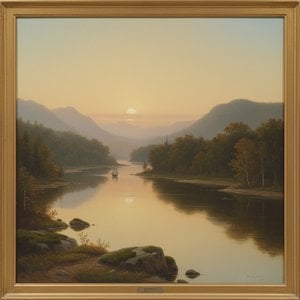
David Johnson: A Luminist Master of the Hudson River School & Beyond
Explore the captivating landscapes of David Johnson, a key figure in the Hudson River School & Luminism movement. Discover his artistic evolution, legacy, and how to collect his works with ArtsDot.

L'École du fleuve Hudson : Romantisme américain et exploration d'un paysage national
Explorez l'École du fleuve Hudson : un mouvement artistique américain majeur célébrant la nature et le sublime. Découvrez ses peintres emblématiques, son histoire et son héritage durable avec ArtsDot.

L'École du fleuve Hudson : 10 chefs-d'œuvre incontournables pour sublimer votre intérieur
Plongez dans l'univers grandiose de l'École du fleuve Hudson ! Découvrez 10 chefs-d'œuvre emblématiques de Thomas Cole, Frederic Church et Albert Bierstadt. Inspirez votre décoration intérieure avec ces paysages américains romantiques. Explorez la collection complète sur ArtsDot.com.
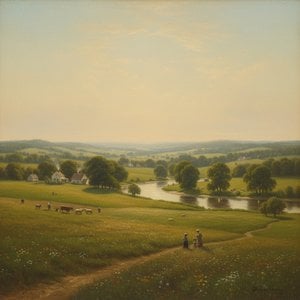
Thomas Worthington Whittredge: Capturing the American Pastoral Ideal with Luminist Light
Explore the luminous landscapes of Thomas Worthington Whittredge, a key figure in the Hudson River School and master of Luminism. Discover his captivating paintings & legacy with ArtsDot.