

 Aperçu en situation
 Envoyer
 Partager
 Détails de l'œuvre
 Guide
Guide

 Télécharger l'image
 Articles similaires
 Radiographie
 Diaporama
 Questions et réponses
 Statistiques
Harmonie


 Lire la suite
Giclées et impressions d'art
Impressions giclées ou sur toile de qualité musée, avec une production rapide et des finitions au choix. ( Commander la reproduction peinte à la main Passer au format numérique)




P118B €10

P118H €10

P118W €10

P438Z €10

P508JH €12

P508YH €12

P805H €10

P805Z €10

P919BZ €10

P919G €10

P919XJ €10

P959ZH €10

P968JZ €12

W106C €8

W218G €10

W218JH €8

W218Y €10

W307PJ €10

W316G €10

W316PJ €8

W316Y €10

W398PJ €8

W4111J €10

W500HY €15

W500JH €15

W692G €12

W849H €8

W940BG €15

W953PJ €8




Choisissez parmi nos formats prédéfinis qui respectent les proportions originales de l’œuvre.

Saisissez la largeur et la hauteur souhaitées pour qu'elles s'adaptent à votre cadre ou à votre mur. Une impression peut être recadrée, mais jamais agrandie au-delà de l'image originale ; ainsi, un format de forme différente entraînera la perte d'une partie de l'image. Nous vous envoyons une maquette numérique pour approbation avant toute impression. L'image présentée sur cette page ne montre pas le recadrage réel — seule la maquette le permet.
Livraison dans le monde entier () en 2 semaines au lieu des 4/5 semaines habituelles. (8 novembre)

Livraison express gratuite dans le monde entier

Toile de lin de qualité supérieure

Assurance transport complète

Garantie de remboursement des droits de douane

Garantie de fidélité des couleurs

Politique de retour de 100 jours (uniquement en cas de défaut)

Garantie de remboursement à 100%

Offre de tarifs dégressifs
 L'option verre n'est disponible que pour les dimensions inférieures à 110 cm.

Harmonie
Giclées et impressions d'art
Format de la reproduction
-


Prix total
€ 56
« Harmonie » de Remedios Varo : Un Sanctuaire Surréaliste
Au cœur de « Harmonie » se dresse une figure solitaire : un homme absorbé par la contemplation, assis devant une table chargée de livres. Il ne s'agit pas d'un simple portrait, mais d'une invitation à assister à un rituel privé, un instant suspendu entre la quête de savoir et l'introspection. Les objets soigneusement disposés autour de lui — un oiseau perché sur une chaise, une horloge suspendue comme pour défier le temps, et un vase délicat — contribuent au profond sentiment de calme et de quiétude qui émane de l'œuvre.
Le style distinctif de Remedios Varo est immédiatement reconnaissable, offrant un mélange puissant de surréalisme et de détails méticuleux. Exécutée avec une main magistrale, la peinture révèle sa technique emblématique : l'application de couches de glacis translucides qui créent une qualité éthérée, apportant profondeur et luminosité à la scène. L'utilisation de couleurs à la fois vibrantes et feutrées — ocres, bleus et verts — évoque un sentiment d'intemporalité et nourrit cette atmosphère onirique. Son rendu minutieux des textures — le cuir usé des livres, les plumes de l'oiseau, les courbes lisses du vase — ancre les éléments fantastiques dans une réalité tangible.
Une Fenêtre sur l'Univers de Varo : Contexte Historique et Influences
« Harmonie » est profondément enracinée dans l'héritage espagnol de Remedios Varo et dans ses expériences durant la période tumultueuse de la guerre civile espagnole. Cette ère a profondément façonné sa vision du monde, favorisant un sentiment de déracinement et une fascination pour les significations cachées et les systèmes symboliques. La peinture reflète cette influence à travers ses références subtiles à l'alchimie, au mysticisme et à la quête de la connaissance spirituelle, des thèmes prédominants dans les traditions intellectuelles espagnoles.
Bien qu'elle soit souvent classée parmi les peintres surréalistes, l'œuvre de Varo transcende toute catégorisation simple. Elle s'est approprié les principes fondamentaux du mouvement — l'exploration de l'inconscient, le rejet du rationalisme — tout en infusant son art d'une vision unique et profondément personnelle. Son attention méticuleuse au détail et son langage symbolique la distinguent de certains de ses contemporains plus ouvertement fantastiques.
Décoder le Symbolisme : Des Couches de Signification
La figure centrale, plongée dans ses livres, représente la quête incessante de savoir et de compréhension, un désir humain fondamental. Cependant, Varo complexifie subtilement cette interprétation simple, suggérant que la véritable sagesse pourrait se situer au-delà de la simple acquisition intellectuelle.
Chaque élément de la peinture porte un poids symbolique significatif. L'oiseau, souvent associé à la liberté et à la spiritualité, est perché sur une chaise, représentant peut-être une aspiration à la transcendance. L'horloge, motif récurrent dans l'œuvre de Varo, symbolise le passage du temps et l'illusion du contrôle. Le vase, fréquemment lié à la beauté et à la fragilité, pourrait représenter la nature éphémère des plaisirs terrestres ou l'équilibre délicat entre l'ordre et le chaos.
Résonance Émotionnelle et Héritage Artistique
« Harmonie » évoque un puissant sentiment de contemplation silencieuse et invite le spectateur à marquer une pause pour réfléchir à sa propre place dans le monde. C'est une œuvre qui récompense l'observation attentive, révélant de nouvelles strates de sens à chaque regard.
Le travail de Remedios Varo continue de captiver les publics aujourd'hui, témoignant de sa capacité remarquable à mêler rigueur intellectuelle et imagination artistique. Sa vision unique a laissé une empreinte indélébile dans l'histoire de l'art du XXe siècle, inspirant des générations d'artistes et de collectionneurs.
Questions et réponses
Quelle est la teinte dominante de «Harmonie» de Remedios Varo ?
La teinte dominante de «Harmonie» de Remedios Varo est De l'ambre au safran. Cette nuance constitue la tonalité de fond de la palette.
Puis-je voir «Harmonie» de Remedios Varo sur mon propre mur avant de l'acheter ?
Visualisez «Harmonie» de Remedios Varo sur votre propre mur grâce à la page Aperçu en RA de l'œuvre, en utilisant la réalité augmentée sur un appareil compatible.
De quel pays est originaire l'œuvre Peinture surréaliste « Harmonie » ?
L'œuvre Peinture surréaliste « Harmonie » a été réalisée par un artiste né en Espagne.
Œuvres similaires


Biographie de l'artiste
A Life Bridging Science, Mysticism, and Surrealism
Remedios Varo (1908-1963) stands as a singular figure in 20th-century art, an artist whose work defies easy categorization. Though often associated with the Surrealist movement, her vision extended far beyond its boundaries, weaving together scientific precision, alchemical symbolism, and a deeply personal mythology. Born María de los Remedios Alicia Rodriga Varo y Uranga in Anglès, Spain, her early life was shaped by a fascinating duality: a pragmatic father, a hydraulic engineer who instilled in her a love for technical drawing and meticulous observation, and a devoutly Catholic mother whose influence sparked a lifelong questioning of established norms. This tension between reason and faith, science and spirituality, would become a defining characteristic of her art. Her childhood was marked by frequent relocations following her father’s work, exposing her to diverse landscapes and cultures, while her formal education at the Real Academia de Bellas Artes de San Fernando in Madrid provided a solid foundation in traditional artistic techniques. It was there she encountered fellow artists like Salvador Dalí, though her path would diverge into more introspective and uniquely symbolic territory.From Madrid to Mexico: A Journey of Artistic Discovery
Varo’s early work reflected the prevailing styles of the time—sensitive portraits and realistic depictions of her surroundings. However, a growing fascination with the esoteric began to permeate her artistic explorations. In Madrid, she became involved with a group known as the Logicophobists, who sought to reconcile art and metaphysics, delving into realms beyond rational understanding. This period marked a crucial shift in her thinking, laying the groundwork for the intensely personal iconography that would define her mature style. The outbreak of the Spanish Civil War forced Varo to flee Europe, eventually finding refuge in Mexico City in 1938. This relocation proved transformative. Freed from the constraints and political turmoil of wartime Europe, she discovered a vibrant artistic community and an environment conducive to fully realizing her unique vision. Mexico offered not just safety but also a fertile ground for exploring her interests in alchemy, astrology, and indigenous philosophies—influences that would become inextricably linked to her art.The Language of Symbols: Alchemy, Technology, and the Feminine Mystique
Varo’s artistic style is instantly recognizable – a meticulous blend of technical draftsmanship and dreamlike imagery. Her paintings are populated by fantastical machines, hybrid creatures, and enigmatic female figures engaged in mysterious activities. These aren't merely whimsical creations; they are carefully constructed allegories, laden with symbolic meaning. Alchemy serves as a central theme, not simply as a historical practice but as a metaphor for transformation—the process of refining the self through knowledge and experience. Her depictions of intricate apparatuses suggest a desire to understand and manipulate the forces of nature, while also hinting at the limitations of human control. Perhaps most compelling is her portrayal of women: not as passive muses or objects of desire, but as active agents of change—inventors, scientists, alchemists, and seekers of knowledge. She challenges traditional gender roles, presenting a vision of feminine power rooted in intellect, intuition, and spiritual exploration. Creation of the World or Microcosm, for example, showcases her early fascination with creation myths and scientific principles, while works like Star Catcher exemplify her ability to merge mysticism with technical skill.A Legacy of Para-Surrealism and Enduring Influence
Remedios Varo’s contribution to art history lies in her development of what has been termed “para-surrealism”—an expansion upon traditional Surrealism that incorporates elements of alchemy, mysticism, and esoteric knowledge. She wasn't interested in simply accessing the subconscious, as many Surrealists were; she sought to create a visual language for exploring deeper truths about the universe and humanity’s place within it. Her work resonates with contemporary audiences because it speaks to our enduring fascination with the mysteries of existence, the power of transformation, and the search for meaning in an increasingly complex world. Though her career was relatively short—she died prematurely at the age of 54—her impact on subsequent generations of artists is undeniable. She paved the way for a more inclusive and multifaceted understanding of Surrealism, inspiring those who seek to bridge the gap between science, spirituality, and artistic expression. Her paintings continue to captivate viewers with their intricate detail, enigmatic symbolism, and profound sense of wonder.
Remedios Varo
1865 - 1911 , Espagne
L'essentiel de l'artiste
- Artistic Movement Or Style: Para-Surréalisme
- Artists Or Movements Influenced By This Artist: ['Future generations of artists']
- Artists Who Influenced This Artist:
- Hieronymus Bosch
- Francisco Goya
- El Greco
- Date Of Birth: 16 décembre 1908
- Date Of Death: 8 octobre 1963
- Full Name: María de los Remedios Alicia Rodriga Varo y Uranga
- Nationality: Espagnole
- Notable Artworks:
- Star Catcher
- Icon
- Face
- Dead Leaves
- Scorpions
- Place Of Birth: Girona, Espagne
Articles connexes

Surréalisme : 10 Chefs-d'œuvre Iconiques à Redécouvrir pour une Déco Inspirée
Plongez dans l'univers fascinant du surréalisme avec ArtsDot.com ! Découvrez 10 chefs-d'œuvre iconiques de Dalí, Magritte et Miró. Inspirez votre décoration intérieure avec ces tableaux célèbres et trouvez la reproduction parfaite pour sublimer votre espace. Explorez la collection complète en ligne
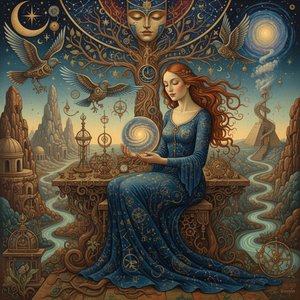
Remedios Varo: A Surrealist Vision of Science, Mysticism & the Female Psyche
Explore the captivating world of Remedios Varo, a pioneering Surrealist painter blending science, mysticism & feminist themes. Discover her unique style and enduring legacy with ArtsDot.

L'Allure de l'Art Mystique : Exploration de la Résonance Émotionnelle et des Profondeurs Symboliques
Explorez l'univers fascinant du surréalisme et de l'art mystique avec ArtsDot. Découvrez les chefs-d'œuvre de Dalí, Magritte et bien d'autres. Investissez dans des œuvres chargées d'émotion et de symbolisme. Reproduction haute définition garantie.

Les 25 chefs-d'œuvre de Salvador Dalí : Voyage au cœur du surréalisme
Explorez les 25 chefs-d'œuvre de Salvador Dalí et le surréalisme. Découvrez ces trésors sur ArtsDot.com.

Surréalisme : 10 Chefs-d'œuvre Révolutionnaires pour une Déco Inspirée
Plongez dans l'univers fascinant du surréalisme avec ArtsDot.com ! Découvrez 10 chefs-d’œuvre de Dalí, Magritte et autres artistes emblématiques. Inspirez votre déco avec des reproductions de tableaux exceptionnelles. Explorez la collection en ligne !


