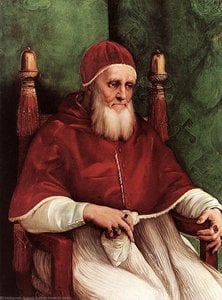
Aperçu en situation
 Envoyer
 Partager
 Détails de l'œuvre

 Télécharger
 Articles similaires
 Radiographie
 Diaporama
Autoportrait avec un ami
 Acrylique sur toile
- Art mural
- Renaissance
 Renaissance
 99.0 x 83.0 cm
 Lire la suite
Reproduction à l'huile faite à la main
Huile sur toile peinte à la main, avec cadre et dimensions personnalisés, réalisée sur commande par nos artistes. ( Commander l'impression Télécharger l'image haute résolution)




P118B $10

P118H $10

P118W $10

P438Z $10

P508JH $12

P508YH $12

P805H $10

P805Z $10

P919BZ $10

P919G $10

P919XJ $10

P959ZH $10

P968JZ $12

W106C $8

W218G $10

W218JH $8

W218Y $10

W307PJ $10

W316G $10

W316PJ $8

W316Y $10

W398PJ $8

W4111J $10

W500HY $15

W500JH $15

W692G $12

W849H $8

W940BG $15

W953PJ $8




Choisissez parmi nos formats prédéfinis qui respectent les proportions originales de l’œuvre.

Vous pouvez saisir vos propres dimensions pour l'adapter à un cadre ou à un espace spécifique. Si la taille sélectionnée ne correspond pas aux proportions de l'image d'origine, nous recadrerons l'œuvre ou prolongerons la peinture avec des éléments peints à la main supplémentaires. Une maquette numérique vous sera envoyée pour approbation avant le début de la production.
Veuillez noter que l'aperçu à l'écran ne reflète pas le recadrage ou l'extension réels. Seule la maquette montrera fidèlement la composition finale.
Bien que des tailles personnalisées soient disponibles, nous vous recommandons de sélectionner une dimension dans la liste prédéfinie afin de préserver les proportions d'origine.
Après la commande, l’équipe ArtsDot.com contactera le client par e-mail pour recueillir ses instructions et lui fournira une maquette d’aperçu
Livraison dans le monde entier () en 3 à 4 semaines au lieu des 5 semaines habituelles. (16 août). Aucun compromis sur la qualité.

Livraison express gratuite dans le monde entier

Toile de lin de qualité supérieure

Assurance transport complète

Garantie de remboursement des droits de douane

Garantie de fidélité des couleurs

Politique de retour de 60 jours (uniquement en cas de défaut)

Garantie de remboursement à 100%

Offre de tarifs dégressifs
 L'option verre n'est disponible que pour les dimensions inférieures à 110 cm.

Autoportrait avec un ami
Technique de reproduction
Format de la reproduction
-


Prix total
$ 263
Description de l'œuvre
Raphael’s Self Portrait with a Friend: A Window Into Renaissance Humanism
Raffaello Sanzio da Urbino’s Self Portrait with a Friend, completed between 1518 and 1520, stands as an emblem of the High Renaissance—a period defined by its pursuit of classical ideals of beauty and proportion alongside burgeoning humanist thought. Currently housed in the Louvre Museum in Paris, this painting transcends mere representation; it’s a carefully crafted meditation on identity, friendship, and artistic aspiration.
The artwork depicts Raphael himself seated beside an unidentified man—traditionally believed to be his fencing master—against a dark, subtly textured background. This deliberate simplicity allows the viewer's gaze to focus entirely on the figures themselves, where Raphael’s masterful technique shines through. Notice the meticulous rendering of facial features: Raphael captures a contemplative expression, conveying both confidence and vulnerability. The artist’s hand demonstrates an unparalleled understanding of anatomy and chiaroscuro—the dramatic interplay of light and shadow—creating depth and realism that was revolutionary for its time.
Historical Context & Renaissance Ideals
Painted during the reign of Pope Julius II, Raphael’s portrait reflects the intellectual fervor of the era. The papacy had become a champion of humanist scholarship, fostering dialogues between art and philosophy. Figures like Leonardo da Vinci and Michelangelo were reshaping artistic conventions, prioritizing human anatomy and emotion over stylized depictions. Raphael embraced these advancements, aligning his work with the broader Renaissance ambition to portray humanity in its fullest glory—a concept known as *grandezza umana*. The painting embodies this ideal through its dignified posture and serene countenance.
The inclusion of a sword hilt symbolizes honor and virtue – qualities highly valued during the Renaissance. It speaks to Raphael’s role as a gentleman, reflecting the humanist emphasis on moral character alongside intellectual pursuits. Furthermore, the composition itself—the balanced positioning of the two figures—mirrors classical architectural principles, reinforcing the overarching aesthetic harmony characteristic of High Renaissance art.
Technique & Artistic Innovation
Raphael’s mastery is evident in his use of oil paint on canvas—a technique that allowed for unprecedented levels of detail and luminosity. He employed a glazing technique, layering thin translucent washes of pigment over underpaintings to achieve subtle gradations of color and texture. This meticulous approach resulted in an astonishingly realistic depiction of skin tones and drapery folds—a departure from earlier artistic styles.
The artist’s attention to detail extends beyond mere visual accuracy; it communicates a profound understanding of human psychology. Raphael captures not just the physical appearance of his subject but also his inner state, conveying a sense of thoughtfulness and introspection. This psychological depth distinguishes Raphael's work from its predecessors and cements its place as one of the most enduring achievements of Renaissance art.
Symbolism & Emotional Resonance
Beyond its technical brilliance, Self Portrait with a Friend carries symbolic weight. The friendship depicted represents an ideal of human connection—one rooted in mutual respect and intellectual companionship. Raphael’s gaze directs towards the viewer, inviting contemplation and fostering a sense of intimacy.
The painting's quiet dignity speaks to the humanist belief in cultivating virtue and achieving inner harmony. It serves as a reminder that true beauty lies not merely in outward appearance but also in moral character—a timeless message conveyed with exquisite artistry by Raphael Sanzio da Urbino.
Œuvres similaires


Biographie de l'artiste
**Jeunesse et formation**
Raphaël (Raffaello Sanzio da Urbino), un peintre et architecte italien renommé, est né entre le 28 mars et le 6 avril 1483, dans la petite mais culturellement significative ville d'Urbino. Son père, Giovanni Santi, était peintre de cour du duc, lui offrant une exposition précoce au monde artistique. Après le décès de son père à l’âge de onze ans, Raphaël a vraisemblablement géré l’atelier familial, consolidant ainsi sa base artistique.**Carrière artistique et influences**
Le parcours artistique de Raphaël peut être divisé en trois phases distinctes, chacune marquée par un style unique :- Premières années à Umbrie : caractérisée par l'influence de son père et l'ambiance culturelle d’Urbino.
- Période florentine (1504-1508) : absorbant les traditions artistiques de Florence, qui a considérablement façonné son style.
- Période romaine (1508-1520) : travaillant pour deux papes et leurs associés, produisant certaines de ses œuvres les plus célèbres, notamment l’école des Athènes dans la stanza della segnatura du Vatican.
**Œuvres notables et héritage**
Certaines des œuvres notables de Raphaël comprennent :- Le jugement de Salomon (voir sur ArtsDot)
- La madone d’Esterházy (voir sur ArtsDot)
- Les Stanze Vaticanes - Vue de la stanza della segnatura (voir sur ArtsDot)
- Saint Sébastien (voir sur ArtsDot)
- La femme voilée (voir sur ArtsDot)
**Influence et héritage**
L'influence de Raphaël sur l'art est profonde, avec son œuvre constituant un pilier du grand Siècle. Son style serein et harmonieux a servi de modèle à la peinture néoclassique, comme le note l’historien d’art Johann Joachim Winckelmann. Malgré l'influence ultérieure du style de Michel-Ange, Raphaël reste l'un des artistes les plus vénérés de l'histoire. Voir le profil de Raphaël sur ArtsDot
Raphaël
1483 - 1520 , Italie
L'essentiel de l'artiste
- Artistes Influents:
- Giovanni Santi
- Pietro Perugino
- Date De Décès: 6 avril 1520
- Date De Naissance: 28 mars 1483
- Influences Artistiques: Peinture néoclassique
- Lieu De Naissance: Urbino, Italie
- Mouvement Artistique: Haute Renaissance
- Nationalité: Italienne
- Nom Complet: Raphaël (Raffaello Sanzio)
- Œuvres Notables:
- L'École d'Athènes
- Madone Esterházy
- La Transfiguration
- Les Stanze Vaticanes
Articles connexes

Raphaël : Les 25 Chefs-d'œuvre Incontournables pour une Décoration d'Exception
Plongez dans l'univers de Raphaël avec les 25 œuvres incontournables du maître italien. Découvrez l'histoire, la technique et la beauté intemporelle de ses chefs-d'œuvre Renaissance. Reproductions de qualité muséale sur ArtsDot.com.

La Haute Renaissance : Éclosion de l'Innovation Artistique et des Idéaux Humanistes
Explorez la Haute Renaissance italienne : ses artistes emblématiques (Léonard de Vinci, Michel-Ange), ses innovations artistiques et son héritage durable. Un guide expert pour les passionnés d'art.
Les 10 Chefs-d'œuvre de la Haute Renaissance : Artistes et Décor d'Exception
Plongez au cœur de la Haute Renaissance avec les 10 chefs-d'œuvre incontournables de Léonard de Vinci, Michel-Ange et Raphaël. Découvrez l'histoire fascinante de ces tableaux emblématiques et trouvez l'inspiration pour une décoration intérieure d'exception sur .

The Flourishing of Humanity: Artistic Representations of Humanist Ideals from the Renaissance to Modernity
Explore the profound impact of Humanism on Renaissance art! Discover key artists, iconic paintings & philosophical themes shaping Western art history. Expert analysis and high-quality reproductions at ArtsDot.
Pietro Perugino: Umbrian Master of Serenity & Precursor to Raphael's High Renaissance
Explore the life & art of Pietro Perugino, a pivotal Renaissance master and Raphael’s influential teacher. Discover his serene compositions, Sistine Chapel frescoes, and lasting legacy with ArtsDot.