


 Aperçu en situation
 Envoyer
 Partager
 Détails de l'œuvre

 Télécharger
 Articles similaires
 Radiographie
 Diaporama
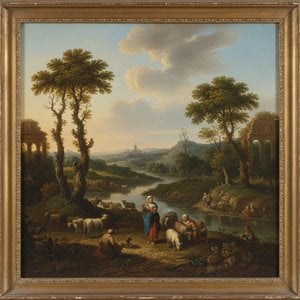
An Extensive Landscape
 Dutch Golden Age
 87.0 x 122.0 cm
 Lire la suite
Reproduction à l'huile faite à la main
Huile sur toile peinte à la main, avec cadre et dimensions personnalisés, réalisée sur commande par nos artistes. ( Commander l'impression Acheter l'image haute résolution)




































Choisissez parmi nos formats prédéfinis qui respectent les proportions originales de l’œuvre.

Vous pouvez saisir vos propres dimensions pour l'adapter à un cadre ou à un espace spécifique. Si la taille sélectionnée ne correspond pas aux proportions de l'image d'origine, nous recadrerons l'œuvre ou prolongerons la peinture avec des éléments peints à la main supplémentaires. Une maquette numérique vous sera envoyée pour approbation avant le début de la production.
Veuillez noter que l'aperçu à l'écran ne reflète pas le recadrage ou l'extension réels. Seule la maquette montrera fidèlement la composition finale.
Bien que des tailles personnalisées soient disponibles, nous vous recommandons de sélectionner une dimension dans la liste prédéfinie afin de préserver les proportions d'origine.
Après la commande, l’équipe ArtsDot.com contactera le client par e-mail pour recueillir ses instructions et lui fournira une maquette d’aperçu
Livraison dans le monde entier () en 3 à 4 semaines au lieu des 5 semaines habituelles. (31 août). Aucun compromis sur la qualité.

Livraison express gratuite dans le monde entier

Toile de lin de qualité supérieure

Assurance transport complète

Garantie de remboursement des droits de douane

Garantie de fidélité des couleurs

Politique de retour de 60 jours (uniquement en cas de défaut)

Garantie de remboursement à 100%

Offre de tarifs dégressifs
 L'option verre n'est disponible que pour les dimensions inférieures à 110 cm.

An Extensive Landscape
Technique de reproduction
Format de la reproduction
-


Prix total
$ 263
Œuvres similaires


Biographie de l'artiste
Philips de Koninck : Une vision panoramique du paysage néerlandais
Philips de Koninck (1619–1688) s'impose comme une figure de proue de l'Âge d'or néerlandais, célébré principalement pour ses paysages expansifs qui capturent la grandeur et la subtilité de la campagne des Pays-Bas. Bien que relativement prolifique par rapport à certains contemporains tels que Rembrandt ou Rubens, sa production demeure modeste — estimée à environ 50 peintures — ce qui fait de lui un artiste quelque peu énigmatique, dont l'héritage est étroitement lié aux débats érudits concernant l'attribution et la lignée artistique. Né à Amsterdam, la vie de de Koninck fut marquée par un succès considérable en tant qu'homme d'affaires ; résidant sur le Reguliersgracht, il y cultivait un mode de vie opulent. Pourtant, ses aspirations artistiques semblent avoir été poursuivies largement de manière indépendante, reflétant un dévouement à l'art plutôt qu'à de grands projets de mécénat.- Jeunesse et formation : Peu de choses sont connues avec certitude sur les années formatrices de de Koninck. Il fut apprenti sous la direction de Jacob Savery, un peintre de paysages flamand fervent défenseur du style baroque, absorbant ainsi les influences de Rubens et du Caravage — des artistes dont les compositions dramatiques et l'usage magistral de la lumière allaient sans aucun doute façonner sa sensibilité artistique.
- L'atelier d'Amsterdam et le style artistique : De Koninck établit son propre atelier à Amsterdam, attirant des élèves et favorisant un environnement collaboratif. Ses paysages se caractérisent par une minutie extrême, capturant les textures de l'écorce, du feuillage et de l'eau avec une précision remarquable. De manière cruciale, il employa la perspective atmosphérique — une technique perfectionnée par Rembrandt — pour transmettre profondeur et réalisme, simulant les effets de la lumière solaire filtrant à travers les arbres et créant ainsi une illusion de distance.
Vues panoramiques et influence de Rembrandt
Les paysages de De Koninck sont instantanément reconnaissables à leur échelle monumentale et à leurs panoramas à couper le souffle. Contra à de nombreux artistes de son époque qui privilégiaient des scènes plus petites et intimistes, il opta pour des compositions panoramiques visant à immerger le spectateur dans la grandeur du paysage néerlandais — un choix délibéré reflétant la fascination baroque pour le spectacle et transmettant un sentiment de beauté sublime. Ses peintures dépeignent fréquemment des zones boisées baignées d'une lumière dorée, capturant les moments éphémère de drames atmosphériques. L'influence de Rembrandt est indéniable ; son usage magistral du clair-obscur — ce jeu entre l'ombre et la lumière — confère à ses toiles une résonance émotionnelle qui transcende la simple représentation visuelle. On peut notamment contempler « Un vaste paysage boisé » (AQR46N), où la lumière tamisée illumine les détails complexes du sol de la forêt, faisant écho au style emblématique de Rembrandt.- Œuvres notables : Parmi ses peintures les plus célèbres figurent « La Couturière » (AQR47J) et « La Bergère », toutes deux représentant des figures rurales sur des arrière-plans dramatiques. Ces œuvres illustrent la capacité de de Koninck à transmettre une profondeur psychologique parallèlement à la splendeur visuelle.
- Controverses d'attribution : L'œuvre de De Koninck a fait l'objet de controverses considérables concernant son attribution. De nombreux tableaux attribués à Rembrandt ont été prouvés de manière concluante comme étant l'œuvre de son neveu, Salomon de Koninck — un disciple qui imita avec talent le style de Rembrandt. Cette confusion souligne les défis auxquels sont confrontés les historiens de l'art pour établir la paternité des œuvres et complexifie notre compréhension de l'innovation artistique durant l'Âge d'or.
Héritage et importance historique
Malgré les litiges d'attribution entourant son travail, Philips de Koninck demeure un contributeur majeur à la peinture de paysage néerlandaise. Ses peintures sont conservées dans des musées à travers l'Europe — notamment le Rijksmuseum d'Amsterdam et le Kunsthistorisches Museum de Vienne — ce qui témoigne de leur attrait durable. Les paysages de De Koninck s'érigent comme de puissantes incarnations de l'esthétique baroque, reflétant la préoccupation de l'époque pour la grandeur, l'émotion et le sublime. Il a consolidé l'héritage de Rembrandt en démontrant comment traduire un éclairage dramatique dans le genre du paysage, assurant ainsi sa place parmi les artistes les plus influents de son temps.- Pour aller plus loin : Pour plus d'informations sur la vie et l'art de Philips de Koninck, consultez Art UK (de koninck philips 1619-1688) et explorez les reproductions de ses peintures sur ArtsDot.com.

Philips De Koninck
1619 - 1688 , Pays-Bas
L'essentiel de l'artiste
- Artistic Movement Or Style: Dutch Landscape Painting
- Artists Or Movements Influenced By This Artist: Baroque
- Artists Who Influenced This Artist: Rembrandt
- Date Of Birth: Amsterdam, 1619
- Date Of Death: Amsterdam, 1688
- Full Name: Philips de Koninck
- Nationality: Dutch
- Notable Artworks:
- An Extensive Wooded Landscape
- The Seamstress
- Place Of Birth: Amsterdam, Netherlands
Articles connexes

L'Âge d'Or Néerlandais : 10 Chefs-d'œuvre Incontournables pour Décorer avec Art et Histoire
Plongez au cœur de l'Âge d'Or néerlandais ! Découvrez 10 chefs-d'œuvre intemporels de Rembrandt, Vermeer et autres maîtres hollandais. Explorez leur histoire, technique & trouvez l'inspiration déco sur

Golden Light & Dutch Skies: Bringing the Magic of Dutch Golden Age Landscapes into Your Home
Transform your home with the breathtaking light of Dutch Golden Age landscapes. Discover how hand-painted oil reproductions of masterworks like Ruisdael and Vermeer bring timeless elegance, atmosphere, and soulful texture to modern interiors. Elevate your space with museum-quality art.
Nicolaes Berchem: Dutch Golden Age Pastoralism & the Evolution of Landscape Painting
Explore the captivating world of Nicolaes Berchem, a leading Dutch Golden Age painter. Discover his idyllic landscapes, masterful technique & lasting influence on art history. Learn more at ArtsDot.

Charles Leickert: Capturing the Dutch Golden Age Light – A Comprehensive Study of Technique, Context, and Legacy
Explore the captivating winter landscapes of Charles Leickert, a master of Dutch Golden Age light & atmosphere. Discover his techniques, symbolism, and lasting legacy – a comprehensive study for art enthusiasts and collectors.

L'Âge d'Or Néerlandais : Splendeur Baroque et Révolution Artistique
Explorez l'Âge d'Or néerlandais : découvrez les maîtres baroques (Rembrandt, Fabritius) et leur révolution artistique. Analyse approfondie, contexte historique et héritage durable. Un voyage au cœur de la peinture du XVIIe siècle.

