Aperçu en situation
 Envoyer
 Partager
 Détails de l'œuvre

 Télécharger
 Articles similaires
 Radiographie
 Diaporama
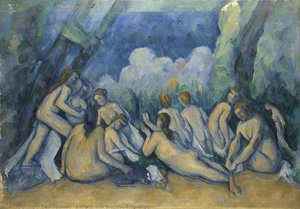
The Large Bathers


 Lire la suite
Giclées et impressions d'art
Impressions giclées ou sur toile de qualité musée, avec une production rapide et des finitions au choix. ( Passer à la peinture faite à la main Passer à l'image)




P118B $10

P118H $10

P118W $10

P438Z $10

P508JH $12

P508YH $12

P805H $10

P805Z $10

P919BZ $10

P919G $10

P919XJ $10

P959ZH $10

P968JZ $12

W106C $8

W218G $10

W218JH $8

W218Y $10

W307PJ $10

W316G $10

W316PJ $8

W316Y $10

W398PJ $8

W4111J $10

W500HY $15

W500JH $15

W692G $12

W849H $8

W940BG $15

W953PJ $8




Choisissez parmi nos formats prédéfinis qui respectent les proportions originales de l’œuvre.

Vous pouvez saisir vos propres dimensions pour vous adapter à un cadre ou à un espace spécifique. Si la taille sélectionnée ne correspond pas aux proportions de l'image originale, nous recadrerons l'œuvre ou étendrons l'image avec une bordure en miroir ou une couleur unie. Une maquette numérique vous sera envoyée pour approbation avant le début de la production.
Veuillez noter que l'aperçu à l'écran ne reflète pas le recadrage ou l'extension réelle. Seule la maquette montrera avec précision la composition finale.
Bien que des tailles personnalisées soient disponibles, nous vous recommandons de choisir une dimension dans la liste prédéfinie afin de préserver les proportions originales.
Livraison dans le monde entier () en 2 semaines au lieu des 4/5 semaines habituelles. (7 août)

Livraison express gratuite dans le monde entier

Toile de lin de qualité supérieure

Assurance transport complète

Garantie de remboursement des droits de douane

Garantie de fidélité des couleurs

Politique de retour de 60 jours (uniquement en cas de défaut)

Garantie de remboursement à 100%

Offre de tarifs dégressifs
 L'option verre n'est disponible que pour les dimensions inférieures à 110 cm.

The Large Bathers
Giclées et impressions d'art
Format de la reproduction
-


Prix total
$ 62
Description de la pièce
A Revolutionary Vision: Paul Cézanne’s “The Large Bathers”
Paul Cézanne's "The Large Bathers," painted in 1900, isn’t merely a depiction of nude figures enjoying the water; it’s a pivotal moment in art history—a bridge between the fleeting impressions of Impressionism and the nascent, fragmented forms that would define Cubism. This monumental oil on canvas, currently residing within The Barnes Foundation in Philadelphia, immediately commands attention with its sheer scale (136 x 191 cm) and an atmosphere of profound stillness. Yet, beneath this serene surface lies a complex interplay of tension and innovation, reflecting Cézanne’s lifelong quest to reconcile the observed world with his own artistic vision.
Cézanne's journey to this groundbreaking work began in his early years studying the masters at the Louvre, absorbing the grandeur of Botticelli, the sensuality of Titian, and the dynamism of Rubens. These influences weren’t simply copied; they were meticulously analyzed and then deliberately reinterpreted through Cézanne’s unique lens. He sought not to replicate reality but to distill it—to capture its essence in a way that felt both familiar and utterly new. “The Large Bathers” embodies this ambition, moving beyond the traditional representation of the nude towards a more geometric and structural approach.
Form, Color, and the Language of Geometry
The painting’s technique is as revolutionary as its subject matter. Cézanne abandons the smooth brushstrokes of Impressionism in favor of bold, deliberate strokes that build up form with an almost sculptural quality. He employs a vocabulary of geometric shapes—triangles, rectangles, and cylinders—to define the figures and their surroundings, creating a sense of movement and energy despite the overall stillness. Notice how the bodies are not rendered as soft, flowing forms but rather as interlocking planes, suggesting volume and weight. The color palette is dominated by earthy tones – ochres, browns, and greens – punctuated by subtle blues and violets that create depth and atmosphere.
Crucially, Cézanne doesn’t shy away from the unfinished. Large areas of the canvas remain deliberately unpainted, revealing the texture of the linen beneath—a conscious decision to disrupt traditional notions of completion and to emphasize the process of painting itself. This technique, combined with his use of perspective, creates a spatial ambiguity that draws the viewer into the scene, inviting them to actively participate in constructing the image.
Symbolism and the Quest for Structure
Beyond its formal innovations, “The Large Bathers” is rich in symbolism. The triangular composition—a recurring motif in Cézanne’s work—represents stability and order, a deliberate counterpoint to the perceived chaos of modern life. The figures themselves are not simply nude women; they embody an idealized vision of femininity, imbued with a sense of timelessness and serenity. The presence of the tree trunk in the background acts as a grounding element, anchoring the scene within a natural landscape.
Interestingly, Cézanne’s preoccupation with this subject matter—nude bathers—extended over many years, resulting in a series of paintings that share a common visual language. He wasn't simply interested in depicting a pleasant afternoon; he was grappling with fundamental questions about form, space, and the relationship between observation and representation. The unfinished quality of these works suggests an ongoing process of exploration, a relentless pursuit of a more perfect way to capture the essence of reality.
A Legacy of Innovation
“The Large Bathers” stands as one of Cézanne’s most ambitious and influential paintings. Its radical departure from traditional artistic conventions paved the way for the development of Cubism, inspiring artists like Pablo Picasso and Henri Matisse to experiment with fragmented forms and multiple perspectives. Cézanne's legacy extends far beyond these individual influences; he fundamentally altered our understanding of what painting could be—shifting the focus from representation to structure, from illusion to perception.
Today, a high-quality reproduction of “The Large Bathers” offers a remarkable opportunity to experience the power and beauty of this iconic work. ArtsDot’s meticulously crafted reproductions capture every nuance of Cézanne's technique, allowing you to bring this masterpiece into your own home and appreciate its enduring significance.
Œuvres similaires




Biographie de l'artiste
jeune vie et influences
paul cézanne, peintre français post-impressionniste, est né le 19 janvier 1839 à Aix-en-Provence, en France. Sa jeune vie a été marquée par un fort attachement à sa famille, dont l'entreprise bancaire lui assurait une sécurité financière. Cela lui a permis de se consacrer à ses aspirations artistiques sans être entravé par des soucis financiers. les nabis, néo-impressionnisme et symbolisme ont influencé le travail de Cézanne au début, qui se caractérisait par son accent sur les formes géométriques et une palette de couleurs limitée. Son intérêt pour les œuvres de paul gauguin et georges seurat a renforcé son style post-impressionniste.style artistique et techniques
L'utilisation innovante de Cézanne des plans de couleurs et de petits coups de pinceau répétitifs a créé des champs complexes qui exprimaient son étude approfondie des sujets. Son approche souvent exploratoire de l'art a conduit au développement d'une nouvelle langue picturale, mettant l'accent sur la structure sous-jacente des objets dans une composition.- caractéristiques principales :
- formes géométriques et façonnage
- palette de couleurs réduite
- importance de l'essence constructive du monde physique
- perspective multiple et simultanéité
- œuvres influentes :
- le plan d'eau de Jas de Bouffan (1880)
- portrait d’Émile Zola (1866)
- forêt (1892)
- musées présentant l'œuvre de Cézanne :
- le musée Marmottan Monet à Paris, en France
- le musée des beaux-arts à Houston, aux États-Unis
héritage et impact
Le travail pionnier de Cézanne en post-impressionnisme a ouvert la voie à divers mouvements avant-gardistes, notamment le cubisme, le fauvisme et le surréalisme. Son influence se retrouve dans les œuvres de pablo picasso, henri matisse et georges braque. L'héritage de Cézanne continue d’inspirer les artistes et les amateurs d’art, consolidant ainsi sa place en tant que figure centrale de l’histoire de l’art moderne.- mouvements artistiques connexes :
- consultez les œuvres de Cézanne :

Paul Cézanne
1839 - 1906 , France
L'essentiel de l'artiste
- Artistes Influents:
- Paul Gauguin
- Georges Seurat
- Date De Décès: 22 octobre 1906
- Date De Naissance: 19 janvier 1839
- Influences Artistiques:
- Pablo Picasso
- Henri Matisse
- Georges Braque
- Lieu De Naissance: Aix-en-Provence, France
- Mouvement Artistique: Post-impressionnisme
- Nationalité: Français
- Nom Complet: Paul Cézanne
- Œuvres Notables:
- Le Plan d'eau à Jas de Bouffan
- Portrait d’Émile Zola
- Forêt
- Mont Sainte-Victoire
Articles connexes

Paul Cézanne : Les 25 Œuvres Maîtresses d'un Génie Révolutionnaire | ArtsDot
Plongez dans l'univers de Paul Cézanne avec les 25 œuvres incontournables du maître post-impressionniste. Découvrez l'histoire, la technique et l'émotion derrière ses tableaux iconiques comme 'Les Baigneuses' ou 'Mont Sainte-Victoire'. Reproductions d'art haute qualité sur ArtsDot.com.

Au-Delà de l'Impressionnisme : Exploration des Profondeurs Émotionnelles de la Peinture Postimpressionniste
Explorez les profondeurs émotionnelles du postimpressionnisme avec ArtsDot. Découvrez Cézanne, Van Gogh, Gauguin et l'évolution de l'art moderne. Reproductions d'exception et expertise pour collectionneurs.

Beyond Impressionism: Exploring Emotional Depth & Formal Innovation in Post-Impressionist Art
Explore the profound emotional depth & formal innovations of Post-Impressionism with our expert guide. Discover Cézanne, Van Gogh, Gauguin & more. Learn about art history, collecting, and investing in this pivotal movement.

Impressionnisme : Top 10 des Œuvres Incontournables pour une Décoration Raffinée
Plongez dans l'univers vibrant de l'impressionnisme avec notre sélection des 10 œuvres les plus emblématiques : Monet, Renoir, Degas… Découvrez l'histoire et la magie de ces chefs-d'œuvre. Reproductions d'art de qualité muséale sur ArtsDot.com

Francis Bacon : Les 25 Œuvres Maîtresses d'un Art Viscéral | ArtsDot
Plongez dans l'univers viscéral de Francis Bacon à travers ses 25 œuvres les plus emblématiques. Découvrez l'histoire, la technique et l'émotion derrière chaque chef-d'œuvre expressionniste. Retrouvez des reproductions de qualité musée pour sublimer votre intérieur sur ArtsDot.com