


 Aperçu en situation
 Envoyer
 Partager
 Détails de l'œuvre
 Guide
Guide

 Télécharger l'image
 Articles similaires
 Radiographie
 Diaporama
 Q&A
Q&A Statistiques
Cottaages


 Lire la suite
Reproduction à l'huile faite à la main
Huile sur toile peinte à la main, avec cadre et dimensions personnalisés, réalisée sur commande par nos artistes. ( Passer au format impression Passer au format numérique)




P118B €10

P118H €10

P118W €10

P438Z €10

P508JH €12

P508YH €12

P805H €10

P805Z €10

P919BZ €10

P919G €10

P919XJ €10

P959ZH €10

P968JZ €12

W106C €8

W218G €10

W218JH €8

W218Y €10

W307PJ €10

W316G €10

W316PJ €8

W316Y €10

W398PJ €8

W4111J €10

W500HY €15

W500JH €15

W692G €12

W849H €8

W940BG €15

W953PJ €8




Choisissez parmi nos formats prédéfinis qui respectent les proportions originales de l’œuvre.

Saisissez la largeur et la hauteur souhaitées, pour s'adapter à votre cadre ou à votre mur. Cette œuvre est peinte à la main ; ainsi, pour un format de forme différente, l'artiste peut peindre un peu plus autour du tableau ou réduire légèrement les bords — c'est vous qui choisissez. Nous vous envoyons une maquette numérique pour approbation avant que la peinture ne commence. L'image présentée sur cette page ne reflète pas le résultat réel — seule la maquette le fait.
Après la commande, l’équipe ArtsDot.com contactera le client par e-mail pour recueillir ses instructions et lui fournira une maquette d’aperçu
Livraison dans le monde entier () en 3 à 4 semaines au lieu des 5 semaines habituelles. (29 octobre). Aucun compromis sur la qualité.

Livraison express gratuite dans le monde entier

Toile de lin de qualité supérieure

Assurance transport complète

Garantie de remboursement des droits de douane

Garantie de fidélité des couleurs

Politique de retour de 100 jours (uniquement en cas de défaut)

Garantie de remboursement à 100%

Offre de tarifs dégressifs
 L'option verre n'est disponible que pour les dimensions inférieures à 110 cm.

Cottaages
Technique de reproduction
Format de la reproduction
-


Prix total
€ 232
A Moment Frozen in Time: Paul Cézanne’s “Cottaages”
Paul Cézanne's "Cottages" (circa 1885) isn’t merely a depiction of two humble houses; it’s a profound meditation on the essence of place, memory, and the very act of seeing. Painted in watercolor on cardboard – a medium he favored for its immediacy and luminous quality – the scene unfolds with an almost unsettling stillness, capturing a fleeting moment within the Provençal countryside near his beloved home at Jas de Bouffan. The houses themselves, simple structures with a characteristic red roof, are not rendered with photographic precision but rather imbued with Cézanne’s intensely personal vision. They stand as anchors in a landscape that feels both familiar and subtly transformed, inviting us to step into a world where observation becomes an act of creation.The Language of Form: Cézanne's Revolutionary Approach
Cézanne was a pivotal figure in the transition from Impressionism to modern art, and “Cottaages” exemplifies this shift dramatically. He moved beyond simply capturing the fleeting effects of light and color – a hallmark of his predecessors – and instead focused on distilling the underlying structure of objects. Notice how he breaks down the forms of the houses into geometric shapes: sharp angles, flattened planes, and overlapping volumes. This isn’t an attempt to create a realistic representation but rather to capture the *essence* of the buildings through their fundamental components. He employs a technique known as “alla prima,” applying paint directly to the surface in loose, expressive strokes, avoiding meticulous detail or preparatory sketches. The result is a vibrant, almost sculptural quality that feels both immediate and deeply considered. The use of watercolor lends itself beautifully to this approach, allowing for subtle gradations of color and a sense of atmospheric depth.Symbolism and the Provençal Landscape
The choice of subject matter – two modest cottages – is laden with symbolic weight. Cézanne frequently depicted rural scenes in Provence, his homeland, viewing them as a source of profound inspiration and spiritual connection. These humble dwellings represent more than just buildings; they embody a simpler way of life, rooted in tradition and the rhythms of nature. The placement of the houses within the landscape suggests a sense of harmony and balance, reflecting Cézanne’s belief that art should strive to capture the underlying order of the universe. The muted palette – dominated by ochres, greens, and blues – evokes the earthy tones of the Provençal countryside, creating a tranquil and contemplative atmosphere. The absence of strong diagonals or dramatic contrasts further reinforces this sense of serenity.A Bridge Between Worlds: Cézanne’s Legacy
“Cottaages” is often considered a crucial bridge between Impressionism and Cubism, movements that would profoundly shape the course of 20th-century art. Artists like Picasso and Matisse were deeply influenced by Cézanne's exploration of form and his radical departure from traditional perspective. His emphasis on geometric simplification paved the way for Cubist artists who sought to deconstruct objects into their fundamental shapes. Yet, “Cottaages” remains a distinctly personal work, reflecting Cézanne’s unique vision and his deep connection to the landscape he loved. It's a testament to the power of observation, the beauty of simplicity, and the enduring legacy of one of art history’s most innovative figures. Reproductions of this captivating artwork offer a window into Cézanne’s world, bringing a touch of Provençal tranquility to any space.Questions et réponses
«Cottaages» de Paul Cézanne utilise-t-il des contrastes marqués ou des harmonies douces ?
Dans « Cottaages », un Serene contraste s'allie à une Unified Palette harmonie.
Quelle est l'intensité des couleurs de «Cottaages» de Paul Cézanne ?
Les couleurs de «Cottaages» de Paul Cézanne présentent une intensité Vivid.
Puis-je voir «Cottaages» de Paul Cézanne sous différents éclairages ?
La vue X de «Cottaages» de Paul Cézanne est disponible sur la page Radiographie de l'œuvre : une exploration interactive de l'image à travers onze couches optiques.
Œuvres similaires


Biographie de l'artiste
jeune vie et influences
paul cézanne, peintre français post-impressionniste, est né le 19 janvier 1839 à Aix-en-Provence, en France. Sa jeune vie a été marquée par un fort attachement à sa famille, dont l'entreprise bancaire lui assurait une sécurité financière. Cela lui a permis de se consacrer à ses aspirations artistiques sans être entravé par des soucis financiers. les nabis, néo-impressionnisme et symbolisme ont influencé le travail de Cézanne au début, qui se caractérisait par son accent sur les formes géométriques et une palette de couleurs limitée. Son intérêt pour les œuvres de paul gauguin et georges seurat a renforcé son style post-impressionniste.style artistique et techniques
L'utilisation innovante de Cézanne des plans de couleurs et de petits coups de pinceau répétitifs a créé des champs complexes qui exprimaient son étude approfondie des sujets. Son approche souvent exploratoire de l'art a conduit au développement d'une nouvelle langue picturale, mettant l'accent sur la structure sous-jacente des objets dans une composition.- caractéristiques principales :
- formes géométriques et façonnage
- palette de couleurs réduite
- importance de l'essence constructive du monde physique
- perspective multiple et simultanéité
- œuvres influentes :
- le plan d'eau de Jas de Bouffan (1880)
- portrait d’Émile Zola (1866)
- forêt (1892)
- musées présentant l'œuvre de Cézanne :
- le musée Marmottan Monet à Paris, en France
- le musée des beaux-arts à Houston, aux États-Unis
héritage et impact
Le travail pionnier de Cézanne en post-impressionnisme a ouvert la voie à divers mouvements avant-gardistes, notamment le cubisme, le fauvisme et le surréalisme. Son influence se retrouve dans les œuvres de pablo picasso, henri matisse et georges braque. L'héritage de Cézanne continue d’inspirer les artistes et les amateurs d’art, consolidant ainsi sa place en tant que figure centrale de l’histoire de l’art moderne.- mouvements artistiques connexes :
- consultez les œuvres de Cézanne :

Paul Cézanne
1839 - 1906 , France
L'essentiel de l'artiste
- Artistes Influents:
- Paul Gauguin
- Georges Seurat
- Date De Décès: 22 octobre 1906
- Date De Naissance: 19 janvier 1839
- Influences Artistiques:
- Pablo Picasso
- Henri Matisse
- Georges Braque
- Lieu De Naissance: Aix-en-Provence, France
- Mouvement Artistique: Post-impressionnisme
- Nationalité: Français
- Nom Complet: Paul Cézanne
- Œuvres Notables:
- Le Plan d'eau à Jas de Bouffan
- Portrait d’Émile Zola
- Forêt
- Mont Sainte-Victoire
Articles connexes

Ephemeral Visions: Exploring the Artistic Legacy & Contemporary Practice of Watercolor Painting
Explore the captivating world of watercolor painting! Discover its rich history, essential techniques, influential artists & collecting tips. A comprehensive guide for art enthusiasts from ArtsDot.
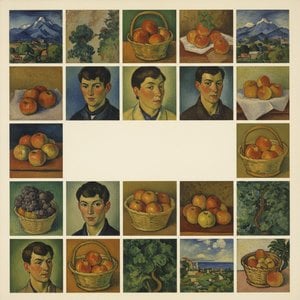
Paul Cézanne : Les 25 Œuvres Maîtresses d'un Génie Révolutionnaire | ArtsDot
Plongez dans l'univers de Paul Cézanne avec les 25 œuvres incontournables du maître post-impressionniste. Découvrez l'histoire, la technique et l'émotion derrière ses tableaux iconiques comme 'Les Baigneuses' ou 'Mont Sainte-Victoire'. Reproductions d'art haute qualité sur ArtsDot.com.

Éphémères Visions : L'Aquarelle, Histoire et Résonance Émotionnelle d'un Art Intemporel
Explorez l'histoire fascinante de l'aquarelle, des origines à nos jours. Découvrez les techniques, les artistes emblématiques et nos conseils d'experts pour collectionner ces œuvres éphémères. ArtsDot.

Les 10 Chefs-d'œuvre de l'Aquarelle qui ont Révolutionné l'Art | ArtsDot
Plongez dans l'univers fascinant des 10 chefs-d'œuvre de l'aquarelle qui ont marqué l'histoire de l'art. Découvrez Turner, Monet, Goya et bien d'autres ! Retrouvez ces œuvres emblématiques en reproductions exceptionnelles sur ArtsDot.com.
L'Aquarelle : Histoire, Techniques et Nuances d'une Peinture de Lumière Éphémère
Explorez l'histoire fascinante de l'aquarelle, des techniques ancestrales aux maîtres impressionnistes. Découvrez les artistes emblématiques et nos conseils pour apprécier et collectionner cette peinture lumineuse.


