


 Aperçu en situation
 Partager
 Partager
 Détails
 Guide imprimable

 Télécharger
 Articles similaires
 Radiographie
 Voir le diaporama
 Statistiques
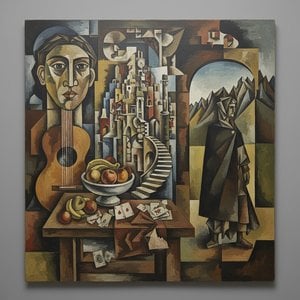
Le Sommeil nu
 Acrylique sur toile
- Art mural
- Proto-Cubism
 1904
1904- Moderne
 36.0 x 26.0 cm
 Afficher la suite
L’œuvre d'art présentée sur cette page est protégée par le droit d'auteur, ce qui signifie que nous ne pouvons légalement créer ou vendre de reproduction identique. Cette protection est appliquée en vertu d'accords internationaux tels que la Convention de Berne et par les lois nationales, notamment celles énoncées par le Loi américaine sur le droit d'auteur - Titre 17.
Cette méthode est pleinement conforme aux réglementations sur le droit d'auteur car elle ne repose pas sur la copie ou la duplication de l'œuvre protégée. Il s'agit plutôt d'une réinterprétation créative — une nouvelle peinture qui s'inspire de l'original sans pour autant lui être identique.
Giclées et impressions d'art
Impressions giclées ou sur toile de qualité musée, avec une production rapide et des finitions au choix. ( Acheter la peinture faite à la main Passer au format image numérique)




P118B €10

P118H €10

P118W €10

P438Z €10

P508JH €12

P508YH €12

P805H €10

P805Z €10

P919BZ €10

P919G €10

P919XJ €10

P959ZH €10

P968JZ €12

W106C €8

W218G €10

W218JH €8

W218Y €10

W307PJ €10

W316G €10

W316PJ €8

W316Y €10

W398PJ €8

W4111J €10

W500HY €15

W500JH €15

W692G €12

W849H €8

W940BG €15

W953PJ €8




Choisissez parmi nos formats prédéfinis qui respectent les proportions originales de l’œuvre.

Saisissez la largeur et la hauteur souhaitées pour qu'elles s'adaptent à votre cadre ou à votre mur. Une impression ne peut être que découpée, elle ne peut jamais être agrandie au-delà de l'image originale ; ainsi, un format de forme différente entraînera la perte d'une partie de l'image. Nous vous envoyons une maquette numérique pour approbation avant toute impression. L'image présentée sur cette page ne montre pas le recadrage réel — seule la maquette le permet.
Livraison dans le monde entier () en 2 semaines au lieu des 4/5 semaines habituelles. (22 octobre)

Livraison express gratuite dans le monde entier

Toile de lin de haute qualité

Assurance transport complète

Garantie de remboursement des droits de douane

Garantie de fidélité des couleurs

Garantie de retour de 100 jours (uniquement en cas de défaut)

Garantie de remboursement à 100%

Tarifs dégressifs sur quantité
 L'option verre n'est disponible que pour les dimensions inférieures à 110 cm.

Le Sommeil nu
Giclées et impressions d'art
Format de la reproduction
-


Prix total final
€ 54
Sleeping Nude : A Symbol of Vulnerability and Proto-Cubist Exploration
Pablo Picasso’s Sleeping Nude, created in 1904, stands as a pivotal work within Picasso's artistic journey—a poignant emblem of Symbolism that foreshadowed the revolutionary stylistic advancements of his burgeoning Cubist movement. Measuring just 36 x 26 cm, this ink drawing possesses an understated elegance that belies its profound conceptual depth. It’s more than merely a depiction of human form; it’s a carefully constructed tableau designed to provoke contemplation about intimacy, stillness, and the complexities of human relationships.The Composition and Symbolism : A Dialogue Between Figures
At the heart of the painting lies a captivating interplay between two figures: a man and a woman reclining together. The man is positioned slightly off-center, draped in flowing robes that convey a sense of dignified repose—his head turned away from the viewer, subtly distancing him from direct observation. This deliberate gesture invites us to consider his inner thoughts and emotions. Conversely, the woman lies on her side, facing downwards, embodying vulnerability and surrender. Her posture exudes quietude, suggesting a state of profound relaxation and receptiveness. The stark yellow background serves as an arresting counterpoint to these figures, intensifying their contours and highlighting their delicate forms. This deliberate use of color underscores Picasso’s intention to draw attention to the essence of human presence—a core preoccupation throughout his oeuvre. Furthermore, the inclusion of two additional individuals adds layers of intrigue to the scene. One stands near the left edge of the frame, while another occupies a position on the right side – creating an atmosphere of mystery and prompting viewers to ponder their roles within this intimate tableau. The arrangement isn’t accidental; it contributes to the painting's narrative dimension, suggesting unspoken connections and hinting at hidden narratives beneath the surface.Artistic Context : Seeds of Cubism
Pablo Picasso’s Sleeping Nude represents a crucial transitional phase in Picasso's artistic evolution—marking the genesis of what would become Cubism alongside Georges Braque. As documented on /art/list/?Filter=A@D3CR3T-Proto-Cubism-Art-Movement, Proto-Cubism—also known as Analytical Cubism—characterized by a radical simplification of form and a deliberate reduction in color palettes—was born from this period. Picasso’s exploration of fractured perspectives and flattened planes foreshadowed the groundbreaking innovations that would define his later artistic endeavors. Proto-Cubism sought to dismantle traditional representational conventions, prioritizing geometric abstraction over realistic depiction. This stylistic shift reflected a broader intellectual movement—influenced by thinkers like Alfred Jules Ayer and Henri Bergson—that questioned the very nature of perception and challenged established artistic dogma.Historical Significance : The Representation of Nudity Through Time
The portrayal of the nude in art has undergone considerable transformations throughout history, mirroring evolving societal standards and cultural values. From classical sculptures celebrating idealized beauty to Renaissance portraits conveying humanist ideals, depictions of the human body have served as vehicles for expressing profound philosophical and emotional concepts. Picasso’s Sleeping Nude aligns with this tradition—yet simultaneously pushes boundaries by prioritizing psychological depth over mere visual accuracy. It contributes to an ongoing dialogue about how art communicates ideas and emotions, prompting viewers to consider the significance of form and gesture in conveying human experience. The History of the Nude in Art reveals a fascinating tapestry of artistic conventions—reflecting shifting attitudes toward sexuality, morality, and aesthetics across different eras. Picasso’s work stands as testament to this enduring fascination with the human figure—a symbol of vulnerability, intimacy, and contemplation that continues to resonate with audiences today. ## Conclusion : A Legacy of Innovation Pablo Picasso's Sleeping Nude remains an exceptional achievement—a masterful distillation of Symbolist principles infused with the nascent seeds of Cubist experimentation. Its availability as a meticulously crafted oil reproduction on /art/list/?Filter=8XYPHT-Pablo-Picasso-Sleeping-nude offers an unparalleled opportunity to immerse oneself in the artistic vision of one of history’s most influential figures—a timeless masterpiece that embodies both aesthetic beauty and intellectual rigor.Questions et réponses
Quelle place occupe «Le Sommeil nu» de Pablo Picasso dans l'histoire de l'art ?
«Le Sommeil nu» de Pablo Picasso appartient au mouvement Proto-Cubism, durant la période Moderne. Ensemble, ils confèrent à l'œuvre sa place dans l'histoire de l'art.
Quel sujet et quelle atmosphère «Le Sommeil nu» de Pablo Picasso associe-t-elle ?
«Le Sommeil nu» présente nude, symbolism, man, woman, yellow background, figures, composition, spanish civil war, et l'atmosphère qui s'en dégage est Élégance classique.
Qui est l'artiste derrière « Le Sommeil nu » ?
« Le Sommeil nu » est attribué à Pablo Picasso.
Œuvres similaires


Biographie de l'artiste
Pablo Picasso: Un Artiste Révolutionnaire
La Jeunesse et la Formation (1881-1904)
- Né le 25 octobre 1881 à Málaga, en Espagne, Pablo Ruiz y Picasso a démontré un talent artistique dès son plus jeune âge.
- Son père, José Ruiz y Blasco, était professeur d'art et lui a fourni une formation précoce. On raconte que les premiers mots de Picasso étaient “piz, piz” – tentant de dire ‘crayola’.
- Picasso a rapidement dépassé les capacités de son père, montrant un talent remarquable pour des représentations naturalistes.
- La famille a déménagé à A Coruña et plus tard à Barcelone après la tragique mort de sa sœur.
- À Barcelone, il a fréquenté l’École des Beaux-Arts mais s'est souvent heurté aux instructions académiques traditionnelles. Il a brièvement étudié à l’Académie Royale des Beaux-Arts de Saint-Ferdinand à Madrid, trouvant cela étouffant et préférant étudier les maîtres comme Velázquez et Goya indépendamment.
La Période Bleue et Rose (1901-1906)
- La Période Bleue (environ 1901-1904) se caractérise par des peintures sombres dominées par des teintes de bleu et turquoise.
- Ces œuvres dépeignent souvent des figures marginalisées – mendiants, aveugles, prostituées – reflétant la mélancolie et le commentaire social. Des exemples clés incluent La Vie (1903) et Le Vieux Guitariste (1903-1904).
- Après cela, la Période Rose (1904-1906) a émergé avec des tons plus chauds – roses, oranges et rouges.
- Cette période reflète une vision plus optimiste, représentant souvent des artistes de cirque, des harlequins et des acrobates. La Famille de Saltimbanques (1905) en est un exemple.
Les Années Révolutionnaires : Cubisme et au-delà (1907-1919)
- 1907 a marqué un moment décisif avec Les Demoiselles d'Avignon, influencé par la sculpture ibérique et les masques africains. Ce tableau a brisé la perspective traditionnelle, ouvrant la voie au Cubisme.
- Travaillant en étroite collaboration avec Georges Braque, Picasso a cofondé le Cubisme, modifiant fondamentalement la façon dont les artistes représentaient la réalité.
- Cubisme Analytique (1909-1912) présentait des formes fragmentées, des couleurs atténuées et une dissection des objets en formes géométriques.
- Cubisme Synthétique (1912-1919) incorporait des éléments de collage – clippings de journaux, chutes de tissu – pour créer des surfaces texturées et de nouvelles couches visuelles.
Néo-classicisme et Surréalisme (Années 1920 - Années 1930)
- Les années 1920 ont vu Picasso explorer des styles néoclassiques avec des figures monumentales soulignant les formes classiques.
- Il a également été impliqué dans le mouvement surréaliste, sans pour autant s'aligner pleinement sur ses principes. Son œuvre mélangeait des styles antérieurs à des images surréalistes et des perspectives déformées.
Années de la Fin et Héritage (1940-1973)
- Pendant la Seconde Guerre mondiale, Picasso est resté en France, produisant des déclarations anti-guerre puissantes comme Guernica (1937), une réponse viscérale au bombardement de Guernica pendant la guerre civile espagnole.
- Guernica est devenu un symbole durable des horreurs de la guerre et reste l'une de ses œuvres les plus célébrées.
- Tout au long des années 1950 et 1960, Picasso a continué à expérimenter avec divers médiums – céramique, sculpture, gravure – démontrant une versatilité remarquable.
- Il s'est marié à Jacqueline Roque en 1961. Il est décédé le 8 avril 1973 à Mougins, en France.
Influences et Importance Historique
- Le développement artistique de Picasso a été façonné par les maîtres espagnols comme Velázquez et Goya, la sculpture ibérique, l'art africain et Henri Matisse.
- Son impact sur l’art du XXe siècle est immeasurable. Il a cofondé le Cubisme, a pionnier le collage et la sculpture construite, et a constamment remis en question les conventions artistiques.
- L’expérimentation incessante de Picasso a redéfini l'art moderne et continue d'inspirer les artistes aujourd'hui.
- Sa production abondante – estimée à plus de 50 000 œuvres – consolide sa position en tant que l'un des artistes les plus importants et les plus influents de l’histoire.

Pablo Picasso
1881 - 1973 , Espagne
En bref
- Artistes Influents:
- Velázquez
- Goya
- Henri Matisse
- Date De Décès: 8 avril 1973
- Date De Naissance: 25 octobre 1881
- Influences Artistiques:
- Cubisme
- Surréalisme
- Lieu De Naissance: Málaga, Espagne
- Nationalité: Espagnole
- Nom Complet: Pablo Ruiz y Picasso
- Oeuvres Notables:
- Les Demoiselles d'Avignon
- Guernica
- La Vie
- Le Vieux Guitariste
- Famille de Saltimbanques
- Style Artistique: Cubisme, Surréalisme
Articles connexes

Les 10 Chefs-d'œuvre Cubistes Révolutionnaires : Art, Décor & Histoire
Plongez au cœur du cubisme avec les 10 œuvres révolutionnaires de Picasso, Braque et Gris. Découvrez l'histoire, les techniques et l'impact de ce mouvement artistique majeur. Reproductions d'art de qualité musée sur ArtsDot.com !

Pablo Picasso : Révolution cubiste, symbolisme et héritage durable
Explorez la révolution cubiste de Picasso et Braque avec ArtsDot. Découvrez l'histoire, les techniques et l'impact durable de ce mouvement artistique majeur. Guide pour collectionneurs passionnés.

Les 10 Chefs-d'œuvre du Portrait Cubiste : Artistes & Décor Intérieur
Plongez au cœur du cubisme avec les 10 portraits emblématiques de Picasso, Braque et Gris. Découvrez l'histoire, la technique & l'impact de ces chefs-d'œuvre. Reproductions d'art de qualité musée sur ArtsDot.com !

Déconstruction de la réalité : L'impact révolutionnaire du cubisme sur l'art du XXe siècle
Explorez l'impact révolutionnaire du cubisme sur l'art moderne. Découvrez Picasso, Braque et les maîtres de ce mouvement clé. Guide pour collectionneurs éclairés.
Cubisme : 10 Chefs-d'œuvre Révolutionnaires à Redécouvrir | ArtsDot
Plongez au cœur du cubisme avec ArtsDot ! Découvrez 10 chefs-d'œuvre révolutionnaires de Picasso, Braque et autres artistes majeurs. Explorez l'histoire, les techniques et les couleurs vibrantes de ce mouvement artistique unique. Retrouvez ces œuvres en reproduction sur ArtsDot.com.


