

 Aperçu en situation
 Envoyer
 Partager
 Détails de l'œuvre
 Guide
Guide

 Télécharger l'image
 Articles similaires
 Radiographie
 Diaporama
 Questions et réponses
 Statistiques
Famille

- 130.0 x 96.0 cm


 Lire la suite
L’œuvre d'art présentée sur cette page est protégée par le droit d'auteur, ce qui signifie que nous ne pouvons légalement créer ou vendre de reproduction identique. Cette protection est appliquée en vertu d'accords internationaux tels que la Convention de Berne et par les lois nationales, notamment celles énoncées par le Loi américaine sur le droit d'auteur - Titre 17.
Cette méthode est pleinement conforme aux réglementations sur le droit d'auteur car elle ne repose pas sur la copie ou la duplication de l'œuvre protégée. Il s'agit plutôt d'une réinterprétation créative — une nouvelle peinture qui s'inspire de l'original sans pour autant lui être identique.
Giclées et impressions d'art
Impressions giclées ou sur toile de qualité musée, avec une production rapide et des finitions au choix. ( Commander la reproduction peinte à la main Passer au format numérique)




P118B €10

P118H €10

P118W €10

P438Z €10

P508JH €12

P508YH €12

P805H €10

P805Z €10

P919BZ €10

P919G €10

P919XJ €10

P959ZH €10

P968JZ €12

W106C €8

W218G €10

W218JH €8

W218Y €10

W307PJ €10

W316G €10

W316PJ €8

W316Y €10

W398PJ €8

W4111J €10

W500HY €15

W500JH €15

W692G €12

W849H €8

W940BG €15

W953PJ €8




Choisissez parmi nos formats prédéfinis qui respectent les proportions originales de l’œuvre.

Saisissez la largeur et la hauteur souhaitées pour qu'elles s'adaptent à votre cadre ou à votre mur. Une impression peut être recadrée, mais jamais agrandie au-delà de l'image originale ; ainsi, un format de forme différente entraînera la perte d'une partie de l'image. Nous vous envoyons une maquette numérique pour approbation avant toute impression. L'image présentée sur cette page ne montre pas le recadrage réel — seule la maquette le permet.
Livraison dans le monde entier () en 2 semaines au lieu des 4/5 semaines habituelles. (4 novembre)

Livraison express gratuite dans le monde entier

Toile de lin de qualité supérieure

Assurance transport complète

Garantie de remboursement des droits de douane

Garantie de fidélité des couleurs

Politique de retour de 100 jours (uniquement en cas de défaut)

Garantie de remboursement à 100%

Offre de tarifs dégressifs
 L'option verre n'est disponible que pour les dimensions inférieures à 110 cm.

Famille
Giclées et impressions d'art
Format de la reproduction
-


Prix total
€ 56
Family: A Glimpse into Picasso's Later Years
Pablo Picasso’s "Family" (1965) offers a fascinating window into the artist’s later explorations of form, family dynamics, and the lingering influence of Surrealism. Measuring 130 x 96 cm, this oil on canvas painting is more than just a portrait; it's an evocative composition brimming with symbolic weight and emotional complexity. The artwork showcases Picasso’s continued experimentation, moving beyond his earlier groundbreaking styles to forge a unique visual language in his twilight years.Visual Analysis: Composition and Technique
The painting presents a scene populated by multiple figures arranged in a dynamic, almost theatrical manner. A central figure immediately draws the eye – a man whose face is strikingly painted directly onto his chest, creating an immediate sense of mystery and intrigue. This unusual feature disrupts conventional portraiture and invites viewers to question the nature of identity and representation. Two other individuals are present: one standing upright, seemingly observing the scene, and another seated, suggesting a moment of quiet contemplation or interaction. Scattered throughout the composition are three clocks, strategically placed to disrupt the sense of linear time and add an element of surreal disorientation. A chair positioned near the center further anchors the scene while contributing to its overall complexity. Picasso’s brushwork is characteristically expressive, with visible strokes that convey a sense of movement and energy. The color palette, though restrained, utilizes greens, blacks, and whites effectively to create depth and contrast, highlighting the figures against the background.Naive Art & Surrealist Influences
“Family” demonstrates Picasso’s engagement with Naive Art (also known as Primitivism), a style characterized by simplicity and directness often associated with self-taught artists. While Picasso was undoubtedly a highly trained artist, his embrace of this aesthetic allowed him to strip away artifice and convey raw emotion. However, the painting isn't purely naive; it’s infused with Surrealist sensibilities. The distorted figures, illogical juxtaposition of objects (like the clocks), and dreamlike atmosphere all point to the influence of Surrealism, a movement that sought to unlock the power of the subconscious mind. Picasso masterfully blends these two disparate styles, creating a work that is both accessible in its simplicity and profound in its underlying meaning. This echoes his earlier explorations as seen in works like “Bust of Woman,” “Paternity,” and “Artist's Son.”Symbolism & Emotional Impact
The symbolism within “Familyrdquo; remains open to interpretation, contributing to the painting’s enduring appeal. The face painted on the chest could represent a mask, concealing true emotions or identities. The clocks might symbolize the passage of time, the fleeting nature of family relationships, or even a commentary on societal structures. The figures themselves, though abstracted, convey a sense of intimacy and connection, despite their somewhat unsettling presentation. Overall, “Family” evokes a complex range of emotions – from curiosity and intrigue to melancholy and contemplation. It’s a poignant reflection on the complexities of human relationships and the enduring power of family bonds, rendered through Picasso’s uniquely expressive lens. The painting invites viewers to engage with its ambiguities and draw their own conclusions about its meaning.Historical Context & Picasso's Legacy
Created in 1965, “Family” sits within a period of significant artistic evolution for Picasso. Having already revolutionized the art world through Cubism and other groundbreaking movements, he continued to experiment with new styles and techniques throughout his long career. Picasso’s influence extended far beyond visual arts, impacting music, ballet, literature, and architecture. His innovative use of collage introduced a modern art form, while his sculptural constructions influenced Constructivism. “Family,” alongside Picasso's other late works, demonstrates the artist’s unwavering commitment to pushing boundaries and challenging conventional artistic norms, solidifying his place as one of the most influential figures in 20th-century art history. Photo Description: The painting is a large piece of artwork that features multiple figures in various positions. The main focus is on a man with a face painted on his chest, who appears to be holding another person. There are also two other people visible in the scene, one standing and the other sitting. In addition to the human figures, there are several objects scattered throughout the painting. These include three clocks, which can be seen at different locations within the artwork. A chair is also present, located near the center of the painting. The overall composition of the painting suggests a sense of movement and interaction among the various elements. Size: 130 x 96 cm Date: 1965 ARTIST INFORMATION: ================== Artist: Pablo Picasso Birth Year: 1881 Death Year: 1973 Birth City: Malaga Birth Country: Spain Biography: Pablo Diego José Francisco de Paula Juan Nepomuceno María de los Remedios Cipriano de la Santísima Trinidad Ruiz y Picasso (25 October 1881 – 8 April 1973) was a Spanish painter, sculptor, printmaker, ceramicist, and theatre designer who spent most of his adult life in France. One of the most influential artists of the 20th century, he is known for co-founding the Cubist movement, the invention of constructed sculpture, the co-invention of collage, and for the wide variety of styles that he helped develop and explore. Among his most famous works are the proto-Cubist Les Demoiselles d'Avignon (1907) and the anti-war painting Guernica (1937), a dramatic portrayal of the bombing of Guernica by German and Italian air forces during the Spanish Civil War.\nBeginning his formal training under his father José Ruiz y Blasco aged seven, Picasso demonstrated extraordinary artistic talent from a young age, painting in a naturalistic manner through his childhood and adolescence. During the first decade of the 20th century, his style changed as he experimented with different theories, techniques, and ideas. After 1906, the Fauvist work of the older artist Henri Matisse motivated Picasso to explore more radical styles, beginning a fruitful rivalry between the two artists, who subsequently were often paired by critics as the leaders of modern art.\nPicasso's output, especially in his early career, is often periodized. While the names of many of his later periods are debated, the most commonly accepted periods in his work are the Blue Period (1901–1904), the Rose Period (1904–1906), the African-influenced Period (1907–1909), Analytic Cubism (1909–1912), and Synthetic Cubism (1912–1919). Much of Picasso's work of the late 1910s and early 1920s is in a neoclassical style, and his work in the mid-1920s often has characteristics of Surrealism. His later work often combines elements of his earlier styles.\nExceptionally prolific throughout the course of his long life, Picasso achieved universal renown and immense fortune for his revolutionary artistic accomplishments, and became one of the best-known figures in 20th-century art history."Questions et réponses
Puis-je voir une vue aux rayons X de «Famille» de Pablo Picasso ?
La page Radiographie de «Famille» de Pablo Picasso est un visionneur interactif qui vous permet de parcourir onze couches optiques de l'image de l'œuvre, incluant une vue de style radiographie.
Quelle tonalité émotionnelle accompagne le style Surrealism de « Famille » ?
Au sein du mouvement Surrealism, « Famille » est empreint d'un ton Mystérieux.
Les couleurs de "Famille" sont-elles vives ou plutôt atténuées ?
La couleur de « Famille » présente une saturation de Couleurs subtiles et une intensité de Équilibré.
Œuvres similaires


Biographie de l'artiste
Pablo Picasso: Un Artiste Révolutionnaire
La Jeunesse et la Formation (1881-1904)
- Né le 25 octobre 1881 à Málaga, en Espagne, Pablo Ruiz y Picasso a démontré un talent artistique dès son plus jeune âge.
- Son père, José Ruiz y Blasco, était professeur d'art et lui a fourni une formation précoce. On raconte que les premiers mots de Picasso étaient “piz, piz” – tentant de dire ‘crayola’.
- Picasso a rapidement dépassé les capacités de son père, montrant un talent remarquable pour des représentations naturalistes.
- La famille a déménagé à A Coruña et plus tard à Barcelone après la tragique mort de sa sœur.
- À Barcelone, il a fréquenté l’École des Beaux-Arts mais s'est souvent heurté aux instructions académiques traditionnelles. Il a brièvement étudié à l’Académie Royale des Beaux-Arts de Saint-Ferdinand à Madrid, trouvant cela étouffant et préférant étudier les maîtres comme Velázquez et Goya indépendamment.
La Période Bleue et Rose (1901-1906)
- La Période Bleue (environ 1901-1904) se caractérise par des peintures sombres dominées par des teintes de bleu et turquoise.
- Ces œuvres dépeignent souvent des figures marginalisées – mendiants, aveugles, prostituées – reflétant la mélancolie et le commentaire social. Des exemples clés incluent La Vie (1903) et Le Vieux Guitariste (1903-1904).
- Après cela, la Période Rose (1904-1906) a émergé avec des tons plus chauds – roses, oranges et rouges.
- Cette période reflète une vision plus optimiste, représentant souvent des artistes de cirque, des harlequins et des acrobates. La Famille de Saltimbanques (1905) en est un exemple.
Les Années Révolutionnaires : Cubisme et au-delà (1907-1919)
- 1907 a marqué un moment décisif avec Les Demoiselles d'Avignon, influencé par la sculpture ibérique et les masques africains. Ce tableau a brisé la perspective traditionnelle, ouvrant la voie au Cubisme.
- Travaillant en étroite collaboration avec Georges Braque, Picasso a cofondé le Cubisme, modifiant fondamentalement la façon dont les artistes représentaient la réalité.
- Cubisme Analytique (1909-1912) présentait des formes fragmentées, des couleurs atténuées et une dissection des objets en formes géométriques.
- Cubisme Synthétique (1912-1919) incorporait des éléments de collage – clippings de journaux, chutes de tissu – pour créer des surfaces texturées et de nouvelles couches visuelles.
Néo-classicisme et Surréalisme (Années 1920 - Années 1930)
- Les années 1920 ont vu Picasso explorer des styles néoclassiques avec des figures monumentales soulignant les formes classiques.
- Il a également été impliqué dans le mouvement surréaliste, sans pour autant s'aligner pleinement sur ses principes. Son œuvre mélangeait des styles antérieurs à des images surréalistes et des perspectives déformées.
Années de la Fin et Héritage (1940-1973)
- Pendant la Seconde Guerre mondiale, Picasso est resté en France, produisant des déclarations anti-guerre puissantes comme Guernica (1937), une réponse viscérale au bombardement de Guernica pendant la guerre civile espagnole.
- Guernica est devenu un symbole durable des horreurs de la guerre et reste l'une de ses œuvres les plus célébrées.
- Tout au long des années 1950 et 1960, Picasso a continué à expérimenter avec divers médiums – céramique, sculpture, gravure – démontrant une versatilité remarquable.
- Il s'est marié à Jacqueline Roque en 1961. Il est décédé le 8 avril 1973 à Mougins, en France.
Influences et Importance Historique
- Le développement artistique de Picasso a été façonné par les maîtres espagnols comme Velázquez et Goya, la sculpture ibérique, l'art africain et Henri Matisse.
- Son impact sur l’art du XXe siècle est immeasurable. Il a cofondé le Cubisme, a pionnier le collage et la sculpture construite, et a constamment remis en question les conventions artistiques.
- L’expérimentation incessante de Picasso a redéfini l'art moderne et continue d'inspirer les artistes aujourd'hui.
- Sa production abondante – estimée à plus de 50 000 œuvres – consolide sa position en tant que l'un des artistes les plus importants et les plus influents de l’histoire.

Pablo Picasso
1881 - 1973 , Espagne
L'essentiel de l'artiste
- Artistes Influents:
- Velázquez
- Goya
- Henri Matisse
- Date De Décès: 8 avril 1973
- Date De Naissance: 25 octobre 1881
- Influences Artistiques:
- Cubisme
- Surréalisme
- Lieu De Naissance: Málaga, Espagne
- Nationalité: Espagnole
- Nom Complet: Pablo Ruiz y Picasso
- Oeuvres Notables:
- Les Demoiselles d'Avignon
- Guernica
- La Vie
- Le Vieux Guitariste
- Famille de Saltimbanques
- Style Artistique: Cubisme, Surréalisme
Articles connexes

The Enduring Legacy of Oil on Canvas: Technique, History & Aesthetic Impact
Explore the rich history & techniques of oil painting – from Renaissance masters to Impressionism. Discover pigments, layering methods, and why this timeless medium endures. Expert insights for artists & art enthusiasts.
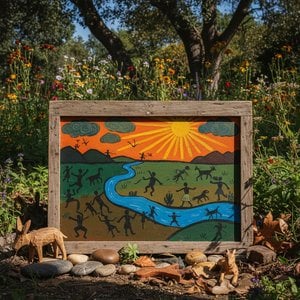
L'Éclosion de l'Instinct : Exploration de l'Art Naïf et du Primitivisme, une Révolte contre les Conventions
Explorez l'art naïf et le primitivisme : Rousseau, Modigliani, Chagall… Découvrez l'histoire, les caractéristiques et les figures clés de ces mouvements artistiques authentiques. Guide expert ArtsDot.

The Enduring Power of Painting: A Historical & Contemporary Exploration of Form and Emotion
Explore the rich history & enduring techniques of oil painting with ArtsDot. Discover masterpieces, learn about art collecting, and find authentic handmade reproductions crafted by skilled artists.

L'Huile sur Toile : Exploration Historique et Technique d'un Médium Artistique Intemporel
Explorez l'histoire fascinante de la peinture à l'huile, des techniques ancestrales aux maîtres flamands comme Van Eyck. Découvrez les secrets des pigments, liants et glacis pour comprendre cet art intemporel.

Les 10 Chefs-d'œuvre Cubistes Révolutionnaires : Art, Décor & Histoire
Plongez au cœur du cubisme avec les 10 œuvres révolutionnaires de Picasso, Braque et Gris. Découvrez l'histoire, les techniques et l'impact de ce mouvement artistique majeur. Reproductions d'art de qualité musée sur ArtsDot.com !


