


 Aperçu en situation
 Partager
 Partager
 Détails
 Guide imprimable

 Télécharger
 Articles similaires
 Radiographie
 Voir le diaporama
 Statistiques
Para III


 Afficher la suite
L’œuvre d'art présentée sur cette page est protégée par le droit d'auteur, ce qui signifie que nous ne pouvons légalement créer ou vendre de reproduction identique. Cette protection est appliquée en vertu d'accords internationaux tels que la Convention de Berne et par les lois nationales, notamment celles énoncées par le Loi américaine sur le droit d'auteur - Titre 17.
Cette méthode est pleinement conforme aux réglementations sur le droit d'auteur car elle ne repose pas sur la copie ou la duplication de l'œuvre protégée. Il s'agit plutôt d'une réinterprétation créative — une nouvelle peinture qui s'inspire de l'original sans pour autant lui être identique.
Giclées et impressions d'art
Impressions giclées ou sur toile de qualité musée, avec une production rapide et des finitions au choix. ( Acheter la peinture faite à la main Passer au format image numérique)




P118B €10

P118H €10

P118W €10

P438Z €10

P508JH €12

P508YH €12

P805H €10

P805Z €10

P919BZ €10

P919G €10

P919XJ €10

P959ZH €10

P968JZ €12

W106C €8

W218G €10

W218JH €8

W218Y €10

W307PJ €10

W316G €10

W316PJ €8

W316Y €10

W398PJ €8

W4111J €10

W500HY €15

W500JH €15

W692G €12

W849H €8

W940BG €15

W953PJ €8




Choisissez parmi nos formats prédéfinis qui respectent les proportions originales de l’œuvre.

Saisissez la largeur et la hauteur souhaitées pour qu'elles s'adaptent à votre cadre ou à votre mur. Une impression ne peut être que découpée, elle ne peut jamais être agrandie au-delà de l'image originale ; ainsi, un format de forme différente entraînera la perte d'une partie de l'image. Nous vous envoyons une maquette numérique pour approbation avant toute impression. L'image présentée sur cette page ne montre pas le recadrage réel — seule la maquette le permet.
Livraison dans le monde entier () en 2 semaines au lieu des 4/5 semaines habituelles. (21 octobre)

Livraison express gratuite dans le monde entier

Toile de lin de haute qualité

Assurance transport complète

Garantie de remboursement des droits de douane

Garantie de fidélité des couleurs

Garantie de retour de 100 jours (uniquement en cas de défaut)

Garantie de remboursement à 100%

Tarifs dégressifs sur quantité
 L'option verre n'est disponible que pour les dimensions inférieures à 110 cm.

Para III
Giclées et impressions d'art
Format de la reproduction
-


Prix total final
€ 54
The Luminous Pulse of Color Field Painting
In the pantheon of mid-century American abstraction, few works command the room with such visceral intensity as Morris Louis’s “Para III.” Created in 1959, this monumental canvas serves as a profound testament to the power of pure color to bypass the intellect and speak directly to the soul. As a cornerstone of the Washington Color School, Louis moved away from the frantic, gestural energy of his Abstract Expressionist contemporaries, opting instead for a meditative exploration of pigment and light. “Para III” does not merely present a scene; it presents an atmosphere, inviting the viewer into a realm where boundaries dissolve and color becomes the sole protagonist.
The painting is a breathtaking tapestry of crimson, scarlet, and magenta, hues that seem to bleed and pulse across the surface. These vibrant tones are not contained by rigid borders but instead flow in vertical bands, creating an illusion of liquid movement and light. To gaze upon this work is to witness a controlled chaos, where the eye is drawn into deep, saturated pools of pigment that suggest a state of perpetual flux. For the discerning collector or interior designer, such a piece offers more than mere decoration; it provides a focal point of immense energy, capable of transforming a space into an environment of profound contemplation and modern elegance.
Mastery of the Pour: Technique and Materiality
The magic of “Para III” lies in its revolutionary technical execution. Louis was a pioneer in the use of Magna paint, a specialized acrylic-based medium that allowed him to achieve unprecedented levels of translucency and fluidity. Eschewing the traditional brush, Louis utilized a method of pouring thinned pigment directly onto unprimed, unstretched canvas. This technique allowed the paint to soak into the very fibers of the fabric, creating a "staining" effect where the color and the support become one inseparable entity.
This process resulted in a surface texture that possesses a unique, almost organic quality, reminiscent of solidified wax or delicate silk. The way the colors overlap and intermingle creates a sense of depth that is both ethereal and substantial. There are no hard edges here—only soft, bleeding transitions that mimic the natural movement of water or light through atmosphere. This meticulous yet spontaneous approach captures a rare moment in art history where the artist’s hand is invisible, leaving only the raw, unadulterated impact of the medium itself.
A Legacy of Emotion and Transcendence
Beyond its technical brilliance, “Para III” carries a deep emotional resonance. Louis was heavily influenced by the tonalist landscapes of artists like Ralph Albert Blakelock, inheriting a fascination with how subtle gradations of color can evoke specific moods. In this work, the heavy saturation of reds evokes feelings ranging from passionate vitality to a somber, introspective warmth. The painting functions as a window into a non-representational world, stripped of recognizable objects so that the viewer may encounter their own emotional reflections.
For those seeking to incorporate high-quality reproductions of masterworks into their collections, “Para III” represents an ideal marriage of historical significance and aesthetic versatility. Its bold, abstract nature allows it to integrate seamlessly into contemporary, minimalist, or even classical interiors, providing a sophisticated layer of texture and color. It remains a timeless masterpiece that continues to challenge our perceptions of what paint can achieve, standing as a permanent monument to the transformative beauty of the Color Field movement.
Questions et réponses
Quelle harmonie de couleurs «Para III» de Morris Louis présente-t-il ?
«Para III» de Morris Louis présente une harmonie de couleurs Strong Color Unity.
Quels sont les pseudonymes ou autres noms sous lesquels Morris Louis est connu ?
D'autres noms répertoriés pour Morris Louis, créateur de « Para III », incluent Morris Louis Bernstein.
Pour quel usage une reproduction de «Para III» de Morris Louis est-elle recommandée ?
L'utilisation recommandée d'une impression de « Para III » est Accent.


Biographie de l'artiste
Premières années et éducation
- Né : Morris Louis Bernstein, le 28 novembre 1912, à Baltimore, Maryland
- Parents : Louis Bernstein (vendeur de meubles) et Cecelia Luckman Bernstein.
- Éducation : A fréquenté les écoles publiques de Baltimore ; Institut d'art et des arts appliqués du Maryland (aujourd’hui MICA), 1929-1932. N’a pas obtenu de diplôme.
- Premières influences incluant Eugene Speicher et Paul Cézanne.
- A montré un intérêt précoce pour l'art, encouragé par sa famille malgré les opportunités limitées à Baltimore.
Développement en tant qu’artiste et influences clés
- Années 1930 : A travaillé à divers emplois occasionnels pour se soutenir tout en peignant (épluchage de légumes, blanchisserie, recherche Gallup Poll).
- 1934-1936 : A participé au projet de fresque du Projet d'art public des travaux progressistes sous la direction de Sam Swerdloff.
- 1936-1937 : Déménagé à New York ; a expérimenté des techniques à l’atelier de Siqueiros.
- Découverte de la peinture Magna (1948) : Un moment décisif – Louis a été un pionnier dans l'utilisation de la peinture acrylique à base d'huile Magna, nouvellement développée pour lui par Leonard Bocour et Sam Golden. Cela a permis une plus grande fluidité et transparence dans son travail.
- Influence de Helen Frankenthaler : En 1953, Louis et Kenneth Noland ont visité l’atelier de Frankenthaler et ont été profondément impressionnés par ses peintures à la technique du déversement (en particulier « Mountains and Sea »). Cela a inspiré leur expérimentation avec les techniques de versement et de teinture.
Les peintures Véles et innovations du champ de couleur
- Peintures Véles matures (1954) : Caractérisées par des couches superposées, transparentes de couleurs versées et teintées dans une toile tendue ou non.
- Technique : De la peinture extrêmement diluée était appliquée sur une toile non apprêtée, non tendue, permettant à celle-ci de s’écouler sur la surface inclinée, créant des voiles de couleur translucides. Cela éliminait les coups de pinceau et mettait l'accent sur la platitude.
- Peinture du champ de couleur : Louis est devenu une figure centrale de la peinture du champ de couleur, simplifiant l’espace pictural et mettant l’accent sur les plans plats de couleurs intenses. Il faisait partie du mouvement de Washington Color School.
- Séries et styles : Au-delà des peintures Véles, il a exploré des séries telles que les floraux, les colonnes (1960), les unfurleds (1960-61) – présentant des ruisseaux de couleurs opaques – et les peintures à rayures (1961-62).
Réalisations majeures et signification historique
- Pionnier de la peinture du champ de couleur : Louis est reconnu comme un innovateur clé dans la peinture du champ de couleur, aux côtés d’artistes tels que Kenneth Noland et Helen Frankenthaler.
- Influence sur l'expressionnisme abstrait : Son travail a élargi les frontières de l'expressionnisme abstrait en se concentrant sur la couleur et la platitude plutôt que sur le geste ou la composition.
- Washington Color School : Un contributeur important à ce mouvement influent, qui mettait l’accent sur une approche réductrice de la peinture.
- Destruction d'œuvres : Notamment, Louis a détruit de nombreuses de ses peintures entre 1955 et 1957, reflétant une auto-évaluation critique de son travail.
- Héritage : Son insistance sur la couleur, la platitude et la matérialité de la peinture continue d’influencer les artistes contemporains.
Dernières années et décès
- Louis a continué à peindre avec acharnement jusqu'à son décès.
- Décès : Décédé le 7 septembre 1962, à Washington, D.C., à l’âge de 49 ans.
- Exposition commémorative (1963) : Une exposition importante a été organisée au Solomon R. Guggenheim Museum peu après sa mort.
- Expositions rétrospectives : De grandes rétrospectives ont suivi au Museum of Fine Arts, Boston (1967), et à la National Gallery of Art, Washington, D.C. (1976).

Morris Louis
1912 - 1962 , États-Unis d'Amérique
En bref
- Artistes Influents:
- Helen Frankenthaler
- Cézanne
- Date De Décès: 7 septembre 1962
- Date De Naissance: 28 novembre 1912
- Influences Artistiques:
- Kenneth Noland
- Washington Color School
- Lieu De Naissance: Baltimore, États-Unis
- Mouvement Artistique: Color Field painting
- Nationalité: Américain
- Nom Complet: Morris Louis Bernstein
- Oeuvres Notables:
- High
- Number 1-36
- Where
- Number 1-68
- Gamma Tau
Articles connexes

Expressionnisme Abstrait : Les 10 Chefs-d'Œuvre Incontournables pour Décorer avec Art et Histoire
Plongez au cœur de l'Expressionnisme Abstrait avec ! Découvrez les 10 œuvres majeures de Pollock, Rothko et De Kooning. Histoire, techniques & inspiration déco. Explorez la collection complète en ligne.

Naviguer l'Expression Abstraite : Guide des Mouvements Contemporains pour une Résonance Émotionnelle dans la Sélection Artistique
Guide expert pour collectionner l'expressionnisme abstrait : découvrez les maîtres (Pollock, Rothko), les tendances et conseils d'experts pour une sélection éclairée. ArtsDot.

Morris Louis: Pioneering Color Field Painting & Abstract Expressionism's Legacy
Explore the groundbreaking abstract expressionism of Morris Louis, a pioneer of Color Field painting. Discover his innovative techniques, influential series & lasting legacy in post-war American art. Learn more at ArtsDot.

Kandinsky : Les 25 Œuvres Maîtresses d'un Pionnier de l'Art Abstrait | ArtsDot
Plongez dans l'univers vibrant de Kandinsky ! Découvrez les 25 œuvres majeures du pionnier de l'art abstrait. Explorez son expressionnisme, ses couleurs audacieuses et l'histoire fascinante derrière chaque tableau. Reproductions d'exception sur ArtsDot.com.
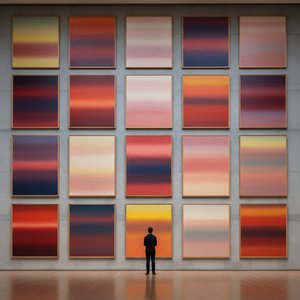
Mark Rothko : Les 25 Œuvres Maîtresses de l'Abstraction Coloriste | ArtsDot
Plongez dans l'univers émotionnel de Mark Rothko avec les 25 œuvres clés du maître de l'abstraction. Découvrez l'histoire, la technique et le pouvoir des couleurs de ces tableaux iconiques. Reproductions d'art de qualité musée sur ArtsDot.com


