- Accueil

- Reproduction de peinture à l'huile
- Max Ernst
- untitled (6065)

 Commander l'impression Acheter l'image haute résolution
 Partager
 Partager
 Détails de l'œuvre
 Ajouter aux favoris

 Télécharger
 Articles similaires
 Radiographie
 Diaporama
untitled (6065)


 Afficher la suite
Reproduction à l'huile faite à la main
Huile sur toile peinte à la main, avec cadre et dimensions personnalisés, réalisée sur commande par nos artistes.




P118B $10

P118H $10

P118W $10

P438Z $10

P508JH $12

P508YH $12

P805H $10

P805Z $10

P919BZ $10

P919G $10

P919XJ $10

P959ZH $10

P968JZ $12

W106C $8

W218G $10

W218JH $8

W218Y $10

W307PJ $10

W316G $10

W316PJ $8

W316Y $10

W398PJ $8

W4111J $10

W500HY $15

W500JH $15

W692G $12

W849H $8

W940BG $15

W953PJ $8




Choisissez parmi nos formats prédéfinis qui respectent les proportions originales de l’œuvre.

Vous pouvez saisir vos propres dimensions pour l'adapter à un cadre ou à un espace spécifique. Si la taille sélectionnée ne correspond pas aux proportions de l'image d'origine, nous recadrerons l'œuvre ou prolongerons la peinture avec des éléments peints à la main supplémentaires. Une maquette numérique vous sera envoyée pour approbation avant le début de la production.
Veuillez noter que l'aperçu à l'écran ne reflète pas le recadrage ou l'extension réels. Seule la maquette montrera fidèlement la composition finale.
Bien que des tailles personnalisées soient disponibles, nous vous recommandons de sélectionner une dimension dans la liste prédéfinie afin de préserver les proportions d'origine.
Après la commande, l’équipe ArtsDot.com contactera le client par e-mail pour obtenir ses instructions et lui fournira une maquette d’aperçu.
Livraison dans le monde entier () en 3 à 4 semaines au lieu des 5 semaines habituelles. (20 juillet). Aucune concession sur la qualité.

Livraison express gratuite dans le monde entier

Toile de lin de haute qualité

Assurance transport complète

Garantie de remboursement des frais de douane

Garantie de fidélité des couleurs

Politique de retour de 60 jours (uniquement en cas de défaut)

Garantie de remboursement à 100%

Réduction sur les achats groupés
 L'option verre n'est disponible que pour les dimensions inférieures à 110 cm.

untitled (6065)
Technique de reproduction
Format de reproduction
-


Prix total final
-
Description de l'œuvre
Unveiling the Enigma: Max Ernst's "Untitled (6065)"
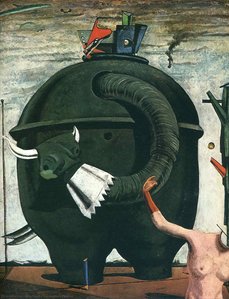
Max Ernst’s “Untitled (6065)” is not merely a depiction of a woman and a bird; it’s an immersion into the subconscious, a meticulously crafted exploration of desire, communication, and the unsettling beauty of the surreal. Painted by one of the most influential figures of 20th-century art, this piece embodies Ernst's signature approach – a deliberate rejection of representational realism in favor of evocative symbolism and dreamlike imagery. The painting’s power resides not just in its visual elements but in the questions it subtly poses about human interaction with nature and the intangible forces that shape our perceptions.
A Surrealist Composition: Technique and Vision
Executed by Max Ernst, a master of collage and frottage techniques, “Untitled (6065)” demonstrates his profound understanding of manipulating perception. The painting’s surface is characterized by a textured layering achieved through meticulous brushwork combined with the deliberate application of various materials – likely incorporating elements of dry-brushing and glazing to build depth and luminosity. Ernst's use of color is restrained, dominated by earthy tones punctuated by flashes of vibrant blue in the bird, drawing immediate attention to this crucial element. The composition itself—the woman perched atop a precarious stack of bricks, reaching for a soaring avian form—is deliberately unbalanced, contributing to the painting’s inherent tension and unsettling beauty. This technique reflects Ernst's broader interest in exploring automatism – spontaneous creation free from conscious control – as a means of accessing deeper levels of the psyche.
Symbolic Layers: Woman, Bird, and Brick
The symbolism within “Untitled (6065)” is rich and layered, inviting multiple interpretations. The woman herself represents a potent archetype—a figure caught between earthly solidity (the bricks) and the ethereal realm of flight. Her outstretched hands suggest an attempt to grasp at something elusive, perhaps representing desire, knowledge, or even spiritual aspiration. The bird, frequently associated with freedom, transformation, and communication, acts as both a subject and a catalyst for the woman’s actions. Its presence elevates the scene beyond a simple portrait, transforming it into a meditation on connection and longing. The bricks, seemingly mundane, introduce an element of instability and vulnerability, hinting at the fragility of human endeavors and the precariousness of dreams.
Historical Context: The Rise of Surrealism
“Untitled (6065)” was created during a pivotal moment in art history – the burgeoning of the Surrealist movement. Emerging in the aftermath of World War I, Surrealism sought to liberate artistic expression from the constraints of rational thought and societal norms. Artists like Ernst were deeply influenced by the theories of Sigmund Freud, exploring the power of dreams, the unconscious mind, and the irrational as sources of creative inspiration. This painting exemplifies the core tenets of Surrealism: a fascination with the illogical, a rejection of conventional beauty standards, and an attempt to tap into the hidden depths of human experience. Ernst’s work aligns perfectly with the movement's broader ambition to challenge viewers' perceptions and provoke emotional responses.
Emotional Impact & Artistic Value
“Untitled (6065)” possesses a haunting beauty that transcends its historical context. The painting evokes a sense of melancholy, wonder, and perhaps even unease—a feeling perfectly aligned with the core aims of Surrealist art. Its evocative imagery and masterful technique make it a compelling addition to any collection, offering a window into the mind of one of 20th-century’s most visionary artists. A hand-painted reproduction captures not only the visual details but also the emotional resonance of this extraordinary work, allowing you to experience its power firsthand.
Œuvres apparentées


Biographie de l'artiste
Max Ernst : Une Vie au Sein du Surréalisme
Jeunesse et Éducation
- Né le: 1er avril 1891 à Brühl, en Allemagne.
- Le père d'Ernst, Philipp Ernst, était enseignant des sourds et peintre amateur, encourageant ainsi l'intérêt précoce de Max pour l'art.
- Il a étudié la philosophie, l'histoire de l'art, la littérature, la psychologie et la psychiatrie à l'Université de Bonn de 1909.
- Ce parcours académique diversifié a profondément influencé ses explorations artistiques ultérieures.
Développement Artistique & Influences
- Un moment décisif fut l'exposition Sonderbund à Cologne (1912), où il a découvert des œuvres de Pablo Picasso, Vincent van Gogh, et Paul Gauguin.
- En 1914, il a rencontré Hans Arp, débutant une amitié qui a durablement façonné son parcours artistique.
- La Première Guerre mondiale a profondément marqué Ernst ; ses expériences de soldat ont conduit à la déception et à une vision critique de la société.
- Il s'est inspiré des écrits de Sigmund Freud, explorant les thèmes de l'inconscient dans son art.
Dadisme & Surréalisme
- Ernst est devenu une figure clé du groupe Dadiste de Cologne après la Première Guerre mondiale, rejetant les conventions artistiques traditionnelles.
- Il a pionné des techniques innovantes telles que frottage (frotter un crayon sur des surfaces texturées) et grattage (gratter la peinture pour révéler les couches sous-jacentes).
- Dans les années 1920, il a rejoint le mouvement surréaliste à Paris, collaborant avec des artistes tels que Paul Éluard.
- Son œuvre de cette période explorait des images oniriques et des thèmes psychologiques.
Œuvres Majeures & Techniques
- Frottage : Une technique utilisée pour créer des textures et des images inattendues, exemplifiée dans de nombreuses œuvres.
- Collage : Ernst a fréquemment utilisé le collage, combinant des éléments disparates pour créer des compositions surréalistes.
- Œuvres Notables :
- La Ville Entière
- Euclides
- De Ceci, Personne Ne Devrait Savoir
- Forêt et Colombe
- Ses peintures présentent souvent des images symboliques, notamment les oiseaux (en particulier son alter ego Loplop), les paysages et des juxtapositions troublantes.
Vie Tardive & Héritage
- Ernst s'est installé aux États-Unis pendant la Seconde Guerre mondiale, continuant à peindre et à expérimenter de nouvelles techniques.
- Il est revenu en France après la guerre et est resté actif jusqu'à sa mort le 1er avril 1976 à Paris.
- Signification Historique : Les contributions d'Ernst au Dadisme et au Surréalisme ont été révolutionnaires. Il a défié les normes artistiques, exploré l’esprit inconscient et inventé des techniques innovantes qui continuent d’inspirer les artistes aujourd’hui.
- Il reste l'un des figures les plus importantes et influentes de l'art du 20e siècle.

Max Ernst
1891 - 1976 , Allemagne
En bref
- Artistes Influents:
- Pablo Picasso
- Vincent van Gogh
- Paul Gauguin
- Date De Décès: 1er avril 1976
- Date De Naissance: 1er avril 1891
- Lieu De Naissance: Brühl, Allemagne
- Mouvement Artistique: Dadaïsme et Surréalisme
- Nationalité: Allemand/Américain/Français
- Nom Complet: Max Ernst
- Œuvres Notables:
- La Ville Entière
- Euclides
- Forêt et Colombe
Articles connexes

Hokusai : Les 25 Œuvres Maîtresses d'un Génie Japonais | ArtsDot
Plongez dans l'univers de Katsushika Hokusai avec les 25 œuvres incontournables du maître japonais. Découvrez l'histoire, les techniques d'ukiyo-e et la beauté intemporelle de 'La Grande Vague'. Reproductions tableaux de qualité muséale sur ArtsDot.com.

Pablo Picasso : Les 25 Œuvres Maîtresses d'un Génie Intemporel | ArtsDot
Plongez dans l'univers de Pablo Picasso avec les 25 œuvres les plus emblématiques du maître espagnol. Découvrez l'histoire, le cubisme et les émotions derrière 'Guernica', 'Les Demoiselles d'Avignon' et bien d'autres. Reproductions de qualité muséale sur ArtsDot.com.

Transforming Spaces: A Comprehensive Exploration of Wall Decor Through Art History & Contemporary Practice
Explore the art of transforming spaces with our comprehensive guide to wall decor. From historical movements to contemporary trends, discover how to curate impactful interiors and commission bespoke artwork for a truly personalized aesthetic.

Top 10 des œuvres d'art pour une ambiance sereine |
Plongez dans la sérénité avec notre sélection des 10 œuvres d'art les plus apaisantes. Découvrez Monet, Renoir et d’autres maîtres classiques. Trouvez l'inspiration déco zen et achetez des reproductions de tableaux de qualité musée sur
Max Ernst : Les 25 Œuvres Maîtresses d'un Surréalisme Révolutionnaire | ArtsDot
Plongez dans l'univers surréaliste de Max Ernst ! Découvrez les 25 œuvres les plus emblématiques du maître allemand, entre frottage, collage et rêves éveillés. Inspirez votre décoration intérieure avec ArtsDot : reproductions de tableaux de qualité muséale et collection d'art unique. Explorez la co