


 Aperçu en situation
 Partager
 Partager
 Détails

 Télécharger l'image
 Articles similaires
 Radiographie
 Voir le diaporama
untitled (3741)


 Afficher la suite
Giclées et impressions d'art
Impressions giclées ou sur toile de qualité musée, avec une production rapide et des finitions au choix. ( Acheter la peinture faite à la main Acheter l'image)




P118B $10

P118H $10

P118W $10

P438Z $10

P508JH $12

P508YH $12

P805H $10

P805Z $10

P919BZ $10

P919G $10

P919XJ $10

P959ZH $10

P968JZ $12

W106C $8

W218G $10

W218JH $8

W218Y $10

W307PJ $10

W316G $10

W316PJ $8

W316Y $10

W398PJ $8

W4111J $10

W500HY $15

W500JH $15

W692G $12

W849H $8

W940BG $15

W953PJ $8




Choisissez parmi nos formats prédéfinis qui respectent les proportions originales de l’œuvre.

Vous pouvez saisir vos propres dimensions pour vous adapter à un cadre ou à un espace spécifique. Si la taille sélectionnée ne correspond pas aux proportions de l'image originale, nous recadrerons l'œuvre ou étendrons l'image avec une bordure en miroir ou une couleur unie. Une maquette numérique vous sera envoyée pour approbation avant le début de la production.
Veuillez noter que l'aperçu à l'écran ne reflète pas le recadrage ou l'extension réelle. Seule la maquette montrera avec précision la composition finale.
Bien que des tailles personnalisées soient disponibles, nous vous recommandons de choisir une dimension dans la liste prédéfinie afin de préserver les proportions originales.
Livraison dans le monde entier () en 2 semaines au lieu des 4/5 semaines habituelles. (25 août)

Livraison express gratuite dans le monde entier

Toile de lin de haute qualité

Assurance transport complète

Garantie de remboursement des droits de douane

Garantie de fidélité des couleurs

Politique de retour de 60 jours (uniquement en cas de défaut)

Garantie de remboursement à 100%

Tarifs dégressifs sur quantité
 L'option verre n'est disponible que pour les dimensions inférieures à 110 cm.

untitled (3741)
Giclées et impressions d'art
Format de la reproduction
-


Prix total final
$ 62
Description de la pièce
A Dreamscape Unveiled: The Surreal Vision of Max Ernst
In the vast, labyrinthine corridors of Surrealism, few works possess the haunting, dreamlike magnetism of Max Ernst’s "Untitled (3741)." Created during the twilight of his career between 1968 and 1969, this masterpiece serves as a profound window into the subconscious, inviting viewers to step away from the rational world and into a realm where the laws of physics and logic dissolve. The painting is not merely a visual arrangement but an emotional journey, capturing that fleeting, unsettling moment between waking and sleep. Through his masterful command of imagery, Ernst presents a tableau that feels both ancient and otherworldly, making it a captivating centerpiece for any collection dedicated to the mysteries of the human psyche.
The composition is anchored by a striking, ethereal encounter: a solitary horse with an elongated, graceful neck that seems to ascend into a celestial void. This creature, appearing almost suspended in an infinite sky, becomes a vessel for the surreal. Perched upon its back is a bird, while another soars nearby, creating a rhythmic dance between the terrestrial and the aerial. Below this cosmic event, a textured, arid landscape stretches out like a forgotten memory, providing a stark, grounded contrast to the lightness of the heavens. On the periphery, a human figure stands in quiet observation, gazing upward. This positioning is deeply symbolic, representing humanity’s eternal state of wonder and our small yet profound connection to the vast, incomprehensible mysteries of nature and the unconscious mind.
The Alchemy of Texture and Technique
What distinguishes this work is Ernst’s revolutionary approach to materiality. A pioneer of frottage, Ernst utilized the technique of rubbing textures—such as wood grain or stone—onto the canvas to allow chance and serendipity to guide his hand. In "Untitled (3741)," this method results in a surface that feels alive with organic complexity. The landscape is not merely painted; it is built through layers of texture that mimic the ruggedness of bark and the erosion of ancient earth. This tactile quality creates a sensory experience for the viewer, where the eye is encouraged to wander over the ridges and crevices of the canvas, discovering new details with every glance.
For the discerning collector or interior designer, this painting offers more than just aesthetic beauty; it provides a profound intellectual depth. The interplay between the smooth, sweeping lines of the horse and the gritty, textured terrain creates a visual tension that is both stimulating and meditative. As a high-quality reproduction, this piece brings the avant-garde spirit of the 20th century into a contemporary space, acting as a conversation starter that bridges the gap between historical significance and modern sophistication. It is an invitation to contemplate metamorphosis, instinct, and the beautiful, terrifying fluidity of perception.
Œuvres similaires


Biographie de l'artiste
Max Ernst : Une Vie au Sein du Surréalisme
Jeunesse et Éducation
- Né le: 1er avril 1891 à Brühl, en Allemagne.
- Le père d'Ernst, Philipp Ernst, était enseignant des sourds et peintre amateur, encourageant ainsi l'intérêt précoce de Max pour l'art.
- Il a étudié la philosophie, l'histoire de l'art, la littérature, la psychologie et la psychiatrie à l'Université de Bonn de 1909.
- Ce parcours académique diversifié a profondément influencé ses explorations artistiques ultérieures.
Développement Artistique & Influences
- Un moment décisif fut l'exposition Sonderbund à Cologne (1912), où il a découvert des œuvres de Pablo Picasso, Vincent van Gogh, et Paul Gauguin.
- En 1914, il a rencontré Hans Arp, débutant une amitié qui a durablement façonné son parcours artistique.
- La Première Guerre mondiale a profondément marqué Ernst ; ses expériences de soldat ont conduit à la déception et à une vision critique de la société.
- Il s'est inspiré des écrits de Sigmund Freud, explorant les thèmes de l'inconscient dans son art.
Dadisme & Surréalisme
- Ernst est devenu une figure clé du groupe Dadiste de Cologne après la Première Guerre mondiale, rejetant les conventions artistiques traditionnelles.
- Il a pionné des techniques innovantes telles que frottage (frotter un crayon sur des surfaces texturées) et grattage (gratter la peinture pour révéler les couches sous-jacentes).
- Dans les années 1920, il a rejoint le mouvement surréaliste à Paris, collaborant avec des artistes tels que Paul Éluard.
- Son œuvre de cette période explorait des images oniriques et des thèmes psychologiques.
Œuvres Majeures & Techniques
- Frottage : Une technique utilisée pour créer des textures et des images inattendues, exemplifiée dans de nombreuses œuvres.
- Collage : Ernst a fréquemment utilisé le collage, combinant des éléments disparates pour créer des compositions surréalistes.
- Œuvres Notables :
- La Ville Entière
- Euclides
- De Ceci, Personne Ne Devrait Savoir
- Forêt et Colombe
- Ses peintures présentent souvent des images symboliques, notamment les oiseaux (en particulier son alter ego Loplop), les paysages et des juxtapositions troublantes.
Vie Tardive & Héritage
- Ernst s'est installé aux États-Unis pendant la Seconde Guerre mondiale, continuant à peindre et à expérimenter de nouvelles techniques.
- Il est revenu en France après la guerre et est resté actif jusqu'à sa mort le 1er avril 1976 à Paris.
- Signification Historique : Les contributions d'Ernst au Dadisme et au Surréalisme ont été révolutionnaires. Il a défié les normes artistiques, exploré l’esprit inconscient et inventé des techniques innovantes qui continuent d’inspirer les artistes aujourd’hui.
- Il reste l'un des figures les plus importantes et influentes de l'art du 20e siècle.

Max Ernst
1891 - 1976 , Allemagne
En bref
- Artistes Influents:
- Pablo Picasso
- Vincent van Gogh
- Paul Gauguin
- Date De Décès: 1er avril 1976
- Date De Naissance: 1er avril 1891
- Lieu De Naissance: Brühl, Allemagne
- Mouvement Artistique: Dadaïsme et Surréalisme
- Nationalité: Allemand/Américain/Français
- Nom Complet: Max Ernst
- Œuvres Notables:
- La Ville Entière
- Euclides
- Forêt et Colombe
Articles similaires
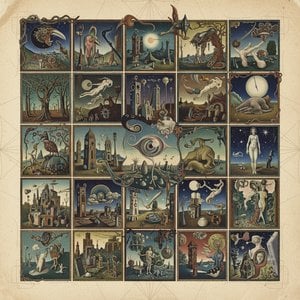
Max Ernst : Les 25 Œuvres Maîtresses d'un Surréalisme Révolutionnaire | ArtsDot
Plongez dans l'univers surréaliste de Max Ernst ! Découvrez les 25 œuvres les plus emblématiques du maître allemand, entre frottage, collage et rêves éveillés. Inspirez votre décoration intérieure avec ArtsDot : reproductions de tableaux de qualité muséale et collection d'art unique. Explorez la co

The Noble Steed on Canvas: A Historical & Artistic Exploration of Horse Painting Across Cultures
Explore the rich history of horse painting! Discover masterpieces from Stubbs to Munnings & learn about symbolism, techniques & artists. Find museum-quality reproductions at ArtsDot.
Dreamscapes & Disrupted Realities: Exploring Surrealism's Enduring Influence
Explore the fascinating world of Surrealism! Discover its origins, key artists like Dalí & Magritte, and enduring influence on art & culture. Expert insights & high-quality reproductions at ArtsDot.

The Equine Muse: A Historical & Artistic Exploration of Horses in Painting
Explore the captivating history of horses in painting! Discover Renaissance masterpieces, Baroque grandeur & expert insights for collecting equestrian art. Learn about symbolism, techniques & lasting value with ArtsDot.

The Noble Steed: A Historical and Artistic Exploration of Horses in Fine Art
Explore the rich history of horses in fine art! From ancient depictions to Renaissance masterpieces & beyond, discover iconic artworks and artists. Learn about symbolism, techniques, and find museum-quality reproductions at ArtsDot.



