


 Aperçu en situation
 Partager
 Partager
 Détails
 Guide imprimable

 Télécharger
 Articles similaires
 Radiographie
 Voir le diaporama
 Statistiques
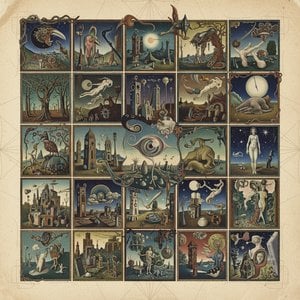
La Chimère


 Afficher la suite
L’œuvre d'art présentée sur cette page est protégée par le droit d'auteur, ce qui signifie que nous ne pouvons légalement créer ou vendre de reproduction identique. Cette protection est appliquée en vertu d'accords internationaux tels que la Convention de Berne et par les lois nationales, notamment celles énoncées par le Loi américaine sur le droit d'auteur - Titre 17.
Cette méthode est pleinement conforme aux réglementations sur le droit d'auteur car elle ne repose pas sur la copie ou la duplication de l'œuvre protégée. Il s'agit plutôt d'une réinterprétation créative — une nouvelle peinture qui s'inspire de l'original sans pour autant lui être identique.
Giclées et impressions d'art
Impressions giclées ou sur toile de qualité musée, avec une production rapide et des finitions au choix. ( Acheter la peinture faite à la main Passer au format image numérique)




P118B €10

P118H €10

P118W €10

P438Z €10

P508JH €12

P508YH €12

P805H €10

P805Z €10

P919BZ €10

P919G €10

P919XJ €10

P959ZH €10

P968JZ €12

W106C €8

W218G €10

W218JH €8

W218Y €10

W307PJ €10

W316G €10

W316PJ €8

W316Y €10

W398PJ €8

W4111J €10

W500HY €15

W500JH €15

W692G €12

W849H €8

W940BG €15

W953PJ €8




Choisissez parmi nos formats prédéfinis qui respectent les proportions originales de l’œuvre.

Saisissez la largeur et la hauteur souhaitées pour qu'elles s'adaptent à votre cadre ou à votre mur. Une impression ne peut être que découpée, elle ne peut jamais être agrandie au-delà de l'image originale ; ainsi, un format de forme différente entraînera la perte d'une partie de l'image. Nous vous envoyons une maquette numérique pour approbation avant toute impression. L'image présentée sur cette page ne montre pas le recadrage réel — seule la maquette le permet.
Livraison dans le monde entier () en 2 semaines au lieu des 4/5 semaines habituelles. (20 octobre)

Livraison express gratuite dans le monde entier

Toile de lin de haute qualité

Assurance transport complète

Garantie de remboursement des droits de douane

Garantie de fidélité des couleurs

Garantie de retour de 100 jours (uniquement en cas de défaut)

Garantie de remboursement à 100%

Tarifs dégressifs sur quantité
 L'option verre n'est disponible que pour les dimensions inférieures à 110 cm.

La Chimère
Giclées et impressions d'art
Format de la reproduction
-


Prix total final
€ 54
L'Énigme de la Chimère : Une Exploration Surrealiste de Max Ernst
Max Ernst’s “Chimera,” painted in 1921, isn’t merely a depiction of a scene; it’s an invitation into the labyrinthine depths of the subconscious. This arresting collage immediately captivates with its unsettling juxtaposition of familiar objects – a chair, an umbrella, and two figures – arranged within a space that defies easy interpretation. It's a quintessential example of Ernst’s pioneering approach to surrealism, a movement he helped define through his deliberate rejection of rational order and embrace of dreamlike imagery. The painting whispers of anxieties about modernity, the fragmentation of identity, and the unsettling power of the unseen.
La Technique et le Langage Visuel : Un Collage Déstructuré
The brilliance of “Chimera” lies not just in its subject matter but also in Ernst’s masterful manipulation of technique. The work is a prime illustration of his collage method, a process he developed and refined throughout his career. He meticulously assembled disparate elements – fragments of printed material, woodcuts, and painted surfaces – creating a textured surface that feels both familiar and utterly alien. This deliberate layering introduces an element of instability, mirroring the psychological unease at the heart of the piece. The use of contrasting colors—the muted tones of the background against the vibrant hues of the umbrella—further amplifies this sense of disorientation. Notice how Ernst doesn’t simply *place* these objects; he seems to wrestle with them, integrating them into a new, unsettling whole.
Le Symbolisme et l'Intrigue Psychologique
The figures themselves are enigmatic, their positions and gazes deliberately ambiguous. The presence of two individuals suggests a dialogue, perhaps even a confrontation, yet the nature of that exchange remains elusive. The umbrella, a symbol of protection and routine, is presented in an unexpected context, hinting at a disruption of established order. Some art historians interpret the chair as representing confinement or observation, while others see it as a portal to another realm. The Chimera itself – a monstrous hybrid creature from Greek mythology—functions as a potent metaphor for the anxieties of the era: a composite of disparate elements striving for coherence, yet ultimately remaining fragmented and unstable. It embodies the feeling of being overwhelmed by contradictory information and conflicting desires.
Contexte Historique et l'Âge d'Or du Surrealisme
“Chimera” was created during a period of profound social and political upheaval – the aftermath of World War I and the rise of new ideologies. Surrealism, born out of this climate of uncertainty, sought to liberate art from the constraints of reason and logic, tapping into the power of dreams, memory, and the unconscious. Ernst’s work aligns perfectly with this movement's core tenets, reflecting a desire to challenge conventional perceptions of reality and explore the hidden depths of human experience. It’s important to remember that Ernst was not simply replicating dream imagery; he was actively constructing it through his deliberate manipulation of materials and forms. His exploration of the subconscious served as a direct response to the disillusionment felt by many artists after the horrors of war.
Une Reproduction d'Exception pour Votre Collection
ArtsDot offers meticulously crafted, hand-painted reproductions of “Chimera” that capture the essence of Ernst’s original masterpiece. Each reproduction is created with the same attention to detail and artistic sensibility as the original, ensuring a faithful representation of its complex textures and evocative atmosphere. Whether you are an art enthusiast, a collector seeking to expand your collection, or an interior designer searching for a statement piece, our reproductions provide a beautiful and authentic way to experience the power and enduring appeal of this iconic surrealist work. Explore the possibilities and bring the enigmatic world of “Chimera” into your space.
Questions et réponses
Quel usage est suggéré pour «La Chimère» de Max Ernst ?
Une reproduction de «La Chimère» de Max Ernst est recommandée pour Pièce maîtresse d'envergure. Cette suggestion découle du sujet, de l'atmosphère et des couleurs de l'œuvre.
De quoi est composé "La Chimère" et dans quel style est-il réalisé ?
Dans « La Chimère », la technique du Collage rencontre le mouvement Surrealist Movement.
Quelle atmosphère et quelle émotion se dégagent de « La Chimère » ?
«La Chimère» de Max Ernst dégage un sentiment Mystérieux au sein d'une atmosphère globalement Mystique.
Œuvres similaires


Biographie de l'artiste
Max Ernst : Une Vie au Sein du Surréalisme
Jeunesse et Éducation
- Né le: 1er avril 1891 à Brühl, en Allemagne.
- Le père d'Ernst, Philipp Ernst, était enseignant des sourds et peintre amateur, encourageant ainsi l'intérêt précoce de Max pour l'art.
- Il a étudié la philosophie, l'histoire de l'art, la littérature, la psychologie et la psychiatrie à l'Université de Bonn de 1909.
- Ce parcours académique diversifié a profondément influencé ses explorations artistiques ultérieures.
Développement Artistique & Influences
- Un moment décisif fut l'exposition Sonderbund à Cologne (1912), où il a découvert des œuvres de Pablo Picasso, Vincent van Gogh, et Paul Gauguin.
- En 1914, il a rencontré Hans Arp, débutant une amitié qui a durablement façonné son parcours artistique.
- La Première Guerre mondiale a profondément marqué Ernst ; ses expériences de soldat ont conduit à la déception et à une vision critique de la société.
- Il s'est inspiré des écrits de Sigmund Freud, explorant les thèmes de l'inconscient dans son art.
Dadisme & Surréalisme
- Ernst est devenu une figure clé du groupe Dadiste de Cologne après la Première Guerre mondiale, rejetant les conventions artistiques traditionnelles.
- Il a pionné des techniques innovantes telles que frottage (frotter un crayon sur des surfaces texturées) et grattage (gratter la peinture pour révéler les couches sous-jacentes).
- Dans les années 1920, il a rejoint le mouvement surréaliste à Paris, collaborant avec des artistes tels que Paul Éluard.
- Son œuvre de cette période explorait des images oniriques et des thèmes psychologiques.
Œuvres Majeures & Techniques
- Frottage : Une technique utilisée pour créer des textures et des images inattendues, exemplifiée dans de nombreuses œuvres.
- Collage : Ernst a fréquemment utilisé le collage, combinant des éléments disparates pour créer des compositions surréalistes.
- Œuvres Notables :
- La Ville Entière
- Euclides
- De Ceci, Personne Ne Devrait Savoir
- Forêt et Colombe
- Ses peintures présentent souvent des images symboliques, notamment les oiseaux (en particulier son alter ego Loplop), les paysages et des juxtapositions troublantes.
Vie Tardive & Héritage
- Ernst s'est installé aux États-Unis pendant la Seconde Guerre mondiale, continuant à peindre et à expérimenter de nouvelles techniques.
- Il est revenu en France après la guerre et est resté actif jusqu'à sa mort le 1er avril 1976 à Paris.
- Signification Historique : Les contributions d'Ernst au Dadisme et au Surréalisme ont été révolutionnaires. Il a défié les normes artistiques, exploré l’esprit inconscient et inventé des techniques innovantes qui continuent d’inspirer les artistes aujourd’hui.
- Il reste l'un des figures les plus importantes et influentes de l'art du 20e siècle.

Max Ernst
1891 - 1976 , Allemagne
En bref
- Artistes Influents:
- Pablo Picasso
- Vincent van Gogh
- Paul Gauguin
- Date De Décès: 1er avril 1976
- Date De Naissance: 1er avril 1891
- Lieu De Naissance: Brühl, Allemagne
- Mouvement Artistique: Dadaïsme et Surréalisme
- Nationalité: Allemand/Américain/Français
- Nom Complet: Max Ernst
- Œuvres Notables:
- La Ville Entière
- Euclides
- Forêt et Colombe
Articles connexes

Dreamscapes & Disrupted Realities: Exploring Surrealism's Enduring Influence
Explore the fascinating world of Surrealism! Discover its origins, key artists like Dalí & Magritte, and enduring influence on art & culture. Expert insights & high-quality reproductions at ArtsDot.
Max Ernst : Les 25 Œuvres Maîtresses d'un Surréalisme Révolutionnaire | ArtsDot
Plongez dans l'univers surréaliste de Max Ernst ! Découvrez les 25 œuvres les plus emblématiques du maître allemand, entre frottage, collage et rêves éveillés. Inspirez votre décoration intérieure avec ArtsDot : reproductions de tableaux de qualité muséale et collection d'art unique. Explorez la co

L'Âge d'Or Réinventé : Esthétique et Héritage Durable de l'Art Déco
Explorez l'histoire fascinante de l'Art Déco : influences, artistes emblématiques, matériaux luxueux et héritage durable. Découvrez comment ce style révolutionnaire continue d'inspirer le design contemporain.

Surréalisme : Les 10 Chefs-d'Œuvre Indéfinissables pour une Déco d'Exception |
Plongez dans l'univers fascinant du Surréalisme avec . Découvrez les 10 chefs-d'œuvre de Dalí, Magritte & Miró qui ont marqué l'histoire de l'art. Reproductions haute définition et inspiration déco sur .

Surréalisme : 10 Chefs-d'œuvre Révolutionnaires pour une Déco Inspirée
Plongez dans l'univers fascinant du surréalisme avec ArtsDot.com ! Découvrez 10 chefs-d’œuvre de Dalí, Magritte et autres artistes emblématiques. Inspirez votre déco avec des reproductions de tableaux exceptionnelles. Explorez la collection en ligne !


