


 Aperçu en situation
 Partager
 Partager
 Détails
 Guide imprimable

 Télécharger
 Articles similaires
 Radiographie
 Voir le diaporama
 Statistiques
Forêt et soleil


 Afficher la suite
Reproduction à l'huile faite à la main
Huile sur toile peinte à la main, avec cadre et dimensions personnalisés, réalisée sur commande par nos artistes. ( Passer au format impression Passer au format image numérique)




P118B $10

P118H $10

P118W $10

P438Z $10

P508JH $12

P508YH $12

P805H $10

P805Z $10

P919BZ $10

P919G $10

P919XJ $10

P959ZH $10

P968JZ $12

W106C $8

W218G $10

W218JH $8

W218Y $10

W307PJ $10

W316G $10

W316PJ $8

W316Y $10

W398PJ $8

W4111J $10

W500HY $15

W500JH $15

W692G $12

W849H $8

W940BG $15

W953PJ $8




Choisissez parmi nos formats prédéfinis qui respectent les proportions originales de l’œuvre.

Vous pouvez saisir vos propres dimensions pour l'adapter à un cadre ou à un espace spécifique. Si la taille sélectionnée ne correspond pas aux proportions de l'image d'origine, nous recadrerons l'œuvre ou prolongerons la peinture avec des éléments peints à la main supplémentaires. Une maquette numérique vous sera envoyée pour approbation avant le début de la production.
Veuillez noter que l'aperçu à l'écran ne reflète pas le recadrage ou l'extension réels. Seule la maquette montrera fidèlement la composition finale.
Bien que des tailles personnalisées soient disponibles, nous vous recommandons de sélectionner une dimension dans la liste prédéfinie afin de préserver les proportions d'origine.
Après la commande, l’équipe ArtsDot.com contactera le client par e-mail pour recueillir ses instructions et lui fournira une maquette d’aperçu
Livraison dans le monde entier () en 3 à 4 semaines au lieu des 5 semaines habituelles. (27 septembre). Aucun compromis sur la qualité.

Livraison express gratuite dans le monde entier

Toile de lin de haute qualité

Assurance transport complète

Garantie de remboursement des droits de douane

Garantie de fidélité des couleurs

Garantie de retour de 100 jours (uniquement en cas de défaut)

Garantie de remboursement à 100%

Tarifs dégressifs sur quantité
 L'option verre n'est disponible que pour les dimensions inférieures à 110 cm.

Forêt et soleil
Technique de reproduction
Format de la reproduction
-


Prix total final
$ 263
Max Ernst's "Forêt et Soleil": A Nocturne of Surreal Reverie
Max Ernst’s “Forêt et Soleil” (Forest and Sun) is not merely a depiction of a nighttime woodland; it’s an immersion into the subconscious, a carefully constructed dreamscape rendered with the precision and unsettling beauty that defined the artist's career. Painted by one of the most influential figures of the 20th century, this work exemplifies Ernst’s deep engagement with Surrealism, a movement he helped pioneer, seeking to unlock the power of the irrational and the symbolic through art.
- Subject Matter: The painting presents a dense forest under the watchful gaze of a luminous moon. The composition is dominated by towering trees, their forms distorted and imbued with an almost hallucinatory quality. A solitary bird perches on one of these branches, adding a touch of fragile life to the otherwise stark and silent scene.
- Style & Technique: Ernst’s technique is characterized by meticulous detail combined with deliberate ambiguity. He employs a layered approach, building up textures and patterns through multiple applications of paint – a hallmark of his process. The use of contrasting light and shadow creates a dramatic effect, emphasizing the surreal nature of the forest and heightening the sense of mystery.
- Historical Context: “Forêt et Soleil” was created during a period of intense artistic experimentation following World War I. The devastation and disillusionment of the war profoundly impacted artists like Ernst, leading them to reject traditional representational art in favor of exploring themes of anxiety, trauma, and the unconscious mind. Surrealism emerged as a direct response to this crisis, offering a new way of seeing and understanding the world.
Symbolic Layers: The Language of Dreams
Ernst’s work is rich in symbolism, drawing heavily on Freudian psychology and the exploration of dreams. The forest itself represents the unconscious mind – dark, dense, and full of hidden pathways. The moon, a recurring motif in Ernst's oeuvre, symbolizes intuition, the feminine principle, and the cyclical nature of time. Its bright illumination cuts through the darkness, suggesting a glimmer of hope or understanding within the depths of the psyche.
- The Trees: The distorted shapes of the trees are not literal representations but rather symbolic embodiments of repressed emotions and anxieties. Their patterns could be interpreted as visual metaphors for complex psychological states.
- The Bird: The solitary bird, a frequent element in Ernst’s work, often represents fragility, vulnerability, or perhaps a yearning for freedom within the confines of the unconscious.
Max Ernst's Artistic Philosophy
Born in Brühl, Germany, in 1891, Max Ernst was a profoundly intellectual artist. His academic background – encompassing philosophy, art history, literature, psychology, and psychiatry – informed his artistic practice in a unique way. He wasn’t simply interested in replicating what he saw; he sought to access deeper truths through the manipulation of form and imagery. This approach is vividly evident in “Forêt et Soleil,” where Ernst uses visual language to evoke emotional responses and stimulate the viewer's own subconscious.
- Surrealist Techniques: Ernst was a master of various Surrealist techniques, including frottage (rubbing textures onto paper) and decalcomania (spreading paint on a surface and then lifting it to create random patterns). These methods allowed him to tap into the unconscious and generate unexpected imagery.
- Influence of Dada: Ernst’s early work was influenced by Dada, another anti-art movement that challenged traditional notions of beauty and meaning. This influence can be seen in his willingness to embrace absurdity and reject conventional artistic norms.
Emotional Impact & Artistic Value
"Forêt et Soleil" possesses a haunting beauty that transcends its subject matter. The painting’s unsettling atmosphere, combined with Ernst's masterful technique, creates a powerful emotional response in the viewer. It invites contemplation on themes of isolation, mystery, and the hidden depths of the human psyche. This reproduction offers an exceptional opportunity to own a piece of art history, bringing the visionary world of Max Ernst into your space.
Œuvres similaires


Biographie de l'artiste
Max Ernst : Une Vie au Sein du Surréalisme
Jeunesse et Éducation
- Né le: 1er avril 1891 à Brühl, en Allemagne.
- Le père d'Ernst, Philipp Ernst, était enseignant des sourds et peintre amateur, encourageant ainsi l'intérêt précoce de Max pour l'art.
- Il a étudié la philosophie, l'histoire de l'art, la littérature, la psychologie et la psychiatrie à l'Université de Bonn de 1909.
- Ce parcours académique diversifié a profondément influencé ses explorations artistiques ultérieures.
Développement Artistique & Influences
- Un moment décisif fut l'exposition Sonderbund à Cologne (1912), où il a découvert des œuvres de Pablo Picasso, Vincent van Gogh, et Paul Gauguin.
- En 1914, il a rencontré Hans Arp, débutant une amitié qui a durablement façonné son parcours artistique.
- La Première Guerre mondiale a profondément marqué Ernst ; ses expériences de soldat ont conduit à la déception et à une vision critique de la société.
- Il s'est inspiré des écrits de Sigmund Freud, explorant les thèmes de l'inconscient dans son art.
Dadisme & Surréalisme
- Ernst est devenu une figure clé du groupe Dadiste de Cologne après la Première Guerre mondiale, rejetant les conventions artistiques traditionnelles.
- Il a pionné des techniques innovantes telles que frottage (frotter un crayon sur des surfaces texturées) et grattage (gratter la peinture pour révéler les couches sous-jacentes).
- Dans les années 1920, il a rejoint le mouvement surréaliste à Paris, collaborant avec des artistes tels que Paul Éluard.
- Son œuvre de cette période explorait des images oniriques et des thèmes psychologiques.
Œuvres Majeures & Techniques
- Frottage : Une technique utilisée pour créer des textures et des images inattendues, exemplifiée dans de nombreuses œuvres.
- Collage : Ernst a fréquemment utilisé le collage, combinant des éléments disparates pour créer des compositions surréalistes.
- Œuvres Notables :
- La Ville Entière
- Euclides
- De Ceci, Personne Ne Devrait Savoir
- Forêt et Colombe
- Ses peintures présentent souvent des images symboliques, notamment les oiseaux (en particulier son alter ego Loplop), les paysages et des juxtapositions troublantes.
Vie Tardive & Héritage
- Ernst s'est installé aux États-Unis pendant la Seconde Guerre mondiale, continuant à peindre et à expérimenter de nouvelles techniques.
- Il est revenu en France après la guerre et est resté actif jusqu'à sa mort le 1er avril 1976 à Paris.
- Signification Historique : Les contributions d'Ernst au Dadisme et au Surréalisme ont été révolutionnaires. Il a défié les normes artistiques, exploré l’esprit inconscient et inventé des techniques innovantes qui continuent d’inspirer les artistes aujourd’hui.
- Il reste l'un des figures les plus importantes et influentes de l'art du 20e siècle.

Max Ernst
1891 - 1976 , Allemagne
En bref
- Artistes Influents:
- Pablo Picasso
- Vincent van Gogh
- Paul Gauguin
- Date De Décès: 1er avril 1976
- Date De Naissance: 1er avril 1891
- Lieu De Naissance: Brühl, Allemagne
- Mouvement Artistique: Dadaïsme et Surréalisme
- Nationalité: Allemand/Américain/Français
- Nom Complet: Max Ernst
- Œuvres Notables:
- La Ville Entière
- Euclides
- Forêt et Colombe
Articles similaires

Les 10 Chefs-d'œuvre du Paysage Romantique : Artistes et Décor d'Intérieur
Plongez dans l'émotion du Romantisme avec les 10 plus beaux paysages de Friedrich, Turner & Delacroix. Découvrez leur histoire et trouvez l'inspiration déco idéale sur ArtsDot.com !

Constable : Les 25 Chefs-d'Œuvre du Maître Anglais | ArtsDot
Plongez dans l'univers de John Constable avec les 25 œuvres incontournables du maître anglais. Découvrez l'histoire, la technique et l'émotion derrière ses paysages romantiques. Reproductions de qualité muséale sur ArtsDot.com.
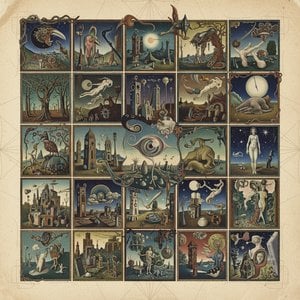
Max Ernst : Les 25 Œuvres Maîtresses d'un Surréalisme Révolutionnaire | ArtsDot
Plongez dans l'univers surréaliste de Max Ernst ! Découvrez les 25 œuvres les plus emblématiques du maître allemand, entre frottage, collage et rêves éveillés. Inspirez votre décoration intérieure avec ArtsDot : reproductions de tableaux de qualité muséale et collection d'art unique. Explorez la co

Évocations de lieux : Un voyage historique à travers l'art du paysage
Explorez l'histoire fascinante de la peinture de paysage à travers les chefs-d'œuvre du Romantisme. Découvrez Friedrich, Turner et Aivazovski et laissez-vous inspirer par la beauté sauvage et le sublime. Reproduction d'art de qualité chez ArtsDot.

The Enchanted Canopy: Exploring Forests in Art History – From Romantic Idealization to Ecological Consciousness
Explore the rich history of forests in art! Discover Romantic masterpieces by Friedrich & Monet, Symbolist depths, and contemporary visions. Find inspiration & quality reproductions at ArtsDot.


