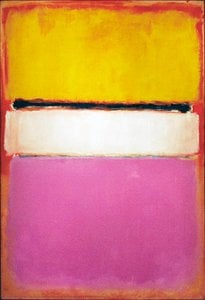
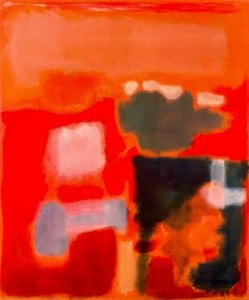
Aperçu en situation
 Envoyer
 Partager
 Détails de l'œuvre

 Télécharger
 Articles similaires
 Radiographie
 Diaporama
Untitled (subway)

 Lire la suite
Giclées et impressions d'art
Impressions giclées ou sur toile de qualité musée, avec une production rapide et des finitions au choix. ( Commander la reproduction peinte à la main Télécharger l'image haute résolution)




P118B $10

P118H $10

P118W $10

P438Z $10

P508JH $12

P508YH $12

P805H $10

P805Z $10

P919BZ $10

P919G $10

P919XJ $10

P959ZH $10

P968JZ $12

W106C $8

W218G $10

W218JH $8

W218Y $10

W307PJ $10

W316G $10

W316PJ $8

W316Y $10

W398PJ $8

W4111J $10

W500HY $15

W500JH $15

W692G $12

W849H $8

W940BG $15

W953PJ $8




Choisissez parmi nos formats prédéfinis qui respectent les proportions originales de l’œuvre.

Vous pouvez saisir vos propres dimensions pour vous adapter à un cadre ou à un espace spécifique. Si la taille sélectionnée ne correspond pas aux proportions de l'image originale, nous recadrerons l'œuvre ou étendrons l'image avec une bordure en miroir ou une couleur unie. Une maquette numérique vous sera envoyée pour approbation avant le début de la production.
Veuillez noter que l'aperçu à l'écran ne reflète pas le recadrage ou l'extension réelle. Seule la maquette montrera avec précision la composition finale.
Bien que des tailles personnalisées soient disponibles, nous vous recommandons de choisir une dimension dans la liste prédéfinie afin de préserver les proportions originales.
Livraison dans le monde entier () en 2 semaines au lieu des 4/5 semaines habituelles. (18 août)

Livraison express gratuite dans le monde entier

Toile de lin de qualité supérieure

Assurance transport complète

Garantie de remboursement des droits de douane

Garantie de fidélité des couleurs

Politique de retour de 60 jours (uniquement en cas de défaut)

Garantie de remboursement à 100%

Offre de tarifs dégressifs
 L'option verre n'est disponible que pour les dimensions inférieures à 110 cm.

Untitled (subway)
Giclées et impressions d'art
Format de la reproduction
-


Prix total
$ 62
Description de la pièce
A Silent Symphony of Urban Isolation
Mark Rothko's Untitled (Subway) isn’t merely a painting; it’s an immersion into the quiet, almost unbearable solitude of modern urban life. Completed in 1937, during a period of intense introspection and experimentation for the artist, this work transcends simple representation, instead offering a deeply felt emotional landscape. Rothko, grappling with the anxieties of his time – the rise of fascism, the displacement of Jewish communities, and the burgeoning alienation of city dwellers – sought to capture not what he *saw*, but what he *felt* in the face of these overwhelming forces.
The painting’s core is a deceptively simple composition: a series of rectangular blocks of color stacked vertically against a muted orange backdrop. These aren't vibrant, celebratory hues; rather, they are somber shades of brown, gray, and deep violet – colors that evoke the dampness of an underground station, the shadows cast by towering buildings, and the pervasive sense of confinement. The figures within the scene—a dozen or so individuals waiting for a train—are rendered with minimal detail, almost dissolving into the surrounding color fields. They are not portraits; they’re archetypes of urban anonymity, each lost in their own private thoughts, adrift in the collective experience of the subway.
Color as Emotion: Rothko's Method
Rothko’s technique is central to the painting’s power. He employed a layering process, applying thin washes of paint over increasingly thicker layers, creating a palpable sense of depth and texture. The edges of the rectangular blocks are deliberately soft and blurred, dissolving into the surrounding color fields – a characteristic feature of his mature work. This blurring effect isn't about lack of precision; it’s about conveying an emotional state: a feeling of being submerged, enveloped by the environment, losing oneself within the vastness of the city.
Crucially, Rothko avoided sharp outlines or distinct forms. He believed that color itself could evoke emotion and create a direct connection with the viewer. The rectangles aren’t meant to represent anything specific; they are vehicles for pure feeling – a distillation of experience into its most essential components. He famously stated, “I'm only interested in expressing basic human emotions—tragedy, ecstasy, doom.” This painting embodies a profound sense of ‘doom,’ not in a dramatic or overtly threatening way, but as a quiet, persistent melancholy that permeates the urban landscape.
Historical Context and Rothko’s Journey
To understand Untitled (Subway) fully, it's essential to consider the historical context in which it was created. Rothko had recently emigrated from Latvia to the United States with his family, a move driven by the escalating political instability and antisemitism of Eastern Europe. This experience of displacement profoundly shaped his artistic vision, fueling a lifelong exploration of themes related to loss, alienation, and the search for meaning. The subway itself—a symbol of transit, anonymity, and the constant movement of urban life—became a potent metaphor for this sense of dislocation.
Interestingly, Rothko’s early work was heavily influenced by Surrealism and Expressionism, reflecting his desire to grapple with complex emotions and psychological states. However, he quickly developed his own distinctive style, characterized by the use of large-scale color fields and a deliberate avoidance of representational imagery. Untitled (Subway) represents a pivotal moment in this evolution, marking a shift towards a more purely emotional and abstract approach to painting.
A Legacy of Quiet Intensity
Untitled (Subway) remains one of Rothko’s most enduringly powerful works. Its understated elegance, coupled with its profound emotional resonance, continues to captivate viewers today. It's a testament to the artist’s ability to distill complex human experiences into their simplest and most evocative forms – a silent symphony of urban isolation that speaks volumes about the anxieties and uncertainties of modern life.
Œuvres similaires


Biographie de l'artiste
enfance et influences
Mark Rothko (Marcus Rothkowitz), un artiste américain renommé, est né le 25 septembre 1903 à Dvinsk, Lettonie. Sa famille a immigré aux États-Unis lorsqu'il n’avait que dix ans. Ce changement culturel aura influencé plus tard son style artistique.évolution artistique
Le travail précoce de Rothko était caractérisé par l’expressionnisme abstrait, un style qui mettait l’accent sur le processus de création d'une œuvre d'art plutôt que sur le produit final. Ses peintures, telles que No. 18 (1948) et Untitled (1948), mettaient en valeur son approche unique de la couleur et de la forme.- Champ de couleurs : L'utilisation par Rothko de champs de couleurs audacieux et rectangulaires, souvent en contraste saisissant les uns avec les autres, créait une sensation de profondeur et d’émotion.
- Structure organique : Ses peintures semblaient respirer la vie, comme si les couleurs étaient des entités vivantes.
œuvres notables et expositions
- No. 10 (1950), une peinture qui marquait un tournant significatif dans le style de Rothko, est maintenant au sein de la collection du Museum of Modern Art.
- Les Seagram Murals, une série de peintures commandées pour le restaurant Four Seasons, mettait en valeur la capacité de Rothko à adapter son style à différents environnements.
- No. 3 (1950), une peinture qui exemplifie l'utilisation par Rothko de champs de couleurs audacieux et rectangulaires.
vie tardive et héritage
La vie de Rothko a été marquée par des luttes contre la santé mentale et un mariage tumultueux. Il est décédé le 25 février 1970, à l'âge de 66 ans. Malgré ses difficultés, Rothko a laissé une marque indélébile sur le monde de l’art. Ochre et rouge sur rouge (champ de couleurs), une peinture qui met en valeur l'approche unique de Rothko à la couleur, peut être trouvée dans la collection ArtsDot.com. La page Wikipédia de Mark Rothko fournit des informations supplémentaires sur sa vie et son style artistique.
Mark Rothko
1903 - 1970 , Lettonie
L'essentiel de l'artiste
- Artistes Influents:
- Sigmund Freud
- Marcel Proust
- Date De Décès: 25 février 1970
- Date De Naissance: 25 septembre 1903
- Influences Artistiques:
- Minimalisme
- Art contemporain
- Lieu De Naissance: Daugavpils, Lettonie
- Mouvement Artistique: Expressionnisme abstrait
- Nationalité: Américaine
- Nom Complet: Mark Rothko / Marcus Rothkowitz
- Œuvres Notables:
- No. 18 (1948)
- No. 10 (1950)
- Murals Seagram
- White Center (1957)
Articles connexes
Mark Rothko : Les 25 Œuvres Maîtresses de l'Abstraction Coloriste | ArtsDot
Plongez dans l'univers émotionnel de Mark Rothko avec les 25 œuvres clés du maître de l'abstraction. Découvrez l'histoire, la technique et le pouvoir des couleurs de ces tableaux iconiques. Reproductions d'art de qualité musée sur ArtsDot.com

The Sublimity of Color: Exploring the Emotional Landscapes of Mark Rothko's Abstract Expressionism
Explore the profound emotional depth of Mark Rothko's abstract expressionism. Discover the history, techniques & lasting impact of this pivotal Color Field painter. Expert insights for collectors and art enthusiasts.

Expressionnisme Abstrait : Les 10 Chefs-d'Œuvre Incontournables pour Décorer avec Art et Histoire
Plongez au cœur de l'Expressionnisme Abstrait avec ! Découvrez les 10 œuvres majeures de Pollock, Rothko et De Kooning. Histoire, techniques & inspiration déco. Explorez la collection complète en ligne.

Atmosphères chromatiques : Explorer les fondements philosophiques de la peinture Color Field
Explorez les fondements philosophiques de la peinture Color Field avec ArtsDot. Découvrez Rothko, Newman et Still, leurs techniques innovantes et le potentiel d'investissement de ce mouvement abstrait majeur.

Atmosphères chromatiques : L'évolution et l'impact du Color Field Painting
Explorez l'histoire et l'impact du Color Field Painting avec ArtsDot. Découvrez les œuvres de Rothko, Newman et Still, leurs techniques innovantes et le marché actuel pour les collectionneurs avertis.