


 Aperçu en situation
 Partager
 Partager
 Détails
 Guide imprimable

 Télécharger
 Articles similaires
 Radiographie
 Voir le diaporama
 Statistiques
Untitled 131

 Afficher la suite
L’œuvre d'art présentée sur cette page est protégée par le droit d'auteur, ce qui signifie que nous ne pouvons légalement créer ou vendre de reproduction identique. Cette protection est appliquée en vertu d'accords internationaux tels que la Convention de Berne et par les lois nationales, notamment celles énoncées par le Loi américaine sur le droit d'auteur - Titre 17.
Cette méthode est pleinement conforme aux réglementations sur le droit d'auteur car elle ne repose pas sur la copie ou la duplication de l'œuvre protégée. Il s'agit plutôt d'une réinterprétation créative — une nouvelle peinture qui s'inspire de l'original sans pour autant lui être identique.
Giclées et impressions d'art
Impressions giclées ou sur toile de qualité musée, avec une production rapide et des finitions au choix. ( Acheter la peinture faite à la main Passer au format image numérique)




P118B €10

P118H €10

P118W €10

P438Z €10

P508JH €12

P508YH €12

P805H €10

P805Z €10

P919BZ €10

P919G €10

P919XJ €10

P959ZH €10

P968JZ €12

W106C €8

W218G €10

W218JH €8

W218Y €10

W307PJ €10

W316G €10

W316PJ €8

W316Y €10

W398PJ €8

W4111J €10

W500HY €15

W500JH €15

W692G €12

W849H €8

W940BG €15

W953PJ €8




Choisissez parmi nos formats prédéfinis qui respectent les proportions originales de l’œuvre.

Vous pouvez saisir vos propres dimensions pour vous adapter à un cadre ou à un espace spécifique. Si la taille sélectionnée ne correspond pas aux proportions de l'image originale, nous recadrerons l'œuvre ou étendrons l'image avec une bordure en miroir ou une couleur unie. Une maquette numérique vous sera envoyée pour approbation avant le début de la production.
Veuillez noter que l'aperçu à l'écran ne reflète pas le recadrage ou l'extension réelle. Seule la maquette montrera avec précision la composition finale.
Bien que des tailles personnalisées soient disponibles, nous vous recommandons de choisir une dimension dans la liste prédéfinie afin de préserver les proportions originales.
Livraison dans le monde entier () en 2 semaines au lieu des 4/5 semaines habituelles. (11 octobre)

Livraison express gratuite dans le monde entier

Toile de lin de haute qualité

Assurance transport complète

Garantie de remboursement des droits de douane

Garantie de fidélité des couleurs

Garantie de retour de 100 jours (uniquement en cas de défaut)

Garantie de remboursement à 100%

Tarifs dégressifs sur quantité
 L'option verre n'est disponible que pour les dimensions inférieures à 110 cm.

Untitled 131
Giclées et impressions d'art
Format de la reproduction
-


Prix total final
€ 53
The Resonance of Absence: Exploring Mark Rothko’s Untitled 131
Mark Rothko's "Untitled 131" stands as a testament to the power of minimalist abstraction—a deceptively simple canvas that belies an immense depth of emotion and intellectual contemplation. Created in 1968, shortly before his death, this oil on canvas exemplifies Rothko’s signature approach to painting, prioritizing color and form over representational imagery to provoke profound responses from the viewer. The photograph captures a meticulously reproduced version of this iconic artwork, allowing us to appreciate its subtle nuances and enduring legacy.- Subject Matter: At first glance, “Untitled 131” presents itself as an austere expanse of dark pigment—a velvety black that dominates the canvas. However, scattered across this darkness are five rectangular blocks of crimson red, positioned vertically along the center axis. <
- Style and Technique: Rothko’s method was revolutionary for its time. He eschewed brushstrokes altogether, applying thin layers of oil paint in a technique known as “color field painting.” This process involved pouring pigment onto the canvas, allowing it to bleed into adjacent areas, creating an almost ethereal effect. The resulting surfaces are matte and luminous, absorbing light rather than reflecting it—a deliberate choice designed to immerse the viewer in a sensory experience.
Historical Context: Minimalism and Existential Anxiety
The late 1960s witnessed a burgeoning interest in minimalism within the art world, fueled by disillusionment with grand narratives and an urgent desire for introspection. Rothko’s work coincided perfectly with this cultural shift, reflecting the anxieties of the era—the Cold War tensions, the Vietnam War protests, and a pervasive questioning of societal values. Yet, unlike many artists grappling with these concerns, Rothko avoided explicit political statements; instead, he sought to communicate universal human emotions through pure color and shape.- Symbolism: The dark background serves as a canvas for the red rectangles, symbolizing not just color but also concepts of darkness, grief, and vulnerability. Simultaneously, the rectangles represent fragments of light—hope, remembrance, and perhaps even transcendence. Their placement along the vertical axis reinforces this duality, suggesting an interplay between opposing forces.
- Emotional Impact: Rothko famously described his paintings as “windows onto eternity.” He aimed to bypass rational thought and tap into primal feelings—a desire for solace, a yearning for connection with something larger than oneself. Viewing "Untitled 131" is intended to be an immersive experience, inviting contemplation and fostering a sense of profound stillness.
The Reproduction: Capturing Rothko’s Essence
A high-quality reproduction of “Untitled 131” allows collectors and interior designers alike to bring this masterpiece into their homes. Careful attention must be paid to pigment accuracy—reproducing the subtle variations in hue and tone that characterize Rothko's original canvases is paramount. Furthermore, the matte finish of the painting should be faithfully replicated to preserve its luminous quality and evoke the same contemplative atmosphere.- Considerations for Interior Design: The artwork’s muted palette lends itself beautifully to calming spaces—living rooms bathed in natural light or bedrooms seeking serenity. Its understated elegance complements a variety of design styles, from Scandinavian minimalism to contemporary bohemian chic.
- Investment Value: Rothko's work commands considerable respect within the art market, recognized for its artistic innovation and enduring emotional resonance. Reproductions offer an accessible pathway to experiencing this influential artist’s vision without incurring the substantial costs associated with owning original pieces.
Questions et réponses
Avec quelle technique «Untitled 131» de Mark Rothko est-elle réalisée ?
Mark Rothko a utilisé la technique du Acrylic pour "Untitled 131". Cette technique définit la nature matérielle de l'œuvre originale.
Qu'est-ce qui explique le statut du droit d'auteur de «Untitled 131» de Mark Rothko ?
«Untitled 131» de Mark Rothko est dans le toujours protégé par le droit d'auteur. La durée du droit d'auteur court à partir du décès de l'artiste, survenu en 1970.
Puis-je commander une reproduction à l'huile de « Untitled 131 » ?
Les reproductions peintes à la main de «Untitled 131» de Mark Rothko sont disponibles sur ce site web : une reproduction à l'huile peinte à la main sur toile de lin, en passant commande via cette page.
Existe-t-il des œuvres similaires à « Untitled 131 » ?
La page Œuvres similaires de «Untitled 131» de Mark Rothko présente des œuvres similaires.
Qui est l'artiste derrière « Untitled 131 » ?
« Untitled 131 » a été créé par Mark Rothko. Les informations présentes sur cette page décrivent l'œuvre originale de Mark Rothko.
À quel style appartient « Untitled 131 » ?
« Untitled 131 » est une œuvre de Abstract Expressionism. Ce mouvement indique la tradition artistique à laquelle l'œuvre appartient.
L'œuvre « Untitled 131 » est-elle disponible en tirage d'art ?
Pour obtenir un tirage de «Untitled 131» de Mark Rothko, il vous suffit de le commander sur cette page : une impression d'art sur toile de coton ou sur papier canvas d'archive.
Œuvres similaires


Biographie de l'artiste
enfance et influences
Mark Rothko (Marcus Rothkowitz), un artiste américain renommé, est né le 25 septembre 1903 à Dvinsk, Lettonie. Sa famille a immigré aux États-Unis lorsqu'il n’avait que dix ans. Ce changement culturel aura influencé plus tard son style artistique.évolution artistique
Le travail précoce de Rothko était caractérisé par l’expressionnisme abstrait, un style qui mettait l’accent sur le processus de création d'une œuvre d'art plutôt que sur le produit final. Ses peintures, telles que No. 18 (1948) et Untitled (1948), mettaient en valeur son approche unique de la couleur et de la forme.- Champ de couleurs : L'utilisation par Rothko de champs de couleurs audacieux et rectangulaires, souvent en contraste saisissant les uns avec les autres, créait une sensation de profondeur et d’émotion.
- Structure organique : Ses peintures semblaient respirer la vie, comme si les couleurs étaient des entités vivantes.
œuvres notables et expositions
- No. 10 (1950), une peinture qui marquait un tournant significatif dans le style de Rothko, est maintenant au sein de la collection du Museum of Modern Art.
- Les Seagram Murals, une série de peintures commandées pour le restaurant Four Seasons, mettait en valeur la capacité de Rothko à adapter son style à différents environnements.
- No. 3 (1950), une peinture qui exemplifie l'utilisation par Rothko de champs de couleurs audacieux et rectangulaires.
vie tardive et héritage
La vie de Rothko a été marquée par des luttes contre la santé mentale et un mariage tumultueux. Il est décédé le 25 février 1970, à l'âge de 66 ans. Malgré ses difficultés, Rothko a laissé une marque indélébile sur le monde de l’art. Ochre et rouge sur rouge (champ de couleurs), une peinture qui met en valeur l'approche unique de Rothko à la couleur, peut être trouvée dans la collection ArtsDot.com. La page Wikipédia de Mark Rothko fournit des informations supplémentaires sur sa vie et son style artistique.
Mark Rothko
1903 - 1970 , Lettonie
En bref
- Artistes Influents:
- Sigmund Freud
- Marcel Proust
- Date De Décès: 25 février 1970
- Date De Naissance: 25 septembre 1903
- Influences Artistiques:
- Minimalisme
- Art contemporain
- Lieu De Naissance: Daugavpils, Lettonie
- Mouvement Artistique: Expressionnisme abstrait
- Nationalité: Américaine
- Nom Complet: Mark Rothko / Marcus Rothkowitz
- Œuvres Notables:
- No. 18 (1948)
- No. 10 (1950)
- Murals Seagram
- White Center (1957)
Articles similaires

Kandinsky : Les 25 Œuvres Maîtresses d'un Pionnier de l'Art Abstrait | ArtsDot
Plongez dans l'univers vibrant de Kandinsky ! Découvrez les 25 œuvres majeures du pionnier de l'art abstrait. Explorez son expressionnisme, ses couleurs audacieuses et l'histoire fascinante derrière chaque tableau. Reproductions d'exception sur ArtsDot.com.

Expressionnisme Abstrait : Les 10 Chefs-d'Œuvre Incontournables pour Décorer avec Art et Histoire
Plongez au cœur de l'Expressionnisme Abstrait avec ! Découvrez les 10 œuvres majeures de Pollock, Rothko et De Kooning. Histoire, techniques & inspiration déco. Explorez la collection complète en ligne.
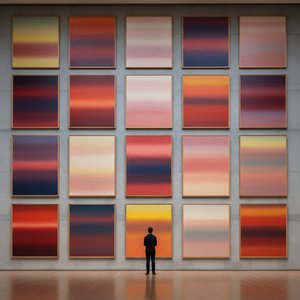
Mark Rothko : Les 25 Œuvres Maîtresses de l'Abstraction Coloriste | ArtsDot
Plongez dans l'univers émotionnel de Mark Rothko avec les 25 œuvres clés du maître de l'abstraction. Découvrez l'histoire, la technique et le pouvoir des couleurs de ces tableaux iconiques. Reproductions d'art de qualité musée sur ArtsDot.com

The Sublimity of Color: Exploring the Emotional Landscapes of Mark Rothko's Abstract Expressionism
Explore the profound emotional depth of Mark Rothko's abstract expressionism. Discover the history, techniques & lasting impact of this pivotal Color Field painter. Expert insights for collectors and art enthusiasts.

Au-Delà de la Représentation : Exploration du Paysage Émotionnel de l'Expressionnisme Abstrait
Explorez l'univers fascinant de l'Expressionnisme Abstrait avec ArtsDot. Analyse approfondie des maîtres (Pollock, Rothko, De Kooning) et conseils d'experts pour collectionner ces œuvres emblématiques. Découvrez une sélection unique.


