


 Aperçu en situation
 Envoyer
 Partager
 Détails de l'œuvre

 Télécharger
 Articles similaires
 Radiographie
 Diaporama
Figure Composition

 Lire la suite
Giclées et impressions d'art
Impressions giclées ou sur toile de qualité musée, avec une production rapide et des finitions au choix. ( Commander la reproduction peinte à la main Acheter l'image haute résolution)




P118B $10

P118H $10

P118W $10

P438Z $10

P508JH $12

P508YH $12

P805H $10

P805Z $10

P919BZ $10

P919G $10

P919XJ $10

P959ZH $10

P968JZ $12

W106C $8

W218G $10

W218JH $8

W218Y $10

W307PJ $10

W316G $10

W316PJ $8

W316Y $10

W398PJ $8

W4111J $10

W500HY $15

W500JH $15

W692G $12

W849H $8

W940BG $15

W953PJ $8




Choisissez parmi nos formats prédéfinis qui respectent les proportions originales de l’œuvre.

Vous pouvez saisir vos propres dimensions pour vous adapter à un cadre ou à un espace spécifique. Si la taille sélectionnée ne correspond pas aux proportions de l'image originale, nous recadrerons l'œuvre ou étendrons l'image avec une bordure en miroir ou une couleur unie. Une maquette numérique vous sera envoyée pour approbation avant le début de la production.
Veuillez noter que l'aperçu à l'écran ne reflète pas le recadrage ou l'extension réelle. Seule la maquette montrera avec précision la composition finale.
Bien que des tailles personnalisées soient disponibles, nous vous recommandons de choisir une dimension dans la liste prédéfinie afin de préserver les proportions originales.
Livraison dans le monde entier () en 2 semaines au lieu des 4/5 semaines habituelles. (2 septembre)

Livraison express gratuite dans le monde entier

Toile de lin de qualité supérieure

Assurance transport complète

Garantie de remboursement des droits de douane

Garantie de fidélité des couleurs

Politique de retour de 60 jours (uniquement en cas de défaut)

Garantie de remboursement à 100%

Offre de tarifs dégressifs
 L'option verre n'est disponible que pour les dimensions inférieures à 110 cm.

Figure Composition
Giclées et impressions d'art
Format de la reproduction
-


Prix total
$ 62
Mark Rothko’s ‘Figure Composition’: A Meditation on Loss and the Human Condition
Mark Rothko's 'Figure Composition,' a captivating portrait of three individuals set against a vibrant pink backdrop, offers a profound glimpse into the artist’s deeply personal exploration of existential themes. Painted in the mid-20th century, this work exemplifies Rothko’s signature style – monumental blocks of color layered to evoke intense emotion and contemplation. The painting's power resides not just in its visual impact but also in the palpable sense of unease and searching that emanates from the figures themselves.
- Subject Matter: The composition centers around three distinct individuals, each rendered with a deliberate ambiguity. Their postures and expressions suggest a shared experience, perhaps one of sorrow or reflection, yet their identities remain elusive.
- Color Palette: Rothko’s masterful use of color is central to the work's impact. The dominant pink hue isn’t merely decorative; it acts as a psychological backdrop, intensifying the emotional weight of the scene and subtly hinting at themes of vulnerability and remembrance.
- Technique: Rothko employed a layering technique known as ‘gessoing,’ applying multiple thin layers of white gesso to the canvas before building up color with thinned oil paints. This created a luminous, almost ethereal effect, characteristic of his mature style. The blurred edges and soft transitions between colors contribute to the painting’s dreamlike quality.
Historical Context: Rothko and the Rise of Abstract Expressionism
'Figure Composition' was created during a pivotal moment in art history – the rise of Abstract Expressionism in post-World War II America. Rothko, along with Jackson Pollock and Willem de Kooning, were at the forefront of this movement, rejecting traditional representational forms in favor of exploring subjective experience through color and form. Rothko’s work, particularly during this period, was deeply influenced by his own personal struggles and a broader sense of disillusionment following the war. The painting reflects a desire to grapple with profound questions about human existence – questions that resonated powerfully with audiences seeking meaning in an increasingly complex world.
- Influence: Rothko’s work was profoundly influenced by Eastern religious traditions, particularly Buddhism and Hinduism, which he encountered during his travels. These influences contributed to the spiritual dimension of his art, aiming to evoke a sense of awe and transcendence.
- Emotional Impact: Rothko intentionally sought to elicit strong emotional responses from viewers, believing that art should be a catalyst for introspection and self-discovery. The scale of the painting – a monumental canvas designed to envelop the viewer – further amplified this effect.
Symbolism and Interpretation
The ambiguous figures in ‘Figure Composition’ invite multiple interpretations. Some scholars suggest they represent archetypal figures grappling with mortality, while others see them as embodiments of universal human emotions— grief, longing, or perhaps a quiet acceptance of fate. The pink background can be seen as symbolizing both vulnerability and the enduring power of memory. The windows in the background, though seemingly simple details, could represent glimpses into other worlds or possibilities – further emphasizing the painting’s themes of searching and uncertainty.
- Mask and Headpiece: The painted mask on one figure and the headpiece worn by another add to the sense of mystery and disguise. They may symbolize a deliberate attempt to conceal emotions or perhaps represent the masks we all wear in social situations.
- Differing Expressions: The subtle differences in facial expressions among the three figures highlight the complexity of human experience and the difficulty of expressing profound emotions through words alone.
A Timeless Masterpiece – Perfect for Your Space
'Figure Composition' remains a powerfully evocative work of art, demonstrating Rothko’s mastery of color and his ability to tap into universal human emotions. A ArtsDot.com reproduction offers an unparalleled opportunity to experience this iconic piece firsthand, bringing its profound beauty and contemplative power into your home or office. Its scale and color palette make it a striking focal point in any interior design scheme, while its historical significance ensures that it will remain a treasured addition to any art collection.


Biographie de l'artiste
enfance et influences
Mark Rothko (Marcus Rothkowitz), un artiste américain renommé, est né le 25 septembre 1903 à Dvinsk, Lettonie. Sa famille a immigré aux États-Unis lorsqu'il n’avait que dix ans. Ce changement culturel aura influencé plus tard son style artistique.évolution artistique
Le travail précoce de Rothko était caractérisé par l’expressionnisme abstrait, un style qui mettait l’accent sur le processus de création d'une œuvre d'art plutôt que sur le produit final. Ses peintures, telles que No. 18 (1948) et Untitled (1948), mettaient en valeur son approche unique de la couleur et de la forme.- Champ de couleurs : L'utilisation par Rothko de champs de couleurs audacieux et rectangulaires, souvent en contraste saisissant les uns avec les autres, créait une sensation de profondeur et d’émotion.
- Structure organique : Ses peintures semblaient respirer la vie, comme si les couleurs étaient des entités vivantes.
œuvres notables et expositions
- No. 10 (1950), une peinture qui marquait un tournant significatif dans le style de Rothko, est maintenant au sein de la collection du Museum of Modern Art.
- Les Seagram Murals, une série de peintures commandées pour le restaurant Four Seasons, mettait en valeur la capacité de Rothko à adapter son style à différents environnements.
- No. 3 (1950), une peinture qui exemplifie l'utilisation par Rothko de champs de couleurs audacieux et rectangulaires.
vie tardive et héritage
La vie de Rothko a été marquée par des luttes contre la santé mentale et un mariage tumultueux. Il est décédé le 25 février 1970, à l'âge de 66 ans. Malgré ses difficultés, Rothko a laissé une marque indélébile sur le monde de l’art. Ochre et rouge sur rouge (champ de couleurs), une peinture qui met en valeur l'approche unique de Rothko à la couleur, peut être trouvée dans la collection ArtsDot.com. La page Wikipédia de Mark Rothko fournit des informations supplémentaires sur sa vie et son style artistique.
Mark Rothko
1903 - 1970 , Lettonie
L'essentiel de l'artiste
- Artistes Influents:
- Sigmund Freud
- Marcel Proust
- Date De Décès: 25 février 1970
- Date De Naissance: 25 septembre 1903
- Influences Artistiques:
- Minimalisme
- Art contemporain
- Lieu De Naissance: Daugavpils, Lettonie
- Mouvement Artistique: Expressionnisme abstrait
- Nationalité: Américaine
- Nom Complet: Mark Rothko / Marcus Rothkowitz
- Œuvres Notables:
- No. 18 (1948)
- No. 10 (1950)
- Murals Seagram
- White Center (1957)
Articles connexes
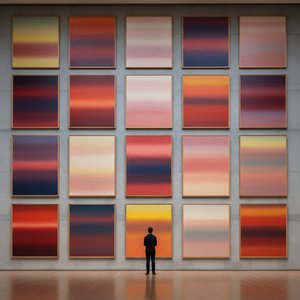
Mark Rothko : Les 25 Œuvres Maîtresses de l'Abstraction Coloriste | ArtsDot
Plongez dans l'univers émotionnel de Mark Rothko avec les 25 œuvres clés du maître de l'abstraction. Découvrez l'histoire, la technique et le pouvoir des couleurs de ces tableaux iconiques. Reproductions d'art de qualité musée sur ArtsDot.com

The Sublimity of Color: Exploring the Emotional Landscapes of Mark Rothko's Abstract Expressionism
Explore the profound emotional depth of Mark Rothko's abstract expressionism. Discover the history, techniques & lasting impact of this pivotal Color Field painter. Expert insights for collectors and art enthusiasts.

Expressionnisme Abstrait : Les 10 Chefs-d'Œuvre Incontournables pour Décorer avec Art et Histoire
Plongez au cœur de l'Expressionnisme Abstrait avec ! Découvrez les 10 œuvres majeures de Pollock, Rothko et De Kooning. Histoire, techniques & inspiration déco. Explorez la collection complète en ligne.

Top 10 des Tableaux Célèbres Dominés par le Rose Pâle : Art & Décor Raffiné
Plongez dans la douceur des 10 tableaux les plus célèbres dominés par le rose pâle. Découvrez Monet, Renoir et d'autres maîtres de l'impressionnisme. Inspirez votre décoration intérieure avec ! Explorez notre collection en ligne.

Atmosphères chromatiques : Explorer les fondements philosophiques de la peinture Color Field
Explorez les fondements philosophiques de la peinture Color Field avec ArtsDot. Découvrez Rothko, Newman et Still, leurs techniques innovantes et le potentiel d'investissement de ce mouvement abstrait majeur.



