


 Aperçu en situation
 Envoyer
 Partager
 Détails de l'œuvre

 Télécharger
 Articles similaires
 Radiographie
 Diaporama
Mourning
 Painting
- Contemporary Art
 2003
2003- Contemporary
 150.0 x 205.0 cm
 ALBERTINA KLOSTERNEUBURG
 Lire la suite
Giclées et impressions d'art
Impressions giclées ou sur toile de qualité musée, avec une production rapide et des finitions au choix. ( Commander la reproduction peinte à la main Acheter l'image haute résolution)




P118B $10

P118H $10

P118W $10

P438Z $10

P508JH $12

P508YH $12

P805H $10

P805Z $10

P919BZ $10

P919G $10

P919XJ $10

P959ZH $10

P968JZ $12

W106C $8

W218G $10

W218JH $8

W218Y $10

W307PJ $10

W316G $10

W316PJ $8

W316Y $10

W398PJ $8

W4111J $10

W500HY $15

W500JH $15

W692G $12

W849H $8

W940BG $15

W953PJ $8




Choisissez parmi nos formats prédéfinis qui respectent les proportions originales de l’œuvre.

Vous pouvez saisir vos propres dimensions pour vous adapter à un cadre ou à un espace spécifique. Si la taille sélectionnée ne correspond pas aux proportions de l'image originale, nous recadrerons l'œuvre ou étendrons l'image avec une bordure en miroir ou une couleur unie. Une maquette numérique vous sera envoyée pour approbation avant le début de la production.
Veuillez noter que l'aperçu à l'écran ne reflète pas le recadrage ou l'extension réelle. Seule la maquette montrera avec précision la composition finale.
Bien que des tailles personnalisées soient disponibles, nous vous recommandons de choisir une dimension dans la liste prédéfinie afin de préserver les proportions originales.
Livraison dans le monde entier () en 2 semaines au lieu des 4/5 semaines habituelles. (3 septembre)

Livraison express gratuite dans le monde entier

Toile de lin de qualité supérieure

Assurance transport complète

Garantie de remboursement des droits de douane

Garantie de fidélité des couleurs

Politique de retour de 60 jours (uniquement en cas de défaut)

Garantie de remboursement à 100%

Offre de tarifs dégressifs
 L'option verre n'est disponible que pour les dimensions inférieures à 110 cm.

Mourning
Giclées et impressions d'art
Format de la reproduction
-


Prix total
$ 62
The Visceral Language of Emotion
In the profound and haunting masterpiece Mourning, the late Austrian visionary Maria Lassnig invites us into a raw, unfiltered exploration of human vulnerability. Created in 2003, this expansive work serves as a powerful testament to the artist's lifelong dedication to her theory of "body awareness." At the heart of the composition, a central female figure emerges with an open-moutched cry, a visceral expression of grief that transcends mere depiction to become a shared human experience. Surrounded by figures that exist in varying states of nakedness and color, the painting dissolves the boundaries between the physical self and the psychological landscape, creating a scene that is as much about internal sensation as it is about external form.
The technique employed here is nothing short of transformative. Lassnig utilizes a vibrant, almost feverish color palette to communicate the intensity of the subject matter. The central figure, bathed in searing reds and warm oranges, acts as a focal point of heat and passion, contrasting sharply with the more varied, multi-colored tones of the surrounding figures. This use of color does not merely decorate the canvas; it functions as a rhythmic pulse, guiding the viewer's eye through a chaotic yet deeply structured emotional journey. The brushwork, characteristic of her later mastery, feels spontaneous and urgent, capturing the fleeting, often painful sensations of being alive.
A Legacy of Subjectivity and Form
To understand Mourning, one must look to the historical context of Lassnig’s evolution within the Austrian art scene. As a pioneer of Informalism and Tachisme, Lassnig moved away from traditional representation toward a style that prioritized the "inner body." This piece stands as a culmination of decades spent navigating the complexities of identity, influenced by her early life in Kappel am Krappfeld and her formative years at the Academy of Fine Arts in Vienna. The figures surrounding the central protagonist—some draped, some bare, some looming in the background—suggest a communal weight to grief, implying that sorrow is never an isolated event but one that ripples through our social and physical connections.
For the discerning collector or interior designer, this artwork offers more than just visual splendor; it provides a profound emotional anchor for any space. The sheer scale of the piece, measuring 150 x 205 cm, allows its commanding presence to dominate a room, turning a wall into a window into the human soul. A high-quality reproduction of this work preserves the delicate nuances of Lassnig's color transitions and the raw energy of her strokes, making it an ideal centerpiece for those seeking to infuse their environment with intellectual depth and avant-garde sophistication. It is a piece that demands conversation, inviting viewers to contemplate the beautiful, tragic, and inescapable nature of our shared existence.
Œuvres similaires


Biographie de l'artiste
Early Life and Education
Maria Lassnig, born September 8, 1919, in Kappel am Kraffeld, Austria, experienced a formative childhood shaped by her mother’s tumultuous relationship with an older man—a dynamic that instilled in Lassnig a profound understanding of familial complexity. Raised primarily by her grandmother, this early upbringing would become a recurring motif throughout her artistic oeuvre, reflecting themes of vulnerability and resilience. Her academic pursuits began at the Vienna Academy of Fine Arts during World War II, where she honed her skills and established her distinctive artistic vision amidst the backdrop of wartime anxieties.Artistic Career and Contributions
Lassnig’s artistic trajectory is characterized by groundbreaking innovations that propelled her into the forefront of Austrian art history. Notably, she spearheaded the introduction of Informalism and Tachisme—styles prioritizing spontaneity and emotional expression—into the postwar landscape. Her involvement with the Hundsgruppe (“Dog Pack”), alongside fellow artists Ernst Fuchs and Wolfgang Hollegha, solidified her position as a pivotal figure in shaping Viennese artistic discourse during the 1950s. Perhaps Lassnig’s most enduring contribution lies in her conceptual framework of “Body Awareness,” articulated in 1948. This theory posits that artists should depict only body parts felt during the creative process—a radical departure from traditional portraiture—resulting in self-portraits imbued with unsettling colors and often featuring missing anatomical elements.Awards and Legacy
Lassnig’s artistic accomplishments garnered considerable recognition, culminating in several prestigious accolades. She was honored as the first female artist to receive the Grand Austrian State Prize in 1988, cementing her place among Austria's most celebrated creatives. In 2005, she received the Austrian Decoration for Science and Art—a testament to her intellectual curiosity and artistic integrity—and achieved international acclaim at the Venice Biennale in 2013 when awarded the Golden Lion Prize for Lifetime Achievement. Her magnum opus, “Selfportrait with Telephone,” housed at Lentzos Kunstmuseum Linz, exemplifies her masterful technique and unwavering commitment to exploring the human condition. Lassnig’s influence extends beyond her own artistic output; she served as professor emeritus at Vienna University of Applied Arts from 1980 until her passing in 2014, nurturing generations of aspiring artists.Notable Works and Exhibitions
Lassnig's artistic legacy is vividly preserved through a selection of iconic artworks showcased in prominent museums across Austria and beyond. “Selfportrait with Telephone,” presented at Lentzos Kunstmuseum Linz, stands as a poignant meditation on identity and perception—a testament to Lassnig’s ability to convey profound emotion through subtle visual cues. Her works were featured extensively in exhibitions at the Kunsthistorisches Museum Vienna and the Museum of Applied Arts Vienna, offering audiences unparalleled access to her artistic vision.Concluding Remarks
Maria Lassnig's pioneering exploration of “Body Awareness” fundamentally altered perceptions of portraiture and artistic representation—a legacy that continues to inspire artists today. Her unwavering dedication to formal experimentation and her profound engagement with existential themes solidified her position as a singular voice in Austrian art history, ensuring her enduring influence on the creative landscape for decades to come.
Maria Lassnig
1919 - 2014 , Autriche
L'essentiel de l'artiste
- Artistic Movement Or Style: Informalism & Tachisme
- Artists Or Movements Influenced By This Artist: ['Feminist Art History']
- Artists Who Influenced This Artist:
- Arnulf Rainer
- Ernst Fuchs
- Date Of Birth: 1919
- Date Of Death: 2014
- Full Name: Maria Lassnig
- Nationality: Austrian
- Notable Artworks:
- Selfportrait with telephone
- Atlas
- Place Of Birth: Kappel am Kraffeld, Austria
Articles connexes

Crimson Threads of Narrative: Exploring Symbolism & Representation in Artworks Featuring the Red Dress
Explore the rich symbolism of the red dress in art history! From ancient power displays to iconic portraits like Cézanne’s 'Madame Cezanne', discover the cultural and artistic significance behind this captivating color. Expert analysis & insights.
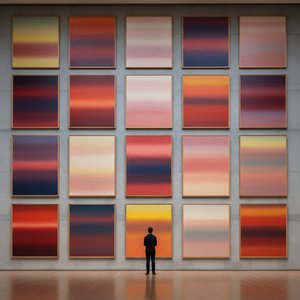
Mark Rothko : Les 25 Œuvres Maîtresses de l'Abstraction Coloriste | ArtsDot
Plongez dans l'univers émotionnel de Mark Rothko avec les 25 œuvres clés du maître de l'abstraction. Découvrez l'histoire, la technique et le pouvoir des couleurs de ces tableaux iconiques. Reproductions d'art de qualité musée sur ArtsDot.com

The Evocative Power of Warmth: Exploring Emotional Resonance in Paintings
Explore the power of warm colors in art history! Discover how masters used reds, oranges & yellows to evoke emotion. Expert insights on Baroque drama, interior design & finding your perfect palette. ArtsDot offers handmade reproductions.

Reflecting the Self: A History of Portraiture & Psychological Insight
Explore the fascinating history of self-portraiture from Renaissance masters like Dürer & Rembrandt to modern interpretations. Discover the psychological insights and artistic techniques behind these iconic works. Expert analysis for art enthusiasts.

Henri Matisse : Les 25 Œuvres Maîtresses d'un Génie de la Couleur | ArtsDot
Plongez dans l'univers vibrant d'Henri Matisse ! Découvrez les 25 œuvres majeures du fauvisme et de la peinture moderne. Explorez La Danse, L'Atelier Rouge & plus encore. Reproductions de qualité musée sur ArtsDot.com.

