

 Aperçu en situation
 Envoyer
 Partager
 Détails de l'œuvre

 Télécharger
 Articles similaires
 Radiographie
 Diaporama
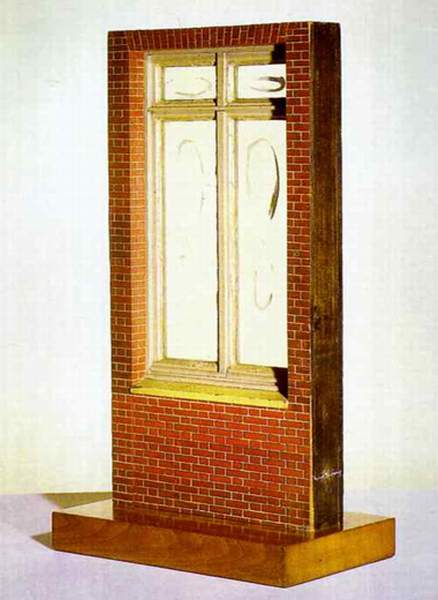
The Brawl at Austerlitz
 Mixed Media
- WallArt
- Surrealism
 1921
1921- Modern
 62.0 x 28.0 cm
 Lire la suite
Giclées et impressions d'art
Impressions giclées ou sur toile de qualité musée, avec une production rapide et des finitions au choix. ( Commander la reproduction peinte à la main Télécharger l'image haute résolution)




P118B $10

P118H $10

P118W $10

P438Z $10

P508JH $12

P508YH $12

P805H $10

P805Z $10

P919BZ $10

P919G $10

P919XJ $10

P959ZH $10

P968JZ $12

W106C $8

W218G $10

W218JH $8

W218Y $10

W307PJ $10

W316G $10

W316PJ $8

W316Y $10

W398PJ $8

W4111J $10

W500HY $15

W500JH $15

W692G $12

W849H $8

W940BG $15

W953PJ $8




Choisissez parmi nos formats prédéfinis qui respectent les proportions originales de l’œuvre.

Vous pouvez saisir vos propres dimensions pour vous adapter à un cadre ou à un espace spécifique. Si la taille sélectionnée ne correspond pas aux proportions de l'image originale, nous recadrerons l'œuvre ou étendrons l'image avec une bordure en miroir ou une couleur unie. Une maquette numérique vous sera envoyée pour approbation avant le début de la production.
Veuillez noter que l'aperçu à l'écran ne reflète pas le recadrage ou l'extension réelle. Seule la maquette montrera avec précision la composition finale.
Bien que des tailles personnalisées soient disponibles, nous vous recommandons de choisir une dimension dans la liste prédéfinie afin de préserver les proportions originales.
Livraison dans le monde entier () en 2 semaines au lieu des 4/5 semaines habituelles. (16 août)

Livraison express gratuite dans le monde entier

Toile de lin de qualité supérieure

Assurance transport complète

Garantie de remboursement des droits de douane

Garantie de fidélité des couleurs

Politique de retour de 60 jours (uniquement en cas de défaut)

Garantie de remboursement à 100%

Offre de tarifs dégressifs
 L'option verre n'est disponible que pour les dimensions inférieures à 110 cm.

The Brawl at Austerlitz
Giclées et impressions d'art
Format de la reproduction
-


Prix total
$ 62
Description de la pièce
A Fractured Vision: Marcel Duchamp’s ‘The Brawl at Austerlitz’
Marcel Duchamp's 1921 work, 'The Brawl at Austerlitz,' is not merely a depiction of a historical event – the Napoleonic defeat at the Battle of Austerlitz – but a meticulously constructed meditation on perception, reality, and the very nature of artistic representation. This unsettling piece, measuring 62 x 28 cm, immediately confronts the viewer with its surreal juxtaposition: a window embedded within a brick wall, creating an illusion of depth that simultaneously draws us in and distances us from the scene. Constructed primarily from cardboard or paperboard overlaid onto painted surfaces, alongside paint, glue, and adhesive, the artwork embodies Duchamp’s revolutionary spirit – a deliberate rejection of traditional artistic conventions in favor of intellectual provocation.
Deconstructing Representation: Style and Technique
Duchamp's approach aligns with the burgeoning Surrealist movement, yet possesses a distinctly Cubist sensibility. The fragmented window frame, rendered with sharp, defined lines that are deliberately blurred through layering, echoes the fractured perspectives championed by Picasso and Braque. Geometric shapes – rectangles defining both the window and the brickwork – dominate the composition, creating a sense of controlled chaos. However, it’s the deliberate disruption of depth and perspective that truly elevates this work. The flat, even lighting further contributes to the two-dimensional effect, emphasizing the constructed nature of the image and challenging the viewer's expectations of traditional representation. This technique isn't about faithfully recreating Austerlitz; it’s about dismantling the idea of faithful reproduction itself.
Symbolism and Context: A Window into Disorientation
'The Brawl at Austerlitz' operates on multiple symbolic levels. The window, a recurring motif in Duchamp’s oeuvre, represents observation, confinement, and perhaps even transition or passage – themes central to his broader philosophical concerns. The ‘brawl’ itself, rendered with an ambiguous violence, suggests the inherent instability of power and the chaotic nature of historical events. Constructed during a period of profound social and political upheaval following World War I, the artwork reflects the widespread disillusionment and questioning of established values that characterized the Dada movement – of which Duchamp was a key figure. The work’s unsettling atmosphere evokes a sense of unease and disorientation, mirroring the psychological impact of war and the breakdown of traditional certainties.
A Legacy of Provocation
Duchamp's ‘The Brawl at Austerlitz’ stands as a testament to his radical vision. Born in 1887, Duchamp’s career was defined by his relentless questioning of artistic norms and his insistence on the primacy of ideas over aesthetics. This piece, with its deliberate distortions and unsettling composition, embodies that spirit perfectly. It's a powerful reminder that art can be more than just beautiful; it can be profoundly thought-provoking, challenging our assumptions about reality and inviting us to reconsider what constitutes ‘art’ itself. A hand-painted reproduction offers an intimate connection to this seminal work of modern art, allowing you to experience Duchamp’s revolutionary vision firsthand.
Œuvres similaires





Biographie de l'artiste
jeune vie et débuts artistiques
marcel duchamp, peintre, sculpteur, joueur d'échecs et écrivain français-américain, est né le 28 juillet 1887 à Blainville-Crevon, en Normandie, France. Sa famille, connue pour ses inclinations culturelles, a encouragé son intérêt précoce pour l’art. Le parcours artistique de Duchamp a commencé avec des styles post-impressionnistes, expérimentant avec les techniques et les sujets classiques.évolution artistique et œuvres notables
- L'œuvre de marcel duchamp est associée au cubisme, à l’art conceptuel et au dadaïsme, bien qu'il soit prudent quant à son utilisation du terme dada.
- L'une de ses œuvres les plus célèbres, Fountain (1917), un urinoir signé « r. mutt », est un exemple de ses ready-mades, remettant en question la notion de ce qui constitue l’art.
- Portrait de joueurs d'échecs (1911), une œuvre cubiste, met en évidence son intérêt pour le jeu et ses aspects stratégiques.
- To be looked at (from the other side of the glass) with one eye, close to, for almost an hour (1945) est une autre œuvre notable, reflétant ses inclinations dadaïstes.
influence et héritage
L'impact de Duchamp sur l’art du XXe siècle est immense. Il, avec Pablo Picasso et Henri Matisse, a défini les arts plastiques au début du XXe siècle. Son approche conceptuelle de l’art a influencé des générations d’artistes.- Explorez davantage les œuvres de Duchamp sur ArtsDot : Marcel Duchamp | œuvres
- Découvrez le Musée Ohara d'art, au Japon, qui présente des collections d’art occidental, dont certaines influencées par le style de Duchamp : Musée Ohara d'art, Japon
- Apprenez-en davantage sur le lettrisme, un mouvement influencé par le dadaïsme et le surréalisme, dans lequel Duchamp participait : Mouvement artistique du lettrisme
conclusion
L’approche énigmatique de l’art de Marcel Duchamp, combinant des éléments conceptuels et dadaïstes, a laissé une marque indélébile sur le monde de l’art. Son héritage continue d'inspirer les artistes et d'influencer le développement de l’art moderne et contemporain. Franck Scurti, artiste français connu pour son art conceptuel, suit les traces de cet artiste pionnier.
Marcel Duchamp
1887 - 1968 , France
L'essentiel de l'artiste
- Artistes Influencés: ['Franck Scurti']
- Date De Décès: 2 octobre 1968
- Date De Naissance: 28 juillet 1887
- Influence:
- Pablo Picasso
- Henri Matisse
- Lieu De Naissance: Blainville-sur-Mer, France
- Mouvement Artistique:
- Cubisme
- Dadaïsme
- Art conceptuel
- Nationalité: Français-Américain
- Nom Complet: Marcel Duchamp
- Oeuvres Notables:
- Fontaine
- Portrait de joueurs d'échecs
- La Grande Verrière
- Boîte-en-valise
Articles connexes
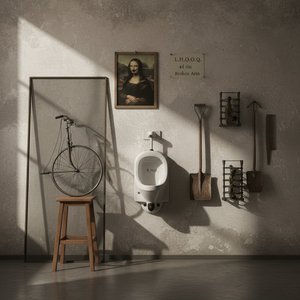
Marcel Duchamp: Challenging Conventions & Redefining Art in the 20th Century
Explore the revolutionary art of Marcel Duchamp! Discover how his Dadaist readymades challenged artistic conventions & redefined modern art. A deep dive into 'Fountain', conceptual shifts, and his lasting impact.

Déconstruire la réalité : L'impact révolutionnaire du cubisme sur l'art du XXe siècle
Explorez l'impact révolutionnaire du cubisme sur l'art moderne. Découvrez Picasso, Braque et les secrets de ce mouvement artistique majeur. Conseils d'experts pour collectionner des œuvres cubistes authentiques.

Déconstruction de la réalité : L'impact révolutionnaire du cubisme sur l'art du XXe siècle
Explorez l'impact révolutionnaire du cubisme sur l'art moderne. Découvrez Picasso, Braque et les maîtres de ce mouvement clé. Guide pour collectionneurs éclairés.

Dada : Révolution de l'Anti-Art et Rejet de la Raison au XXe Siècle – Une Analyse pour Collectionneurs Élus
Explorez l'histoire révolutionnaire du Dadaïsme avec notre analyse approfondie pour collectionneurs avertis. Découvrez les techniques, l'héritage et les enjeux de ce mouvement artistique majeur. Expertise & conseils d'investissement.

Jean Dominique Antony Metzinger: Pioneering Cubism & the Evolution of Abstract Form
Explore the life & work of Jean Metzinger, a pivotal Cubist painter and theorist. Discover his innovations in proto-Cubism, 'Du Cubisme,' and Crystal Cubism – a journey through modern art's evolution.



